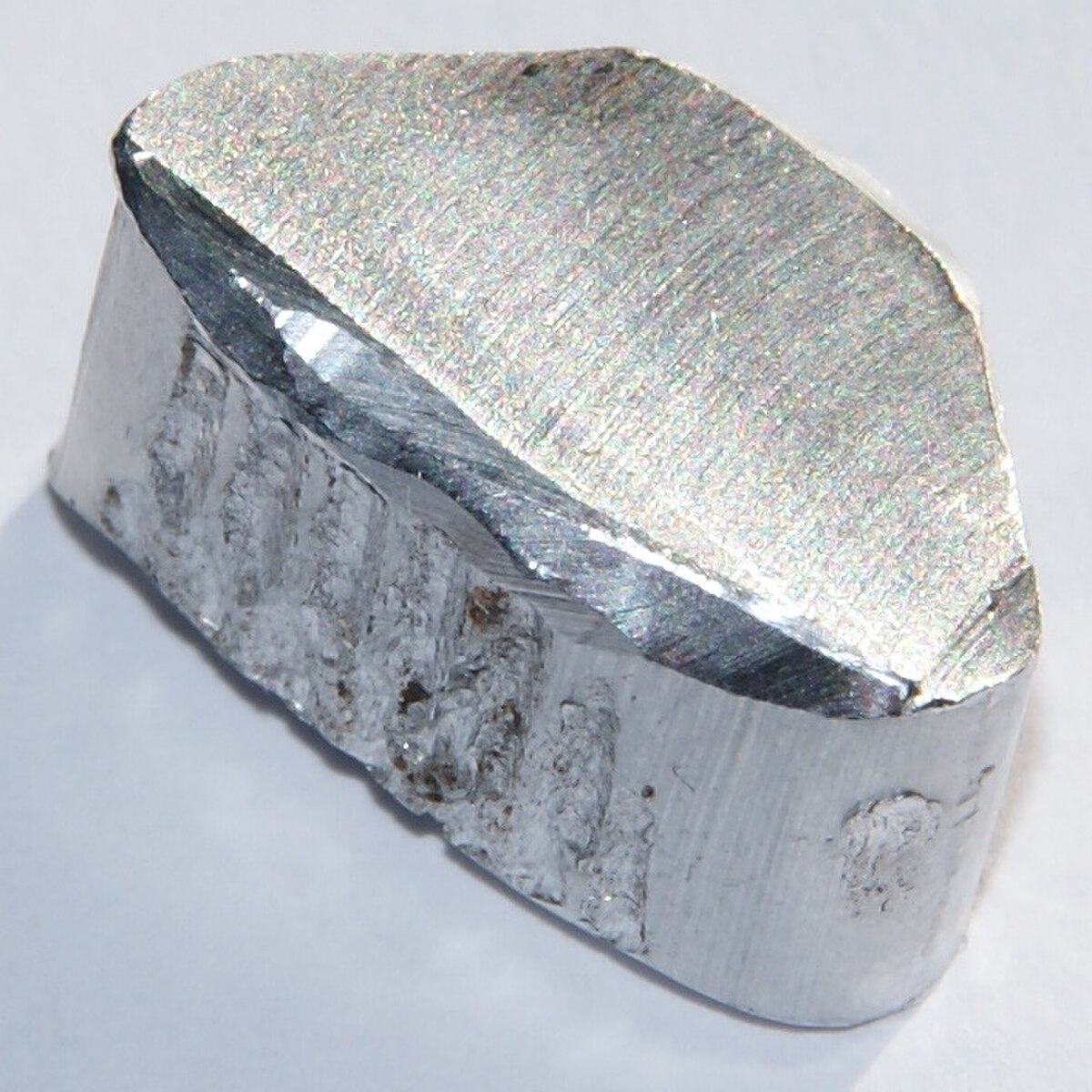
Aluminum is a lightweight chemical element and silvery metal that makes up a major part of Earth's crust. It resists rust because it instantly forms an invisible, self-healing oxide shield when exposed to air. Although once more expensive than gold, modern electrical smelting transformed it into one of the most widely used metals in everyday life.
By the edgi team We find the most surprising true thing about an idea and build a 60-second lesson around it.
In the mid-19th century, Napoleon III hosted banquets where his most elite guests ate off aluminum plates. Commoners, meanwhile, were stuck using standard gold or silver cutlery.
At the time, pure aluminum was more valuable than gold because it was nearly impossible to extract from the earth.
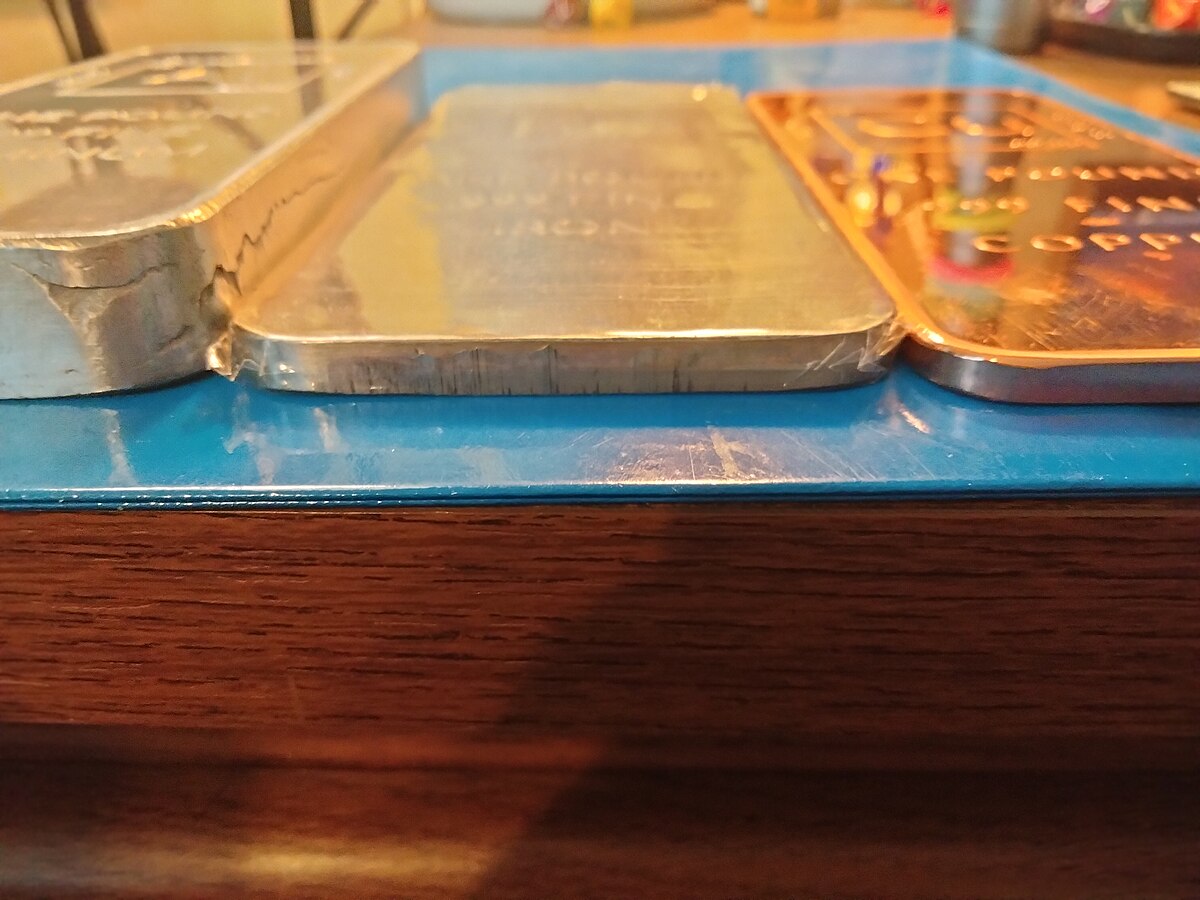
Three 1.0 pound (0.454 kg) bullion ingots of aluminium, iron, and copper are shown side-by-side on a blue tray. Kencf0618, CC BY 4.0, via Wikimedia Commons
The self-healing shield
Aluminum is a chemical hermit that hates being alone. It reacts instantly with oxygen to grow a microscopic, rock-hard layer of Aluminum Oxide. This invisible skin is self-healing; it seals the metal off from the air, preventing further Corrosion.
It is the only reason the metal survives in our atmosphere instead of turning into powder.
The price crash
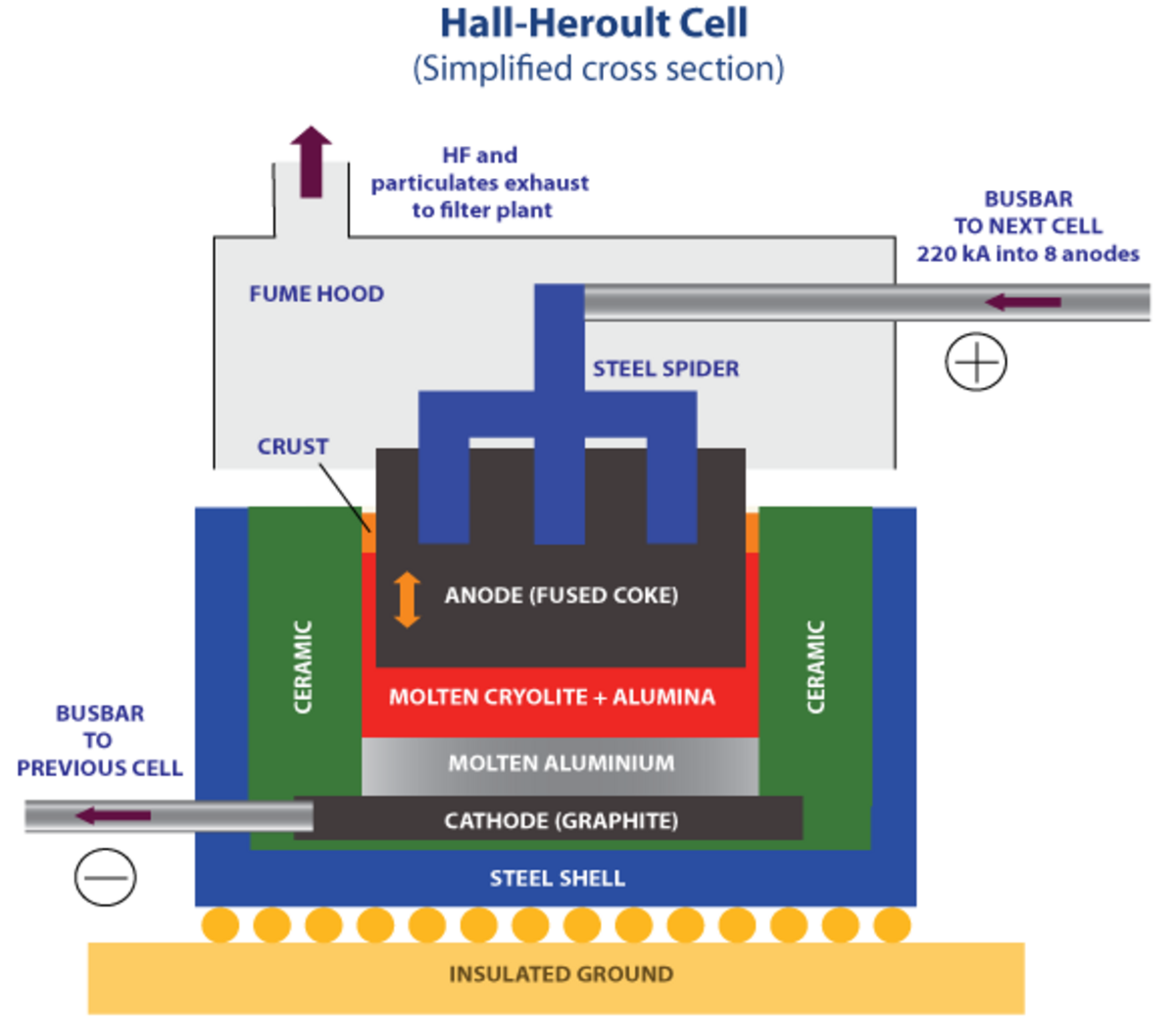
In 1886, two 22-year-olds on different continents simultaneously discovered the Hall–Héroult process. By using massive jolts of electricity, they finally cracked the code to extract aluminum from Bauxite ore.
Simplified cross-section diagram of a Hall-Héroult industrial cell, illustrating the process of aluminum production with labeled components such as the fume hood, steel spider, anode (fused coke),… Kashkhan at English Wikipedia, CC BY-SA 3.0, via Wikimedia Commons
The price collapsed almost overnight, turning a royal luxury into a material we now crush and recycle by the billion.
Why is aluminum so light and durable?
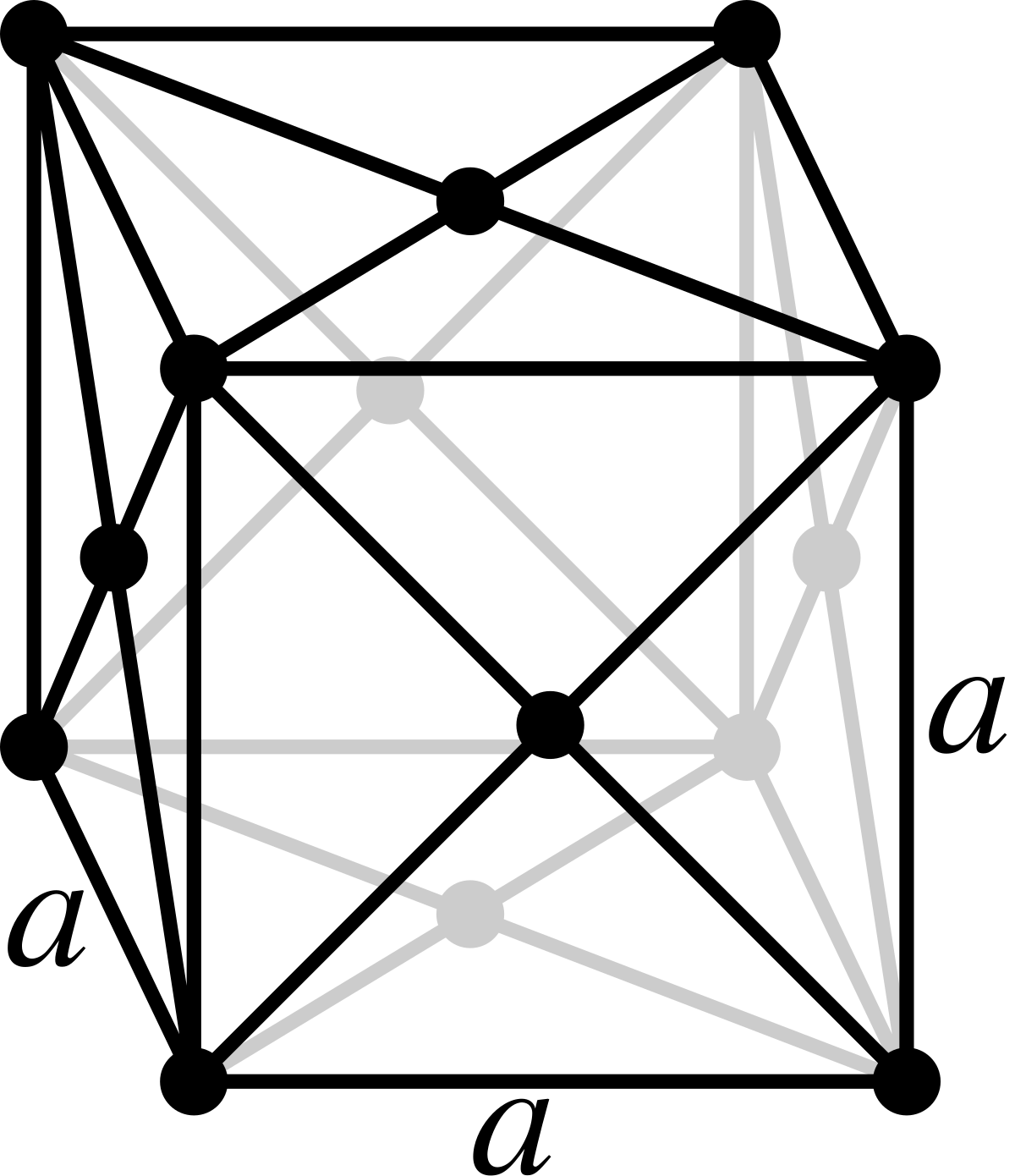
Aluminum has a density of 2.70 grams per cubic centimeter, which is roughly one-third the weight of steel. It achieves this low density because its unit cell size is relatively large compared to the number of nucleons in each atom. While pure aluminum is soft and weak, mixing it into alloys raises its yield strength from about 11 megapascals up to 600 megapascals.
Aluminum atoms arrange themselves into a face-centered cubic lattice, creating a spacious structure that keeps the metal's bulk density low. Original PNGs by Daniel Mayer and DrBob, traced in Inkscape by User:Stannered, CC BY-SA 3.0, via Wikimedia Commons
The metal does not corrode away in open air because of its strong chemical affinity for oxygen. Upon contact with the atmosphere, it immediately grows a protective oxide film across its surface. This layer prevents air and moisture from penetrating deeper into the material, keeping the underlying metal intact.
How is aluminum extracted and used?
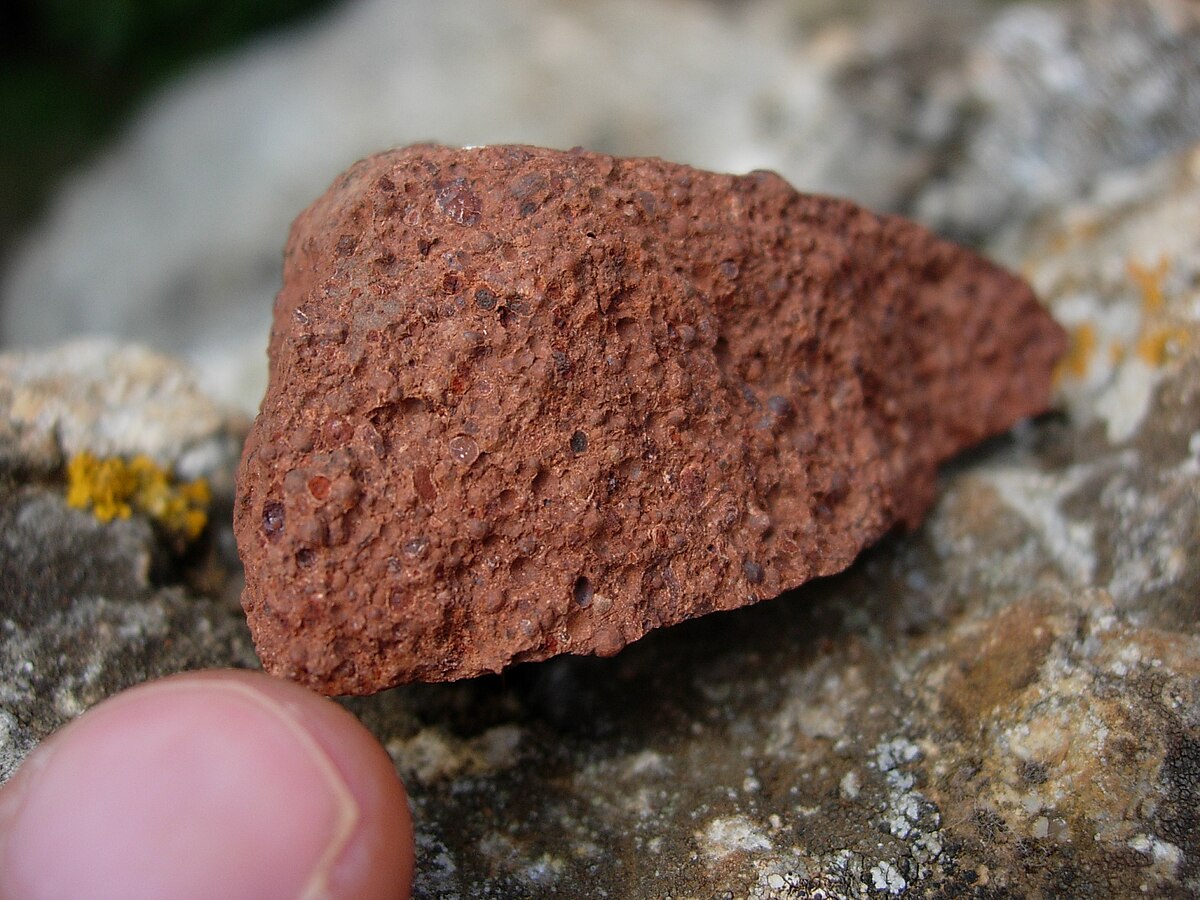
Aluminum is the third most abundant element in Earth's crust, but it is almost never found in its pure metallic form. Instead, it is locked inside sedimentary rocks such as bauxite. The Hall-Héroult process, discovered independently in 1886 by Charles Martin Hall and Paul Héroult, cracked this bond by passing strong electric currents through dissolved ore to isolate the pure metal.
Bauxite rock serves as the primary raw ore mined to extract aluminum through electrical smelting. saphon, CC BY-SA 1.0, via Wikimedia Commons
In 1954, aluminum overtook copper as the most produced non-ferrous metal in the world. It conducts electricity well enough that an aluminum wire matching the amperage of a copper wire weighs only half as much. Today, major industries rely on aluminum for transportation, packaging, construction, and aerospace engineering.
Test yourself
What role does the natural oxide layer play in aluminum's survival in our atmosphere?
It acts as a self-healing barrier against corrosion. Aluminum reacts instantly with oxygen to form a microscopic, protective skin that seals out air and prevents further corrosion.
What explains the historical high value of aluminum relative to gold?
It is difficult to extract from ore. Aluminum is one of the most abundant elements on Earth, but it is locked tightly in bauxite ore. Its high value was due to the extreme difficulty of extraction, not its scarcity in nature.
Play the lesson in edgi and the card is yours. It lands on your Map next to the ideas it connects to, and turns from matte to foil to gold as you learn more around it.
Aluminum is paramagnetic, meaning it is essentially unaffected by static magnetic fields. However, strong alternating magnetic fields can interact with it by inducing internal electrical currents.
Do living organisms use aluminum?
No living organism is known to metabolize aluminum salts. Despite this lack of biological function, plants and animals generally tolerate the element well.
Who first discovered aluminum?
Danish physicist Hans Christian Ørsted first announced the discovery of aluminum in 1825. French chemist Henri Étienne Sainte-Claire Deville later initiated its first industrial production in 1856.