Cavendish BananaThe cloned fruit dominating world trade
The Cavendish banana is a seedless, commercial banana variety belonging to the AAA subgroup of Musa acuminata. Almost every Cavendish sold today is a sterile clone traced back to a single nineteenth-century greenhouse plant. Because these clones lack genetic diversity, the entire global crop is vulnerable to the same deadly fungal diseases.
By the edgi team We find the most surprising true thing about an idea and build a 60-second lesson around it.
Almost every banana you buy in a grocery store is a Cavendish. It wasn't always this way. In the 1830s, a specimen was brought to the 7th Duke of Devonshire’s estate in England.
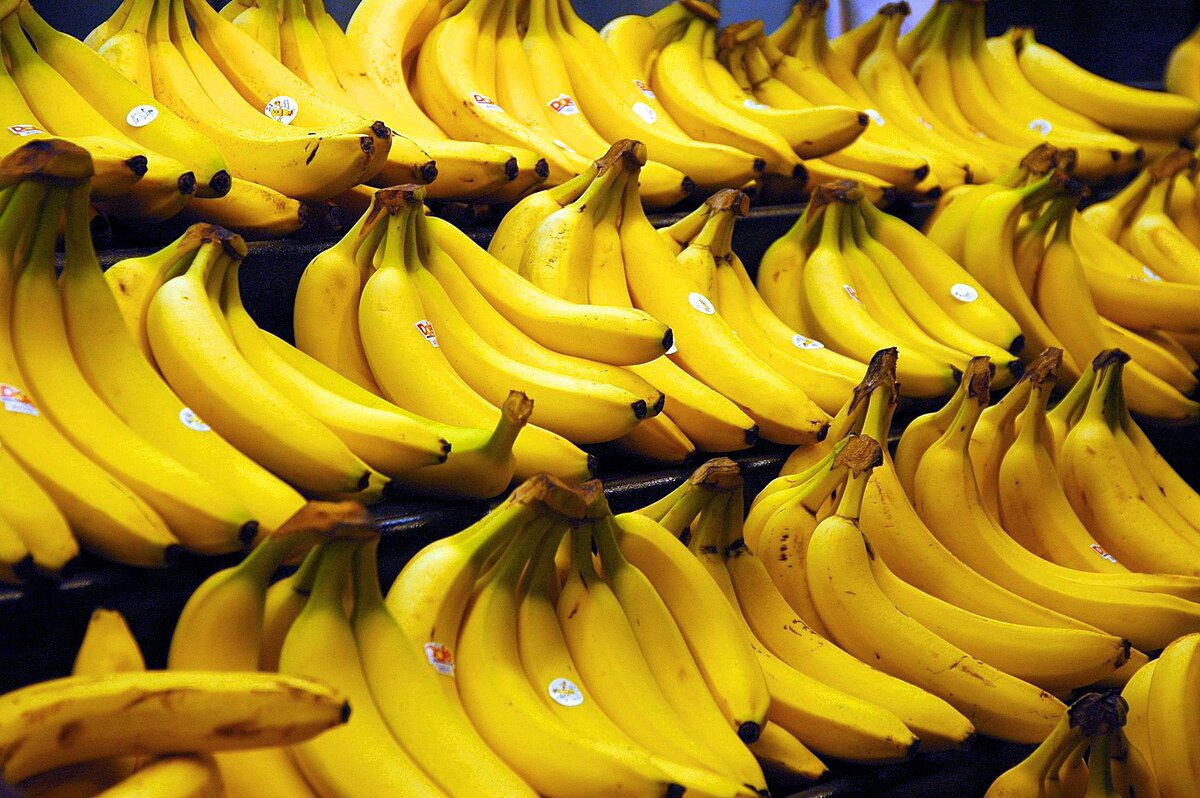
Close-up photograph of numerous bunches of Cavendish bananas displayed on shelves. Steve Hopson, www.stevehopson.com, CC BY-SA 2.5, via Wikimedia Commons
His gardener, Joseph Paxton, cultivated it in a greenhouse. Every Cavendish banana grown today is a direct genetic clone of that single plant.
The fall of the king
Before the 1950s, the world ate the Gros Michel banana. It was creamier and more flavorful than the Cavendish. That variety was wiped out by a fungal infection called Panama disease.
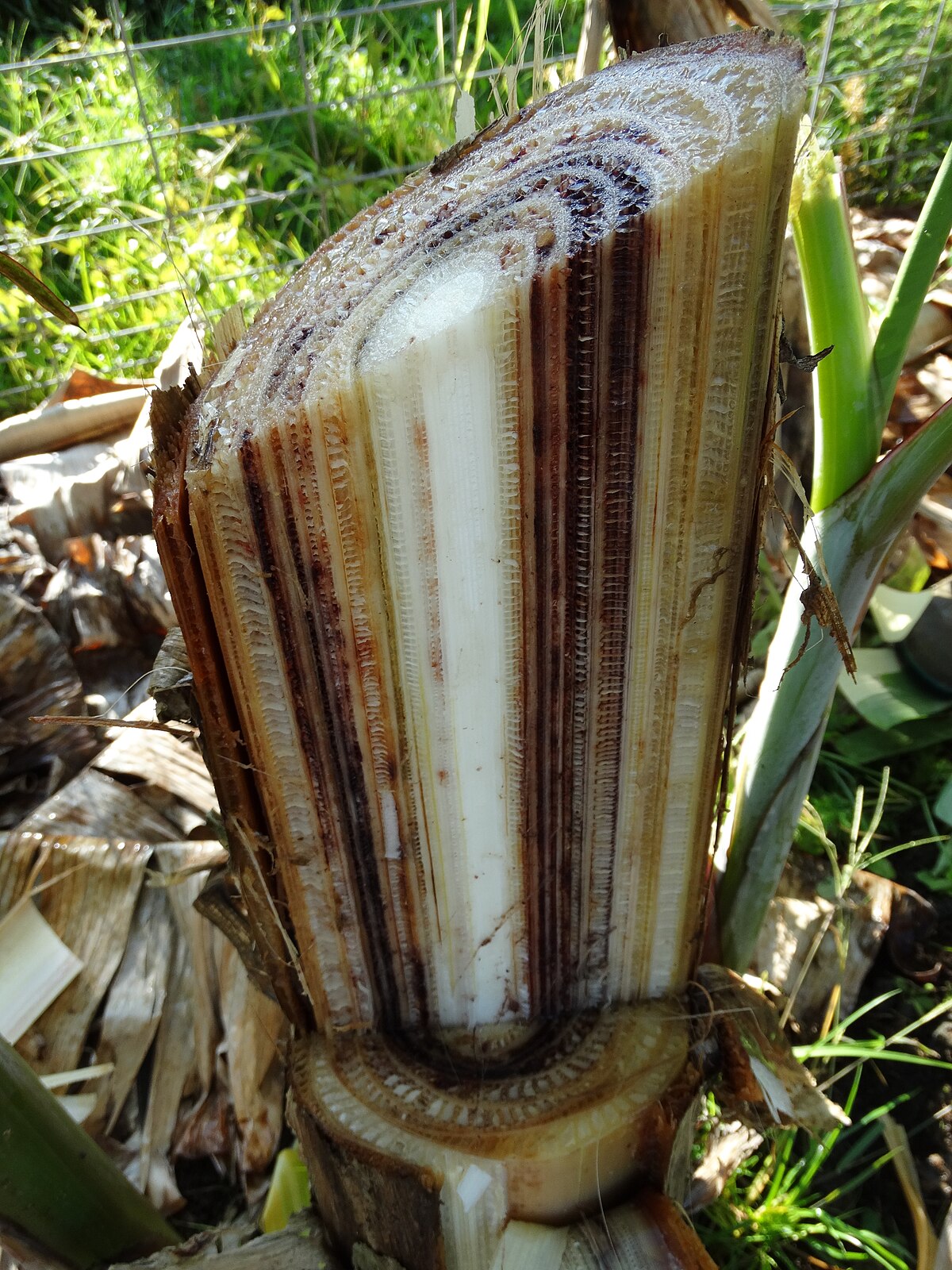
Close-up view of a banana stalk, variety 'Koa'e Kea, infected with Fusarium wilt, also known as Panama disease. Scot Nelson, CC0, via Wikimedia Commons
The Cavendish replaced it because it was tough enough to survive long-distance shipping, not because it was the best tasting.
A ticking time bomb
Because Cavendish bananas are clones, they are genetically identical. They lack the variation needed to resist new diseases. A new fungal strain, Tropical Race 4, is currently sweeping through plantations worldwide.
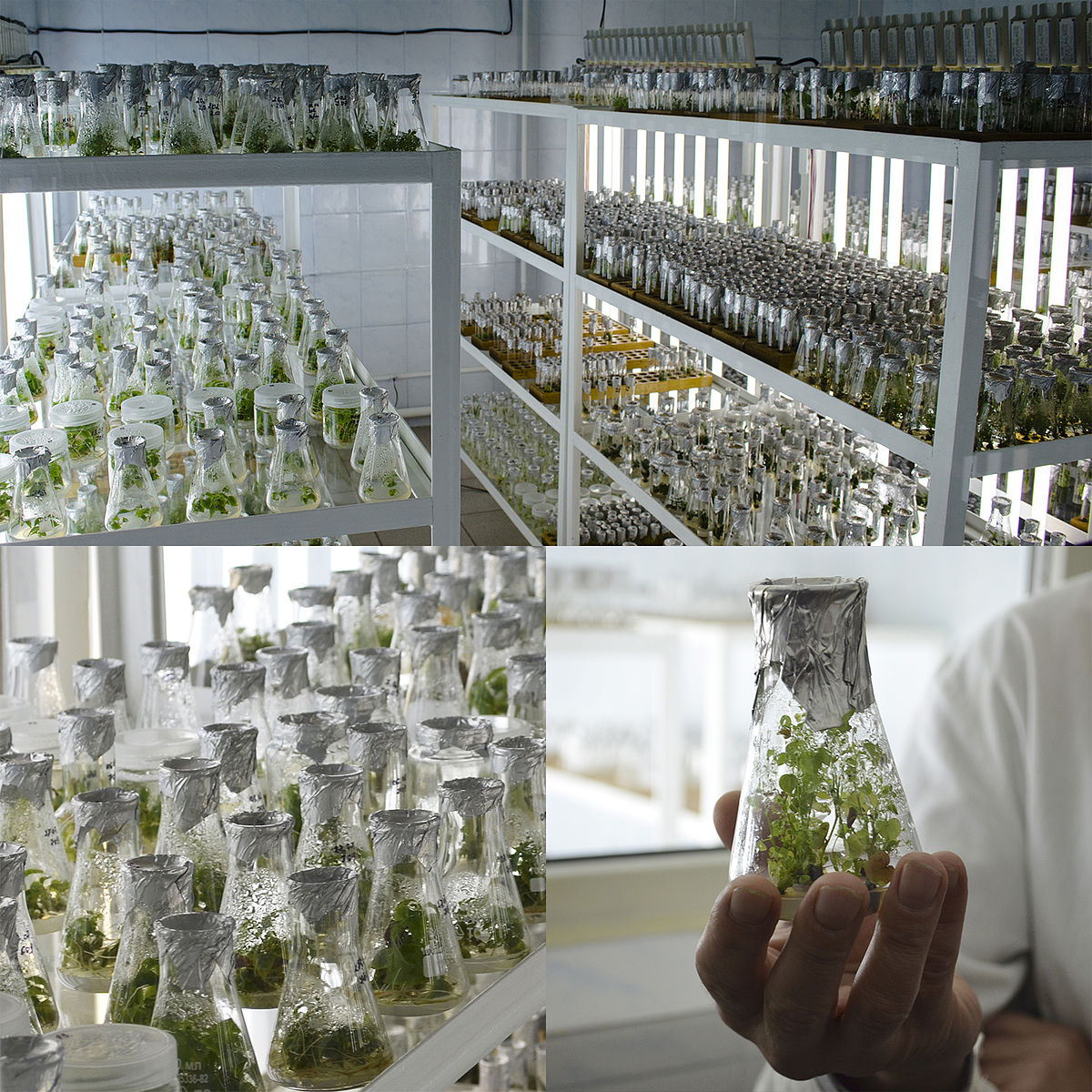
A four-panel image showing a laboratory for microclonal plant propagation, with numerous glass flasks containing cloned plants in various stages of growth. Красноштан Василь Ігорович, CC BY-SA 4.0, via Wikimedia Commons
When a disease hits a massive monoculture of clones, there is no 'immune' survivor. The entire global supply is at risk.
Why are all Cavendish bananas identical clones?
Cavendish bananas are parthenocarpic, which means their fruit develops without seeds and they cannot reproduce sexually. Farmers instead propagate them through vegetative cloning, creating genetically identical offshoots of the parent plant. 'Grande Naine' and 'Dwarf Cavendish' are two of the most widely grown clones in commercial agriculture.
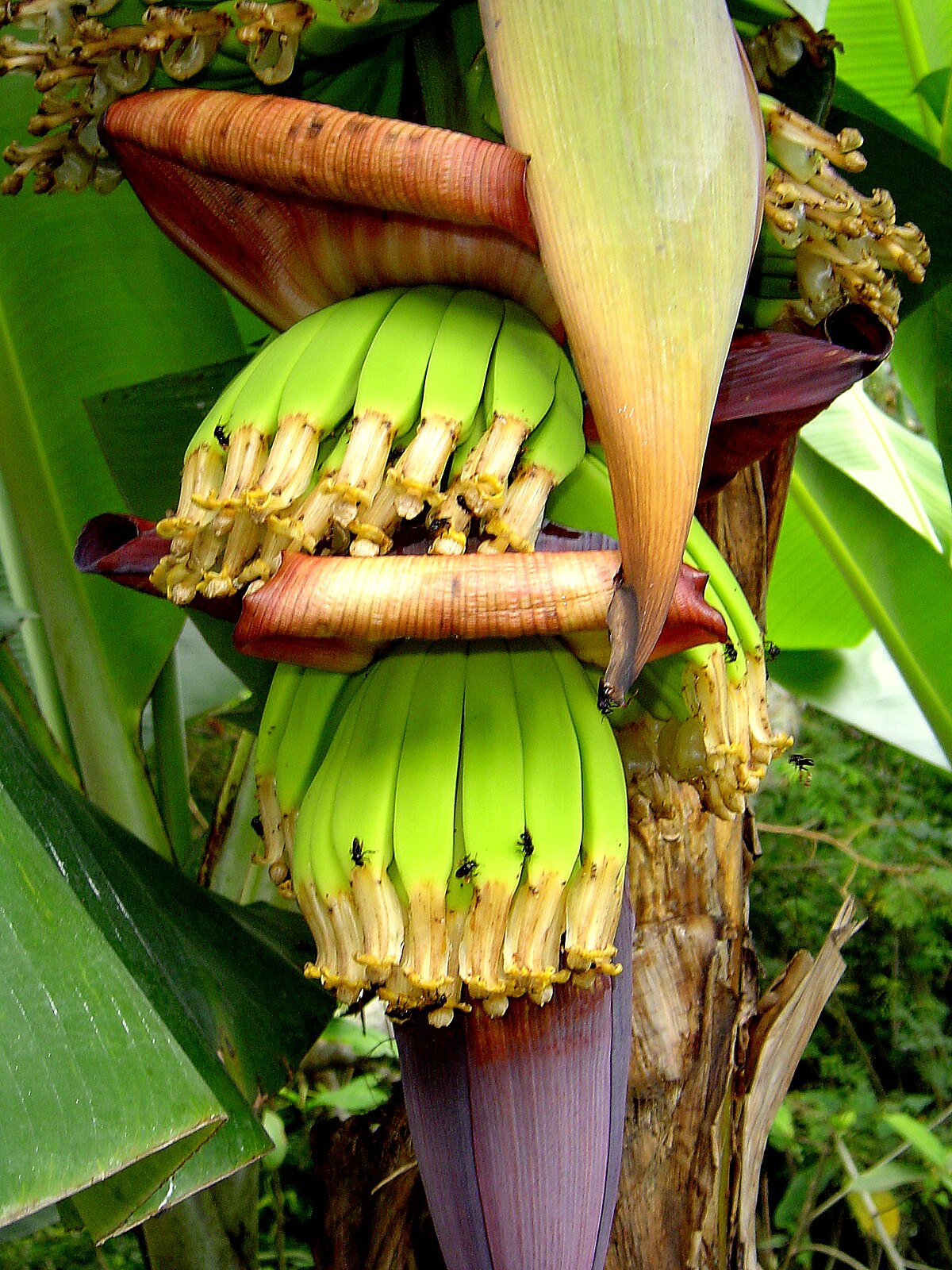
Cavendish banana fruits grow in dense clusters without seeds, meaning every plant must be propagated through identical clones. *Spatz*, CC BY-SA 3.0, via Wikimedia Commons
This clonal uniformity makes global farming predictable, but it removes the genetic variation that crops need to survive new pathogens. Because these plants cannot develop natural defenses through sexual reproduction, any evolution in disease resistance depends entirely on rare spontaneous mutations.
How does the Cavendish ripen for international trade?
Cavendish bananas accounted for 47% of global banana production between 1998 and 2000, and they make up around 99% of banana exports to developed countries. Their thick skin allows them to survive long-distance transit far better than older varieties.
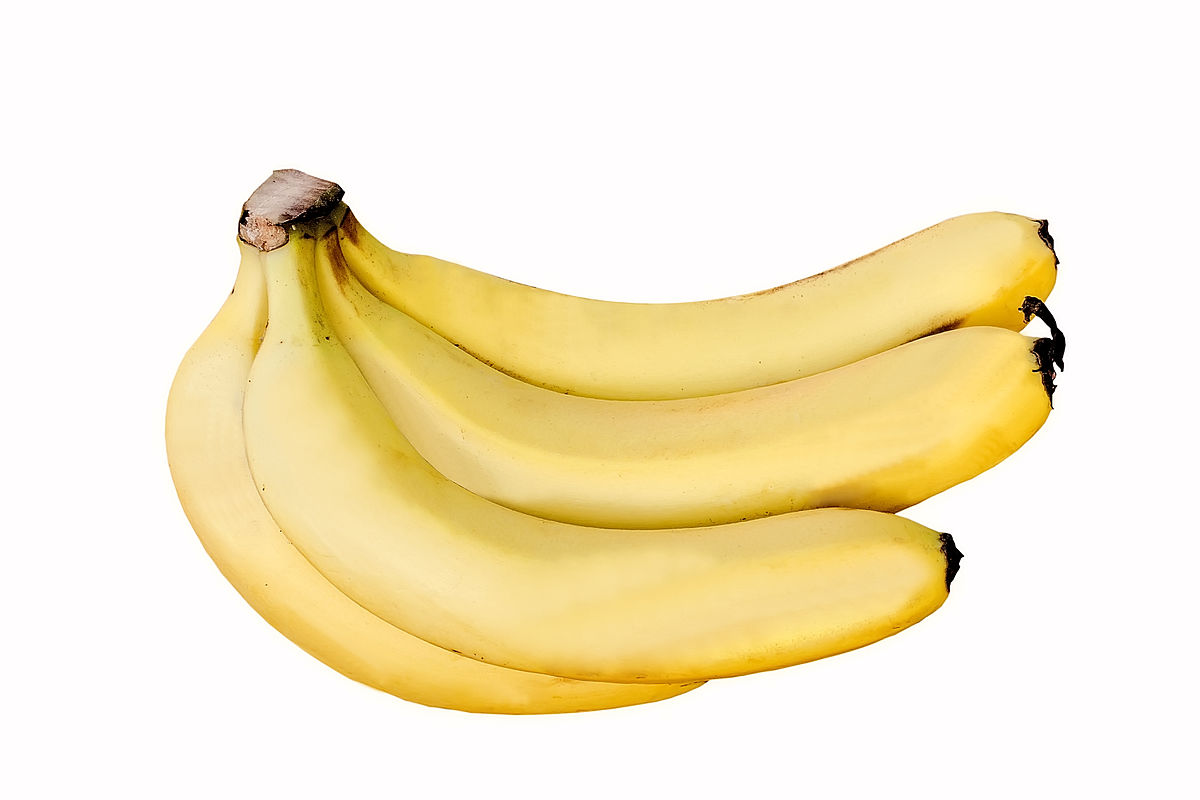
Fully ripe yellow Cavendish bananas have converted most of their starches to sweet sugars before reaching retail shelves. Augustus Binu : flickr, CC BY-SA 3.0, via Wikimedia Commons
Farmers pick the fruit green and induce ripening with ethylene gas, or let fully mature fruits ripen on their own. As the banana ripens, its starches convert into sugars while emitting sweet-smelling esters. The outer skin turns from green to yellow, eventually developing brown sugar spots at stage seven before becoming black and mushy.
Why is Panama disease threatening the Cavendish?
The Cavendish gained worldwide dominance in the 1950s after Panama disease wiped out the previous standard export, the Gros Michel variety. Because Cavendish plants initially grew in the contaminated soil left behind by Gros Michel farms, growers believed the variety was safe from the pathogen.
That protection failed when a new fungal strain called Tropical Race 4 (TR4) emerged. TR4 attacked Cavendish crops in Sumatra and Malaysia in 2008 and reached Latin American farms in 2019. With no effective chemical fungicide against TR4, scientists have turned to genetic engineering, including a transgenic TR4-resistant banana developed in Australia in 2017.
Test yourself
Why does a global agricultural monoculture of genetically identical crops face high vulnerability to disease?
Lack of genetic diversity for immunity. When all plants share the exact same genetic blueprint, a pathogen that overcomes one can easily infect every other individual without encountering resistant survivors.
Are modern grocery store Cavendish bananas grown from seeds or cloned from a single plant?
Cloned from a single plant. Every commercial Cavendish banana is a direct vegetative clone of the original specimen cultivated in the 19th century, which is why they share identical DNA.
Play the lesson in edgi and the card is yours. It lands on your Map next to the ideas it connects to, and turns from matte to foil to gold as you learn more around it.
What do the grocery store PLU stickers on Cavendish bananas mean?
Standard yellow Cavendish bananas use price look-up code 4011, while small yellow Cavendish bananas use 4186. Organic Cavendish bananas use code 94011.
Who is the Cavendish banana named after?
The fruit is named after William Cavendish, the 6th Duke of Devonshire. His head gardener, Sir Joseph Paxton, grew the plants in the greenhouses of Chatsworth House in the 1830s.