Chiaroscuro is an art technique that uses bold contrasts between light and dark to make flat shapes look like solid, three-dimensional objects. Originating during the Renaissance, it trick the human eye by defining forms through gradual shading and deep shadows. Artists like Caravaggio and Rembrandt used it to bring dramatic intensity to paintings, laying the foundation for modern cinematic lighting.
By the edgi team We find the most surprising true thing about an idea and build a 60-second lesson around it.
Before this technique, paintings were often flat icons. Chiaroscuro, meaning light-dark in Italian, changed that by using intense contrast to model three-dimensional objects. Our brains are wired to prioritize edges. By carving subjects out of deep shadow, artists trick us into seeing depth where there is only flat paint.
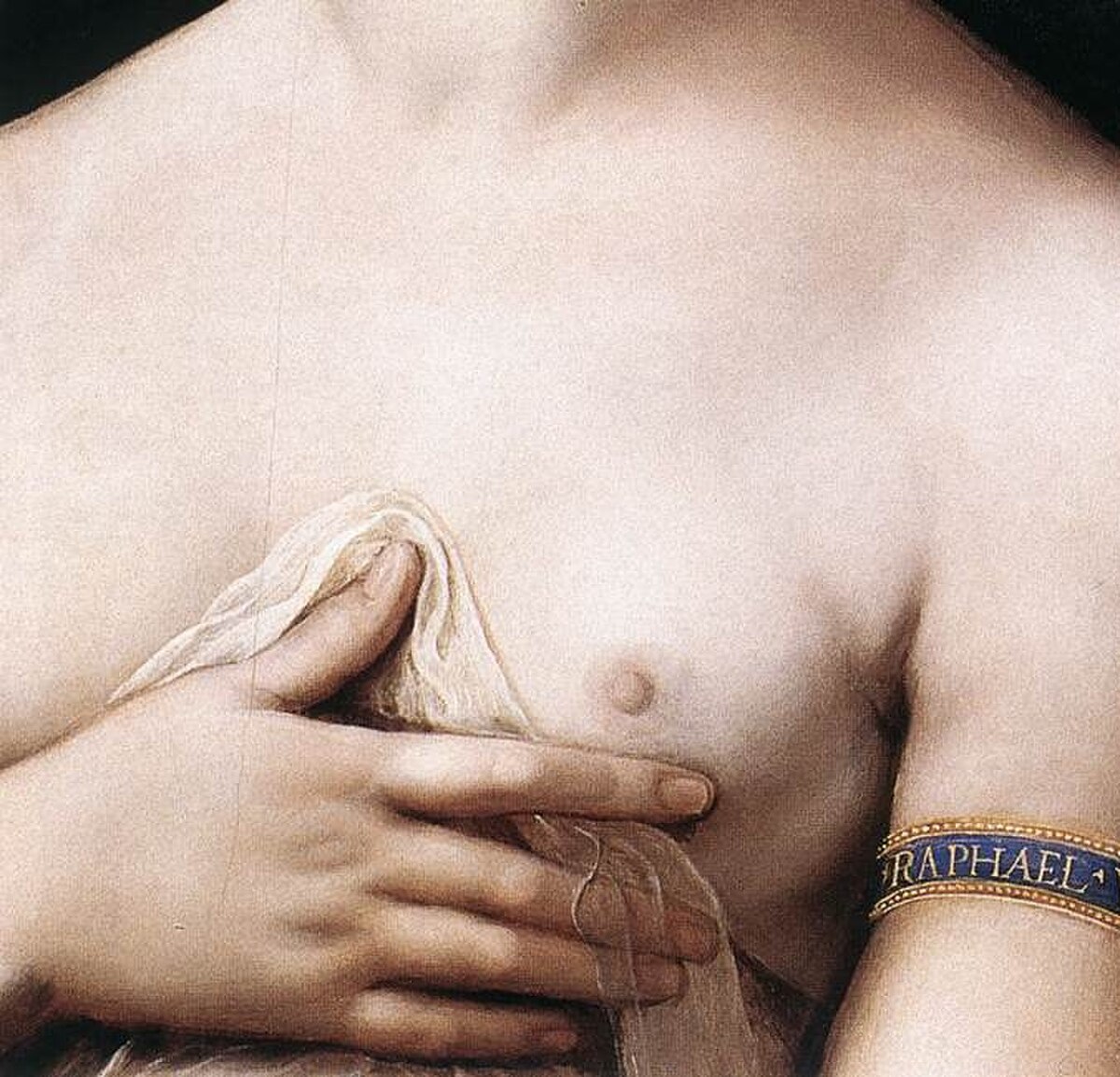
A detail from Raphael's painting "La Fornarina" (1518–19) shows the delicate chiaroscuro modeling on the shoulder, breast, and arm of the subject. Raffael_045.jpg: File Upload Bot (Eloquence) derivative work: Hic et nunc (talk), Public domain, via Wikimedia Commons
The fugitive master
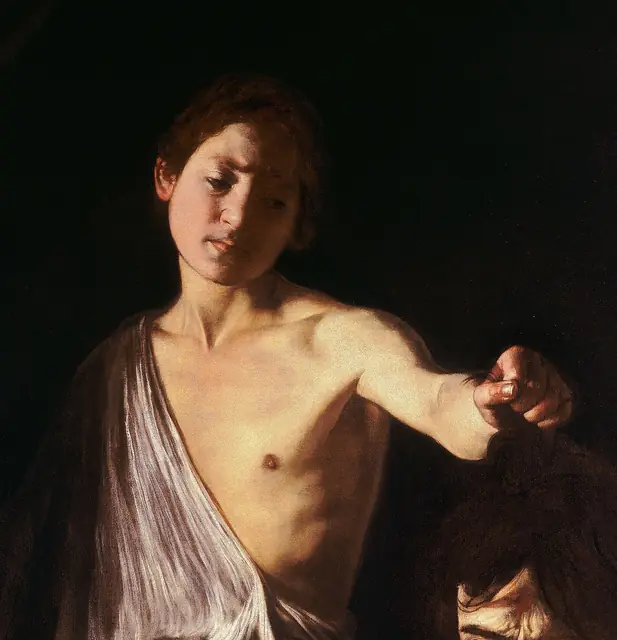
The technique was refined during Renaissance Art, but it was perfected by Caravaggio, a volatile genius who was also a fugitive murderer. In his The Calling of St. Matthew, he used a sharp, single beam of light to slice through a tavern, making the scene feel immediate and gritty.
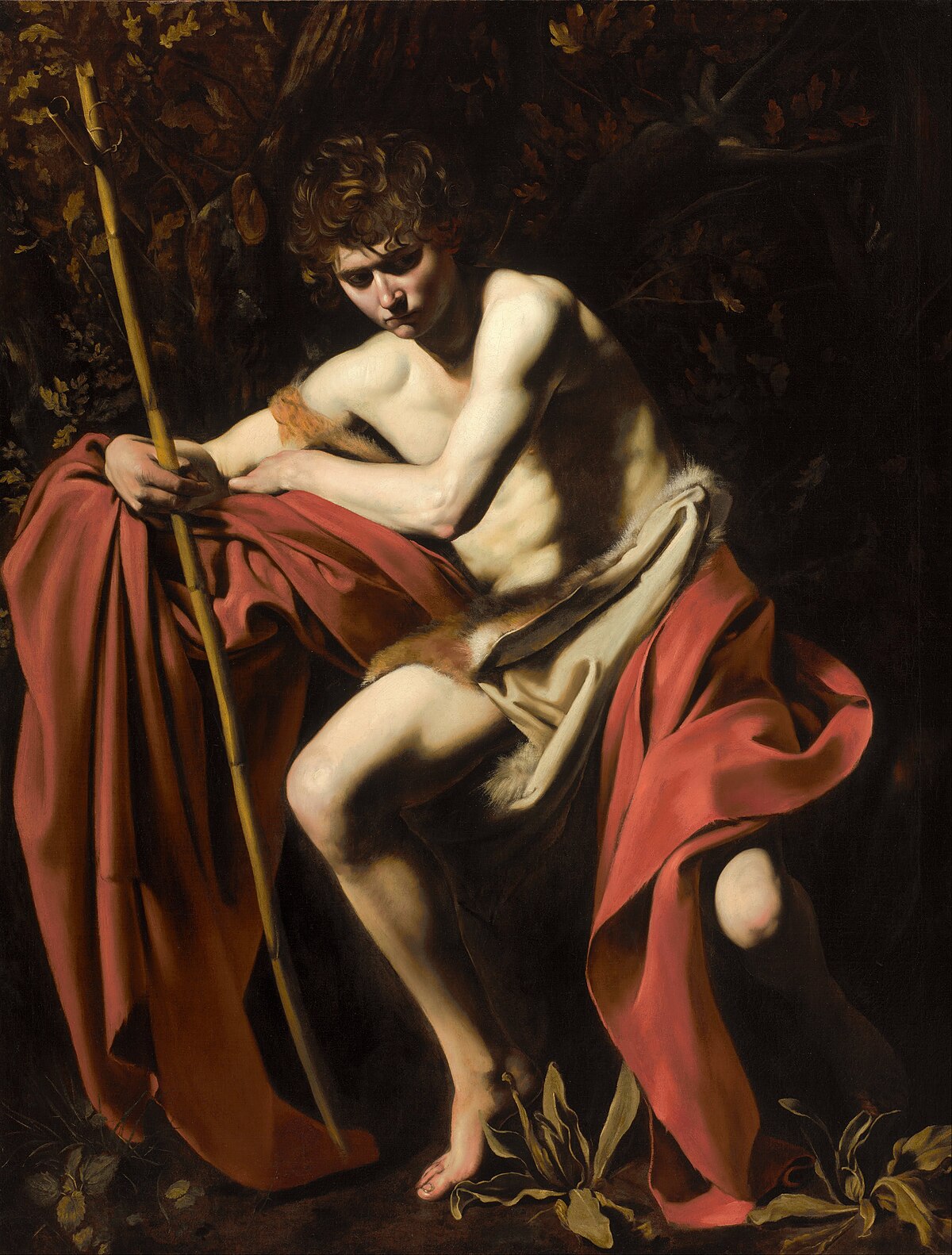
An oil painting by Caravaggio, titled "Saint John the Baptist in the Wilderness" (also known as "John in the Wilderness"), created in 1604 and located in the Nelson-Atkins Museum of Art. Caravaggio, Public domain, via Wikimedia Commons
He often painted in a windowless cellar, studying how light clung to a shoulder while the rest of the body vanished into the void.
From paint to film
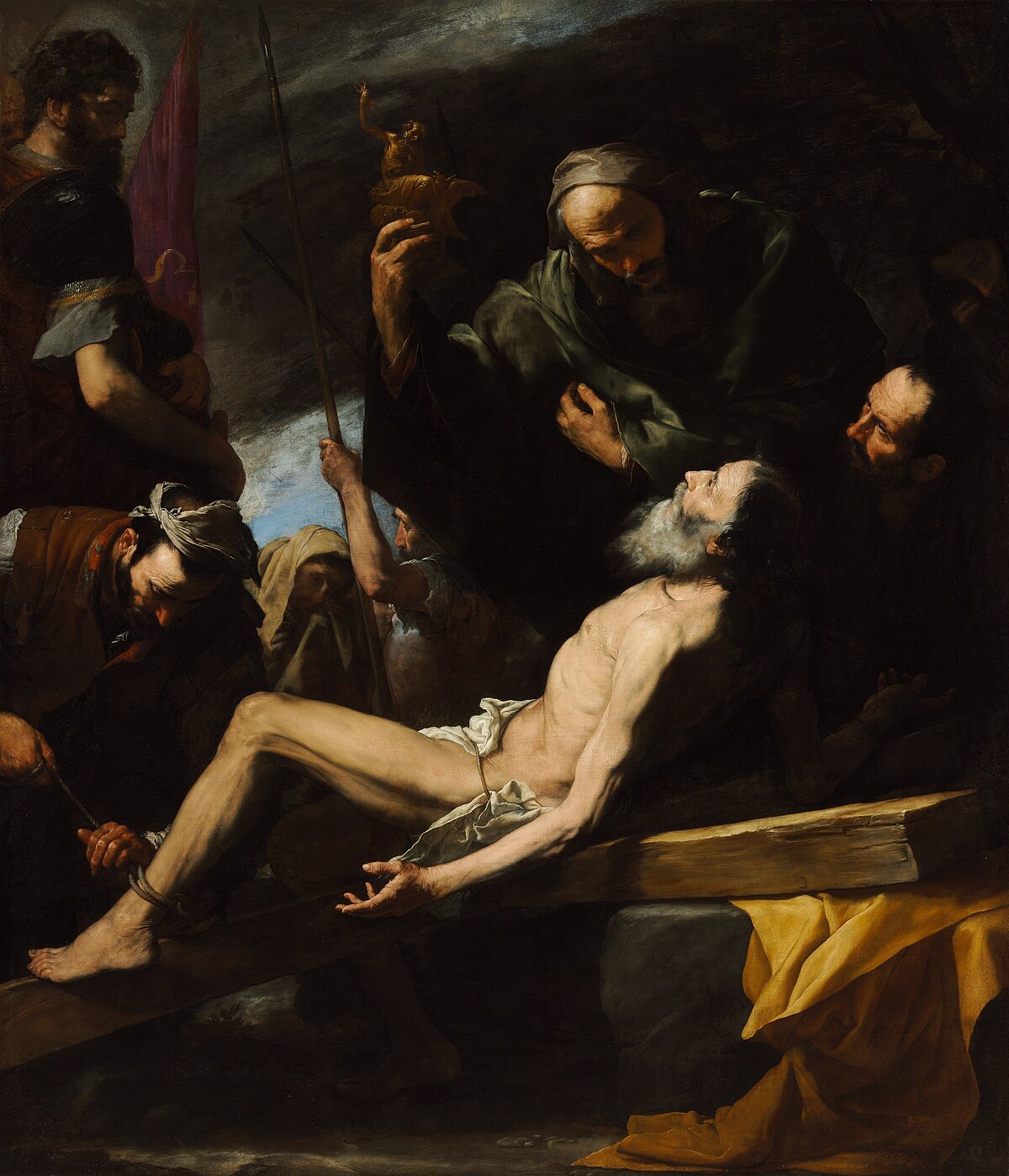
Caravaggio’s extreme style evolved into tenebrism, where shadows don't just frame the subject, they swallow the background entirely. You see this legacy in film noir, where high-contrast lighting creates psychological tension without a single word of dialogue.
An oil painting by Jusepe de Ribera, titled "Martyrdom of St Andrew," created in 1628 and housed in the Museum of Fine Arts, Budapest. Jusepe de Ribera, Public domain, via Wikimedia Commons
It is the art of telling a story by deciding exactly what to hide in the dark.
How does light modelling create volume?
In drawing, painting, and printmaking, chiaroscuro models volume through the analytical division of light and shadow shapes. Artists use value gradations of color or shading techniques like hatching, parallel line work, stippling, and washes to convince the human brain that a flat surface has physical weight and curves.
The Ancient Greeks called this effect skiagraphia, or shadow-painting, a method attributed to the fifth-century BC Athenian painter Apollodoros. Surviving fourth-century BC Macedonian mosaics, like the Stag Hunt Mosaic in Pella, still display this early understanding of light modelling.
How chiaroscuro evolved across mediums
The technique began as chiaroscuro drawing on colored paper, where artists worked from a base tone toward highlights using white gouache and toward darks using ink or watercolor. Woodcut printmakers later imitated this look by layering impressions from multiple blocks inked in different colors.
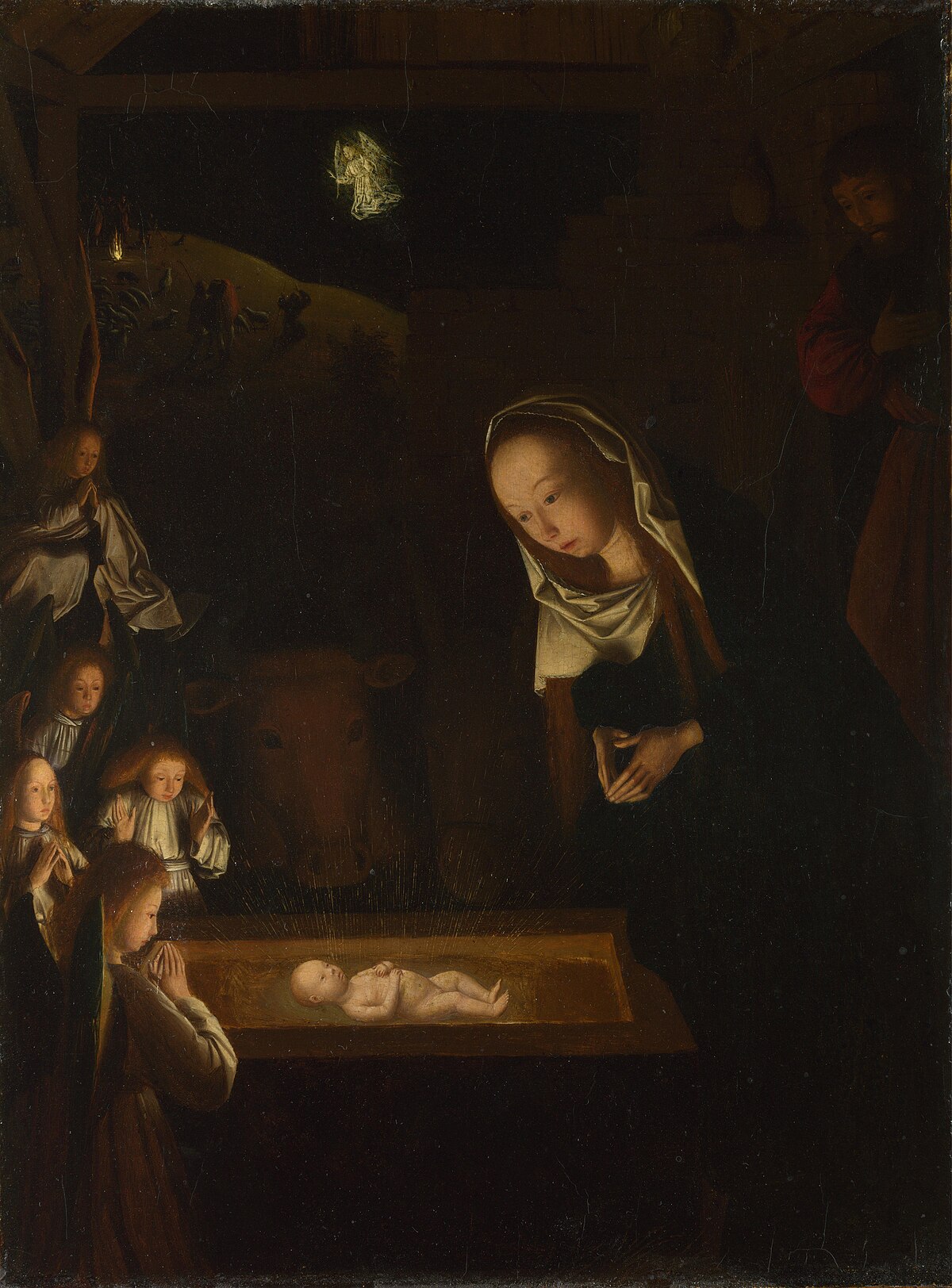
Geertgen tot Sint Jans's Nativity at Night uses dramatic contrast where primary figures emerge directly from deep nocturnal shadows. After Hugo van der Goes / Geertgen tot Sint Jans, Public domain, via Wikimedia Commons
While Renaissance masters like Leonardo da Vinci and Raphael used delicate light transitions, Baroque painters pushed the contrast to its limits. When shadows swallow the background entirely to isolate the illuminated subject, the style becomes tenebrism. This extreme interplay of light and dark later jumped mediums, defining low-key photography and the tense visual style of film noir.
Play the lesson in edgi and the card is yours. It lands on your Map next to the ideas it connects to, and turns from matte to foil to gold as you learn more around it.
What is the difference between chiaroscuro and tenebrism?
Tenebrism is chiaroscuro taken to an extreme. In standard chiaroscuro, light and dark model three-dimensional volume, while in tenebrism, deep darkness dominates the entire composition and completely swallows the background.
What are the four painting modes of the High Renaissance?
According to art historian Marcia B. Hall, chiaroscuro is one of four canonical painting modes of the Italian High Renaissance, alongside cangiante, sfumato, and unione.
Did all historical artists support the use of chiaroscuro?
No, some opposed heavy shadows. English miniaturist Nicholas Hilliard recorded that Queen Elizabeth I preferred to sit for portraits in open garden light with no trees nearby, avoiding shadows altogether.