Inattentional blindness is a psychological event where you fail to see an unexpected object right in front of you because your focus is locked onto something else. It is not caused by poor eyesight or brain damage, but by limits on conscious attention. Because the brain cannot bring everything it detects into awareness, unexpected details get filtered out before you ever consciously notice them.
By the edgi team We find the most surprising true thing about an idea and build a 60-second lesson around it.
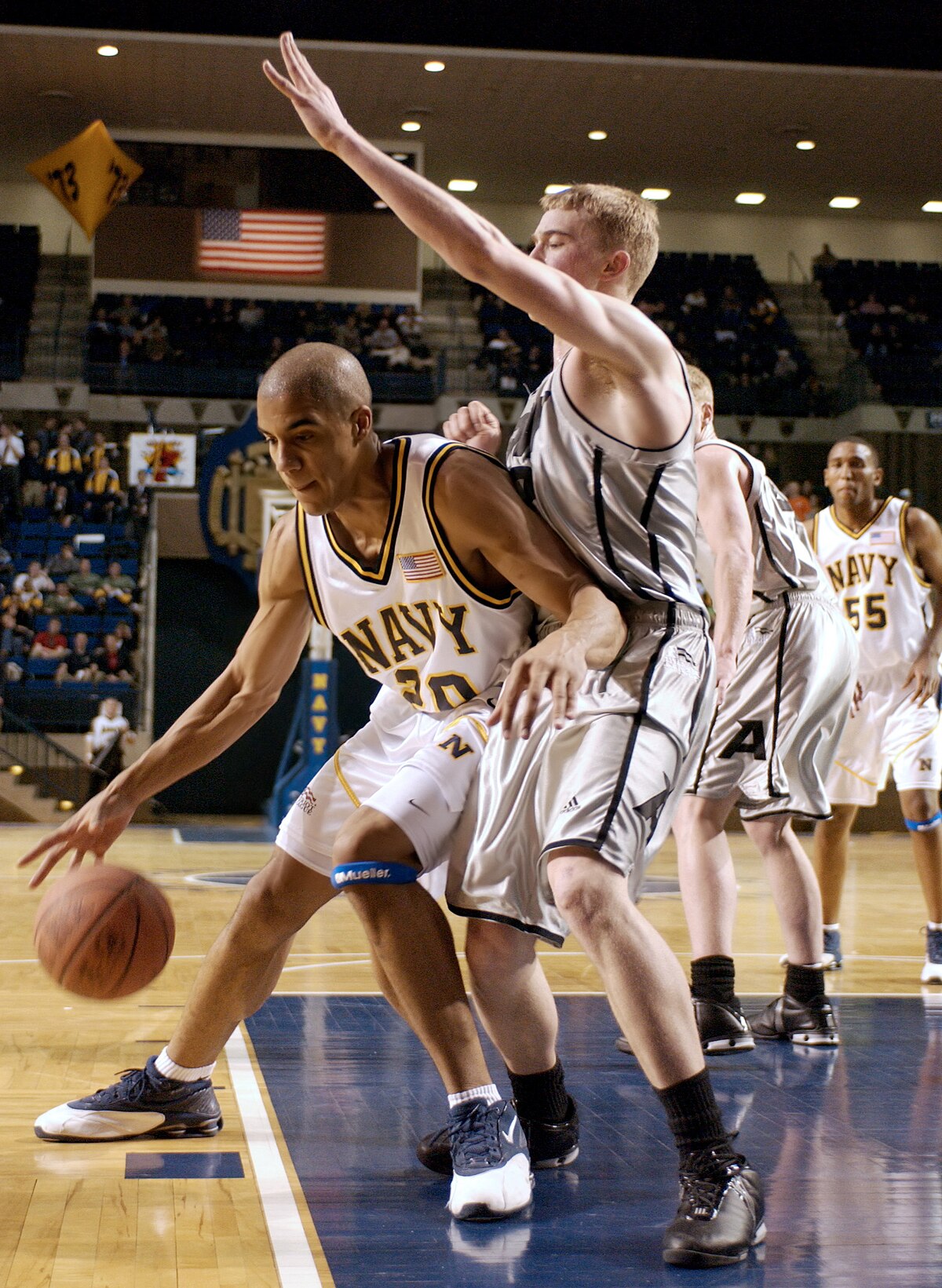
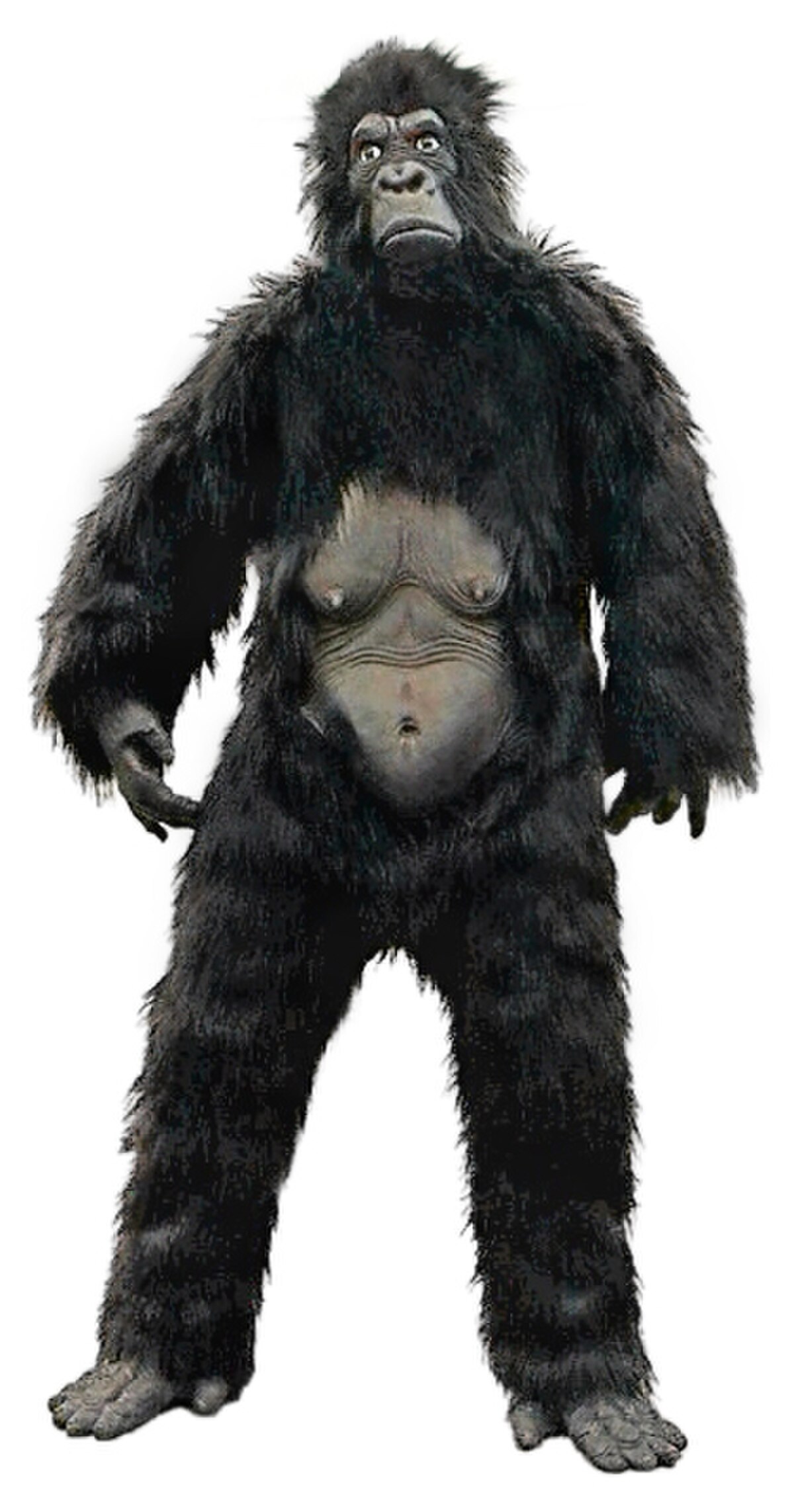
In 1999, researchers Christopher Chabris and Daniel Simons asked volunteers to count basketball passes between players in white shirts. Midway through the video, a person in a full gorilla suit walked to the center of the frame, thumped their chest, and walked off.
A Navy basketball player, wearing a white jersey with number 20, dribbles the ball while being defended by an Army player in a grey jersey during the 2004 Army vs. U.S. Navy photo by Photographer's Mate 2nd Class Damon J. Moritz, Public domain, via Wikimedia Commons
Nearly half of the participants missed it entirely, despite looking directly at the screen.
How the brain filters
This is not a failure of your eyes, but a limitation of your attention budget. Because your mind cannot process every detail in front of you, it actively deletes unexpected stimuli when you are heavily engaged elsewhere.
This phenomenon is known as inattentional blindness.
Real-world stakes
This mental filtering explains why drivers can look directly at a motorcycle and still pull out right in front of it. They are searching specifically for cars, so the motorcycle effectively vanishes from their conscious perception.
We experience a heavily edited reality where the most important thing in the room is often the one we aren't looking for.
Four criteria that define the effect
Arien Mack and Irvin Rock coined the term in 1992 and published their findings in a 1998 book. Psychologists require four specific conditions to classify an event as inattentional blindness. First, the person must completely fail to notice a visual object or event. Second, that object must be fully visible in plain sight.
Third, the observer must be easily able to identify the object if they were consciously looking at it. Fourth, the missing stimulus must be unexpected, and the failure to see it must happen because attention was engaged on another task rather than because of flaws in the visual image itself. People who experience this effect are usually unaware that they missed anything at all.
How the brain filters unseen details
Researchers debated for decades whether attention filters visual information early or late in processing. Early selection theorists argued that the brain quickly scans physical features and discards unattended items almost immediately. In contrast, late selection theorists propose that the brain processes all stimuli in a visual scene simultaneously, selecting what reaches conscious awareness only after full processing.
Late selection is now the widely accepted explanation. Evidence comes from stem completion tasks, where participants are shown word fragments and asked to complete them into full words. Observers who completely failed to notice an unexpected word on a screen still completed word fragments using that exact word, proving their brains processed the unseen text beneath conscious awareness.
Cognitive capture in everyday tasks
A specific form of this phenomenon is cognitive capture, also called cognitive tunneling. This happens when an observer gets so focused on internal thoughts, a specific task, or a set of instruments that they become blind to the surrounding environment.
A common example occurs while driving. If a driver focuses intently on checking the speedometer rather than scanning the road, cognitive capture prevents them from noticing immediate hazards in front of their vehicle.
Play the lesson in edgi and the card is yours. It lands on your Map next to the ideas it connects to, and turns from matte to foil to gold as you learn more around it.
Does inattentional blindness change as people age?
Yes. Studies show that susceptibility to inattentional blindness increases as humans grow older.
Are people with ADHD less prone to inattentional blindness?
Evidence shows that individuals with attention deficit hyperactivity disorder perform better on inattentional blindness tasks than control groups. This indicates that certain types of neurodivergence can reduce the filtering effect.
How does inattentional blindness differ from change blindness?
Change blindness occurs when an observer fails to notice a slow alteration within a visual scene. Inattentional blindness specifically requires the missed stimulus to be an unexpected object appearing while attention is focused on an entirely different task.