The dead zone
For centuries, scientists assumed the deep sea was an 'Azoic' zone, a silent, lifeless graveyard where nothing could survive the immense pressure. We actually knew more about the surface of the Moon than the bottom of our own seas.
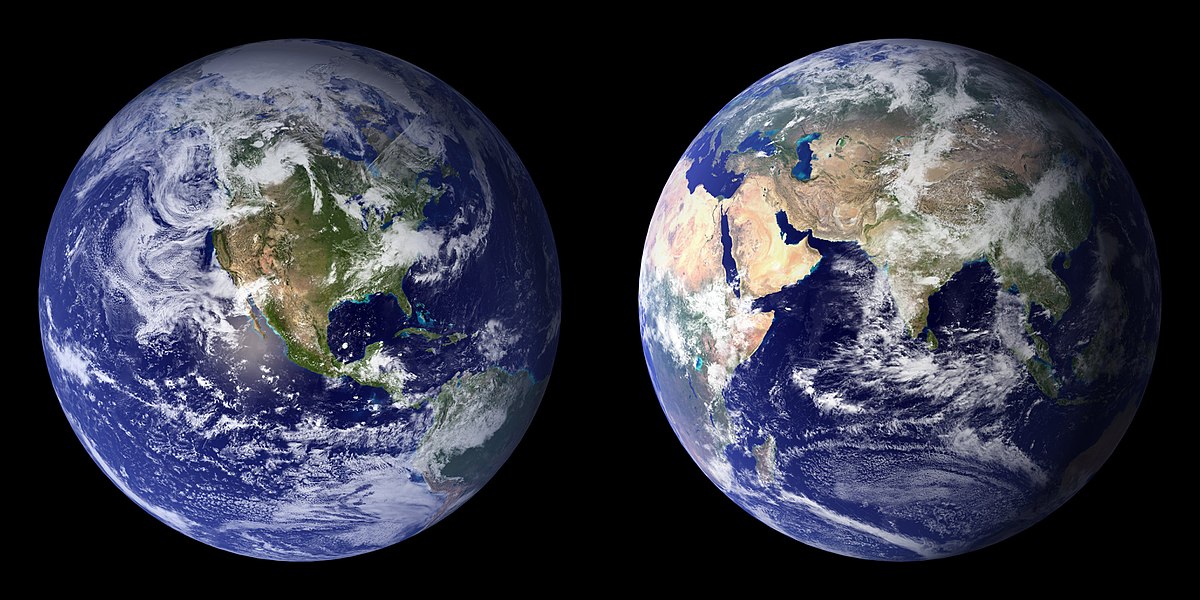
Oceanography is the scientific study of the oceans, covering their physical motion, chemical properties, living organisms, and underlying seafloor geology. It combines fields like physics, meteorology, and biology to treat the seas as dynamic systems rather than static bodies of water. Scientists study these waters because ocean currents move heat and chemicals around the planet, actively regulating the global climate.

By the edgi team We find the most surprising true thing about an idea and build a 60-second lesson around it.
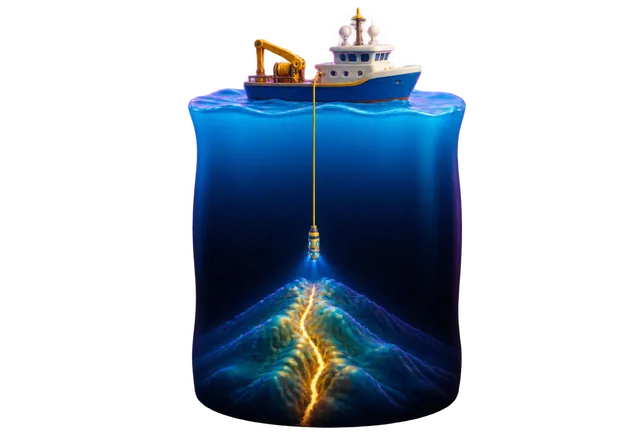
For centuries, scientists assumed the deep sea was an 'Azoic' zone, a silent, lifeless graveyard where nothing could survive the immense pressure. We actually knew more about the surface of the Moon than the bottom of our own seas.
In 1872, the HMS Challenger set sail on a four-year expedition to test this theory. They dropped a weighted rope nearly five miles down into what we now call the Challenger Deep.
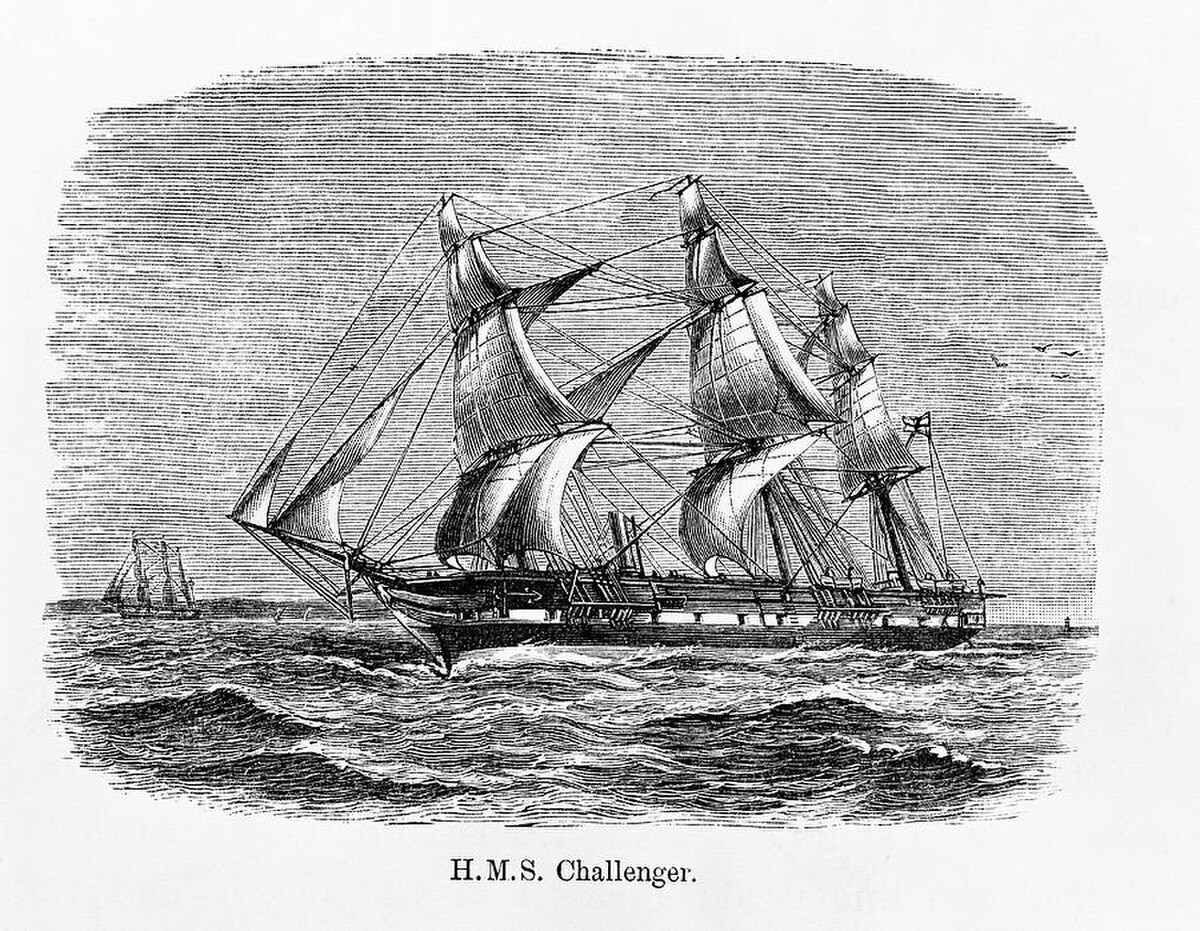
When they hauled it up, the line was covered in thousands of unknown species. The 'lifeless' theory was shattered.
Oceanography transformed the sea from a flat, blue void into a complex, three-dimensional engine. They discovered the Mid-Atlantic Ridge, proving the seafloor was a rugged, mountainous landscape as active as any continent.
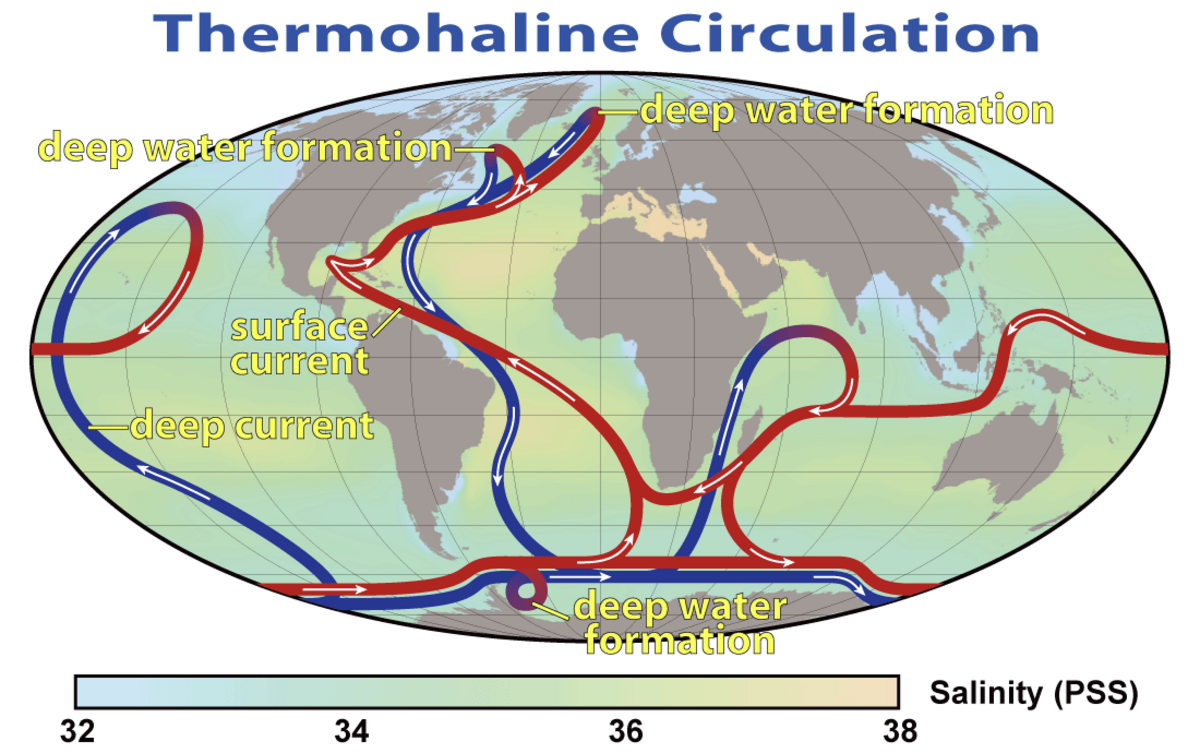
We realized the deep sea isn't a graveyard; it's the highway of heat and chemicals that regulates our climate.
Oceanography is an Earth science divided across several interconnected disciplines. Researchers examine waves, tides, ocean currents, and geophysical fluid dynamics to trace how massive bodies of water circulate across the globe.
The field also measures fluxes of chemical substances across marine boundaries, tracks marine ecosystem dynamics, and investigates plate tectonics along the seabed, including massive underwater structures such as the Mid-Atlantic Ridge.
Systematic oceanic study began long before modern research vessels. In the fifteenth century, Portuguese navigators carried out a multi-decade scientific campaign in the Atlantic, discovering that sailing straight along the African coast trapped ships against opposing winds and the North Atlantic gyre.
To return safely, captains used the 'volta do mar', sailing far west into the open Atlantic toward the Sargasso Sea and the Azores to catch favorable westerly winds. Navigators used astronomical charts, seasonal wind predictions, and mathematical work by scholars like Pedro Nunes to plan specific open-ocean routes out of sight of land for months at a time.
Ocean currents can influence the climate of nearby coasts.
True. Ocean currents transport heat, which can make nearby coastal regions warmer or cooler.
How does oceanography change our understanding of the deep ocean?
It studies a complex, active environment. Oceanography examines the ocean’s physics, chemistry, biology, and geology, revealing an active world rather than an empty void.
What did the HMS Challenger expedition prove about the deep sea?
It is a dynamic, biologically active zone.. The expedition shattered the 'Azoic' theory by finding diverse life at extreme depths, revealing the seafloor is active rather than a static void.
Collectible card
Play the lesson in edgi and the card is yours. It lands on your Map next to the ideas it connects to, and turns from matte to foil to gold as you learn more around it.
Oceanography is also referred to as oceanology, marine science, sea science, or ocean science. The word itself comes from the Ancient Greek terms 'okeanos' (ocean) and 'graphe' (writing).
Early observations of ocean tides were documented in the Mediterranean world by Aristotle and Strabo between 384 and 322 BC.
Early sailors took depth soundings using lead lines, which were weighted ropes dropped from vessels to measure how deep the seafloor lay beneath them.
Lesson complete
You finished the lesson. In edgi, the card goes on your Map next to everything else you learn.