Platonic RelationshipWhy it started as divine Eros
A platonic relationship is a deep, affectionate, and sometimes passionate bond between people where sexual desire is nonexistent, suppressed, or redirected. Rather than a lesser alternative to romance, it began as a philosophical concept for directing desire away from physical bodies and toward wisdom, truth, and spiritual growth.
By the edgi team We find the most surprising true thing about an idea and build a 60-second lesson around it.
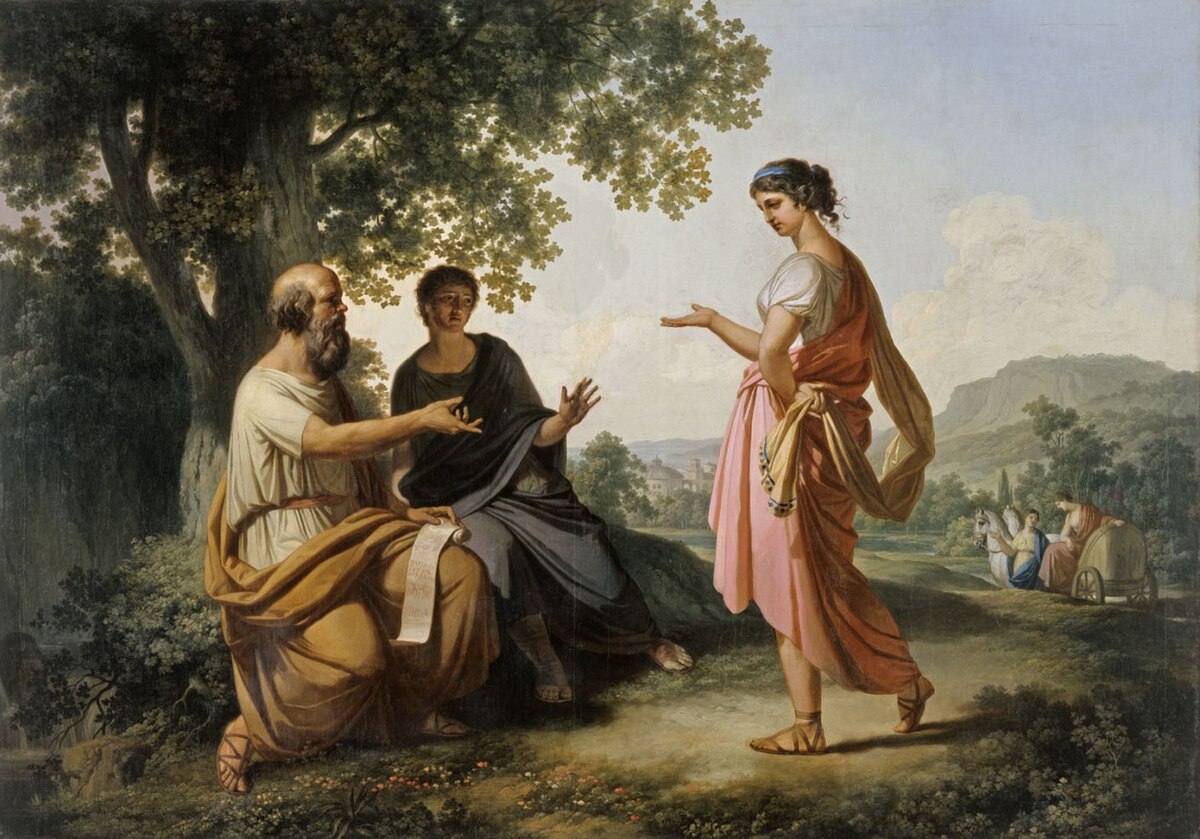
Plato never actually used the term platonic love, nor did he claim to invent the idea. In his dialogue the Symposium, he attributed the teaching to a mysterious priestess named Diotima of Mantinea.
The painting "Socrates with a Disciple and Diotima" by Franz Caucig (1820) shows Socrates and a disciple seated under a tree, engaged in conversation with Diotima, who stands before them. Franz Caucig, Public domain, via Wikimedia Commons
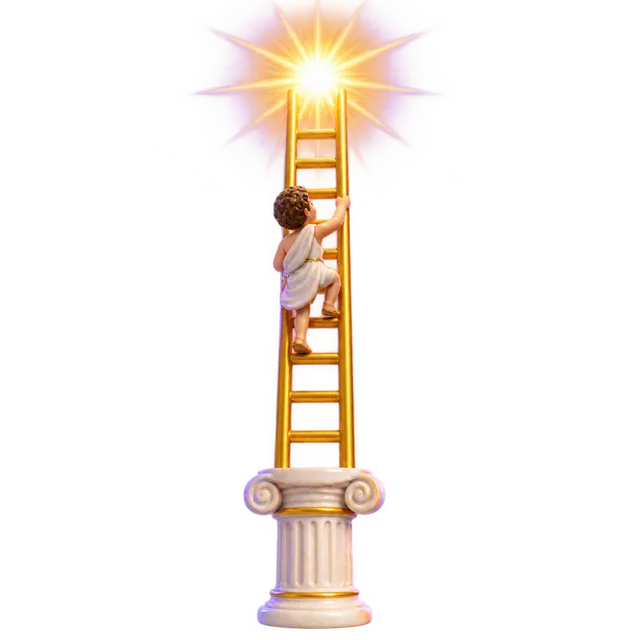
She instructed Socrates that physical desire was merely the first, lowest rung of a much higher ladder of connection.
The ladder of love
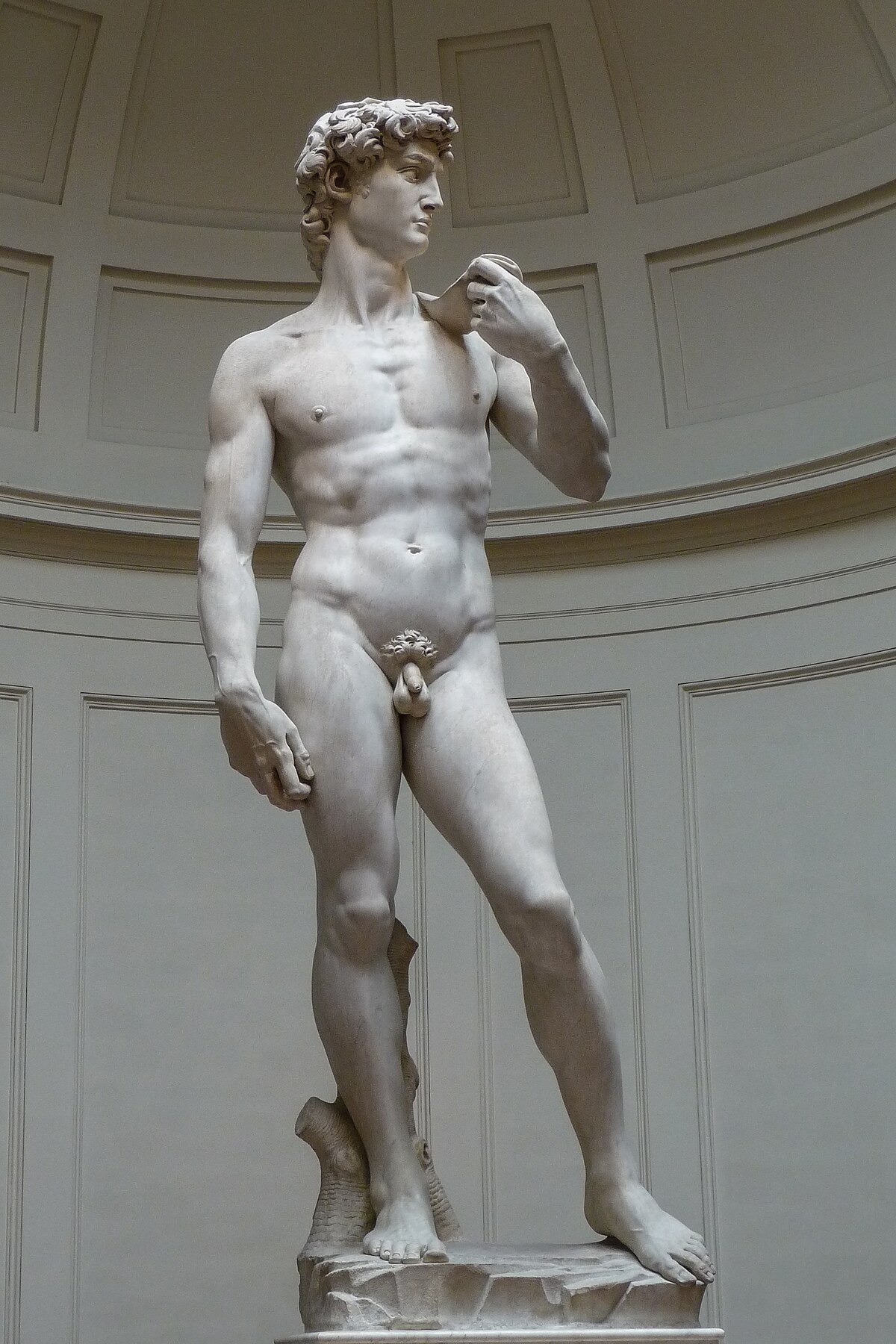
According to Diotima, love begins with an attraction to a single physical body. Instead of stopping there, the lovers use that intense energy to appreciate beauty in minds, laws, and virtues.
Michelangelo's marble statue of David, created between 1501 and 1504, stands in a well-lit gallery. Jörg Bittner Unna, CC BY 3.0, via Wikimedia Commons
Eventually, the bond transcends the physical entirely, reaching a pure contemplation of truth itself.
The modern shift
By the 15th century, thinkers coined the term platonic to describe deeply intimate, non-physical bonds. Today, we often dismiss this kind of connection as a consolation prize or the friend zone.
But the original ideal treated non-romantic intimacy as the highest, most enduring form of human bonding.
The Ladder of Love and two types of Eros
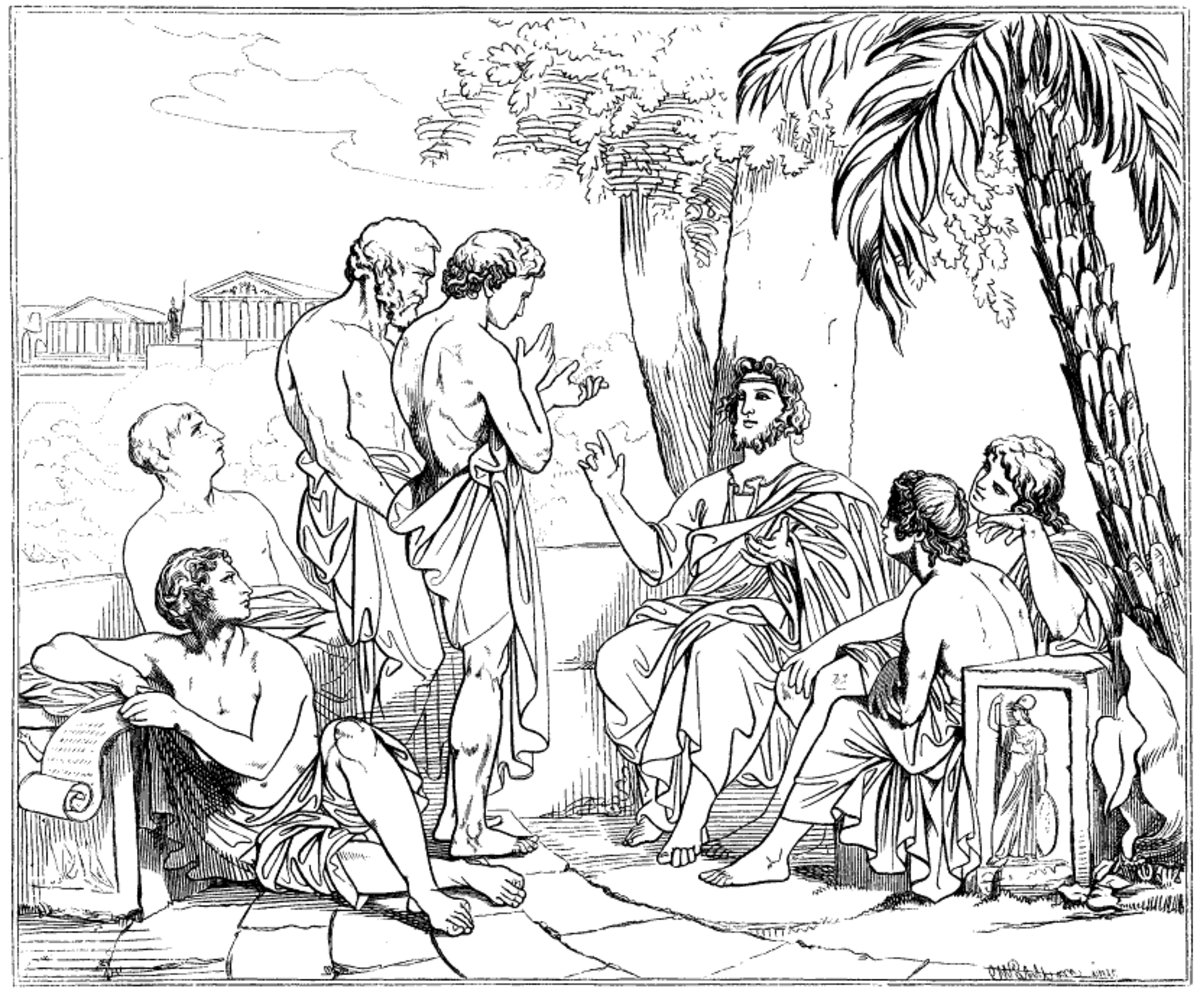
In Plato's dialogue, the Symposium, characters break love, or Eros, into two distinct forms: vulgar Eros and divine Eros. Vulgar Eros is purely physical attraction aimed at bodily pleasure and reproduction, which Socrates notes is practiced by animals. Divine Eros begins with an attraction to physical beauty but redirects that energy upward into an ascent toward divine truth.
This ascent is structured as the Ladder of Love. The bottom rung is attraction to a single beautiful body. As a person climbs each step, love shifts from physical forms to beauty found in minds, souls, and virtues. Eventually, love detaches from physical bodies entirely to focus on supreme, absolute beauty.
Socrates divides this pursuit into classifications of pregnancy. Pregnancy of the body produces human offspring. Pregnancy of the soul produces virtue, translating truth and goodness into the world as a person climbs toward wisdom.
How the modern meaning shifted from the original ideal
Plato never used the exact term platonic love. The Latin phrase amor platonicus was coined in the 15th century by Marsilio Ficino during a revival of Neoplatonism in Europe. By the 1630s, the term entered the English language as a royal fashion, and by the 18th century, it shifted into its modern definition: a relationship without sex.
Platonic affection is not always free of passion. Concepts like romantic friendship historically described intense, passionate affection between friends without sexual desire. While modern society often treats platonic bonds as mere friendship, classical philosophy viewed non-physical love as the highest way to cultivate human nature.
Test yourself
What makes Platonic love more than friendship without sex?
It can transform attraction into a pursuit of truth.. In Diotima’s account, love can develop from physical attraction toward beauty in minds and virtues, ultimately reaching truth.
In the Symposium, how is the role of physical attraction described?
As a starting point for spiritual growth. Diotima taught that physical attraction acts as the first rung of a ladder. It is not an obstacle to be ignored, but the initial energy source to be redirected toward higher truths.
Play the lesson in edgi and the card is yours. It lands on your Map next to the ideas it connects to, and turns from matte to foil to gold as you learn more around it.
Did the ancient Greeks connect platonic love to marriage?
The ancient Greeks viewed love and marriage as entirely separate institutions. Passionate romantic love was typically treated as a form of madness and depicted mostly in literature rather than practiced as the basis for marriage.
Can a mortal reach the top of the Ladder of Love?
In the Symposium, Diotima explains that directly accessing pure Being and absolute truth would require transcending mortality, making the final peak impossible for mortals to reach fully. Genuine platonic love operates in the middle, where mortals use soul-level attraction to grasp truth indirectly through other beings.