Sexual repression is a state where a person is prevented from expressing their sexuality or sexual orientation, often because of internal guilt or external pressure. It occurs when normal sexual desires are treated as shameful, driving people to push those feelings out of conscious awareness. This internal conflict often leads to severe anxiety, emotional distress, and strained mental health.
By the edgi team We find the most surprising true thing about an idea and build a 60-second lesson around it.
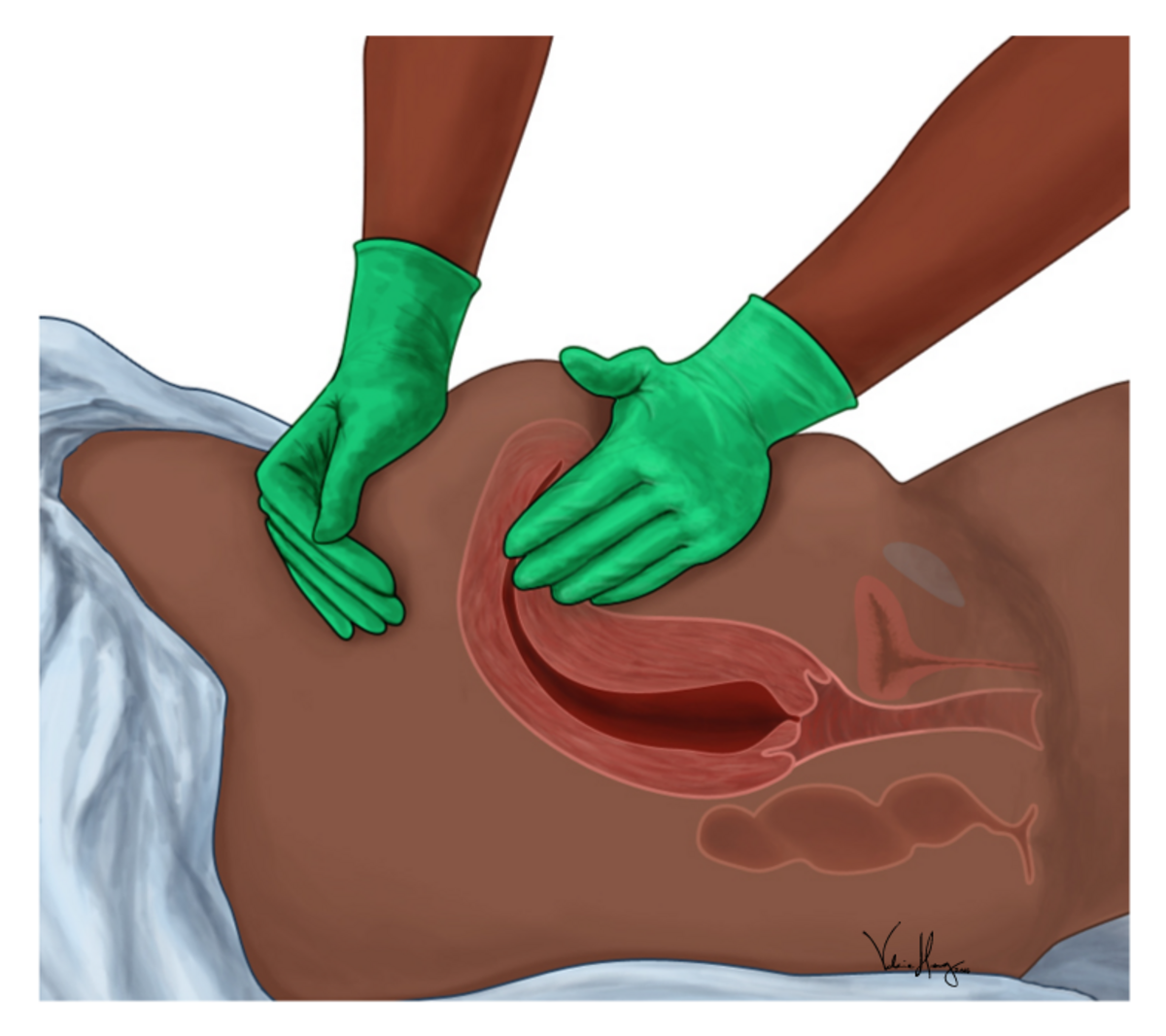
In the late nineteenth century, doctors diagnosed countless women with hysteria, a catch-all medical condition for anxiety, irritability, and normal sexual frustration. The standard medical treatment was a pelvic massage performed by a physician until the patient experienced what was then called hysterical paroxysm.
An illustration depicting a side view of a uterine massage, showing gloved hands applying pressure to the abdomen with the internal anatomy of the uterus and surrounding organs visible. Valerie Henry, CC BY-SA 4.0, via Wikimedia Commons
Because manual relief was exhausting for doctors, the electromechanical vibrator was invented specifically to speed up the clinical procedure.
Internalizing the shame
Sexual repression is the blocking of sexual expression due to internal conflict, guilt, or external pressures from family or religious dogmas. When an individual learns to view their natural desires as shameful, the mind uses unconscious mechanisms of psychological repression to push those impulses out of awareness.
This internal censorship often masquerades as personal virtue, but it frequently results in severe anxiety, emotional numbness, and sudden distress.
The social cost
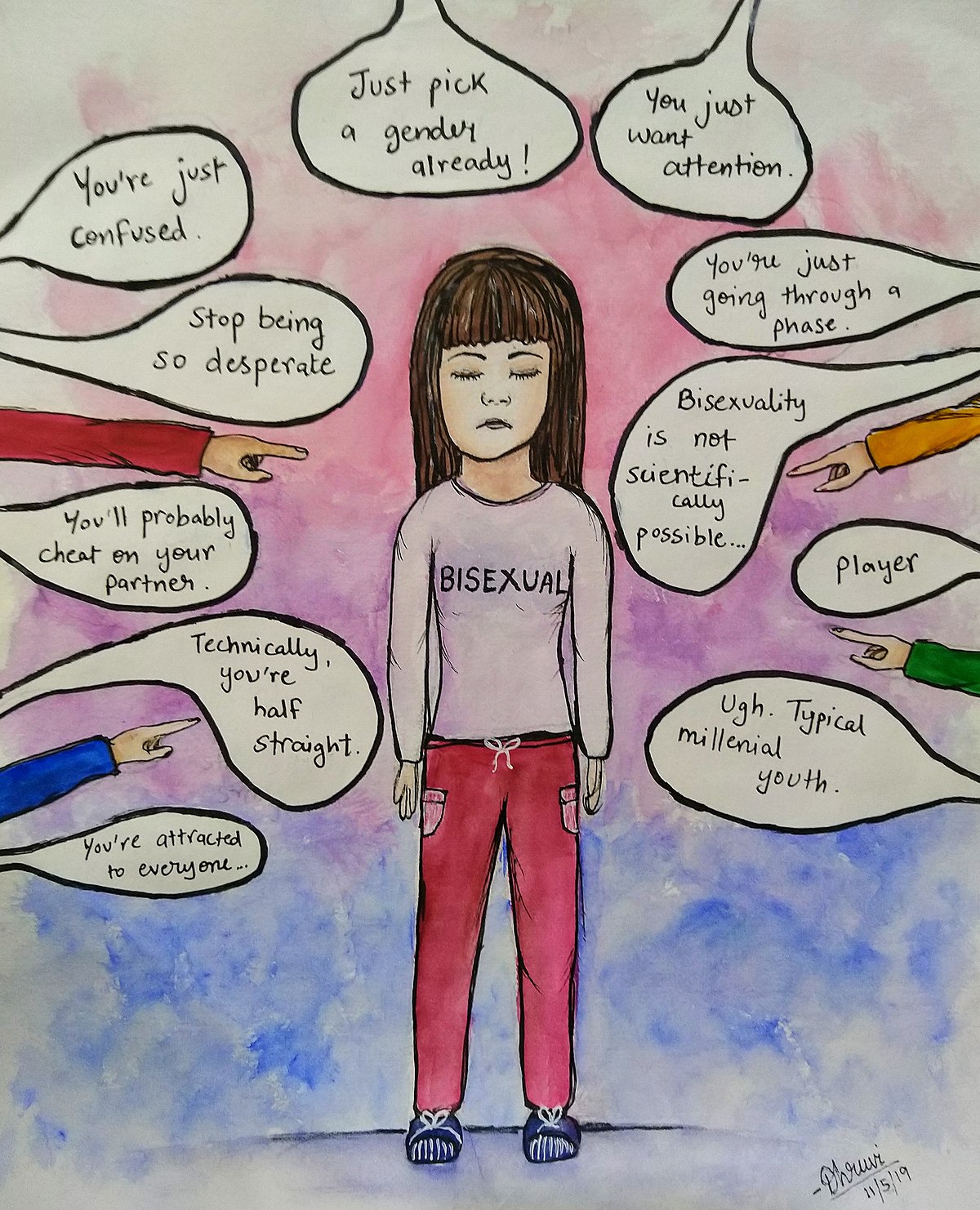
External forces like social stigma and strict heteronormativity enforce these boundaries by penalizing any expression that deviates from traditional expectations. For LGBTQ individuals, this pressure often leads to living while closeted, constantly monitoring every outward sign of identity to avoid rejection or hostility.
An illustration depicting social stigma and discrimination against bisexuals, with a central figure labeled "BISEXUAL" surrounded by speech bubbles and pointing hands. The Purple Weirdo, CC BY-SA 4.0, via Wikimedia Commons
When these suppressed feelings are met with external attempts to force conformity, such as conversion therapy, the psychological toll can be devastating.
Internal shame and psychological mechanisms
Sigmund Freud popularized the term sexual repression, arguing that people suppress their natural sexual impulses to meet the demands of civilized society. He famously claimed that Leonardo da Vinci was a repressed homosexual who redirected his desires into artistic brilliance, a process Freud called sublimation. Other theorists, such as sex therapist Bernard Apfelbaum, challenged this view by arguing Freud misunderstood the nature and strength of human desire.
A protest sign against conversion therapy, an enforced practice linked to internalized shame, guilt, and sexual repression. Daniel Tobias, CC BY-SA 2.0, via Wikimedia Commons
When an individual internalizes external disapproval from family, religion, or peers, the mind develops unconscious barriers against those feelings. For gay, lesbian, and bisexual individuals, this often manifests as internalized homophobia, where a person suppresses same-sex attraction to fit heterosexual expectations. Blocking these natural impulses frequently leads to emotional numbness, anxiety, and severe internal distress.
External controls and cultural enforcement
Societies throughout history have used physical and legal methods to control sexual behavior. In parts of Indian history, anaphrodisiacs were administered to lower libido, while male choristers in Europe were castrated before puberty to preserve their high vocal ranges, a practice tolerated by the Vatican into the twentieth century.
In many regions, sexual repression is enforced through direct violence and strict laws. Practices like child marriage are used to regulate female sexuality and guarantee virginity before marriage. Female genital mutilation, which affects more than 125 million girls and women across 27 African nations, parts of the Middle East, and Indonesia, is used to suppress female libido. In several Middle Eastern and South Asian regions, violating sexual norms or engaging in same-sex activity can result in honor killings, state persecution, or the death penalty.
Test yourself
Why does the body produce shame during sexual repression?
To prevent perceived social rejection. Sexual repression conditions the brain to treat natural desire as a social threat, triggering shame as a defensive response.
How does speaking openly in psychotherapy help reduce conditioned sexual shame?
It disproves the fear of being rejected. Shame relies on secrecy and the expectation of punishment. Experiencing neutral acceptance in therapy teaches the nervous system that expressing feelings is safe.
Why might someone still feel shame about desire after consciously changing their beliefs?
Early conditioning acts automatically. Childhood socialization trains automatic emotional reflexes in the nervous system, which often persist long after conscious beliefs change.
Play the lesson in edgi and the card is yours. It lands on your Map next to the ideas it connects to, and turns from matte to foil to gold as you learn more around it.
What is the difference between internal and external sexual repression?
Internal repression happens inside the mind when a person feels guilt or shame about their own desires and pushes them out of conscious thought. External repression is enforced from the outside through laws, religious rules, social stigma, or physical acts like genital mutilation.
Why were castrati created?
Young male singers were castrated before puberty to prevent their voices from deepening as they aged. This ensured their high vocal range remained intact for church choirs and performances.
How does marriage relate to sexual repression in history?
Certain forms of marriage, such as child marriage, have been used to strictly control the sexuality of girls. Families arranged these unions to prevent multiple partners, preserve premarital virginity, and protect family reputation.