Space exploration is the physical investigation of outer space using uncrewed robotic probes and human spaceflight. It began when mid-twentieth-century military rocket technology was adapted to launch scientific payloads and human crews beyond Earth's atmosphere. Rather than simple stargazing through telescopes, it directly reaches celestial bodies to study their environments and test human survival.
By the edgi team We find the most surprising true thing about an idea and build a 60-second lesson around it.
The Space Race wasn't just about scientific curiosity; it was a military standoff. During WWII, Nazi Germany developed the V-2, the first man-made object to cross the Kármán line into space.
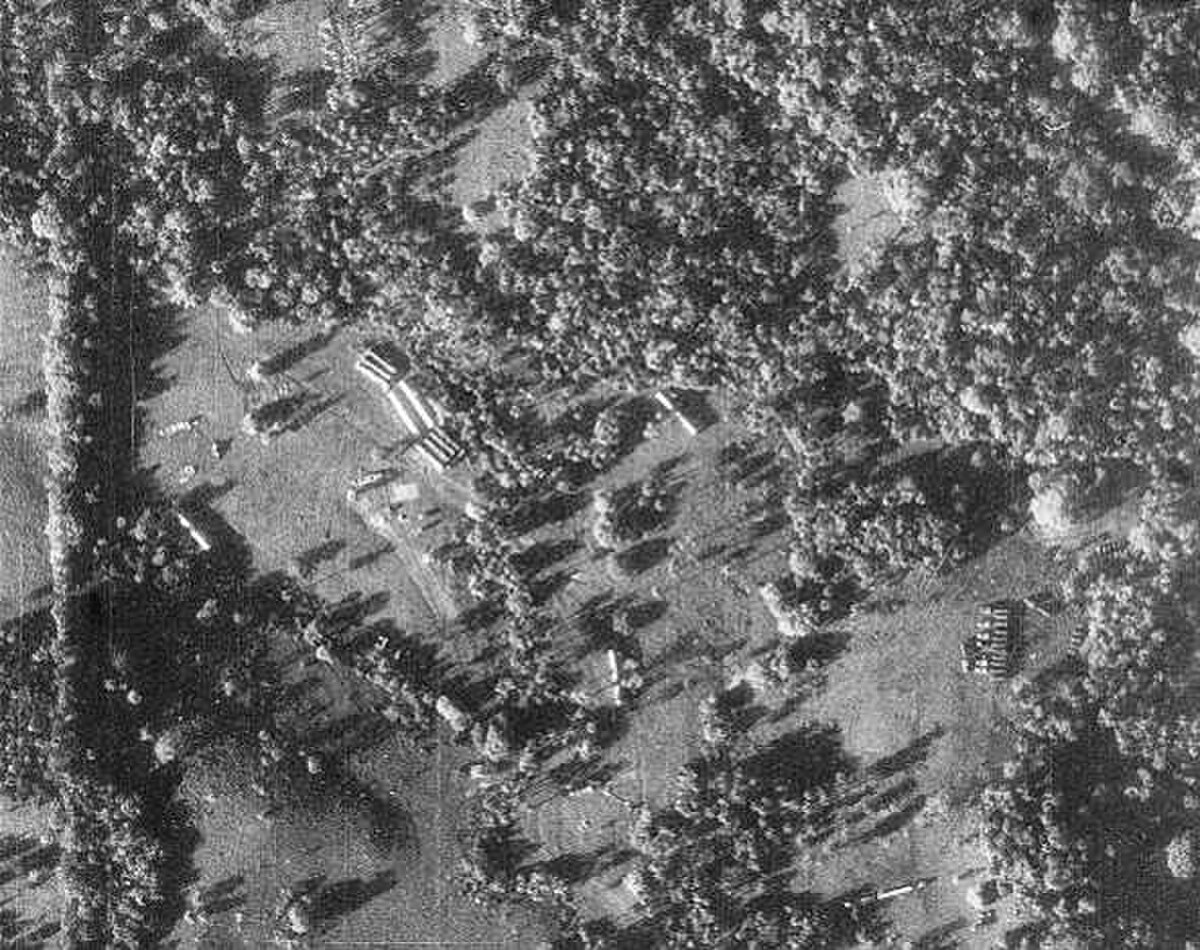
A black and white reconnaissance photograph from the Cuban Missile Crisis shows a missile site with several long, cylindrical objects identified as missiles, surrounded by trees and clearings. CIA, Public domain, via Wikimedia Commons
It was a terror weapon, designed to deliver explosives to London, not people to the Moon.
The scientific exodus
After the war, the US and Soviet Union didn't just want the rockets; they wanted the engineers. Wernher von Braun, the lead V-2 architect, was brought to the US under Operation Paperclip.
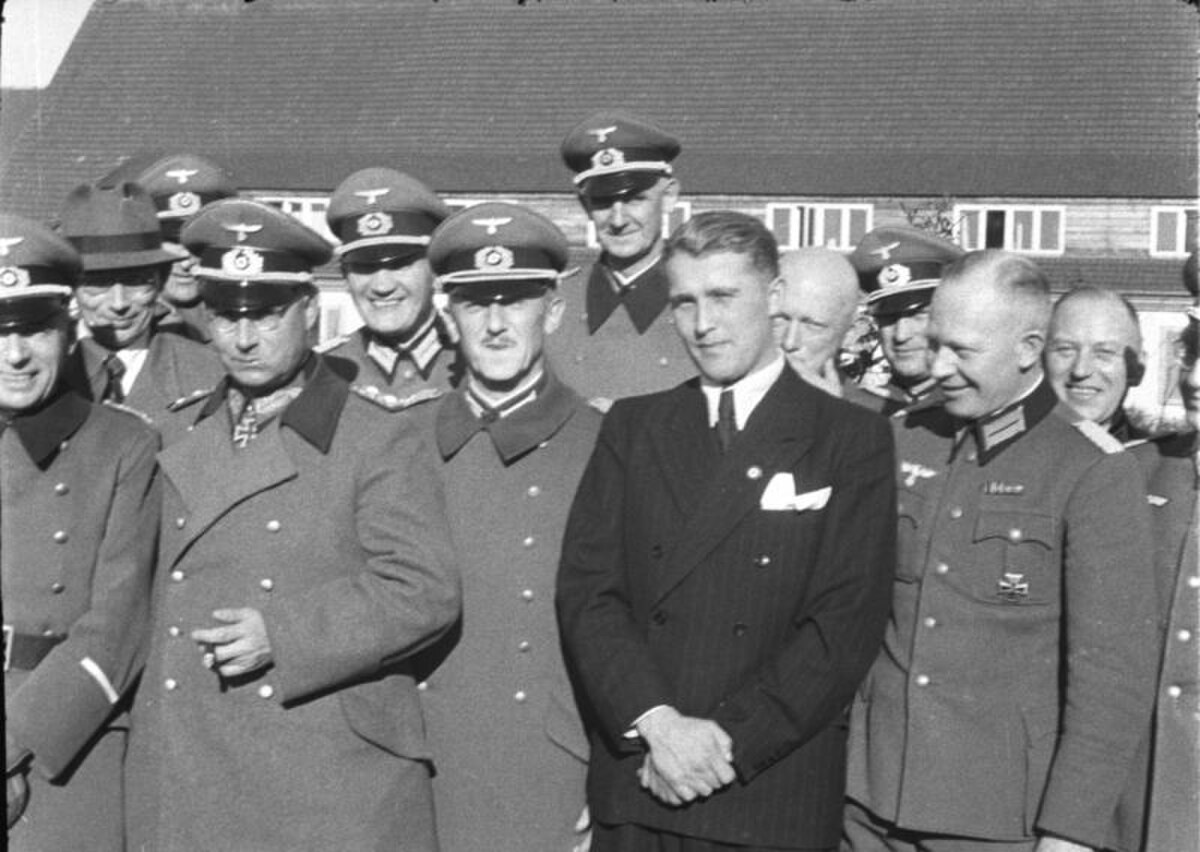
A black and white photograph from March 1941 at Peenemünde shows a group of German military officers and Wernher von Braun. Unknown authorUnknown author, CC BY-SA 3.0 de, via Wikimedia Commons
He famously joked that his rocket worked perfectly, except for landing on the wrong planet.
The high ground
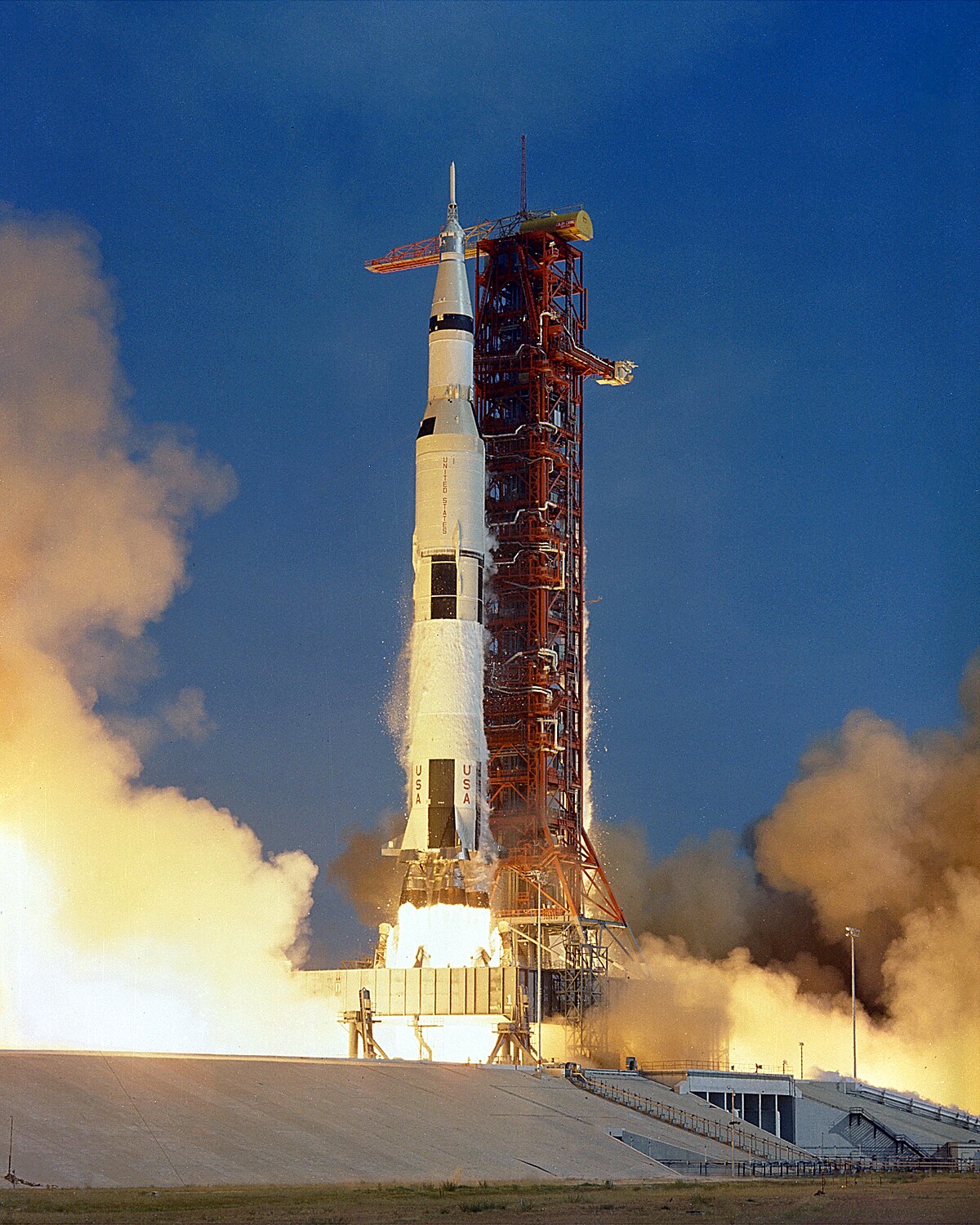
The Saturn V rocket that launched Apollo 11 was essentially a scaled-up, weaponized engine refined for soft landings. We took the technology built for mutually assured destruction and pointed it away from Earth.
The Apollo 11 Saturn V rocket launching from Launch Complex 39A at Kennedy Space Center, surrounded by massive plumes of smoke and fire. NASA, Public domain, via Wikimedia Commons
Space exploration became the ultimate way to prove technological superiority without pulling the trigger.
How military hardware reached orbit
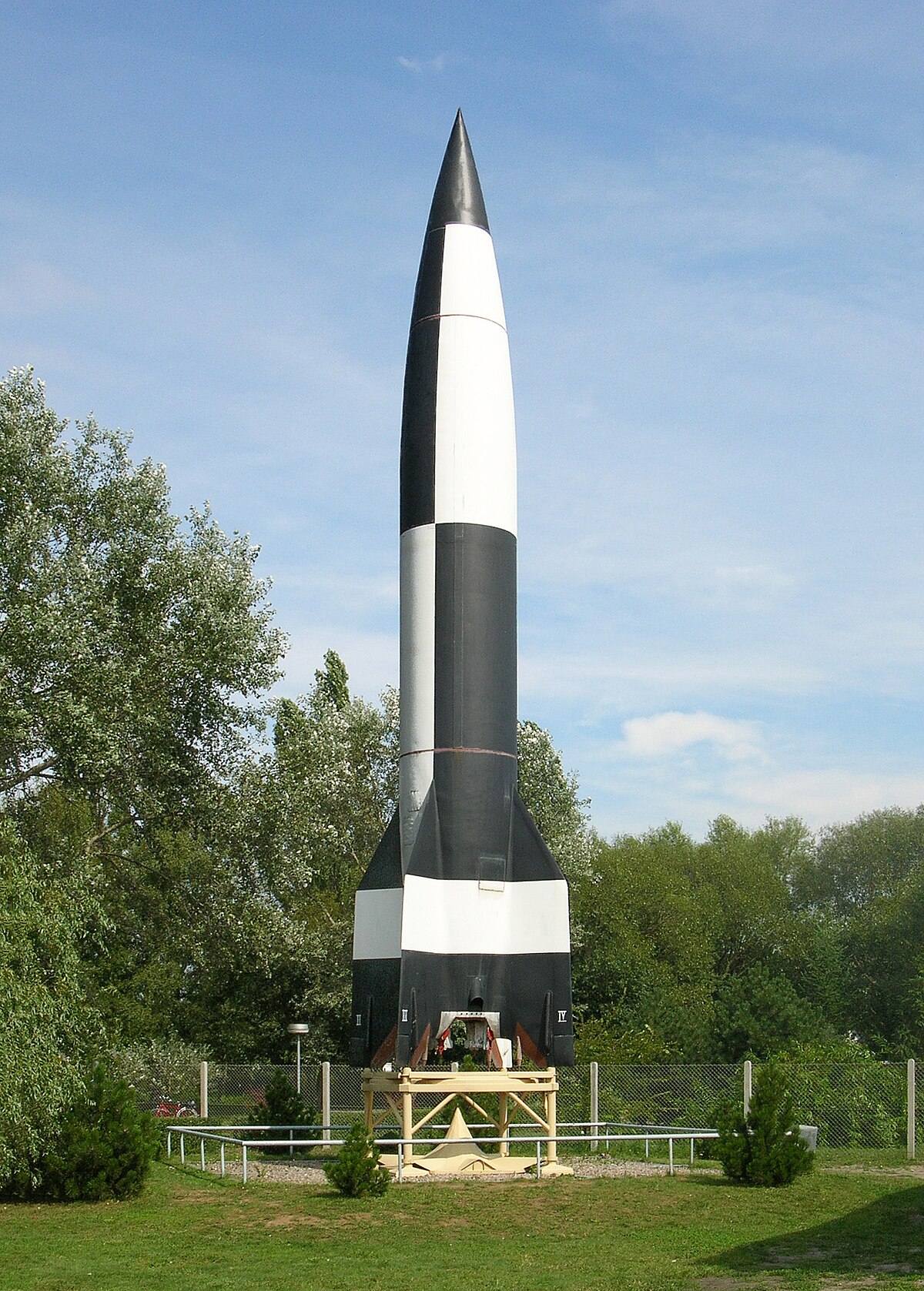
The first human-made object crossed into outer space on 20 June 1944. That craft, the German MW 18014, was a vertical test launch of a V-2 rocket reaching an altitude of 176 kilometers, well past the boundary of space known as the Kármán line. Because it lacked orbital velocity, it fell straight back to Earth in a sub-orbital flight.
A preserved V-2 rocket at Peenemünde, the design that first crossed the Kármán line before its engineers were recruited into postwar space programs. AElfwine, CC BY-SA 3.0, via Wikimedia Commons
Putting something into sustained orbit required adapting these ballistic missiles into multi-stage launch vehicles. On 4 October 1957, the Soviet Union launched Sputnik 1 into orbit using an R-7 rocket. The 83-kilogram sphere circled Earth every 96 minutes, transmitting radio beeps that scientists used to calculate the electron density of the upper atmosphere.
The progression of human spaceflight
Human space exploration advanced rapidly from solo orbital flights to planetary landings within a single decade. Yuri Gagarin completed the first human spaceflight aboard Vostok 1 on 12 April 1961, orbiting Earth once in 108 minutes. Alexei Leonov followed with the first spacewalk in 1965.
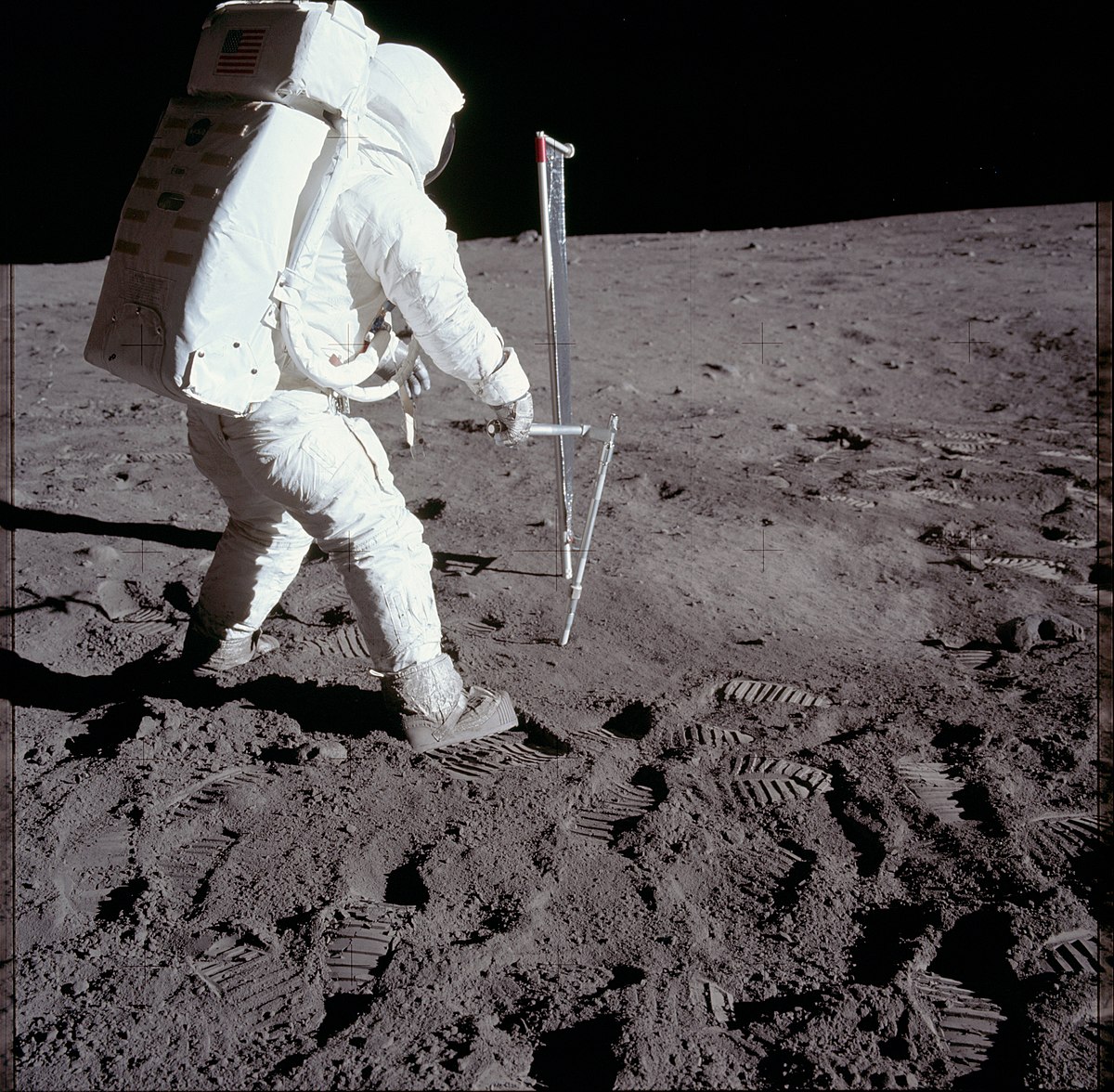
Buzz Aldrin collecting core samples during Apollo 11, the first crewed landing on another celestial body in 1969. Project Apollo Archive, Public domain, via Wikimedia Commons
Crewed exploration reached its peak distance with the Apollo program. Apollo 11 landed humans on the Moon on 20 July 1969, marking the first time humans set foot on another celestial body. Between 1969 and 1972, six separate Apollo missions landed astronauts on the lunar surface.
From competition to space stations
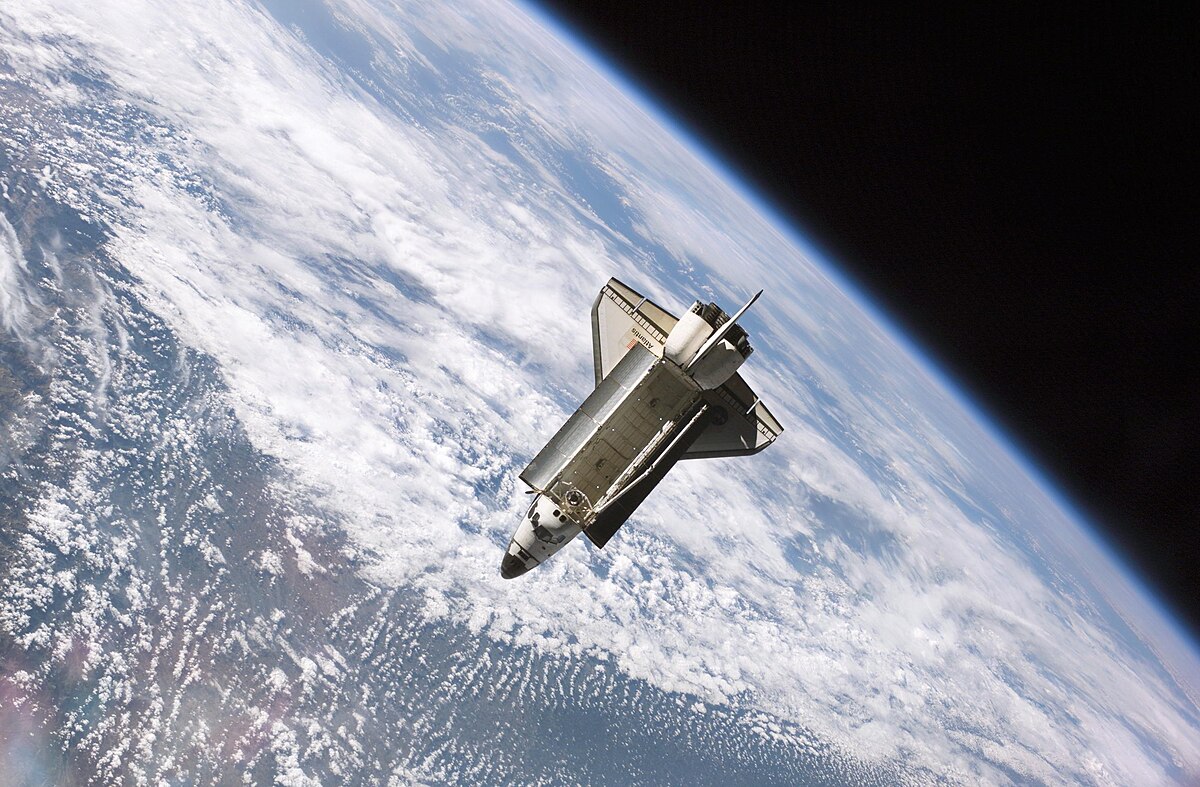
In the 1970s, national programs shifted their focus from one-off competitive races toward reusable systems and permanent orbital infrastructure. The Soviet Union launched Salyut 1, the first space station, in 1971. The United States later introduced the Space Shuttle program to provide reusable hardware for orbital transport.
The Space Shuttle Atlantis departing the International Space Station, demonstrating reusable transport docked at the permanent orbital research facility. STS115_Atlantis_undock_ISS.jpg: NASA derivative work: The High Fin Sperm Whale, Public domain, via Wikimedia Commons
International cooperation replaced pure rivalry with the construction of the International Space Station between 1998 and 2011. Recent decades have expanded beyond the original two superpowers, incorporating national programs from China, Japan, India, and Europe, alongside private launch vehicles.
Test yourself
Why are astronauts seated on their backs during launch?
Force across the chest is easier to tolerate. With acceleration pushing across the chest, blood is not drawn away from the brain, and the body tolerates much higher g-forces.
What does a launch escape system do during a failing launch?
Pulls the capsule away from the booster. The escape rocket pulls the capsule away from the booster so the crew can descend by parachute. It does not try to save the rocket.
How did space exploration reuse military rocket technology?
It adapted military rocket engineering for spaceflight.. Military rocket engineering provided a foundation that could be adapted for spaceflight; exploration redirected the technology rather than abandoning rocket propulsion.
Play the lesson in edgi and the card is yours. It lands on your Map next to the ideas it connects to, and turns from matte to foil to gold as you learn more around it.
What was the first spacecraft to land softly on another celestial body?
The Soviet Luna 9 spacecraft performed the first soft landing on the Moon on 3 February 1966. Earlier probes, such as Luna 2 in 1959, reached the Moon by impacting the surface rather than landing softly.
How does space exploration differ from astronomy?
Astronomy is the observation of distant space objects, historically done from Earth using optical telescopes and space-based observatories. Space exploration involves physically sending robotic craft or human crews into space to sample, orbit, or land on celestial bodies.
Which planetary bodies have robotic probes visited?
Probes have performed flybys of all eight planets in the Solar System, beginning with Venus via Mariner 2 in 1962 and ending with Neptune via Voyager 2 in 1989. Robotic missions have also orbited the Sun and visited dwarf planets like Ceres and Pluto.