Syn-propanethial S-oxideThe tear gas in sliced onions
Syn-propanethial S-oxide is a volatile sulfur-containing compound produced when an onion bulb is sliced. It serves as a botanical defense mechanism, vaporizing into the air and stinging the eyes on contact. The irritation triggers tear ducts to flush the chemical away.
By the edgi team We find the most surprising true thing about an idea and build a 60-second lesson around it.
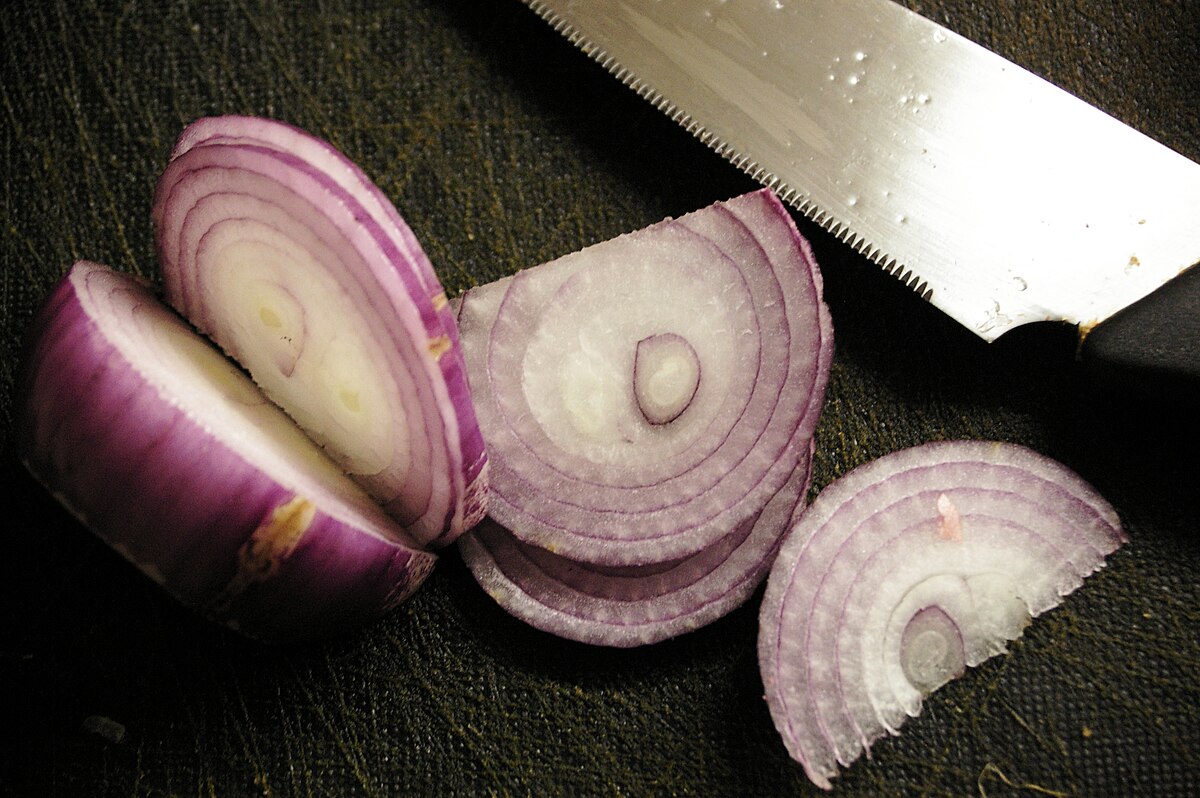
Onions have evolved a clever survival strategy to stop hungry animals from eating their bulbs. When you slice the onion, you crush its cells and release a specific enzyme called lachrymatory-factor synthase.
This enzyme instantly converts stored sulfur compounds into a volatile gas: syn-propanethial S-oxide. It is essentially nature's version of tear gas, designed to sting the eyes of anyone trying to take a bite.
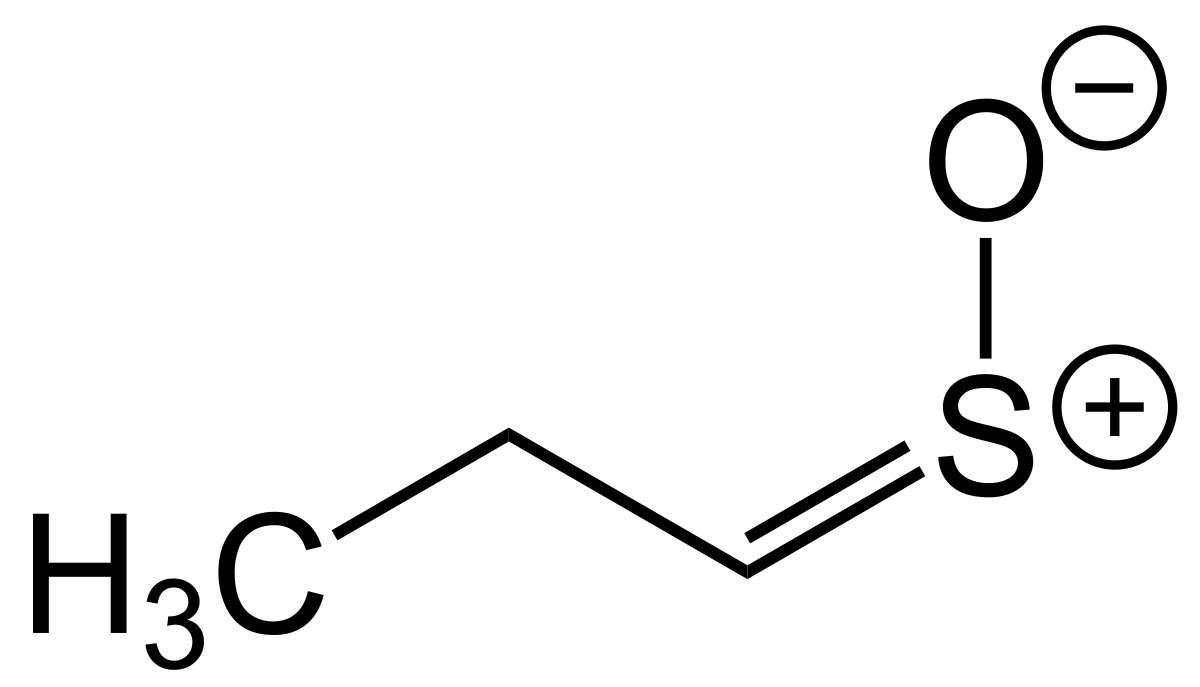
Structural formula of Syn-Propanethial S-oxide, showing a three-carbon chain with a methyl group (H3C) and a double bond to a sulfur atom (S) which is double-bonded to an oxygen atom (O). Jü, Public domain, via Wikimedia Commons
The chemical reaction
The gas is incredibly unstable and seeks the nearest moist surface, which is usually your eyeballs. Once it touches the water in your eyes, it reacts to form a diluted sulfuric acid.
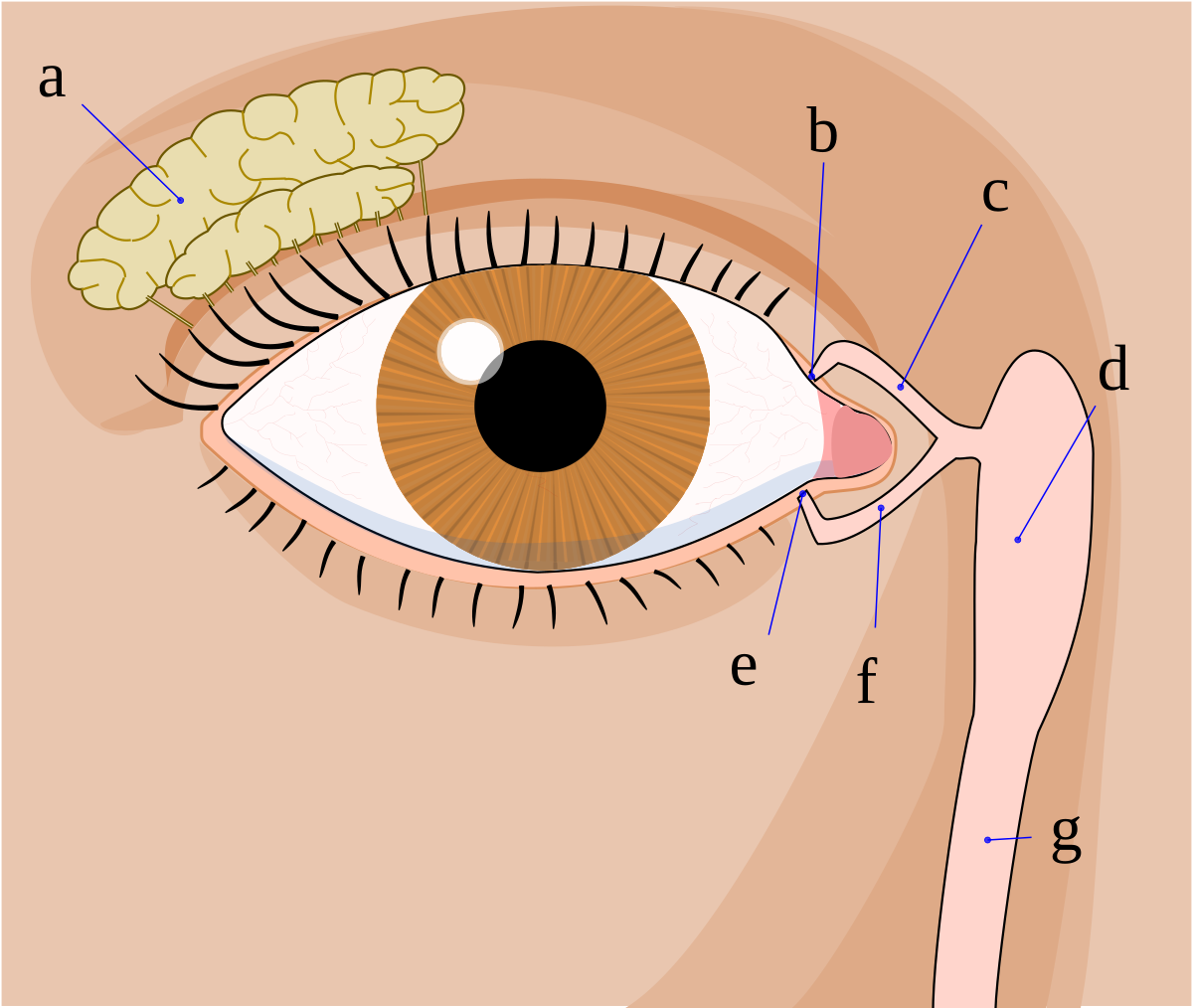
Your brain detects this threat and triggers your tear ducts to flood your eyes, hoping to wash the acid away.
Diagram of the human tear system, labeling key anatomical components. Since FML's vector image was broken, Erin_Silversmith took the bitmap version and vectorised it. The labels in Portugues, CC BY-SA 2.5, via Wikimedia Commons
The tearless future
Scientists only discovered the specific enzyme behind this reaction in 2002. By identifying the lachrymatory-factor synthase, researchers have opened the door to engineering tearless onions.
A biochemist wearing glasses and purple gloves smiles while working with test tubes and laboratory equipment. Katherine Stember, CC BY 4.0, via Wikimedia Commons
You could soon have an onion that keeps its flavor but forgets to deploy its chemical defense.
How onions produce syn-propanethial S-oxide
Intact onion cells keep their defensive chemical components separated. When a knife slices into an onion (Allium cepa), it ruptures the cell walls and mixes previously isolated enzymes and amino acid compounds.
The reaction sequence starts when enzymes called alliinases break down amino acid sulfoxides to produce sulfenic acids. Specifically, the precursor isoalliin is converted into 1-propenesulfenic acid. An enzyme named lachrymatory factor synthase, discovered by scientists in 2002, then rearranges this acid into syn-propanethial S-oxide.
Because this liquid is highly volatile, it rapidly evaporates into a gas. The airborne vapor travels straight toward the eyes, where it reacts with the water film on the cornea and irritates the nerve endings that set off tears.
Related tear-inducing compounds in nature
Syn-propanethial S-oxide is not the only sulfur chemical that plants deploy against predators. Other species synthesize closely related molecules through similar chemical steps.
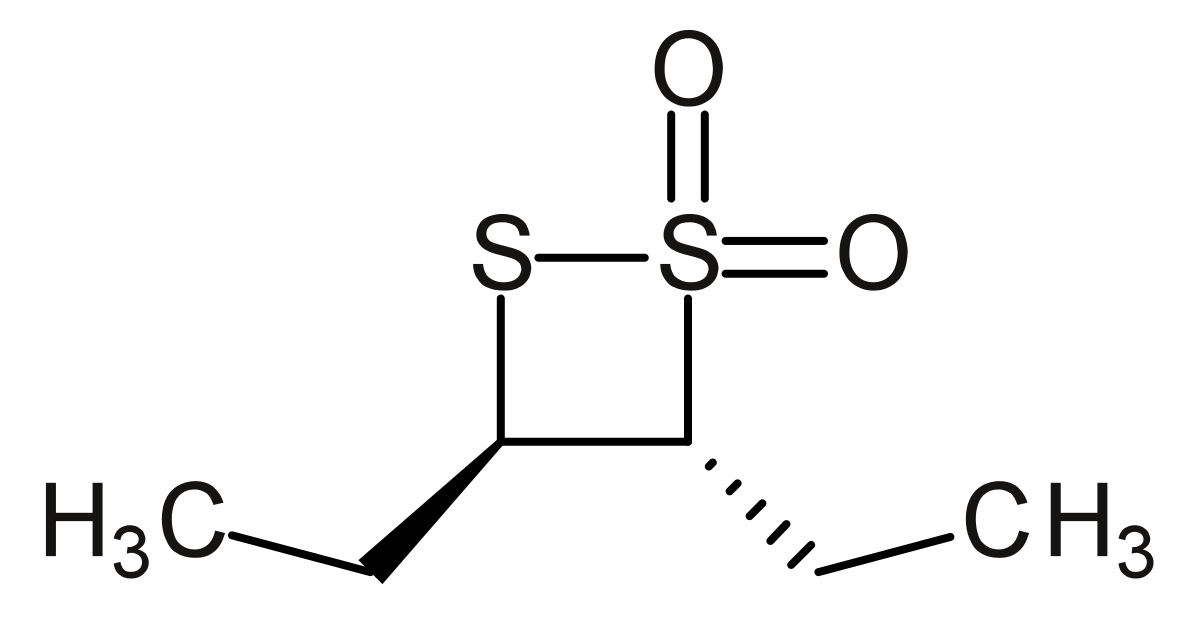
Two syn-propanethial S-oxide molecules can fuse together to form this stable cyclic dimer. Ronhjones (Talk), Public domain, via Wikimedia Commons
Allium siculum, a botanical relative of the common onion, releases a related compound called syn-butanethial S-oxide when cut. A non-Allium plant species, Petiveria alliacea, generates its own analogue named syn-phenylmethanethial S-oxide using a matching biosynthetic pathway.
Unchecked syn-propanethial S-oxide molecules also pair up spontaneously over time. They bond together into a stable dimer known as trans-3,4-diethyl-1,2-dithietane 1,1-dioxide.
Play the lesson in edgi and the card is yours. It lands on your Map next to the ideas it connects to, and turns from matte to foil to gold as you learn more around it.
What chemical family does syn-propanethial S-oxide belong to?
It is an organosulfur compound belonging to the thiocarbonyl S-oxide class. Chemists formerly referred to this group of sulfur chemicals as sulfines.
Can scientists create tearless onions?
Researchers are working on it. Identifying lachrymatory factor synthase gave them a target: an onion with that enzyme switched off makes far less of the volatile irritant.