The Ant and the GrasshopperThe insect was a cicada
The Ant and the Grasshopper is an ancient fable attributed to Aesop about a hungry insect that begs an industrious ant for food when winter arrives, only to be refused. Historically, the tale served as a practical survival rule for early farming communities where neglecting harvest preparation meant starvation. Over centuries, retellings turned the story into a broader debate about charity, thrift, and the place of artists in society.
By the edgi team We find the most surprising true thing about an idea and build a 60-second lesson around it.
In Aesop's ancient fable, the ant spends all summer toiling to store grain while the grasshopper plays music. When winter arrives, the starving grasshopper begs for food.
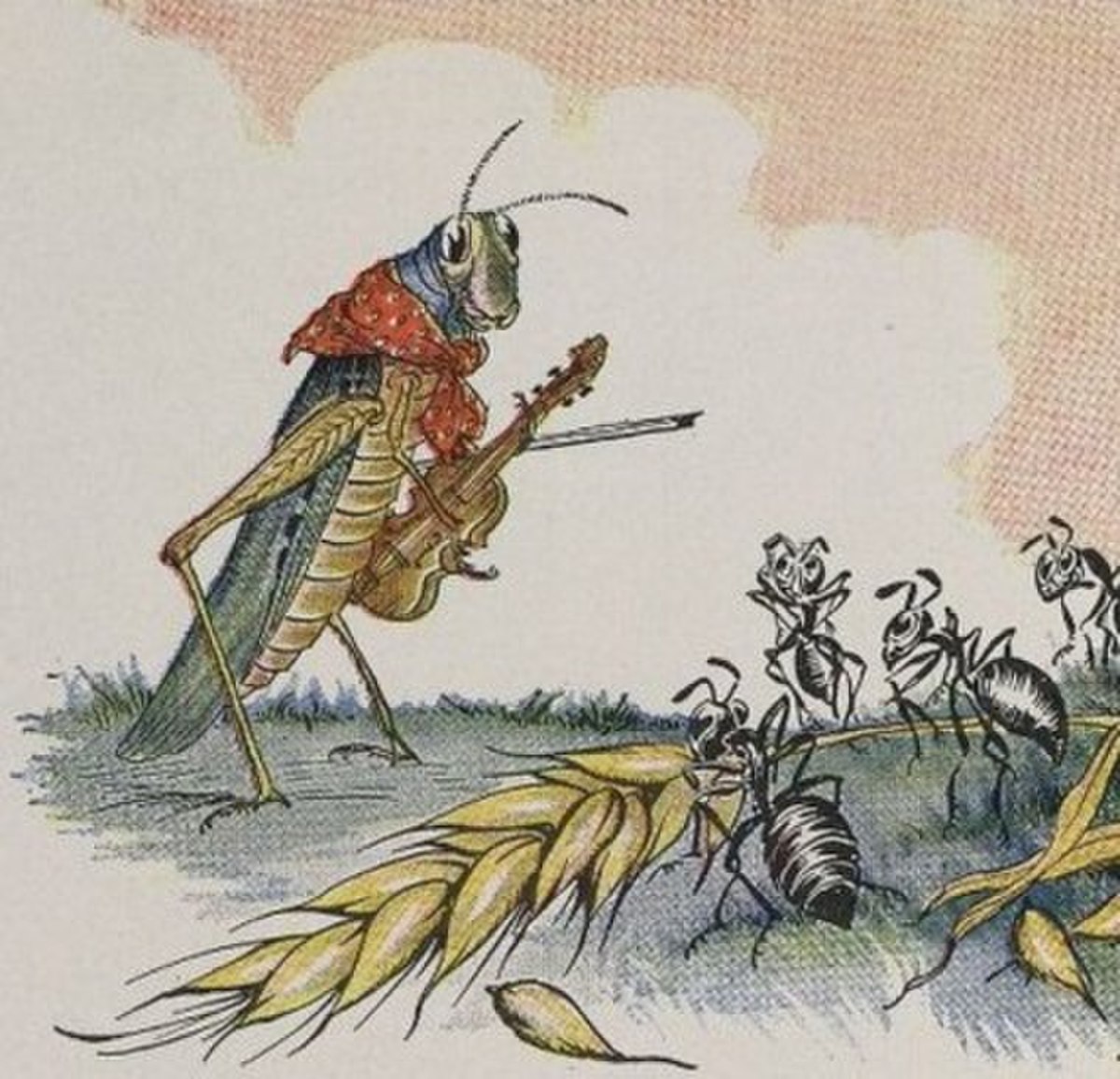
A 1919 illustration by Milo Winter for Aesop's Fables shows an anthropomorphic grasshopper playing a violin, wearing a red scarf, while several ants gather around a stalk of wheat. Illustrated byMilo Winter (1886-1956), Public domain, via Wikimedia Commons
Early versions were harsh: the ant mocks him, telling him to dance the winter away since he spent the summer singing.
The agrarian stakes
The story was not just a moral lecture; it was a practical survival manual for early agrarian societies. In an ancient farming economy, a single season of procrastination meant literal starvation.
Aerial view of a green John Deere combine harvester harvesting corn in a field, with a green grain cart pulled by a tractor alongside it. Wikideas1, CC0, via Wikimedia Commons
The ant was not viewed as a cruel hoarder, but as the only one who respected the lethal reality of winter.
Ancient origins and alternate versions
In the original Greek tale, the improvident insect is a cicada rather than a grasshopper, a detail preserved in Latin and Romance language translations. Ancient verse collections by Babrius and Avianus record the story, which is indexed as number 373 in the Perry Index. Another variant, Perry 112, replaces the grasshopper with a dung beetle that starves after winter rains wash away its food supply.
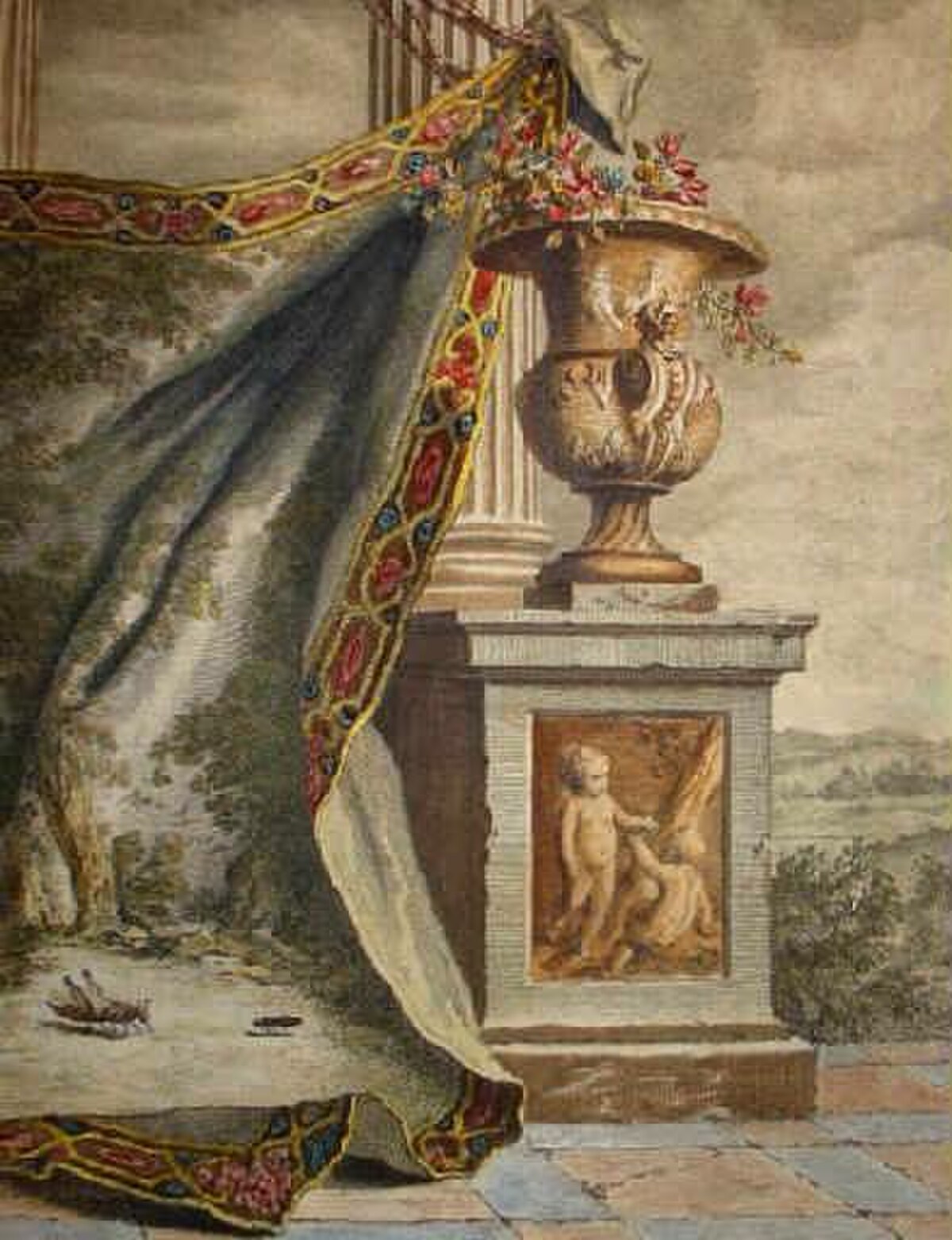
A mid-eighteenth-century print by Jean-Baptiste Oudry illustrates the classic confrontation between the ant and the improvident insect. Danny Scott, Public domain, via Wikimedia Commons
Classical tradition also preserved an obscure counter-fable, Perry 166, which presents the ant as a villain. In that version, the ant was originally a greedy human farmer who stole his neighbors' crops at night. The king of the gods turned him into an ant as punishment, yet the insect kept its thieving habits by continuing to hoard the labor of others.
Shifting morals and artistic depictions
Jean de la Fontaine placed his retelling at the start of his famous collection, avoiding an explicit moral and opening the tale to debates about compassion. By the eighteenth century, artists routinely reinterpreted the grasshopper as a symbol of the impoverished musician or artist.
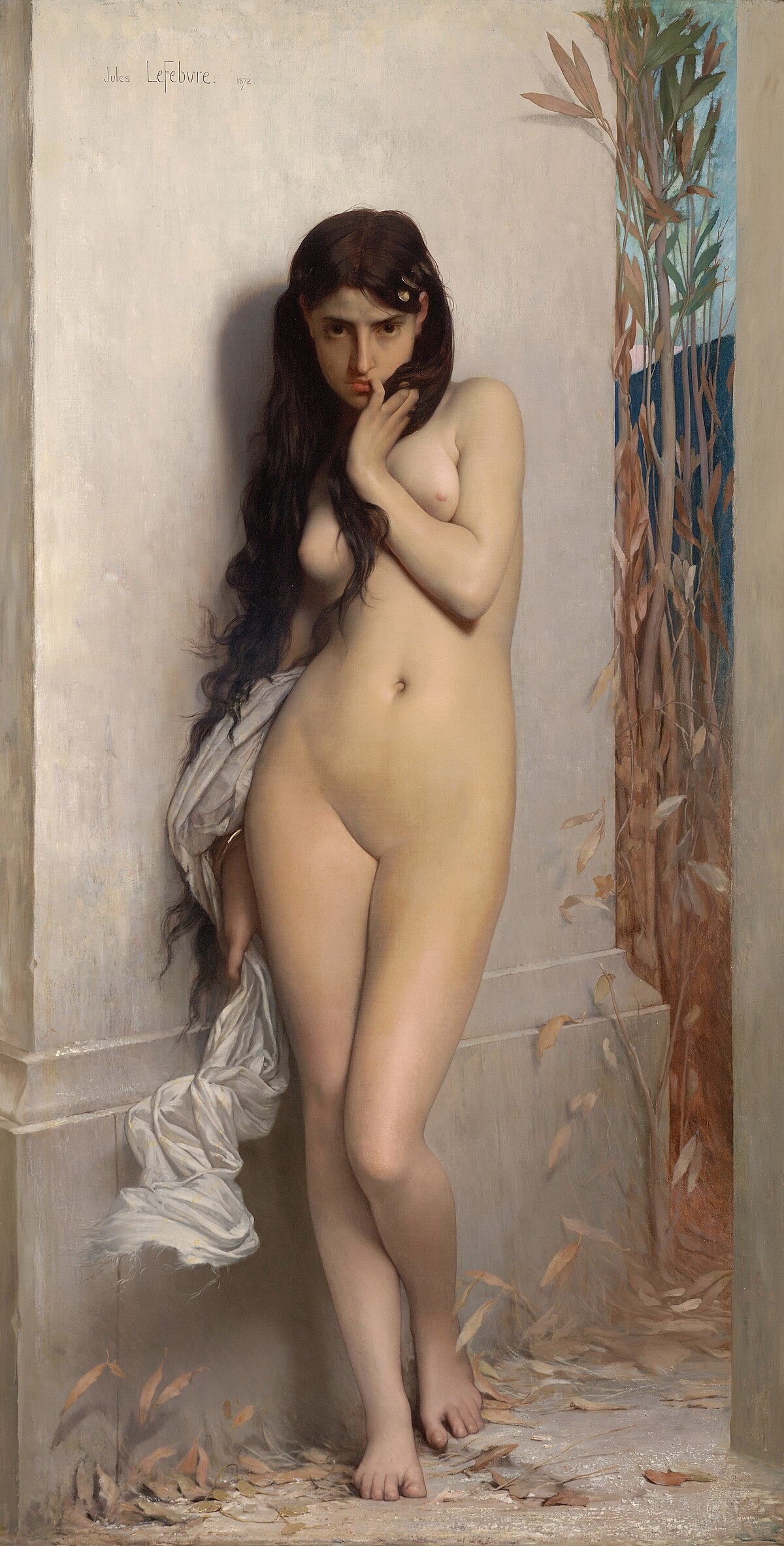
Jules-Joseph Lefebvre's 1872 painting La Cigale uses the shivering grasshopper motif to criticize political improvidence after the war with Prussia. Jules Lefebvre, Public domain, via Wikimedia Commons
Because the words for both insects are grammatically feminine in Romance languages, painters frequently portrayed them as women. In nineteenth-century French art, works titled La Cigale by Jules-Joseph Lefebvre, Edouard Bisson, and Henrietta Rae depicted freezing female musicians with mandolins or guitars. Lefebvre used his 1872 painting as a political critique of Napoleon III following France's defeat in the war with Prussia.
Test yourself
What does The Ant and the Grasshopper suggest about preparing for seasonal hardship?
Preparation can be essential to survival.. In an agrarian society, failing to prepare could mean starvation; the fable treats hardship as a foreseeable cost of procrastination.
In the original version of The Ant and the Grasshopper, what was the ant's response when the grasshopper begged for food?
The ant mocked the grasshopper's prior singing.. Early versions emphasized the unforgiving reality of an agrarian economy. The ant refused aid because the grasshopper's failure to prepare was seen as a personal choice with fatal consequences.
Play the lesson in edgi and the card is yours. It lands on your Map next to the ideas it connects to, and turns from matte to foil to gold as you learn more around it.
The biblical Book of Proverbs mentions the ant twice, commending it for gathering supplies in summer without an overseer. It famously advises the sluggard to observe the ant and learn wisdom.
Why is the grasshopper often shown playing a musical instrument?
Because the fable describes the insect singing all summer, artists personified it as a wandering minstrel or musician. Illustrators and painters regularly gave the character a lute, mandolin, or guitar.