Marshmallow TestWhy waiting was about trust, not grit
The Marshmallow Test is a classic psychology experiment where children choose between one immediate treat or two if they wait alone for 15 minutes. Long presented as a benchmark of innate willpower, later research showed that a child's decision to wait reflects their socioeconomic background and trust in promises rather than simple self-control.
By the edgi team We find the most surprising true thing about an idea and build a 60-second lesson around it.
In 1970, psychologist Walter Mischel placed young children alone in a room at Stanford University with a single marshmallow. They were told a simple rule: if you wait fifteen minutes without eating it, you get a second one.
A close-up view of a pile of colorful, pastel-colored marshmallows, including pink, yellow, green, and orange. Smith609, CC BY-SA 3.0, via Wikimedia Commons
Through a one-way mirror, researchers watched kids cover their eyes, kick desks, and stroke the treat like a pet to fight the temptation.
The myth of willpower
For decades, the test was cited as proof that innate self-control at age four dictated adult success, SAT scores, and health. Children who waited were branded as disciplined prodigies, while those who ate the treat were written off as impulsive.
This framed delayed gratification purely as a personal character trait you either had or lacked.
The rational survival strategy
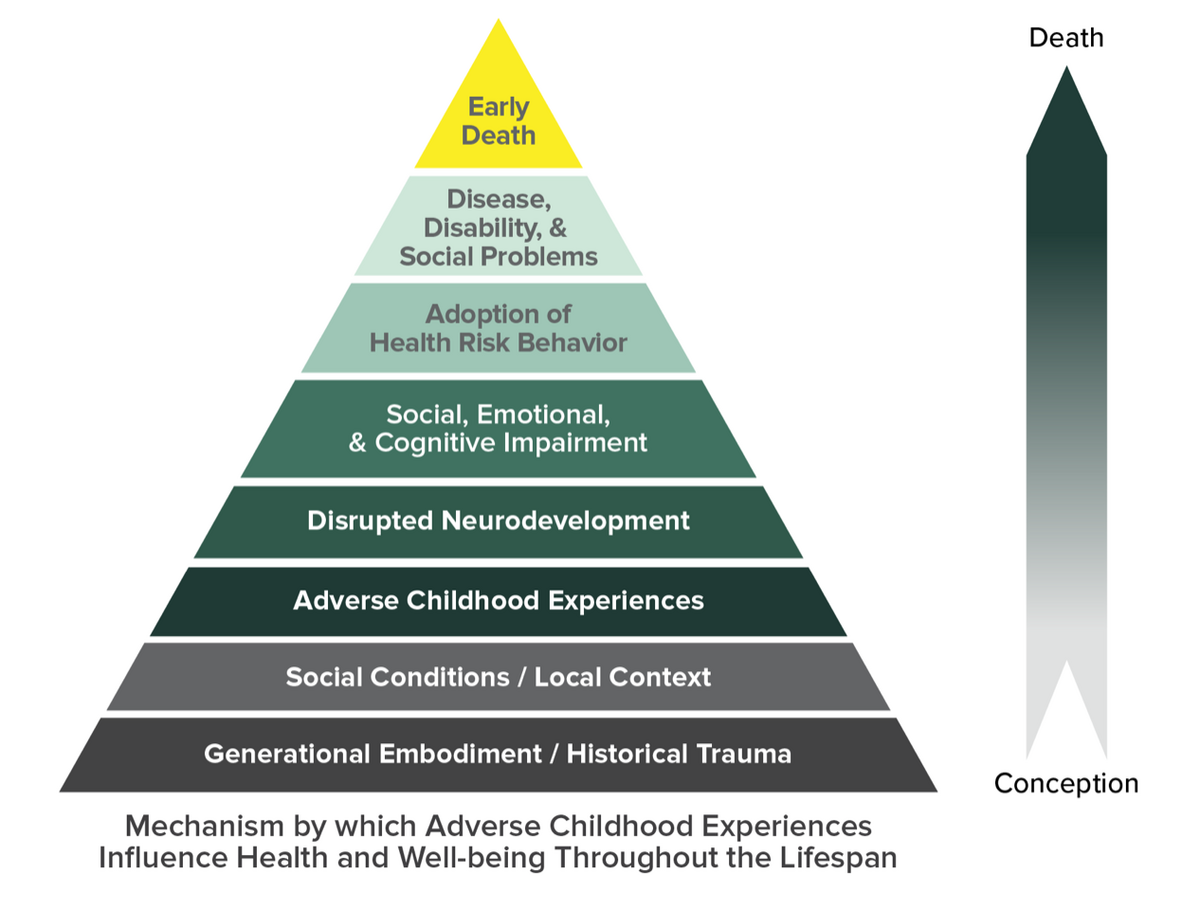
Later replications discovered a massive flaw: the results depended almost entirely on the child's socioeconomic background and trust. If a kid grew up in a chaotic environment where promises made by adults were constantly broken, waiting for a second marshmallow was a terrible bet.
The ACE Pyramid illustrates the mechanism by which Adverse Childhood Experiences influence health and well-being throughout the lifespan, from 'Generational Embodiment / Historical Trauma' at the… CDC, Public domain, via Wikimedia Commons
Eating the first treat right away wasn't a failure of willpower; it was a completely rational survival strategy in an unreliable world.
How the original Stanford study worked
In 1970, Walter Mischel and Ebbe B. Ebbesen tested 32 children between the ages of three and five at Stanford University's Bing Nursery School. The researchers initially thought placing treats right in front of the kids would help them wait by reminding them of the future prize. The opposite happened: staring at the food increased frustration and made the children give up faster.
To endure the 15-minute wait, children invented their own distractions. They sang, covered their eyes, talked to themselves, kicked desks, and one even fell asleep. The researchers realized that ignoring the reward, rather than focusing on it, was what enabled delayed gratification.
Why the willpower theory fell apart
Early follow-up studies claimed that children who waited longer grew into adults with higher SAT scores, lower body mass index, and higher educational attainment. This popularized the idea that four-year-olds possess fixed levels of self-discipline that determine their entire lives.
Modern replications overturned this conclusion. A study with a sample over ten times larger and more diverse than the original found only half the reported effect, showing that economic background explained the difference. When an environment is unstable or adults are unreliable, eating the treat immediately is a rational choice. Work published in 2018, 2020, and 2024 confirmed that the test does not reliably predict adult functioning.
Test yourself
Does delayed gratification in the Marshmallow Test primarily reflect innate willpower or contextual trust?
Contextual trust in promises. Subsequent replications revealed that waiting depends heavily on whether the environment makes adult promises reliable.
Does the Marshmallow Test primarily measure a child's innate self-control?
No, it tests environmental trust.. While traditionally viewed as a measure of grit, modern research shows the choice often depends on whether the child can reliably trust the researcher to follow through with a future promise.
Play the lesson in edgi and the card is yours. It lands on your Map next to the ideas it connects to, and turns from matte to foil to gold as you learn more around it.
What treats were used in the original experiments?
Although marshmallows became famous, the original 1970 study used five pretzel sticks and two animal cookies. Later variations introduced marshmallows and allowed children to pick their preferred reward.
How long were the children required to wait?
Children had to wait alone in the room for approximately 15 minutes without eating the treat to receive the double reward.