Matthew effectWhy early advantage breeds more success
The Matthew effect is the pattern where people who start with an early advantage in wealth, fame, or recognition continue to gain more over time, while those who lack it fall further behind. It describes the common observation that the rich get richer and the famous get more credit. Because early advantages compound, even tiny differences at the start can grow into massive permanent gaps.
By the edgi team We find the most surprising true thing about an idea and build a 60-second lesson around it.
Sociologist Robert K. Merton coined the term in 1968 after noticing a glaring pattern in scientific credit. Famous researchers routinely received all the praise for joint discoveries, while junior colleagues were overlooked.
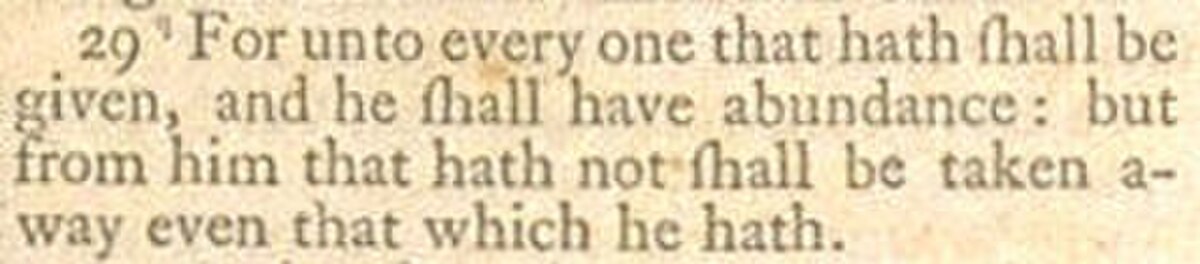
He named the phenomenon after a verse in the Gospel of Matthew: 'For to everyone who has, more will be given.'
A cropped image of Matthew 25:29 from a 1772 King James Bible, displaying the biblical text: "For unto every one that hath shall be given, and he shall have abundance: but from him that hath not… Oxford University, Oxford, England, Public domain, via Wikimedia Commons
Cumulative advantage
The Matthew effect describes how initial success acts like a snowball, gathering more resources as it rolls. A best-selling book sells more copies simply because it is already on the bestseller list.
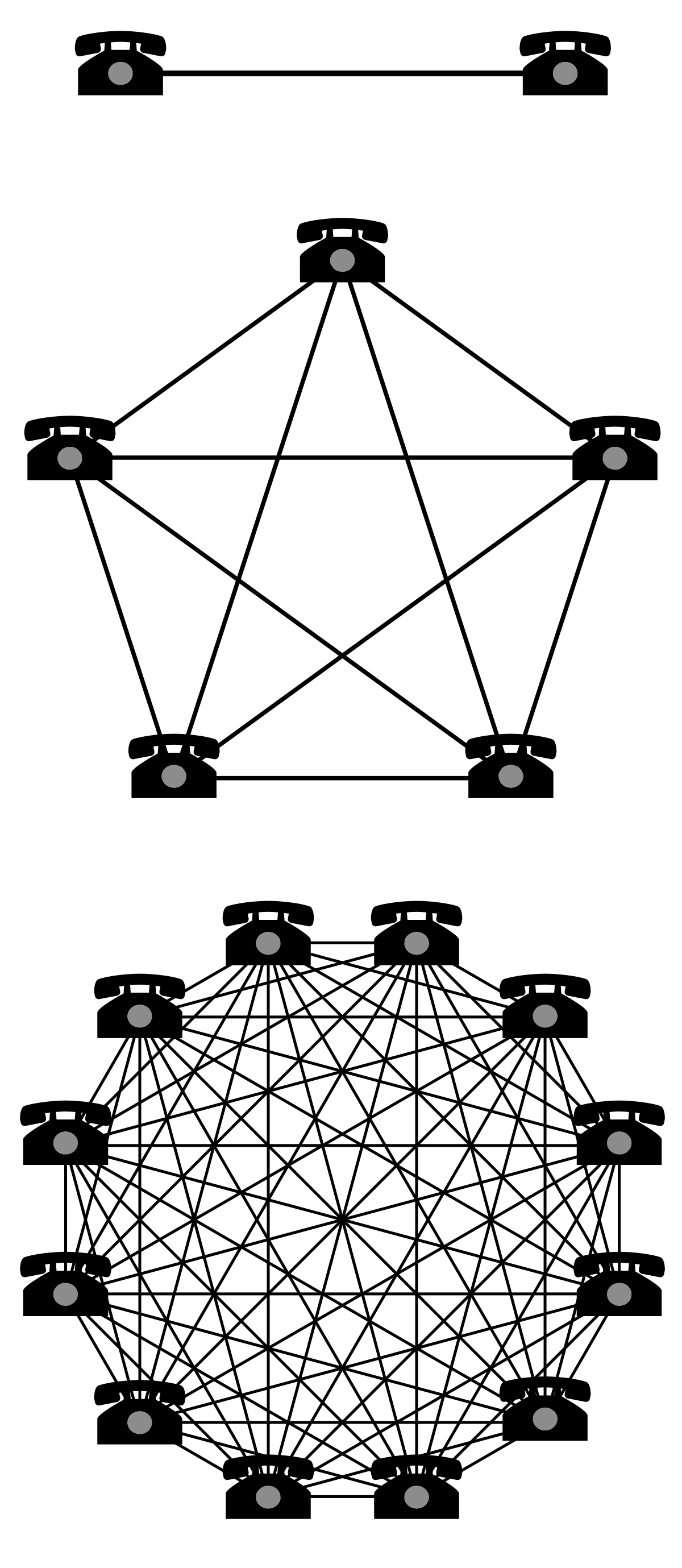
This feedback loop is driven by the network effect, where a product or person gains value just by being popular.
Diagram illustrating the network effect with three examples of phone networks. Woody993 at English Wikipedia, CC0, via Wikimedia Commons
The bigger picture
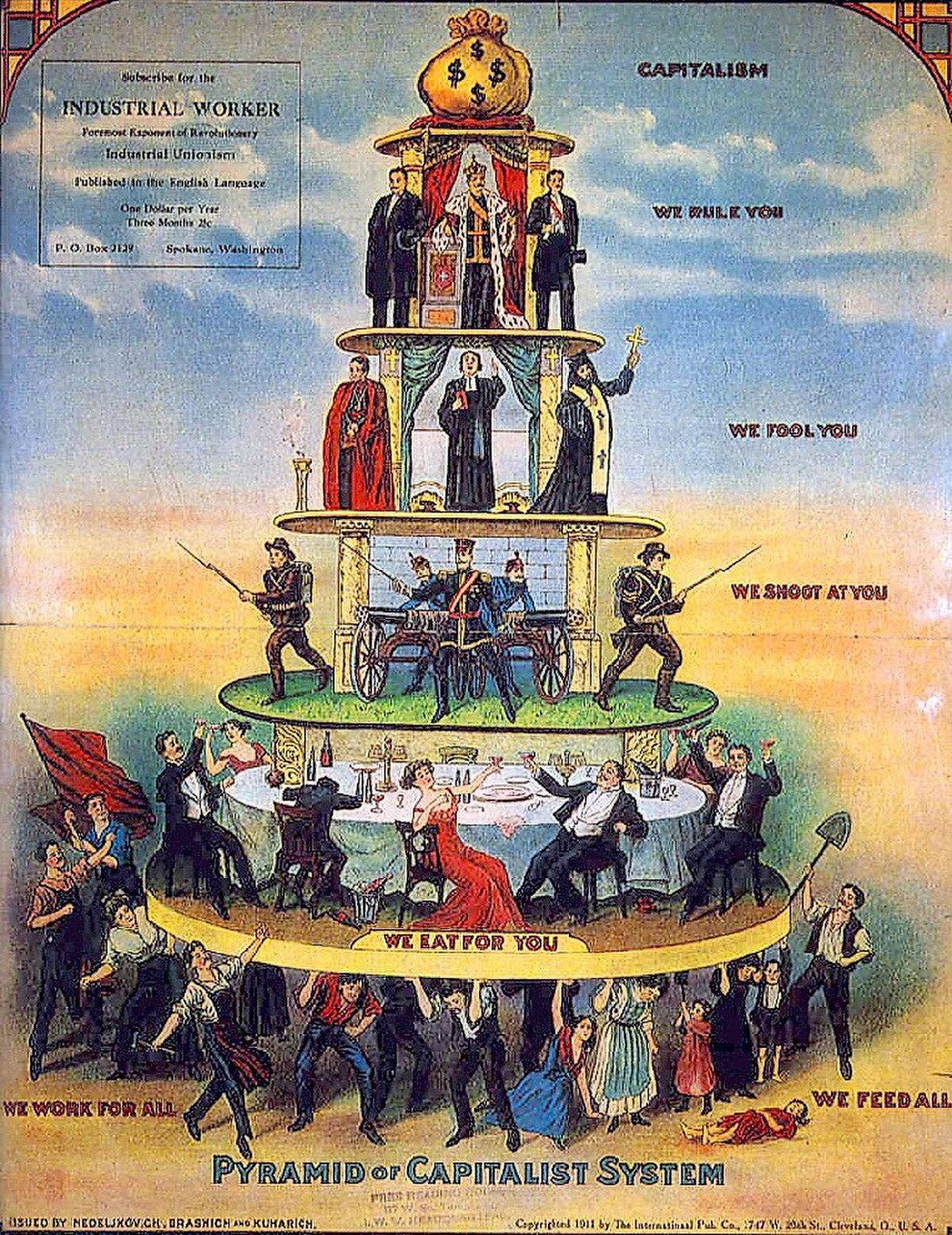
This principle explains how small early edges turn into permanent gaps across wealth, fame, and science. It is the mathematical engine behind the Gini Index, constantly concentrating rewards at the top of any social hierarchy.
The 1911 "Pyramid of Capitalist System" cartoon illustrates social stratification, depicting society as a pyramid with different classes. Artist not credited. Published by International Pub. Co., Cleveland, Ohio., Public domain, via Wikimedia Commons
How credit concentrates at the top
Sociologists Robert K. Merton and Harriet Zuckerman coined the term in 1968 after studying how scientists earn recognition. They noticed that when a well-known scientist and an unknown researcher collaborate on identical work, the famous researcher receives nearly all the credit. Prizes often go to senior laboratory directors, even if graduate students did most of the actual labor.
This pattern also distorts what gets read. Journal editors seeking to save time and effort often prioritize articles from established scholars over equal or superior work submitted by new authors. As famous researchers accumulate prestige, they gain access to larger grants, better lab facilities, and top students. Success feeds itself: a study of Dutch science funding showed that researchers who scored just barely high enough to win an initial grant accumulated more than twice as much funding over the next eight years as peers with nearly identical scores who barely missed the cutoff.
The mathematics of preferential attachment
The Matthew effect is driven by a mechanism network scientists call preferential attachment. Derek J. de Solla Price first applied this principle to network growth and scientific citations in 1976, showing that systems naturally produce scale-free networks where a tiny minority attracts the vast majority of resources.
In these systems, new connections link disproportionately to nodes that already have many connections. Wealth and credit follow the exact same mathematical dynamic. Because individuals at the top hold large surpluses, they can afford to take risks that yield higher returns. Individuals with low starting totals have fewer resources to risk, making it harder to grow their share over time.
Test yourself
One major consequence of the Matthew effect is increasing social ___.
inequality. Because the effect favors those who already have a head start, it naturally widens the gap between different social tiers.
The Matthew effect identifies ___ as a major factor that multiplies an individual's initial success.
popularity. Social recognition and fame create a cycle where being known leads to being even better known.
The 'Matthew' in the term refers to a specific passage in the ___.
New Testament. The concept draws its name from the Gospel of Matthew, specifically the parable of the talents.
Play the lesson in edgi and the card is yours. It lands on your Map next to the ideas it connects to, and turns from matte to foil to gold as you learn more around it.
Stigler's law states that no scientific discovery is named after its original discoverer. Statistician Stephen Stigler explicitly credited Robert K. Merton with the underlying idea, deliberately turning his own law into an example of the Matthew effect.
Where does the name Matthew effect come from?
The name comes from the Christian Gospel of Matthew, specifically the Parable of the Talents. The parable concludes with the line: 'For to everyone who has, more will be given, and he will have abundance; but from him who has not, even what he has will be taken away.'
How does the sacred spark theory explain early success?
The sacred spark theory suggests that certain individuals start with minor natural advantages in talent, work habits, or persistence. These initial traits act as a multiplier, allowing them to secure early wins that snowball into lasting advantages.