Confirmation bias is the tendency to gather, interpret, and remember information in a way that matches your existing beliefs or choices. It operates through automatic mental habits rather than deliberate deception. Because of this bias, people often cling to their assumptions even when evidence proves them wrong.
By the edgi team We find the most surprising true thing about an idea and build a 60-second lesson around it.
In 1960, psychologist Peter Wason gave subjects a sequence: 2, 4, 6. He asked them to find the hidden rule by testing their own number sequences.
Most guessed 'even numbers going up by two' and only tested 8, 10, 12 to prove themselves right. They never tried sequences like 5, 3, 1, which would have proven them wrong.
The trap
The actual rule was simply 'any three increasing numbers.' By only searching for evidence that confirmed their hypothesis, they missed the obvious truth.
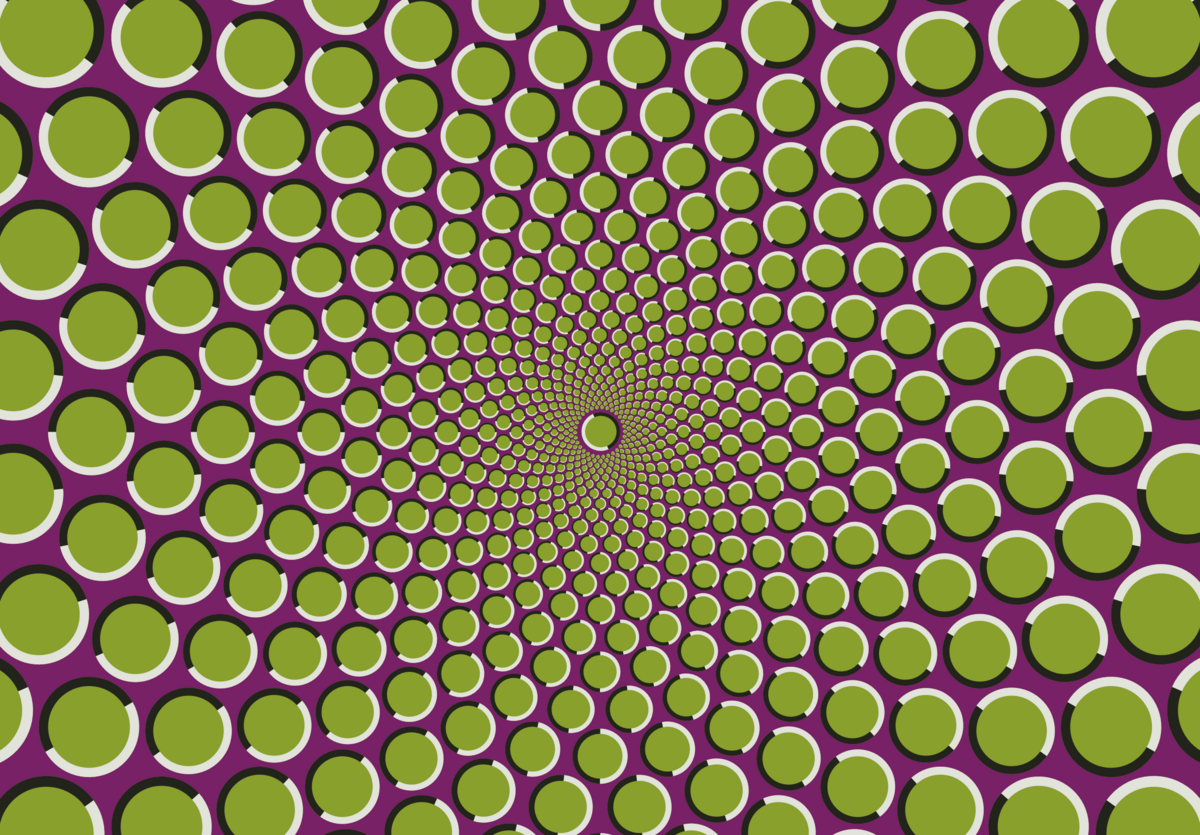
An optical illusion features a spiral arrangement of green circles with white and purple segments, creating an impression of motion or depth. Fiestoforo, CC BY 3.0, via Wikimedia Commons
This is confirmation bias: the tendency to seek validation instead of accuracy.
The cost
This bias is a shield against cognitive dissonance, the mental pain of holding conflicting beliefs. It powers the echo chamber, where you only hear voices that mirror your own.
Icon of a human head in profile with two opposing arrows pointing toward each other in the center of the brain. Arafat Uddin, CC BY 4.0, via Wikimedia Commons
We don't see the world as it is; we see it as we expect it to be.
How one-sided searches work
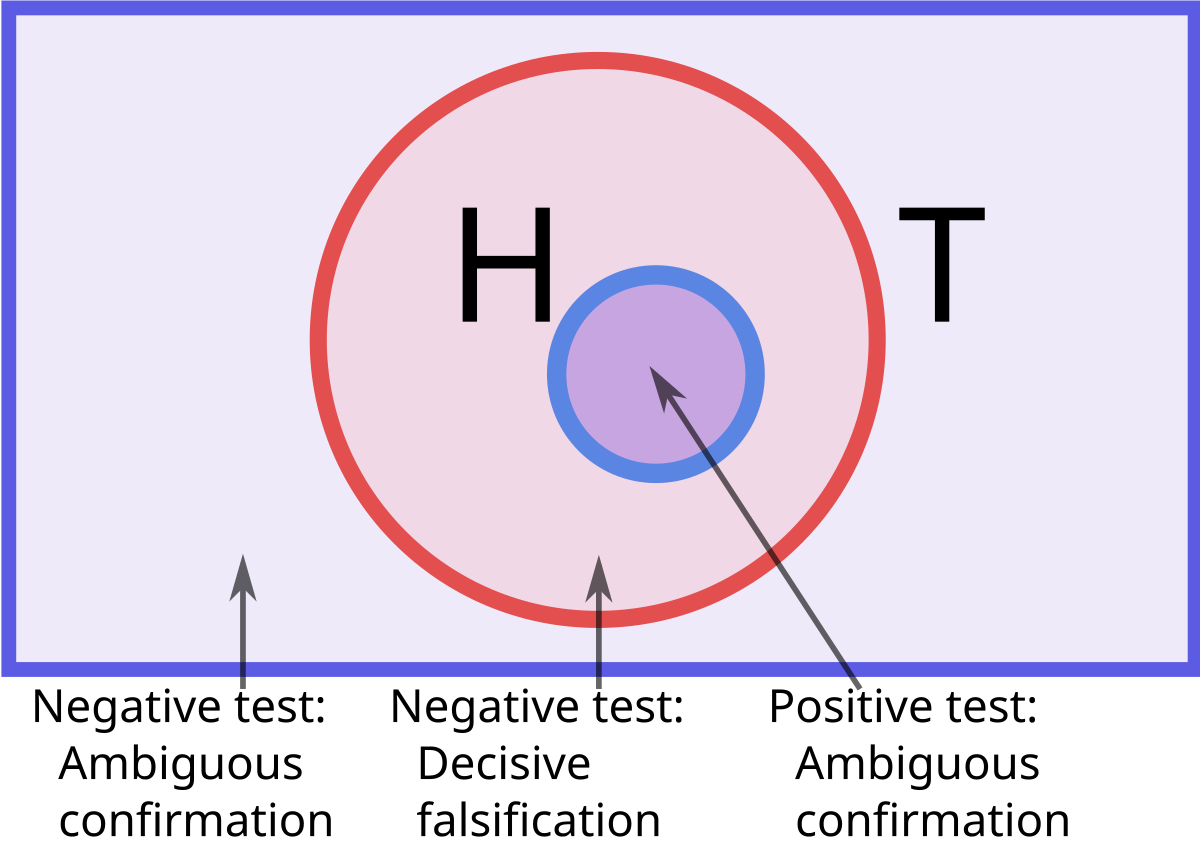
People naturally test ideas using positive tests, phrasing questions to get an affirmative answer that fits their current theory. If someone suspects a hidden number is 3, they usually ask "Is it an odd number?" instead of "Is it an even number?", even though both questions provide identical information.
When a true rule contains a narrower hypothesis, testing only positive examples fails to reveal that the hypothesis is incomplete. MartinPoulter, Public domain, via Wikimedia Commons
In complex situations with mixed evidence, searching only for supporting data almost always succeeds. For instance, people asked "Are you happy with your social life?" report much higher satisfaction than those asked "Are you unhappy with your social life?" because the wording directs where memory looks.
Where confirmation bias causes harm
Flawed judgments from confirmation bias appear across politics, finance, medicine, and policing. A detective who settles on a suspect early in an investigation may gather only incriminating evidence while ignoring clues that point elsewhere. Similarly, a doctor who focuses prematurely on a specific diagnosis during an early checkup risks seeking only symptoms that match that single illness.
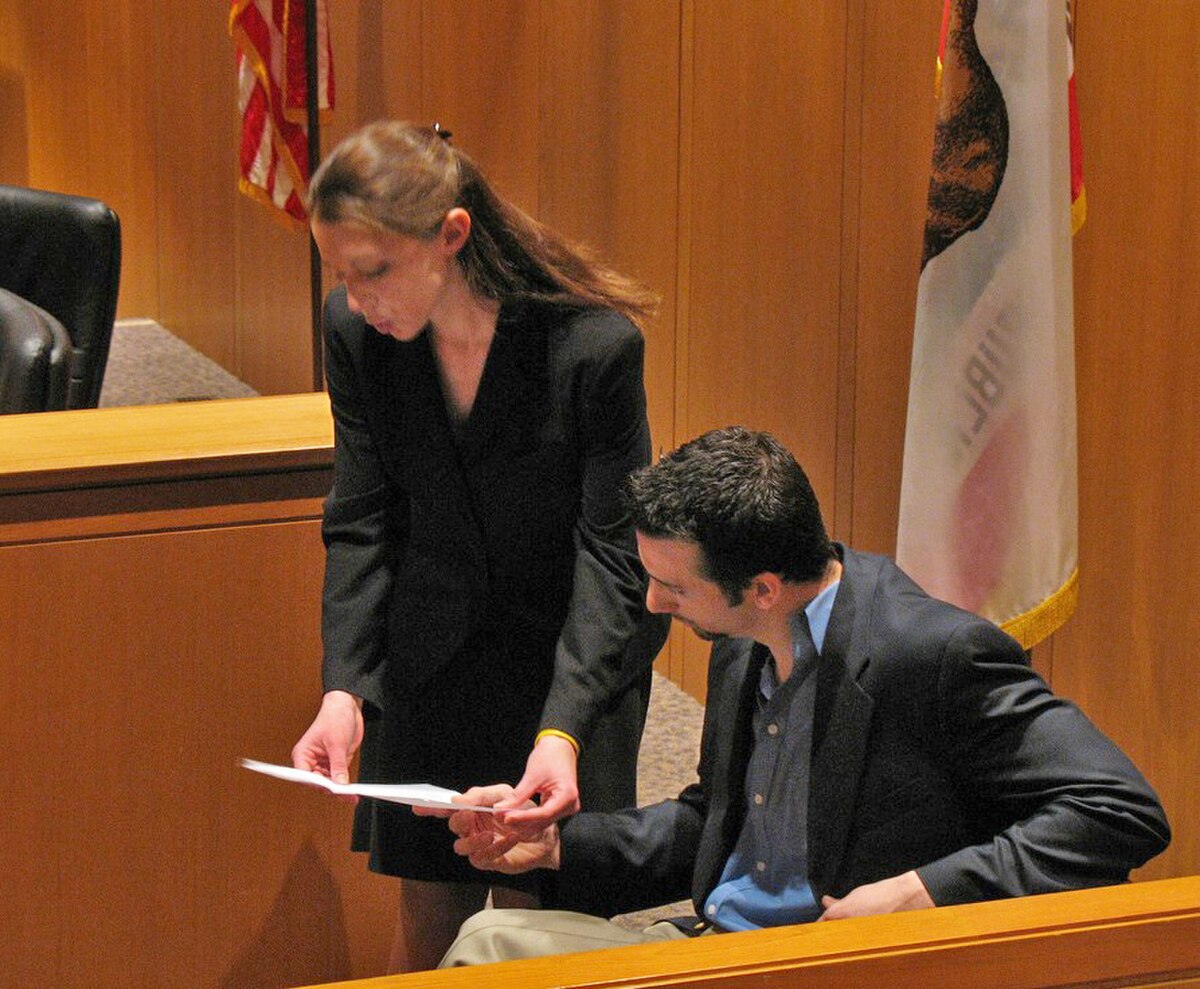
Mock trials provide a realistic setting for researchers studying how people evaluate competing evidence. Eric Chan from Palo Alto, United States, CC BY 2.0, via Wikimedia Commons
On social media platforms, algorithmic editing and filter bubbles amplify this tendency by presenting users with content they already agree with. This reinforcement feeds attitude polarization, turning disagreements extreme even when opposing sides look at the exact same set of facts.
Test yourself
How does confirmation bias affect the way people process everyday arguments?
It scrutinizes opposing views harshly. Confirmation bias does not block out information entirely; instead, it applies a double standard, accepting friendly claims easily while nitpicking contrary ones.
When testing a hypothesis, how does confirmation bias typically manifest?
By seeking only evidence that confirms it. Confirmation bias leads people to hunt for supporting data while ignoring tests that could disprove their ideas.
When testing a theory, do people naturally try to prove it right or wrong?
They try to prove it right. Our default instinct is seeking validation for our existing ideas, rarely looking for the data that would break them.
Play the lesson in edgi and the card is yours. It lands on your Map next to the ideas it connects to, and turns from matte to foil to gold as you learn more around it.
What is the difference between confirmation bias and a self-fulfilling prophecy?
Confirmation bias is an information-processing flaw where you selectively search, interpret, or recall evidence. A self-fulfilling prophecy, or behavioral confirmation effect, occurs when your expectations change your actual behavior, causing the expected outcome to happen.
What is belief perseverance?
Belief perseverance is the tendency for a belief to survive even after the evidence supporting it has been proven false. It is one of several specific psychological effects caused by biased search, interpretation, and memory.
Why do people rely on confirmation bias?
Psychologists link it to automatic mental habits, wishful thinking, and the human brain's limited capacity to handle complex data. People may also use it to pragmatically protect against the perceived costs of being wrong rather than acting like neutral observers.