May 68 was a massive wave of student demonstrations, street riots, and wildcat strikes that brought France to a near standstill in May 1968. Sparked by student protests over university rules and police brutality, it expanded into a nationwide walkout by roughly ten million workers, or two-thirds of the French labor force. Although the government survived and the revolution collapsed within weeks, the uprising permanently transformed French society, politics, and labor rights.
By the edgi team We find the most surprising true thing about an idea and build a 60-second lesson around it.
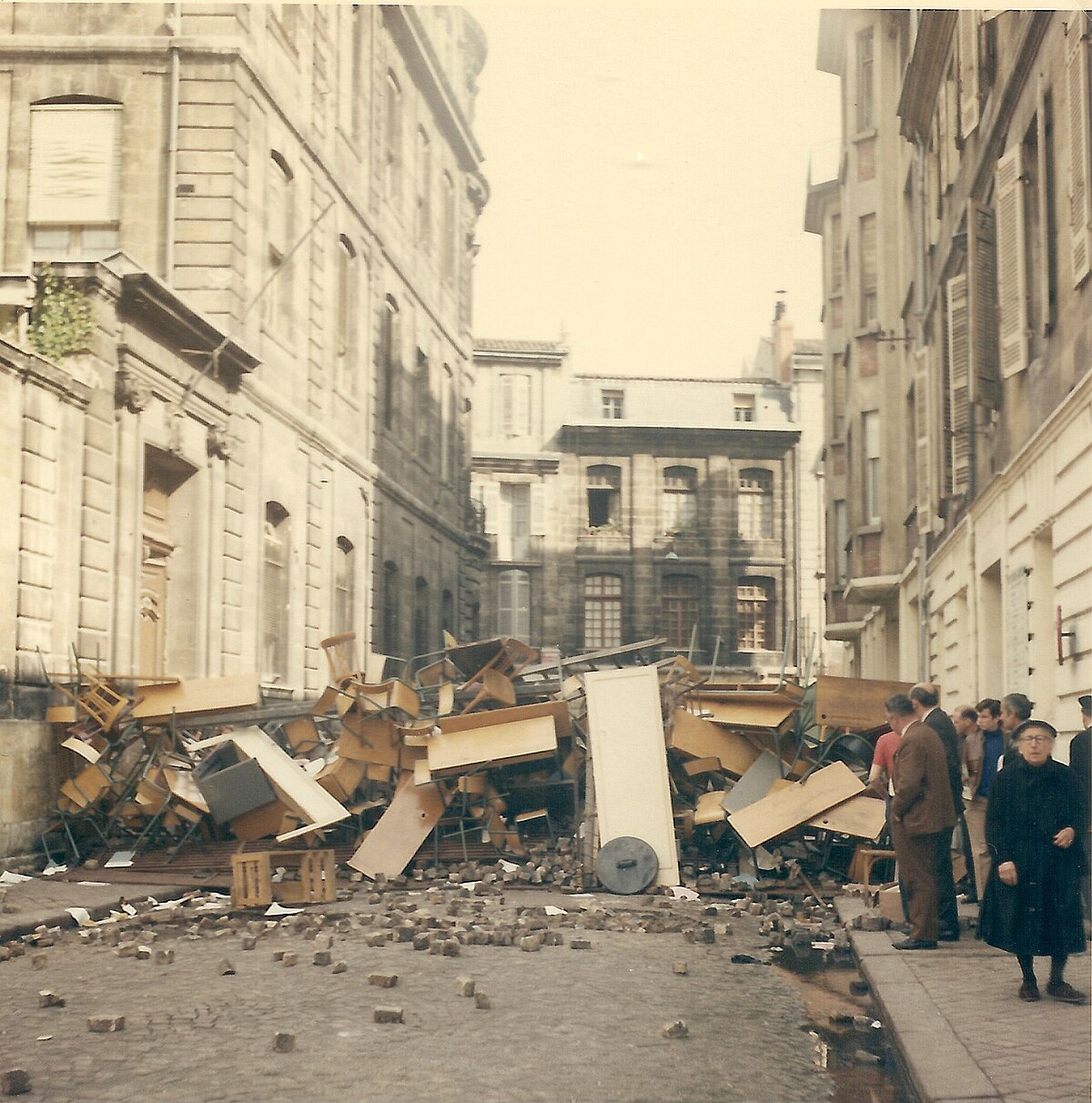
In early 1968, students at Nanterre University protested archaic campus rules, including a ban on male students visiting female dormitories. When police cleared the campus, the unrest spread to the Sorbonne in Paris, triggering violent street clashes and barricades in the Latin Quarter.
A street in Bordeaux, France, in May 1968, with a large barricade constructed from overturned furniture and debris. Tangopaso, Public domain, via Wikimedia Commons
The general strike
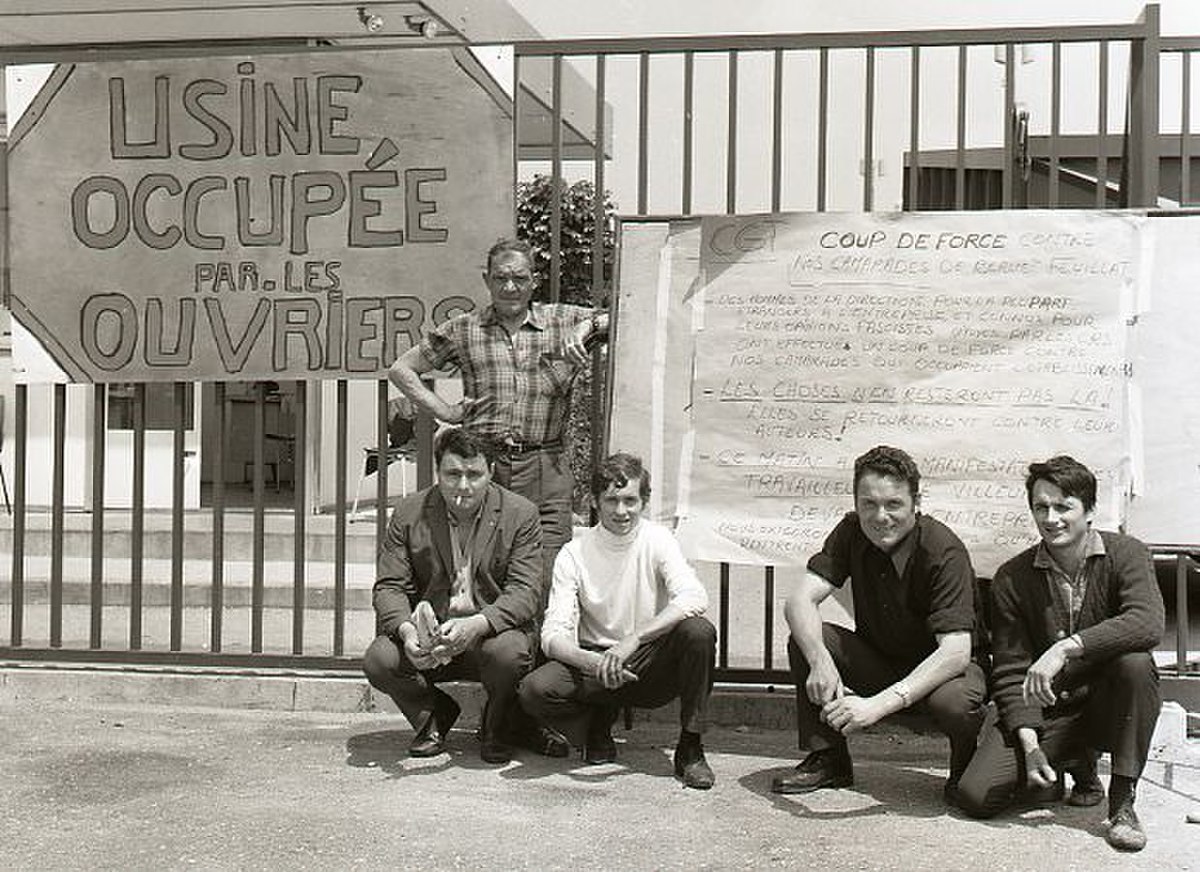
Furious at police brutality, French labor unions called a one-day general strike in solidarity with the students. Instead of returning to work, over ten million workers seized factories, occupied shipyards, and shut down transport across the country.
French workers pose in front of a factory entrance with a large sign reading "USINE OCCUPEE PAR LES OUVRIERS" (Factory Occupied by the Workers) during the May 1968 strikes. GeorgeLouis, CC BY-SA 3.0, via Wikimedia Commons
France ground to a complete halt, bringing President Charles de Gaulle's government to the brink of collapse.
The aftermath
De Gaulle briefly fled the country to a French military base in Germany to secure army support before returning to dissolve parliament. Though the revolution fizzled out, the uprising shattered traditional authority and permanently reshaped French social and cultural life.
Black and white photograph of graffiti on a wall, reading "Il est interdit d'interdire!" which translates to "It is forbidden to forbid!". Espencat, Public domain, via Wikimedia Commons
From university protests to a national shutdown
The crisis began in March 1968 at Paris Nanterre University, where far-left students occupied an administration building to oppose political bureaucracy and social discrimination. After administrators shut down Nanterre on 2 May, the unrest shifted to the Sorbonne in central Paris. On 6 May, police charged a march of over 20,000 students and teachers, leading protesters to tear up paving stones, build barricades, and clash with police.
Public anger over police brutality quickly drew in the working class, who were already frustrated by stagnant wages and poor working conditions despite rapid post-war economic growth. On 13 May, labor unions launched a general strike that rapidly snowballed. About ten million workers walked off the job, occupying factories, shutting down transport, and halting public services across the country.
How the uprising ended and what it changed
By late May, the Fifth Republic seemed on the verge of collapse. President Charles de Gaulle briefly vanished to a French military base in West Germany on 29 May to ensure military backing before returning to dissolve the National Assembly and call new parliamentary elections. Meanwhile, government officials and union representatives negotiated the Grenelle agreements on 27 May, granting substantial wage increases and expanded social protections to placate the labor force.
The revolutionary momentum evaporated quickly at the ballot box. In the June 1968 elections, de Gaulle's party won a landslide victory while left-wing parties lost more than half their seats. Even so, the political shock lingered: de Gaulle resigned the following year, the state poured new funding into universities, and the movement gave rise to modern French feminist, environmentalist, and LGBTQ activism.
Test yourself
In May 68, what turned campus unrest into a national crisis?
Workers joined through mass strikes and occupations. The decisive escalation was workers’ mass strike and workplace occupations, which halted activity across France and threatened the government.
What triggered the nationwide general strike during the May 68 protests?
Police brutality against students. The strike spread because workers were outraged by police violence against students. The initial dorm rules were a campus issue, not the catalyst for the industrial paralysis.
What was the immediate political result of May 68 in France?
De Gaulle's party won new elections. De Gaulle dissolved parliament on May 30 and his party won a large majority in June. The government survived, even though attitudes and wages changed.
Play the lesson in edgi and the card is yours. It lands on your Map next to the ideas it connects to, and turns from matte to foil to gold as you learn more around it.
They were a package of labor concessions negotiated on 27 May between the French government, business leaders, and trade unions. They secured significant wage increases and better working conditions, which helped persuade striking workers to return to their jobs.
Which intellectuals were influenced by May 68?
The uprising sparked radical new directions in philosophy, media, and academia. French thinkers such as Michel Foucault and Jean Baudrillard drew heavily on the ideas and anti-authoritarian spirit of the movement.