Motivation is an internal state that drives people and animals to start, continue, or stop a specific behavior. It determines which goals you pursue, how hard you try, and how long you persist before quitting. Rather than just pulling you toward positive rewards, motivation often acts as an uncomfortable tension that forces you to act simply to resolve unfinished tasks.
By the edgi team We find the most surprising true thing about an idea and build a 60-second lesson around it.
In the 1920s, psychologist Bluma Zeigarnik noticed that waiters in a bustling Vienna cafe had perfect memory for complex, unpaid orders. But the moment the bill was paid, that recall instantly vanished. They couldn't even remember what the customer had ordered.
The interior of Café Hawelka in Vienna on a quiet morning, showing wooden tables and chairs, patrons reading newspapers, and a waiter in the background. KF at English Wikipedia, Public domain, via Wikimedia Commons
She realized the brain treats unfinished tasks as open tabs that demand constant, low-level mental attention.
The psychology of tension
This is the Zeigarnik effect. Your brain creates a state of cognitive tension when a task is left open. That tension isn't just about the reward; it is an uncomfortable itch that motivates you to act just to find relief.
You aren't always driven by a positive goal. You are often driven by the need to silence the mental noise of something left undone.
Hacking your drive
This is why massive projects cause Procrastination. The mental open tab is so large it feels paralyzing. The secret to effective Goal setting is breaking a project into tiny, bite-sized loops.
By closing small tasks, you trigger a sense of completion that keeps your brain's engine running and prevents the paralysis of the unfinished.
How does motivation work?
Motivation operates in two distinct phases: setting a target and then working to reach it. Every motivational state is defined by three measurable elements: direction, intensity, and persistence. Direction is the specific goal selected. Intensity is the amount of physical or mental energy used, which decides whether a thought turns into real action. Persistence is the length of time an individual keeps working toward that outcome.
Because motivation happens inside the brain, researchers cannot see it directly. Scientists measure it by gathering self-reported answers on questionnaires, tracking visible behavioral changes, or recording physiological signals like skin conductance and brain activity.
What are the main types of motivation?
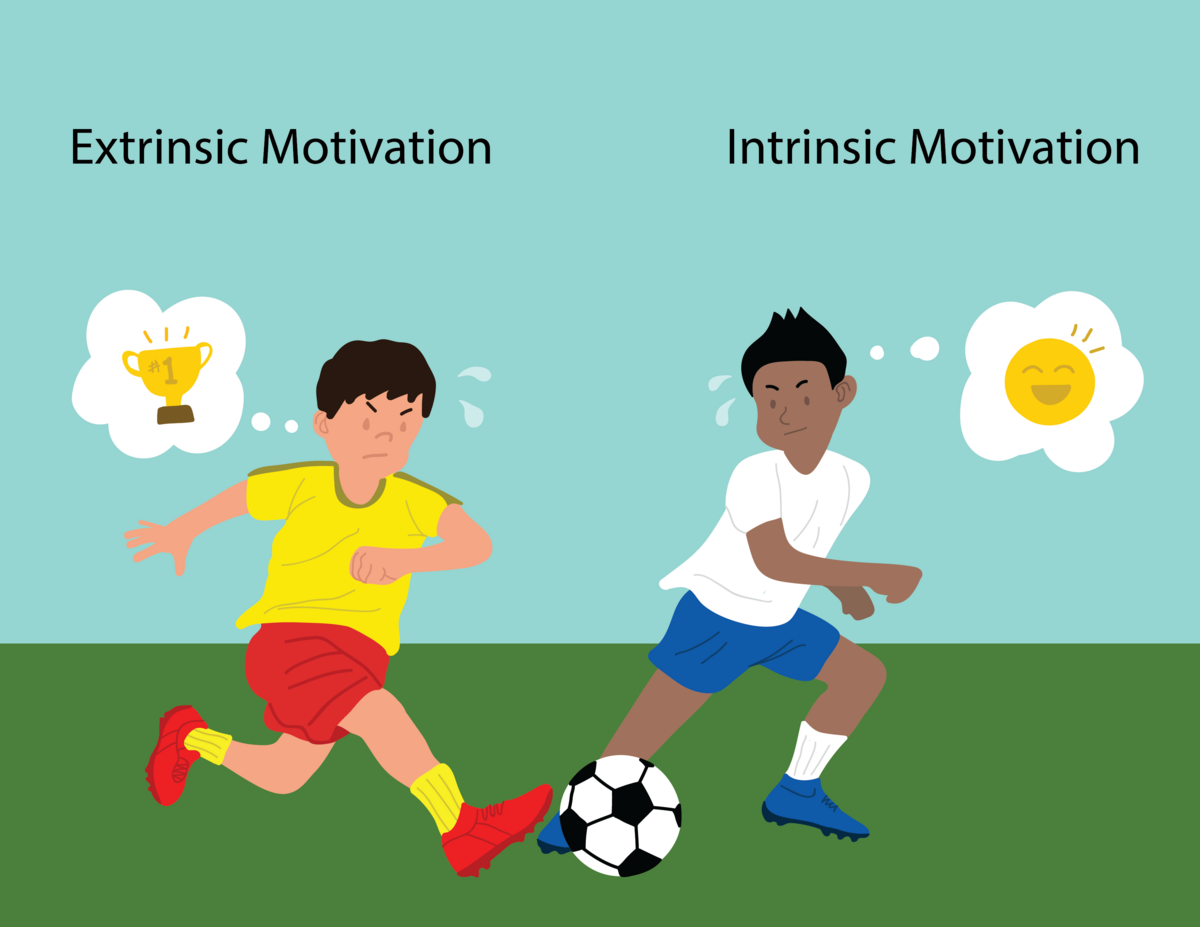
Psychologists classify motivation based on where the driving force originates and whether the individual is aware of it. Intrinsic motivation comes from inside the person, such as curiosity or the simple enjoyment of an activity. Extrinsic motivation relies on external outcomes, such as earning physical rewards or dodging punishment.
This diagram contrasts intrinsic motivation, which is powered by internal enjoyment, with extrinsic motivation, which relies on outside rewards. Muhammad M Rahman, CC BY-SA 4.0, via Wikimedia Commons
Motivation also divides along lines of awareness and reasoning. Conscious motivation involves clear awareness of why you are acting, whereas unconscious motivation influences choices without deliberate recognition. Other categories include rational and irrational, short-term and long-term, biological needs like hunger, and cognitive drives shaped by thought.
How do theories explain human drive?
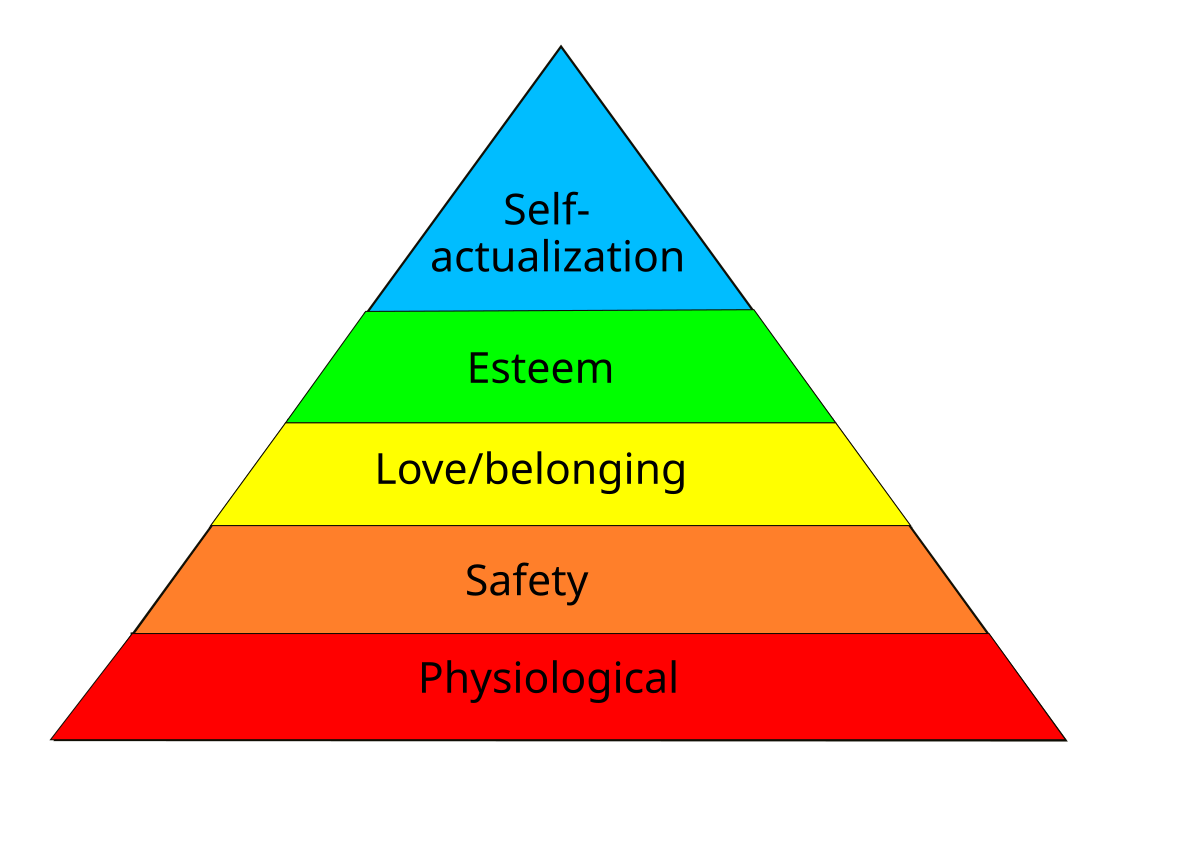
Scholars organize explanations of motivation into content theories and process theories. Content theories identify what internal needs stimulate action. Famous examples include Abraham Maslow's hierarchy of needs, the learned needs theory, and the two-factor theory.
Maslow's hierarchy of needs arranges fundamental biological demands at the base to support higher psychological goals at the top. FireflySixtySeven, CC BY-SA 4.0, via Wikimedia Commons
Process theories describe how cognitive decisions and emotional patterns produce action over time. Frameworks like goal-setting theory, expectancy theory, equity theory, reinforcement theory, and self-determination theory outline how individuals choose strategies, evaluate fairness, and sustain their efforts across education, athletics, and workplace tasks.
Test yourself
How does the Zeigarnik effect explain why breaking a large project into small tasks aids motivation?
It replaces one paralyzing loop with manageable ones.. Massive projects cause paralysis because the open tab is too large. Breaking them down creates smaller loops that provide regular relief and keep your engine running.
The Zeigarnik effect posits that humans are motivated primarily by future rewards.
False. Motivation is often driven by the need to resolve the cognitive tension of incomplete tasks, not just the pursuit of rewards. Once the task is completed and the tension is released, the motivation fades.
___ goals focus on the desire to learn and improve skills, rather than just performing better than others.
Mastery. Mastery goals lead to deeper engagement and more persistence when facing difficult setbacks.
Play the lesson in edgi and the card is yours. It lands on your Map next to the ideas it connects to, and turns from matte to foil to gold as you learn more around it.
What is the difference between motivation and amotivation?
Motivation is an active internal force that directs and sustains action toward a goal. Amotivation is its opposite, defined as a state of apathy, listlessness, or total resistance to engaging in an activity.
Where does the word motivation come from?
The word motivation comes from the Latin term movere, which translates to 'to move'.
How does motivation differ from a basic reflex?
Unlike fixed stimulus-response reflexes, motivation produces flexible behavior aimed at consequences. For example, motivated animals can navigate entirely new mazes to find food rather than relying on automatic, unthinking reactions.