Cognitive DissonanceWhy minds invent stories to cope
Cognitive dissonance is the mental discomfort you feel when you hold conflicting beliefs, or when your actions clash with your values. Your brain treats this internal tension like pain and immediately seeks relief. People often reduce this stress not by facing facts, but by rationalizing their mistakes or explaining away contradictions.
By the edgi team We find the most surprising true thing about an idea and build a 60-second lesson around it.
In 1954, psychologist Leon Festinger infiltrated a doomsday cult called The Seekers, who believed the world would end in a flood on December 21st. When the sun rose on the 22nd and the world was still perfectly dry, the group faced a catastrophic conflict: their prophecy had failed.
Instead of disbanding, they doubled down. They claimed their collective devotion had actually saved the planet from destruction.
The mental friction
This is cognitive dissonance: the intense mental discomfort caused by holding two conflicting beliefs, or knowing your actions contradict your values. Your brain treats this conflict like a physical pain. It demands relief, and the easiest way to get it is to invent a story that makes you the hero.
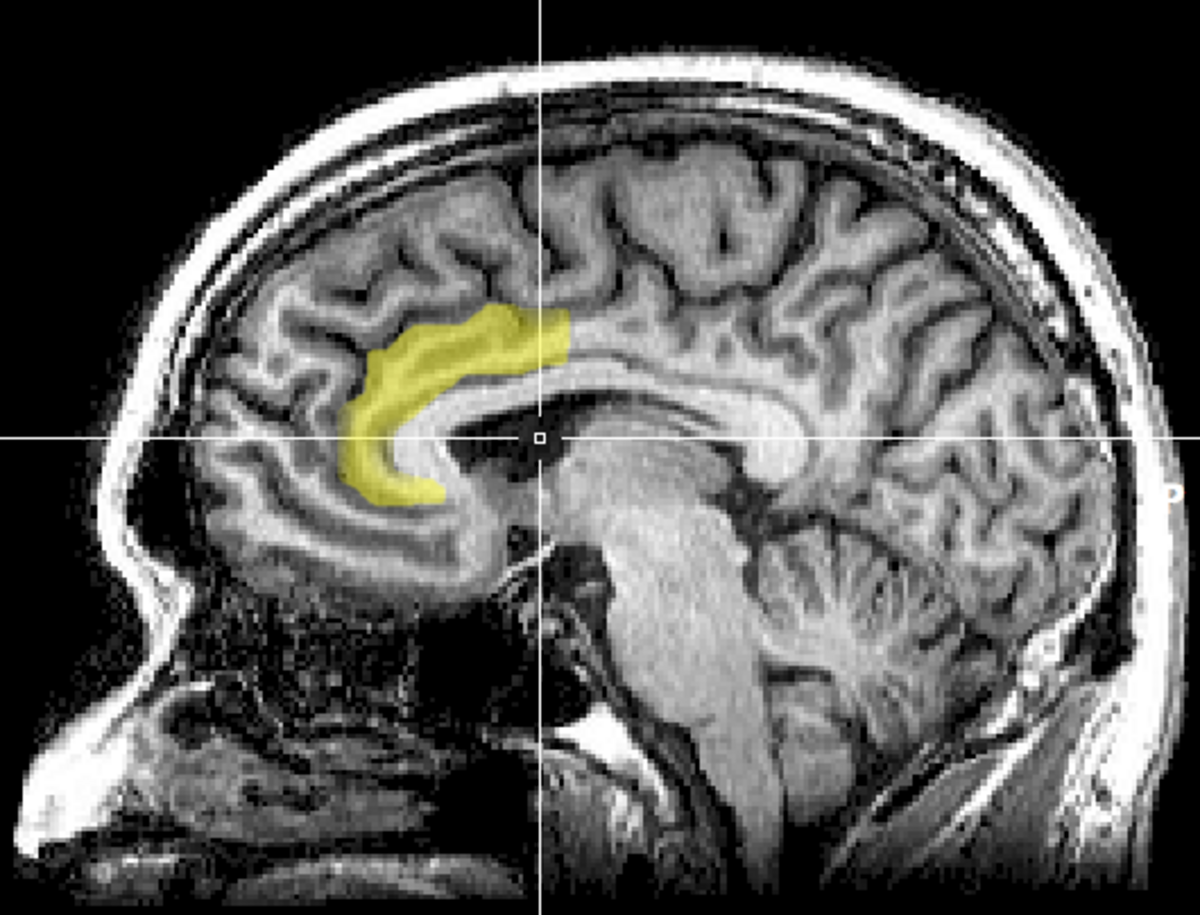
MRI scan of a human brain in sagittal view, highlighting the anterior cingulate cortex in yellow. Geoff B Hall, CC0, via Wikimedia Commons
We don't actually crave the truth as much as we crave the comfort of a mind that agrees with itself.
The cost of comfort
This mechanism explains why people double down on bad decisions. Admitting you were wrong is painful, so your brain filters out evidence to protect your ego. It is the engine behind confirmation bias. We actively ignore facts that prove us wrong so we can avoid the agony of being inconsistent.
How the brain handles mental inconsistency
Human beings strive for internal psychological consistency to function mentally in the real world. Items of cognition include a person's actions, feelings, ideas, beliefs, values, and environment. When two cognitions clash, such as wanting to stay sober but choosing to drink more wine, the relationship becomes dissonant.
Aesop's fable illustrates rationalization, where the fox claims unreachable grapes are sour to resolve the conflict between desire and failure. Milo Winter, Public domain, via Wikimedia Commons
Instead of remaining in psychological tension, people resolve the conflict by reframing one side to make both thoughts fit together. This relief occurs through rationalization, selective perception, or adopting the just-world fallacy, which assumes people get what they deserve. The greater the personal value of the conflicting elements, the higher the magnitude of the mental stress.
How dissonance shapes behavior and bias
Psychologist Leon Festinger introduced cognitive dissonance theory in 1957 after observing how people stick to consistent routines and habits. When contradictory evidence disrupts that order, people actively avoid information likely to increase their distress. Festinger noted that when shown facts or logic that disagree with their views, individuals will question the sources or fail to see the point.
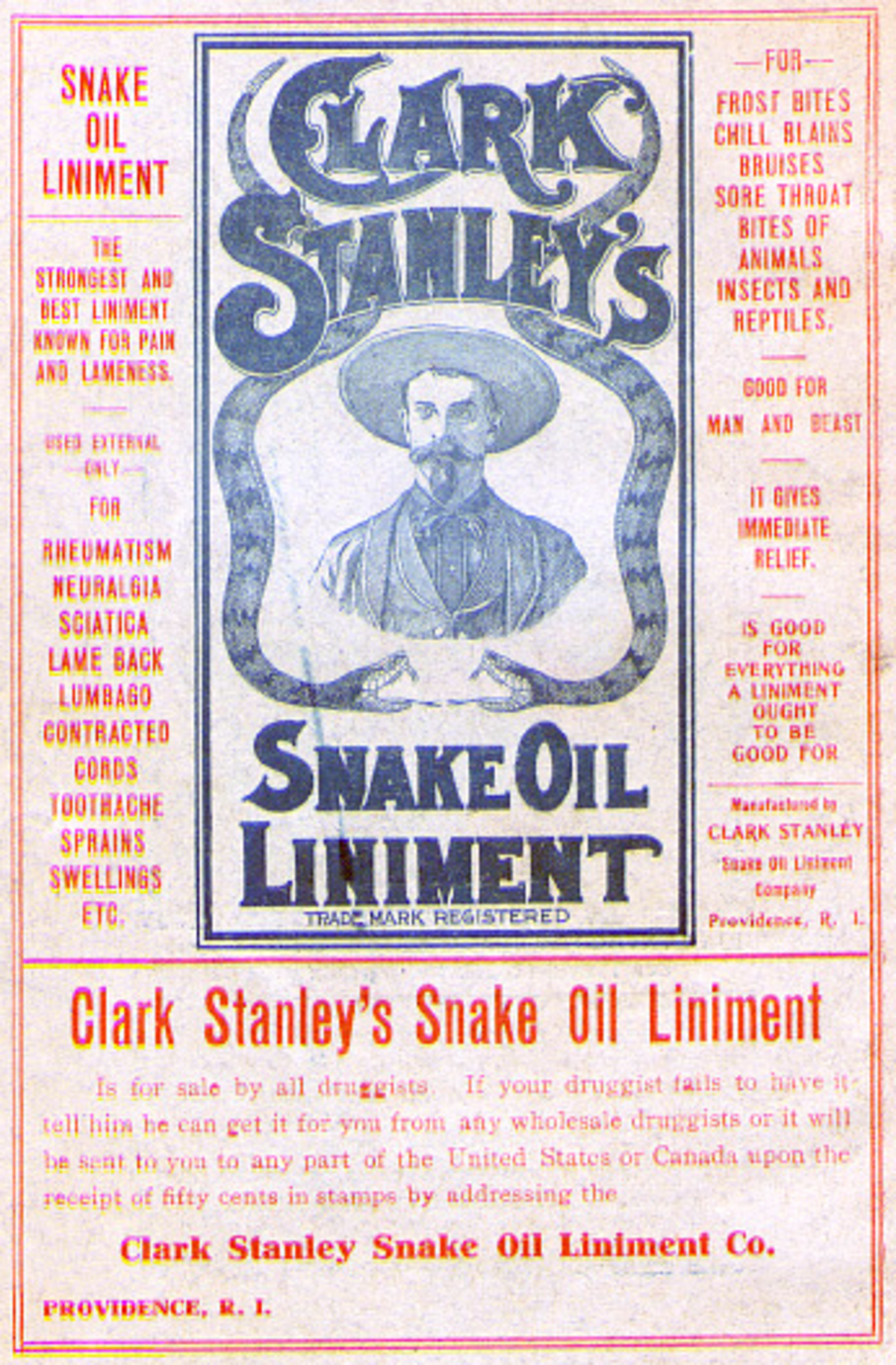
A person engaging in dishonest actions, such as selling false medicine, relies on external rewards like profit to justify the behavior to themselves. Clark Stanley, Public domain, via Wikimedia Commons
This need to eliminate mental friction drives confirmation bias, where people take in specific facts while ignoring opposing data. However, the mechanism also serves as a tool for change. Applied interventions use induced hypocrisy to trigger internal discomfort, helping shape pro-social behaviors or deradicalize extremists.
Test yourself
What causes the discomfort of cognitive dissonance?
A clash between beliefs and actions. Cognitive dissonance occurs when new facts or your own actions contradict an existing belief, producing mental tension.
A buyer regrets an expensive purchase. How does dissonance lead them to react?
They search for positive product reviews. To relieve the discomfort of making a mistake, people actively look for evidence that justifies their original decision.
When a belief fails, does the brain prefer to change the belief or invent a story to save it?
Invent a story to save it. Cognitive dissonance creates painful mental friction. The brain usually takes the path of least resistance, rewriting the narrative to protect the ego instead of discarding the faulty belief.
Play the lesson in edgi and the card is yours. It lands on your Map next to the ideas it connects to, and turns from matte to foil to gold as you learn more around it.
What are the three relationships between cognitions?
Cognitions share a consonant relationship when they agree, like ordering water to stay sober. They share an irrelevant relationship when unrelated, like wearing a blue shirt while avoiding alcohol. A dissonant relationship occurs when an action directly contradicts a goal, like drinking wine while trying to remain sober.
Who first developed the theory of cognitive dissonance?
Social psychologist Leon Festinger introduced the concept in his 1957 work, A Theory of Cognitive Dissonance. Influenced by Gestalt psychologist Kurt Lewin and his own research on Social Comparison Theory, Festinger explored how people evaluate internal friction.