Norse mythology is the collection of myths and religious beliefs belonging to the pre-Christian North Germanic peoples. Unlike many traditions with immortal rulers, its gods face inevitable destruction in a catastrophic battle called Ragnarök. The surviving stories center on deities such as Odin and Thor, their complex ties to other beings, and a cosmos destined to burn and restart.
By the edgi team We find the most surprising true thing about an idea and build a 60-second lesson around it.
Most religions promise eternal life. Norse mythology promises the apocalypse. The gods aren't immortal; they are warriors waiting for their final battle, known as Ragnarök.
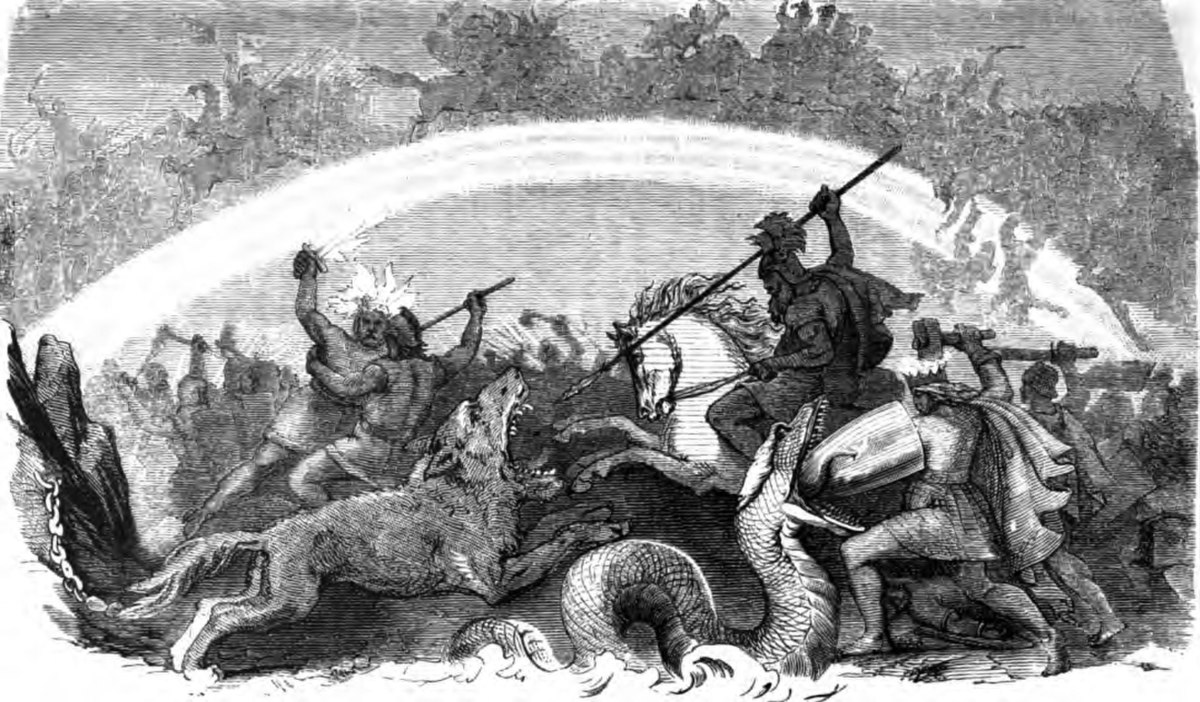
Engraving by Friedrich Wilhelm Heine from 1882 titled "Battle of the Doomed Gods," depicting a chaotic battle scene with gods fighting monstrous wolves and serpents. Friedrich Wilhelm Heine (1845-1921)., Public domain, via Wikimedia Commons
They know the world ends in fire and ice, and that even the sun will be eaten by a wolf.
The written record
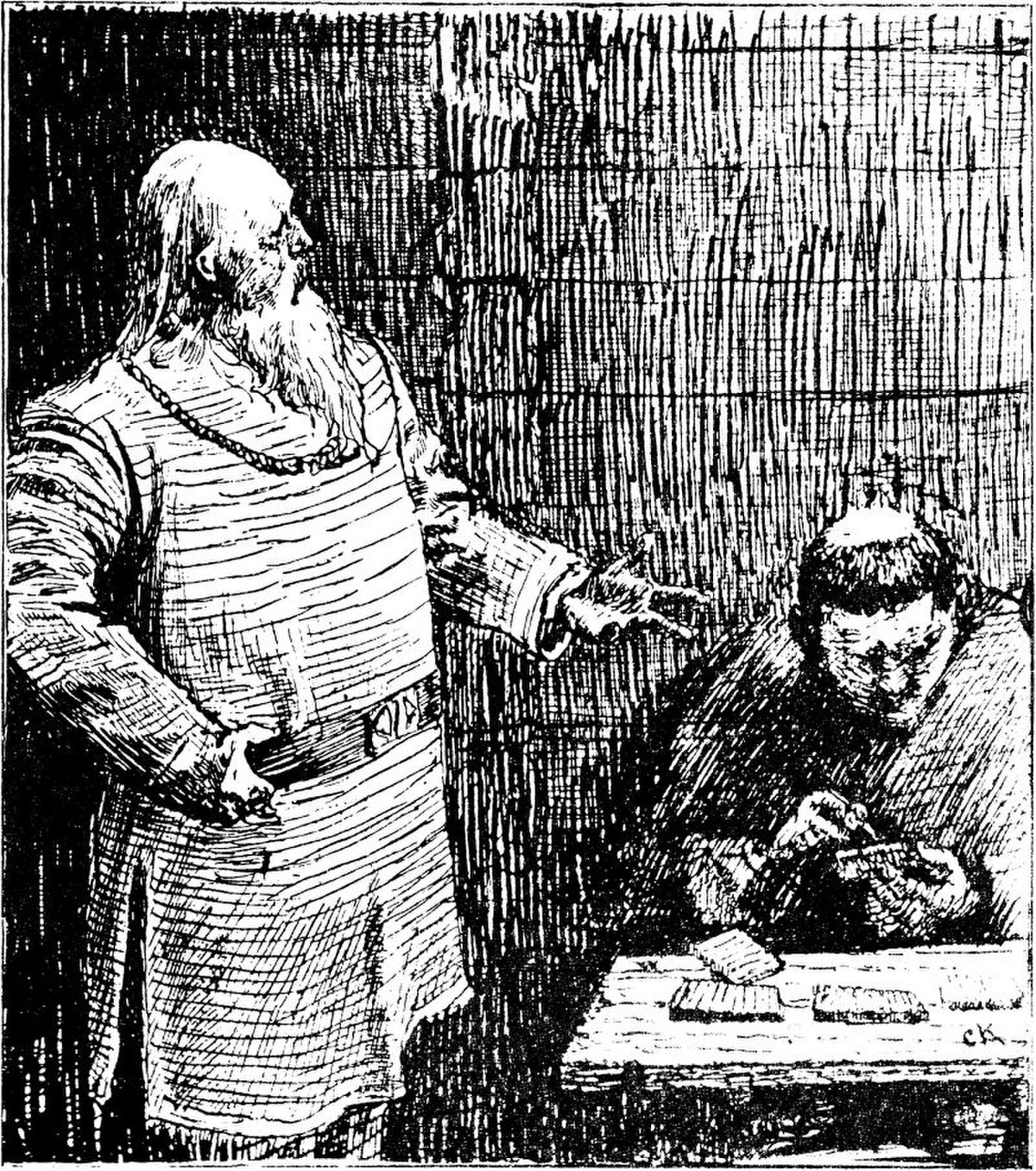
We almost lost these stories entirely. They were oral traditions until an Icelandic scholar named Snorri Sturluson wrote them down in the 13th century. He compiled the Prose Edda long after the Viking Age ended, preserving the poetic traditions of his ancestors before they vanished.
An illustration by Christian Krohg from 1899 depicting Snorri Sturluson, a prominent Icelandic historian and skald, standing and gesturing towards another figure seated at a table. Christian Krohg, Public domain, via Wikimedia Commons
The impossible leash
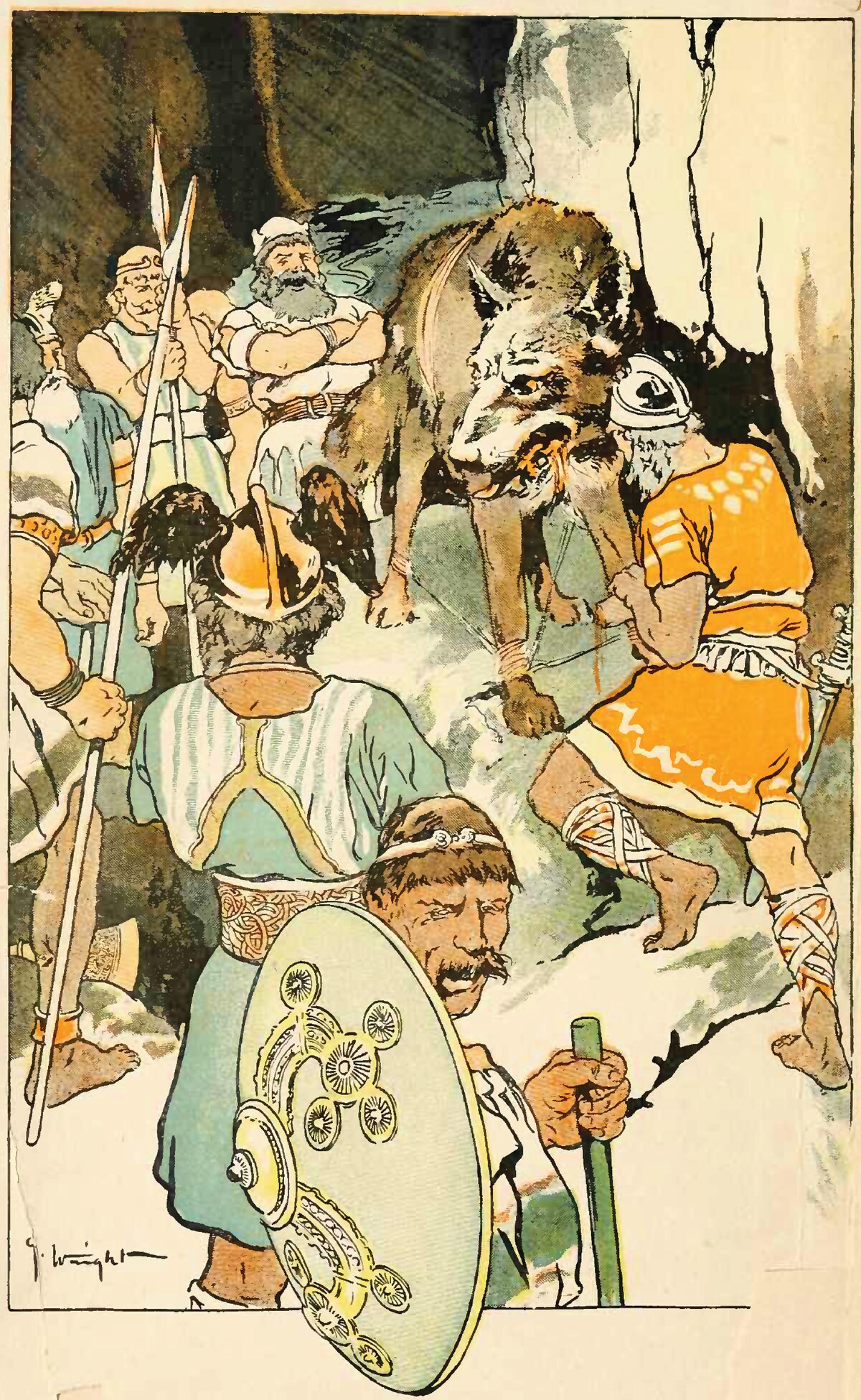
The gods once needed to bind the giant wolf Fenrir. Iron chains broke instantly, so they turned to magic. They forged a ribbon from things that do not exist: the sound of a cat’s footfall, the breath of a fish, and the beard of a woman.
An illustration by George Wright from 1908 showing the binding of Fenrir by several Norse gods. George Wright (1872-1951), Public domain, via Wikimedia Commons
Cosmology and the cycle of destruction
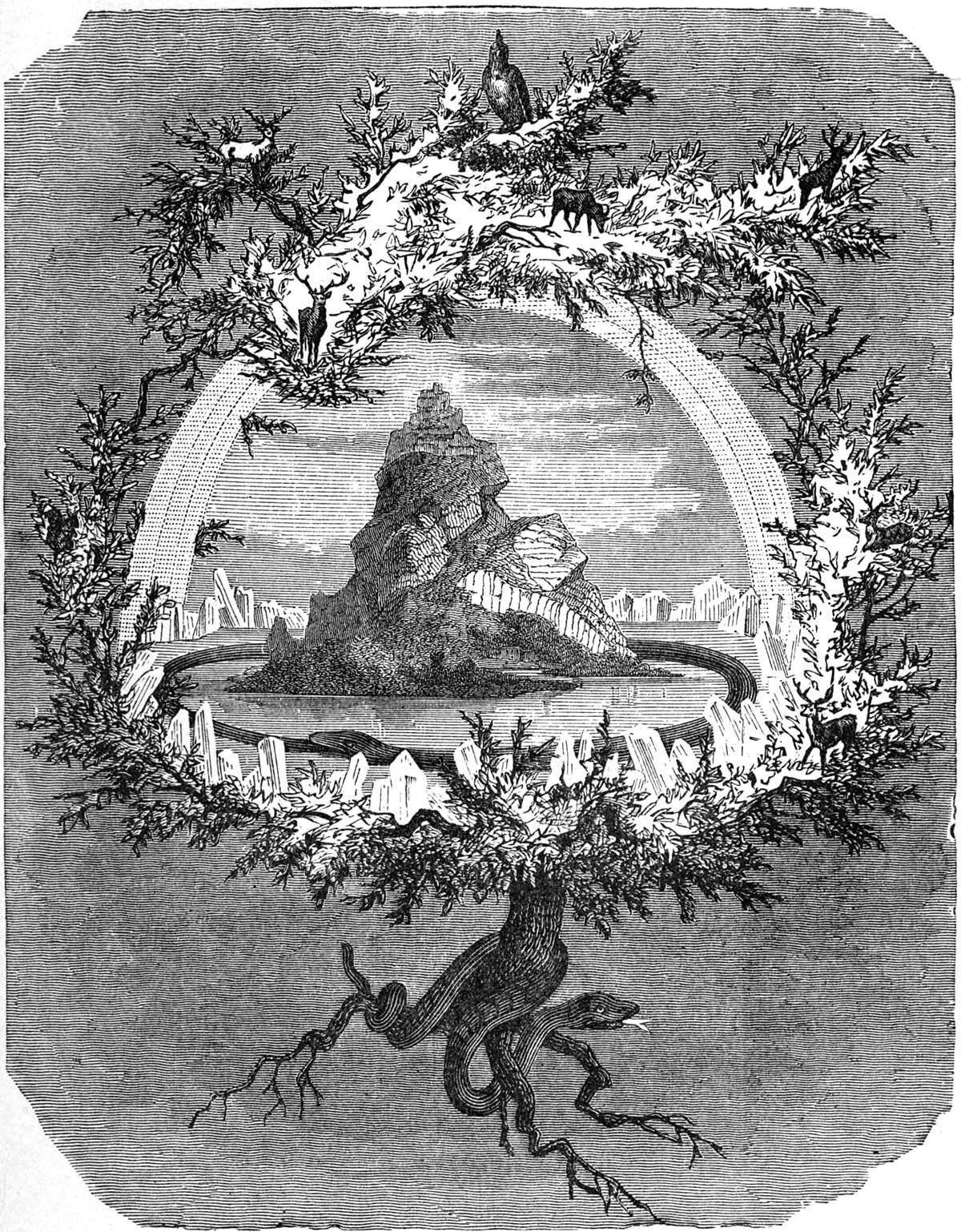
The Norse universe is organized around a sacred central ash tree named Yggdrasil, which is flanked by Nine Worlds. Creation began when the world was formed from the flesh of the primordial being Ymir, leading to the creation of the first two humans, Ask and Embla. Time units and natural elements are personified as active beings throughout this cosmos.
This 1886 illustration shows the central sacred ash tree Yggdrasil, which links the Nine Worlds of the Norse cosmos. Friedrich Wilhelm Heine, Public domain, via Wikimedia Commons
The entire cosmological system heads toward Ragnarök, a massive final conflict between the gods and their adversaries. During this event, the world is consumed by fire and destruction. After the flames settle, the land emerges fertile and green again, surviving gods gather, and two surviving humans repopulate the world.
How the myths were preserved
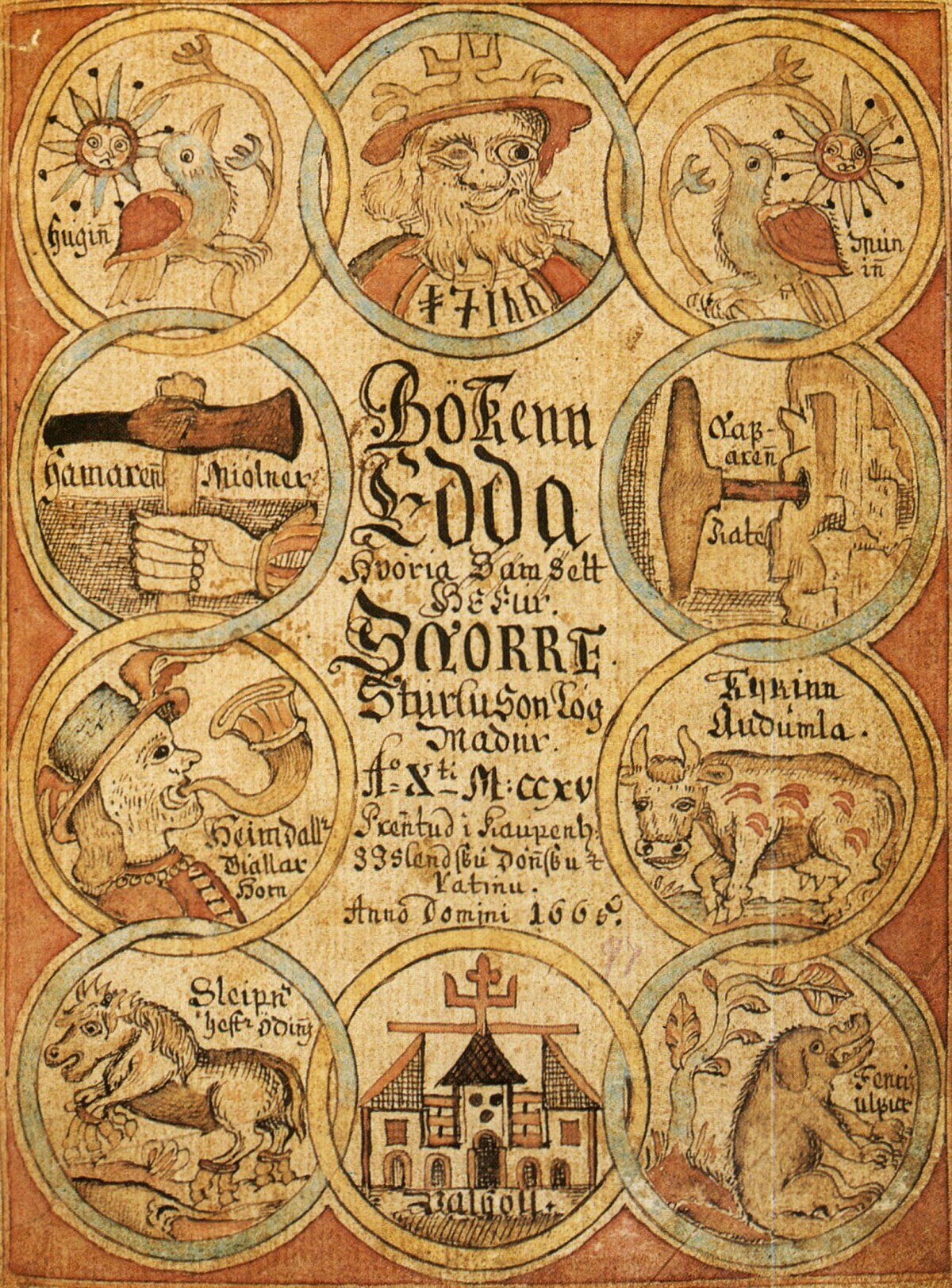
Most surviving Norse myths were recorded in 13th-century Iceland, long after the region had converted to Christianity. Oral traditions were collected into written manuscripts, primarily the Poetic Edda and the Prose Edda. The Prose Edda was assembled by the Icelandic historian and lawspeaker Snorri Sturluson as a guide for writing traditional skaldic poetry.
A late manuscript title page of Snorri Sturluson's 13th-century Prose Edda, depicting Norse deities such as Odin and Heimdallr. Unknown authorUnknown author, Public domain, via Wikimedia Commons
Because these texts were written down centuries after the Viking Age, authors sometimes used euhemerization, presenting the old gods as historical humans who wielded magic and were later deified. Physical artifacts also corroborate these written tales. Inscriptions on objects such as the Rök runestone and pagan burial amulets of Thor's hammer, Mjölnir, preserve references to the mythology outside Christian-era manuscripts.
Test yourself
In Norse myth, how do the gods respond to knowing Ragnarök is coming?
They prepare to fight it. Odin trains warriors in Valhalla and Heimdall readies his horn. The prophecy shapes how they act and does not stop them.
What does the Norse idea of fate most admire in a warrior facing certain defeat?
Meeting it with courage. The Norns set the outcome, but the myths value how a person meets it. Courage is remembered, and giving up is not.
What defines the unique heroism of gods in Norse mythology?
Facing inevitable defeat with honor. Norse gods know they are doomed to lose at Ragnarök, making their heroism about how they fight a losing war rather than winning.
Play the lesson in edgi and the card is yours. It lands on your Map next to the ideas it connects to, and turns from matte to foil to gold as you learn more around it.
The myths were primarily written down in dialects of Old Norse. This North Germanic language was spoken across Scandinavia during the European Middle Ages and is the ancestor of modern Scandinavian languages.
Who are the jötnar in Norse mythology?
The jötnar are a group of beings who interact constantly with the gods. Depending on the story, they act as friends, lovers, family members, or enemies of the deities.
What archaeological evidence exists for Norse mythology?
Archaeologists have found runestones like the Rök stone with inscriptions referencing mythical figures, small silver figures associated with valkyries or dísir, and amulets shaped like Thor's hammer Mjölnir buried in pagan graves.