PointillismPainting with dots instead of mixed paint
Pointillism is a painting technique where an artist applies small, distinct dots of pure color in patterns across a canvas rather than mixing paints on a palette. When a viewer steps back, their eyes and mind blend these separate dots into full tones. This method avoids dulling pigments through physical mixing, creating images that often appear brighter than traditional subtractive paintings.
By the edgi team We find the most surprising true thing about an idea and build a 60-second lesson around it.
Your brain is an eager mixer that prefers to finish images for you from a distance. Instead of mixing red and blue on a palette to make purple, artists like Georges Seurat placed thousands of tiny, pure primary-colored dots right next to each other.
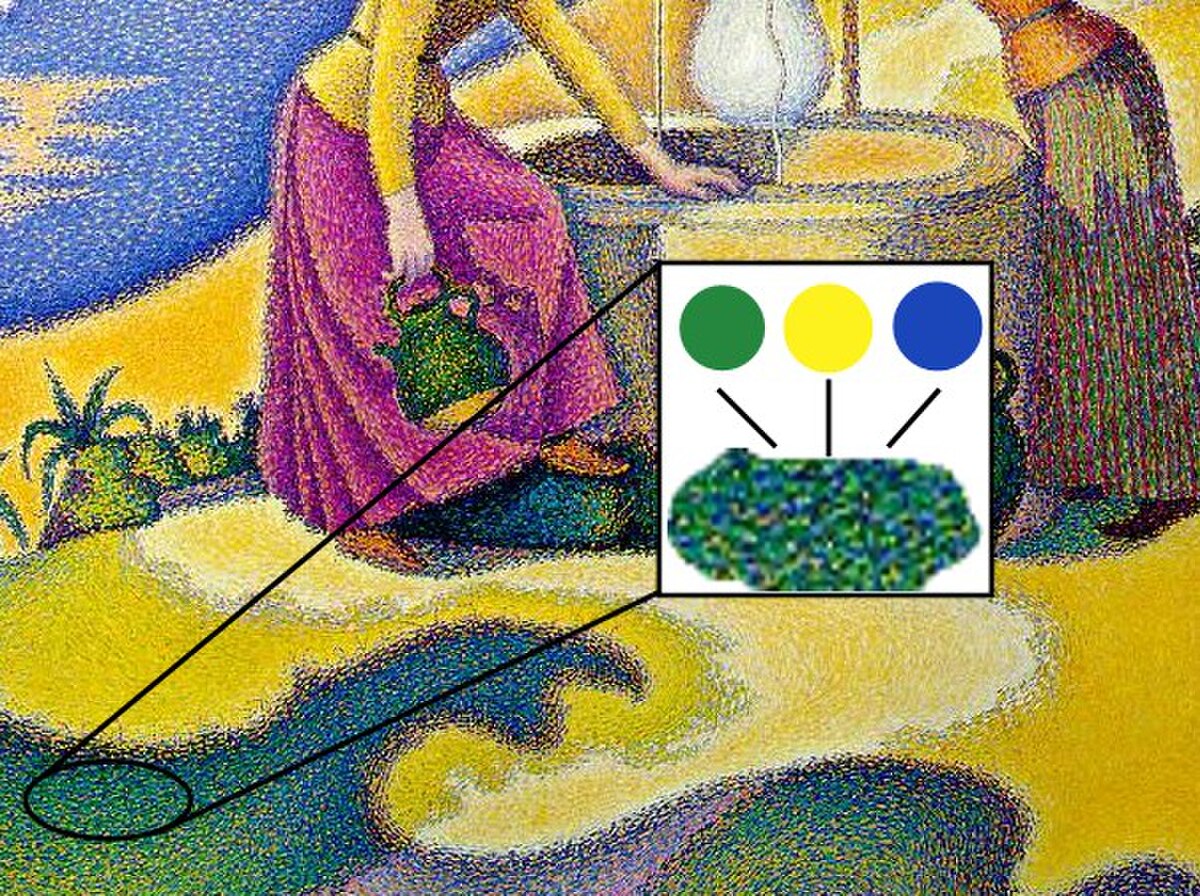
Detail of Paul Signac's 1892 painting "Femmes au puits" (Women at the Well), illustrating the pointillist technique. Piscis13, Public domain, via Wikimedia Commons
When you step back, your eyes can no longer distinguish the individual points, forcing your brain to perform an optical mix.
The two-year canvas
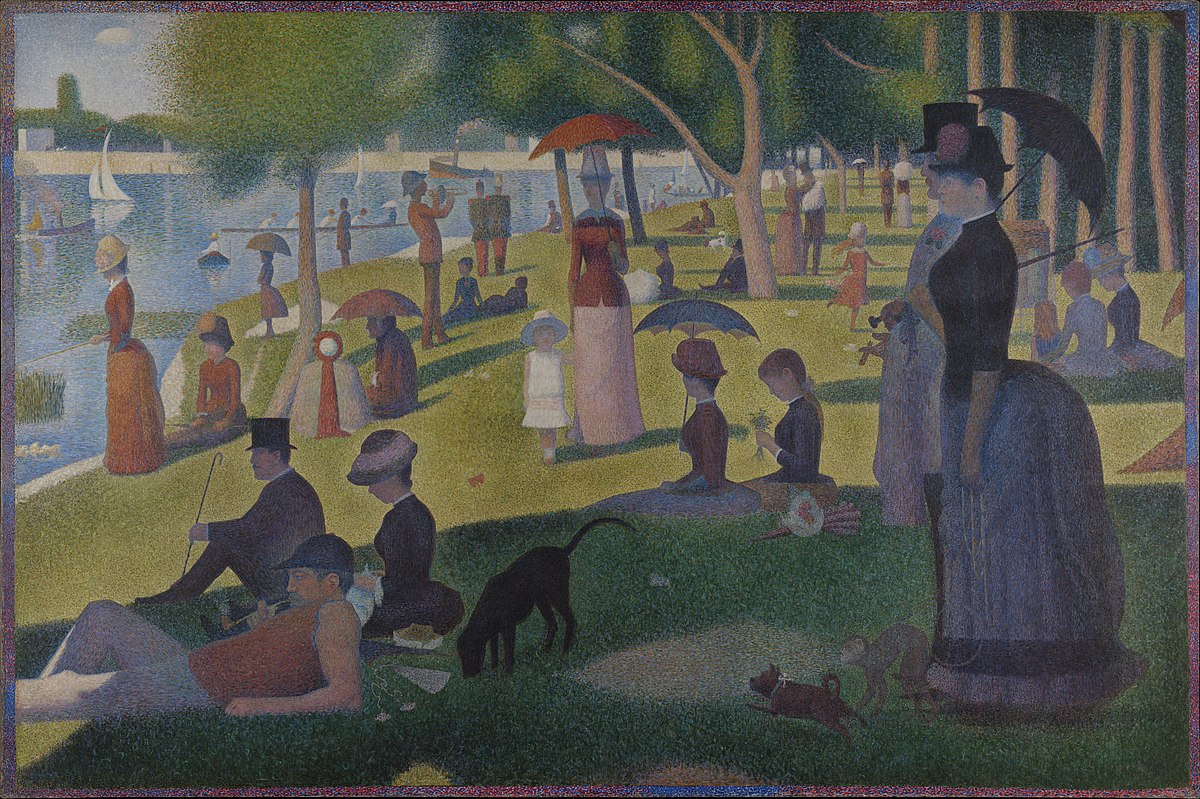
In 1884, Seurat spent two years obsessively applying millions of dots to a canvas nearly seven feet tall. He was applying the scientific color theory of Michel Eugène Chevreul, who discovered that colors look different depending on what is next to them.
Georges Seurat's iconic painting "A Sunday on La Grande Jatte, 1884" depicts numerous Parisians enjoying a leisurely day by the river, rendered in his signature pointillist style. Georges Seurat, Public domain, via Wikimedia Commons
Critics were horrified by this mechanical approach, mocking the style as flyspecks and coining the name Pointillism as an insult.
Proto-digital screens
This radical shift into Neo-Impressionism turned the canvas into a mechanical, calculated experiment. Just as your phone screen uses tiny red, green, and blue pixels to trick you into seeing a full spectrum, these painters anticipated digital displays.
Close-up macro photograph of the subpixels on a Samsung UA40M5860AKCHD TV screen. Ashkananisi7, CC BY-SA 4.0, via Wikimedia Commons
Every modern digital image is essentially a high-tech descendant of a 19th-century dot painting.
How optical mixing works on canvas
Traditional painters blend pigments on a palette before brushing them onto a canvas. Pointillism replaces this physical blending with an optical trick. Artists place unmixed, contrasting dots right next to one another. At a distance, the human eye cannot resolve the individual spots, forcing the brain to blend the colors together.
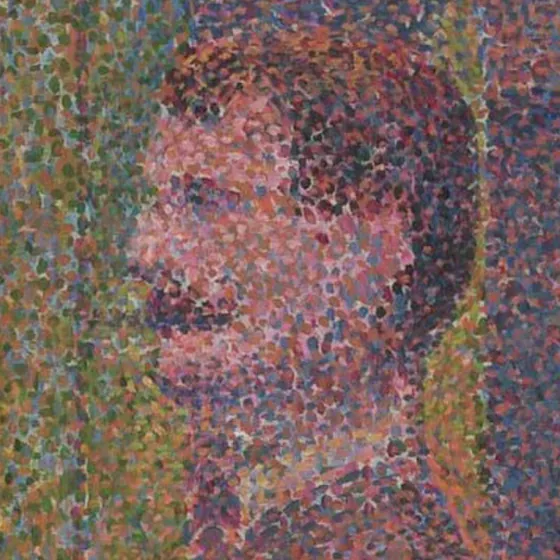
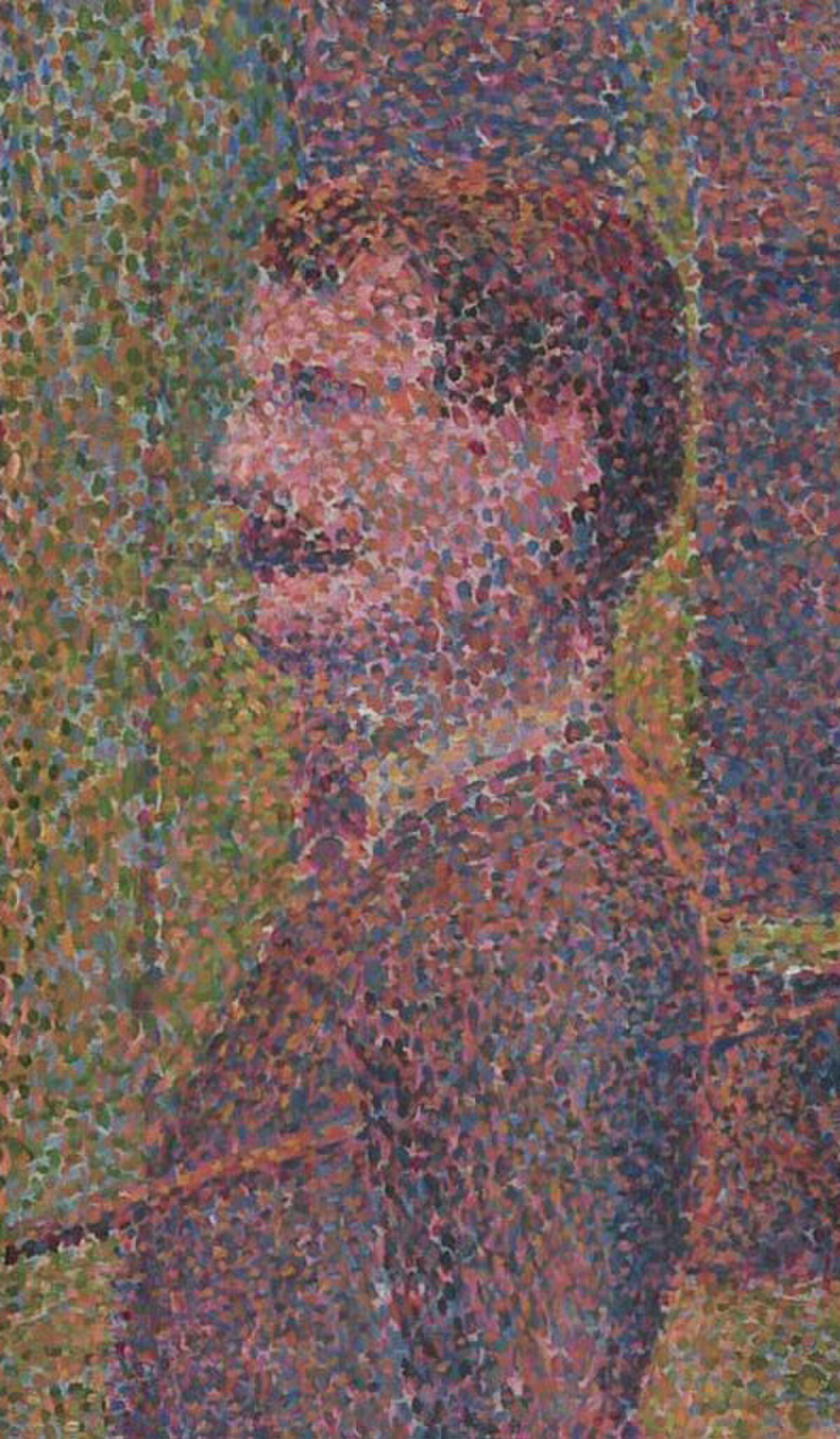
Up close, separate dots of unmixed paint remain distinct rather than blended into a smooth stroke. Georges Seurat, Public domain, via Wikimedia Commons
Physical paint mixing is subtractive, which tends to absorb light and darken the result. Because pointillist painters keep colors separated and sometimes let the white canvas show through between dots, the resulting colors look notably brighter. Most pointillists used oil paint because its thickness prevented the tiny dots from running or bleeding into one another.
The link to screens and modern printing
Pointillism works on the same basic optical mechanism used by modern color screens and industrial printing presses. Color computer monitors and televisions display images using tiny, separate red, green, and blue (RGB) light elements that the eye integrates into a full color spectrum.
Four-color CMYK printing presses use a similar approach by laying down patterns of tiny cyan, magenta, yellow, and black dots to build complex pictures. Pointillist painters arrived at this pixelated, mechanical logic decades before digital displays existed.
Pointillism versus Divisionism
Georges Seurat and Paul Signac developed Pointillism in 1886 as an offshoot of Impressionism, launching the Neo-Impressionist movement. While the terms are often paired, Divisionism focuses on scientific color theory, whereas Pointillism refers specifically to the brushwork style of applying distinct paint dots.
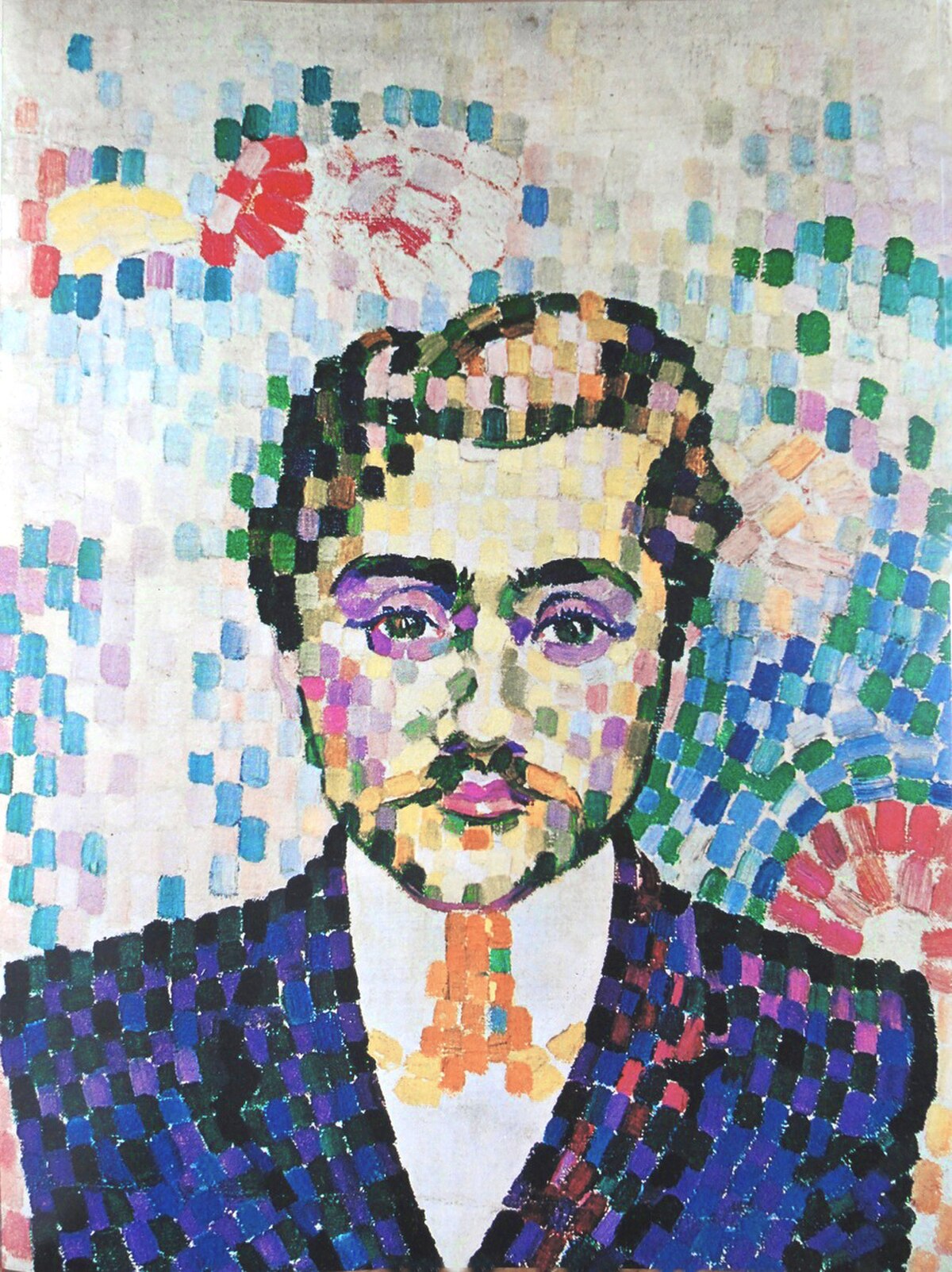
Robert Delaunay used larger, rectangular cubes of color rather than tiny round dots in this portrait of Jean Metzinger. Robert Delaunay, Public domain, via Wikimedia Commons
Art critics originally invented the name as an insult to mock the mechanical, calculated appearance of the paintings. Between 1905 and 1907, artists like Jean Metzinger and Robert Delaunay expanded the idea by using larger, cube-like brushstrokes, a variation that prompted critics to coin the term Cubism.
Play the lesson in edgi and the card is yours. It lands on your Map next to the ideas it connects to, and turns from matte to foil to gold as you learn more around it.
Most pointillist art is made with oil paint. Artists favored oils because the thick paint stays in place and does not run or bleed across neighboring dots.
What is musical Pointillism?
In 20th-century music, Pointillism refers to compositions where individual musical notes sound in seclusion rather than forming a linear melody. This technique is also known as punctualism or klangfarbenmelodie.
Who were the primary artists behind Pointillism?
Georges Seurat and Paul Signac developed the technique in 1886. Other notable painters who worked with the style include Henri-Edmond Cross, Camille Pissarro, Maximilien Luce, and Vincent van Gogh.