BrainwashingThe Cold War myth that science rejected
Brainwashing is the concept that a person can be forced to adopt new beliefs through manipulation techniques that overpower their will and judgment. It gained widespread attention during the Korean War to explain why captured soldiers appeared to support their captors. Mainstream psychologists and legal experts later rejected the concept, finding that it lacks scientific merit and that victims' thinking reverted once they left coercive environments.
By the edgi team We find the most surprising true thing about an idea and build a 60-second lesson around it.
The word brainwashing did not come from a psychology lab. It was invented in 1950 by journalist Edward Hunter. He was describing how Communist China remade minds, a fear that exploded when American prisoners of war in Korea began praising Communism.
The mechanism
Psychiatrist Louis Jolyon West later studied these returnees and uncovered the brutal reality behind the propaganda. The method relied on a cocktail of extreme sleep deprivation, isolation, and constant interrogation.
A film set designed to resemble a Japanese police interrogation room, featuring a plain room with a table, two chairs, and a clock on the wall. nesnad, CC BY 3.0, via Wikimedia Commons
This induced a state known as DDD: debility, dependency, and dread.
Milieu control
By strictly regulating every piece of information a person receives, captors create a closed environment. This total command over surroundings is called milieu control, a tactic later identified as a core tool of any destructive cult.
A Soviet propaganda poster featuring a stern-faced woman in a red headscarf holding a finger to her lips in a gesture of silence. Christopher Michel, CC BY 2.0, via Wikimedia Commons
How the concept started
The English word brainwashing translates the Chinese term xǐnǎo, meaning wash brain. Early 20th-century Chinese intellectuals used the phrase to mean modernizing thoughts, based on a Taoist idiom for cleansing the heart before sacred ceremonies. The Maoist government later applied coercive persuasion to remake individuals into compliant members of its social system.
Journalist Edward Hunter first introduced the term to English readers in an October 1950 newspaper article. Hunter, an anticommunist said to be an undercover CIA agent, used it to describe how China obtained cooperation from American prisoners of war. The phrase quickly spread across Cold War news headlines and political speeches.
What researchers and investigations found
In 1953, psychiatrist Robert Jay Lifton began interviewing returned American prisoners of war, as well as European priests and Chinese citizens subjected to university indoctrination. He discovered that once prisoners returned home to the United States, their thinking returned to normal, directly contradicting the belief that their minds had been permanently altered.
A 1956 U.S. Army report titled Communist Interrogation, Indoctrination, and Exploitation of Prisoners of War went further, officially calling brainwashing a popular misconception. The report determined that exhaustive investigations by multiple government agencies failed to uncover a single documented case of an American prisoner of war being brainwashed in Korea.
Brainwashing as a legal defense
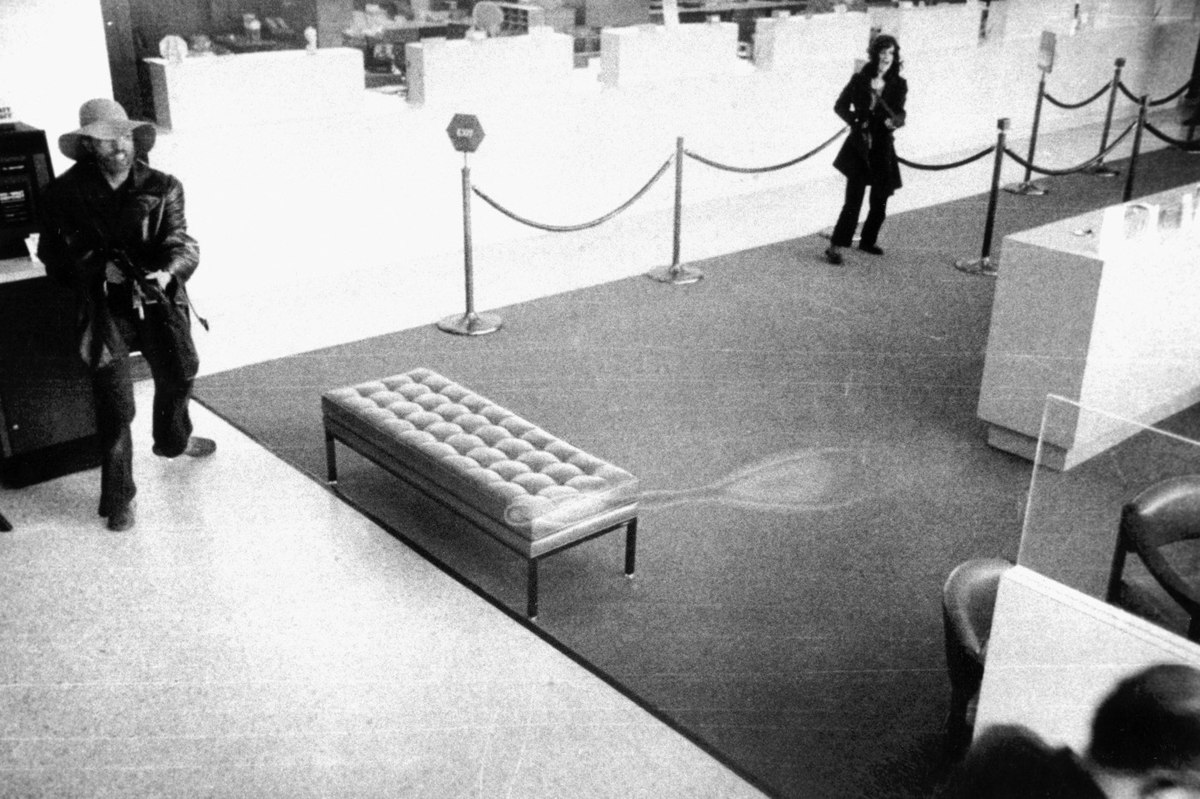
Attorneys have repeatedly attempted to use brainwashing to excuse criminal behavior. In 1974, nineteen-year-old Patty Hearst was kidnapped by the militant Symbionese Liberation Army and later joined them in armed crimes. During her 1975 bank robbery trial, defense lawyer F. Lee Bailey and psychologist Margaret Singer claimed Hearst had been subjected to the same coercive forces as Korean War prisoners, but the jury convicted her anyway.
Patty Hearst participating in a bank robbery alongside members of the Symbionese Liberation Army, an act her lawyers unsuccessfully blamed on brainwashing. Hibernia Bank's security camera, Public domain, via Wikimedia Commons
Courts eventually barred the defense entirely. In the 1990 mail fraud trial of Scientology member Steven Fishman, judges ruled brainwashing testimony legally inadmissible under the Frye standard, which requires expert testimony to rely on accepted scientific consensus.
Test yourself
Which situation best fits coercive persuasion rather than persuasion?
A group cutting off a member's contacts and food until they agree. Isolation, control of information, and punishment for disagreement remove the person's ability to refuse. The other cases are forceful, but the person can still leave or disagree.
What most separates coercion from strong persuasion?
Whether you can walk away. Persuasion can be intense and still leave you free to leave, compare sources, or refuse. Coercive persuasion removes those options and controls the person's surroundings.
After escaping coercive control, what is the more common lasting harm?
Trauma symptoms like flashbacks. Schein found most POW beliefs faded once the pressure ended. The lasting damage tends to be trauma symptoms and a shaken sense of self.
Play the lesson in edgi and the card is yours. It lands on your Map next to the ideas it connects to, and turns from matte to foil to gold as you learn more around it.
Did psychologists expand brainwashing theories beyond war prisoners?
Psychologists Margaret Singer and Philip Zimbardo expanded the concept to explain how people join and remain in new religious movements or cults. Legal bodies and mainstream scholars rejected these expanded mind control theories as lacking scientific merit.
Why did the U.S. military promote brainwashing claims during the Korean War?
U.S. officials used brainwashing allegations to discredit public confessions made by American captives. When captured officers made radio broadcasts confessing to biological warfare, military leaders blamed coercive Communist interrogation methods rather than admitting the statements were genuine.
How is the word brainwashing used in casual speech?
In everyday language, people use brainwashing figuratively to describe intense advertising campaigns or political propaganda designed to influence public opinion.