Psychological ManipulationControl disguised as your choice
Psychological manipulation is a deliberate effort to control or influence someone through subtle, underhanded methods to advance personal goals. Unlike standard persuasion, it operates at the target's expense by exploiting their vulnerabilities and cognitive shortcuts. It often leads people to act against their own interests while believing they made an independent choice.
By the edgi team We find the most surprising true thing about an idea and build a 60-second lesson around it.
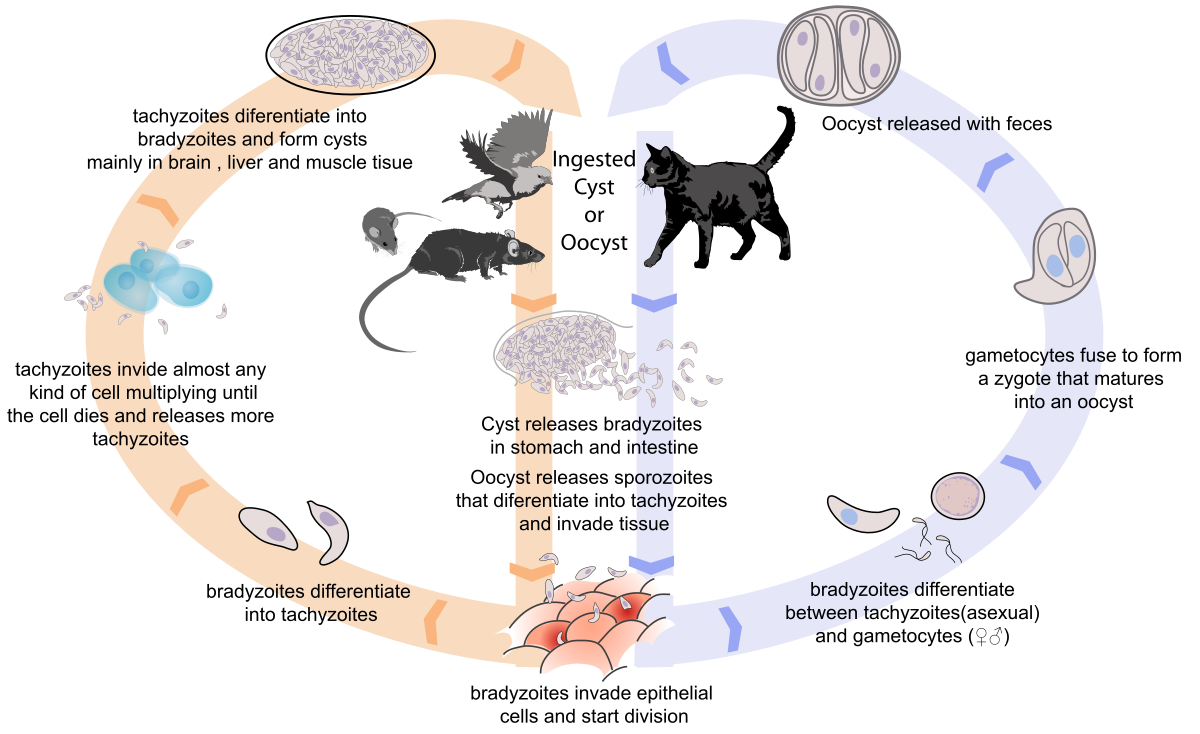
Toxoplasma gondii is a parasite that needs to reach a cat's stomach to reproduce. It infects rats and rewires their amygdala, the brain's fear center.
A detailed diagram illustrating the life cycle of Toxoplasma gondii, showing the infection pathway between cats, rodents, and other animals. LadyofHats, Public domain, via Wikimedia Commons
Suddenly, the smell of cat urine, normally a terrifying warning, becomes an aphrodisiac. The rat walks directly into the cat's jaws, convinced it is choosing its own path.
The human parallel
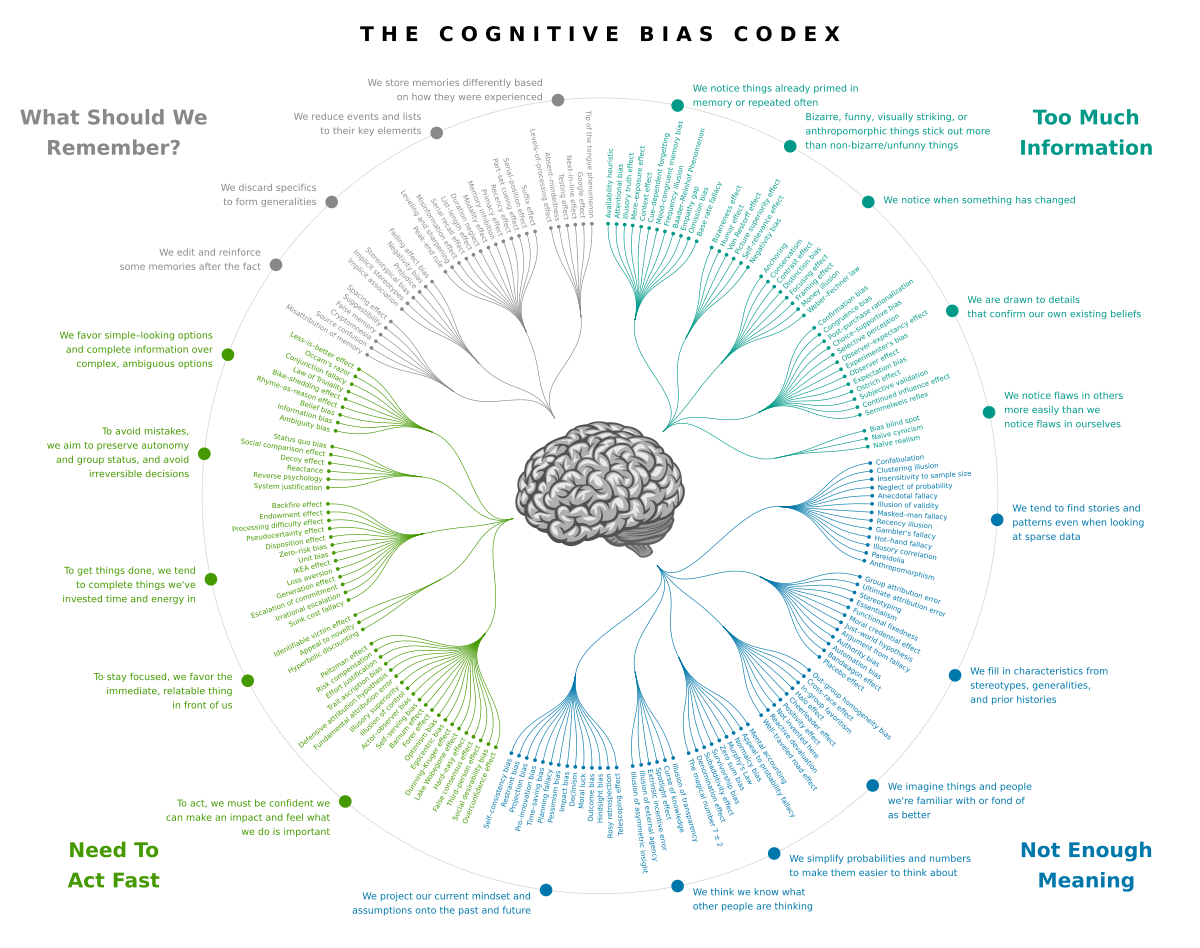
Human manipulation works on the same principle: rewiring the target's internal reality. Manipulators exploit cognitive biases, the mental shortcuts our brains use to make decisions.
The Cognitive Bias Codex, a radial diagram illustrating various cognitive biases categorized by their underlying causes. design: John Manoogian III categories and descriptions: Buster Benson implementation: TilmannR, CC BY-SA 4.0, via Wikimedia Commons
By controlling information or triggering emotions like fear or guilt, they make you feel like you are acting freely. You aren't just being tricked; your own brain is being recruited to rationalize the manipulator's agenda.
The telltale signs
Unlike the parasite, humans use social tactics like gaslighting or love bombing to create this effect. If you ever feel like you are making a choice that contradicts your own best interests, pause.
A promotional still from the 1944 film "Gaslight" shows Charles Boyer, Ingrid Bergman, and Joseph Cotten in character. Unknown authorUnknown author, Public domain, via Wikimedia Commons
Ask yourself if the desire is truly yours, or if it has been implanted by someone else's carefully curated reality.
How manipulation differs from persuasion
Influence and persuasion are standard, neutral parts of communication. Persuasion seeks to change beliefs or behaviors toward a specific goal without removing a person's freedom to accept or reject the proposal. Non-manipulative influence is considered harmless because it does not rely on deception or coercion.
Manipulation crosses into antisocial behavior by deliberately exploiting personal vulnerabilities for one-sided benefit. The manipulator knows what they want and intentionally uses covert tactics such as seduction, suggestion, coercion, or blackmail. The defining mark is that the manipulator advances their own agenda at the direct expense of the target.
Core tactics identified by researchers
In psychological research led by David Buss, investigators categorized specific tactics people use to alter social environments and control others. Charm is frequently deployed to start a behavior, while coercive acts or the silent treatment are used to halt unwanted actions.
Researchers identified twelve distinct manipulation tactics used across romantic relationships, friendships, and families. These include charm, reason, coercion, silent treatment, debasement, regression, responsibility invocation, reciprocity, monetary reward, pleasure induction, social comparison, and hardball tactics involving threats, deception, and aggression.
Personality traits and digital manipulation
Consistent personality markers appear in chronic manipulators, including low empathy, high narcissism, cold-heartedness, and dominant interpersonal styles. Studies linking tactics to Big Five traits show that disagreeable individuals lean toward coercion, emotionally unstable individuals use regression, and highly agreeable people favor pleasure induction.
Manipulation also operates at scale through digital platforms. Technology enables organizations to collect personal data without informed consent, as seen when Cambridge Analytica harvested millions of Facebook profiles to target political advertising and alter user opinions.
Test yourself
How does psychological manipulation make a choice seem freely made?
It steers reasoning while preserving a sense of choice.. Manipulation can steer choices by shaping information or triggering emotions, then recruit the target’s own reasoning to justify the manipulator’s aims.
Which situation is an example of psychological manipulation?
Faking an illness to make someone stay. Faking an illness manufactures false guilt and distorts reality to force a specific reaction without honest consent.
What is the key difference between persuasion and psychological manipulation?
Whether the true motive is hidden. Persuasion allows people to evaluate open arguments. Manipulation conceals true motives or distorts facts to control the outcome.
Play the lesson in edgi and the card is yours. It lands on your Map next to the ideas it connects to, and turns from matte to foil to gold as you learn more around it.
The word originally comes from the French term manipule, a pharmacist's unit of measure meaning a handful. In the nineteenth century, it shifted from meaning physical handling by hand to handling or influencing people for personal gain.
Do family environments influence manipulation styles?
Yes. Studies of high school students and their parents found significant familial aggregation in manipulation tactics, showing strong correlations between the tactics parents use and the ones their offspring adopt.
What is hardball manipulation?
Hardball is an explicit manipulation strategy documented by psychologists. It relies on direct pressure tactics, including threats, outright deception, and overt aggression to force compliance.