A casino game is a game of chance where players gamble cash or chips on random outcomes, usually against the casino itself. While players can win money in the short term, every game is mathematically built with a house edge that guarantees the casino profits over thousands of bets.
By the edgi team We find the most surprising true thing about an idea and build a 60-second lesson around it.
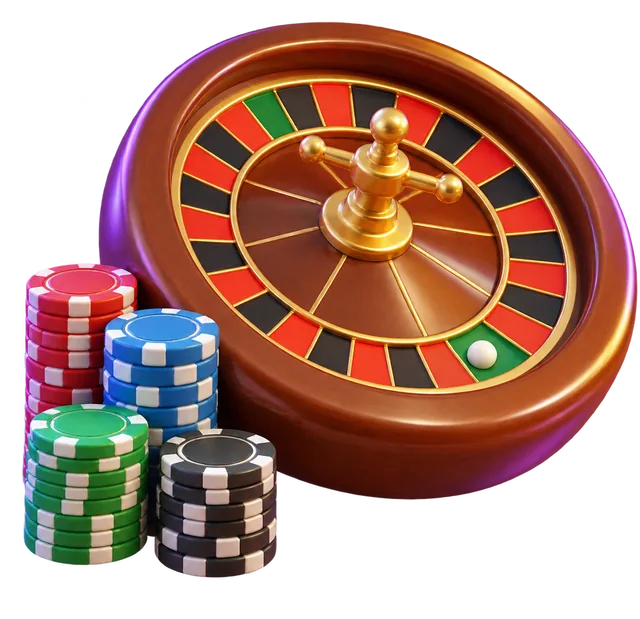
Every casino game is designed with a house edge, a built-in mathematical advantage that ensures the casino profits over time. On a roulette wheel, the green zero isn't just a number; it is the house's profit margin.
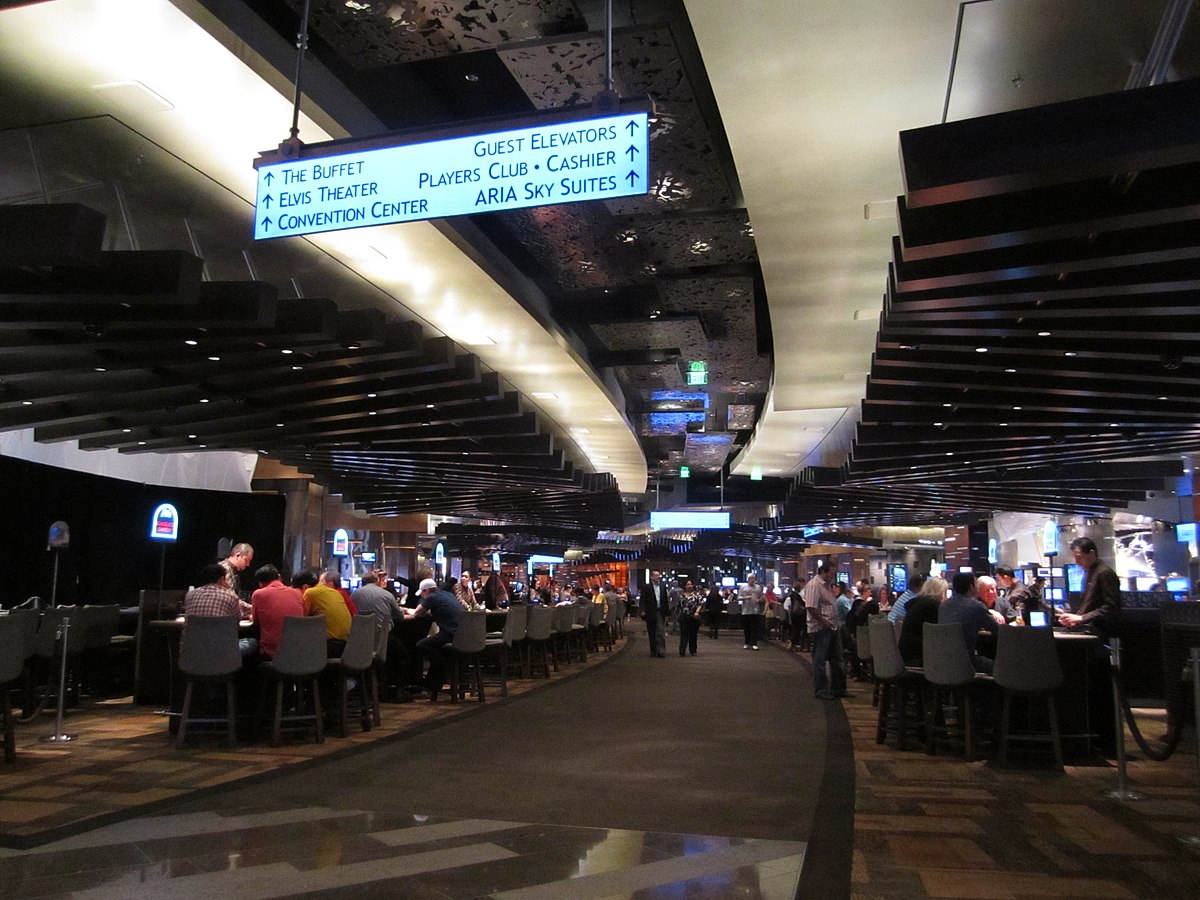
The casino floor of the Aria Resort and Casino in Las Vegas, with rows of gaming tables and slot machines. La Citta Vita, CC BY-SA 2.0, via Wikimedia Commons
It doesn't matter if you win a round or two. Over thousands of bets, the house edge is a statistical certainty.
The one game that remembers
In the 1960s, a math professor named Edward Thorp realized Blackjack was different. Because cards are dealt from a deck without replacement, the remaining cards 'remember' what has already been played.
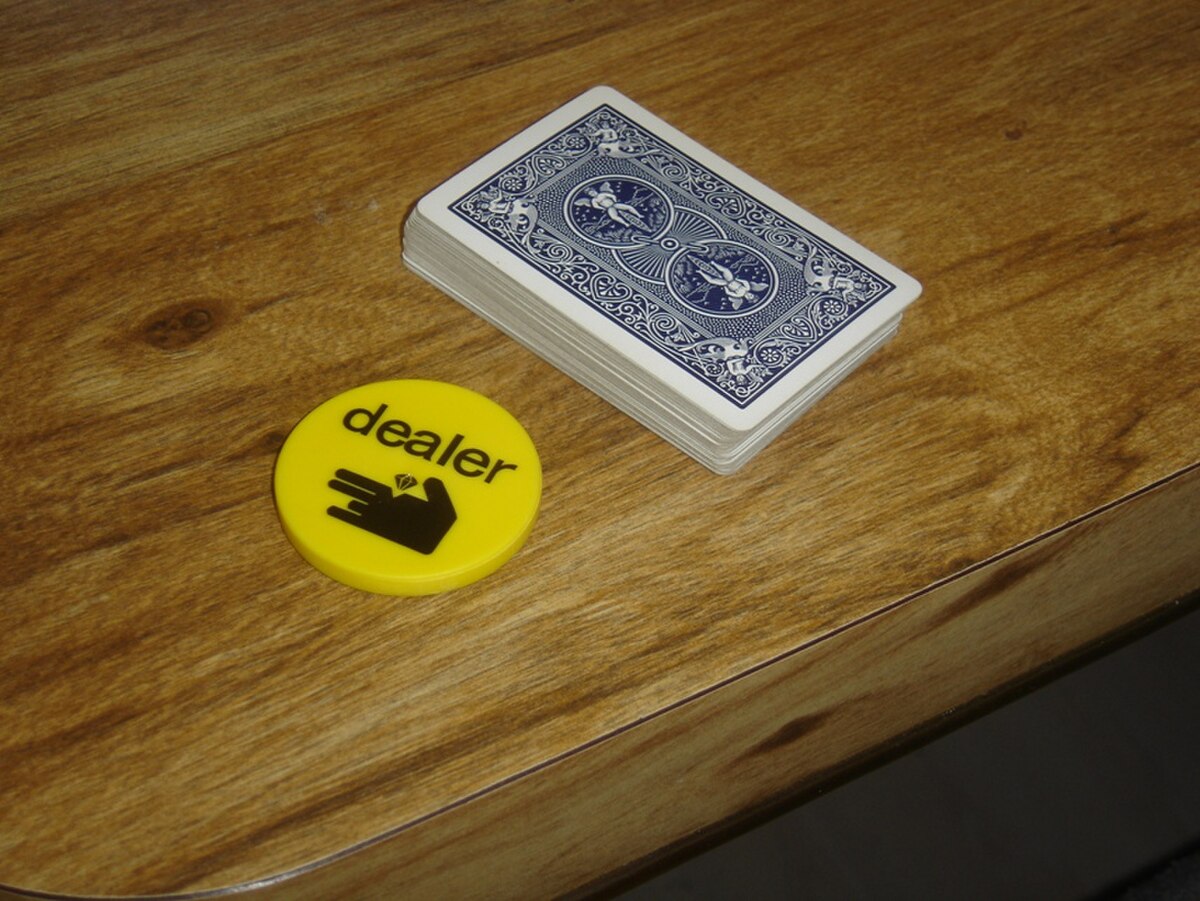
A hand holds a deck of playing cards in a mechanic's grip, with the blue-backed cards facing the viewer. Editoratlarge55, CC BY-SA 4.0, via Wikimedia Commons
Thorp used an early IBM computer to prove that tracking those cards could actually flip the odds in the player's favor through card counting.
The sensory trap
Casinos didn't change the math of Blackjack; they just added more decks and banned anyone who looked like they were counting. Today, they use sensory engineering, windowless rooms, free drinks, and slot machines tuned to specific musical keys, to keep you playing.
Yellow poker dealer button chip and a deck of blue playing cards resting on a wooden table surface. JohnDoe0007, CC BY-SA 4.0, via Wikimedia Commons
The goal is to separate you from your money not by force, but by time.
Categories of casino games
Casino games fall into three general categories: table games, gaming machines, and random number games. Table games like blackjack, baccarat, craps, and roulette are operated by casino employees called dealers or croupiers, with players betting directly against the house. In some legal jurisdictions, casinos are restricted to machines, leading to electronic table games where players use seated terminals or touchscreens instead of live dealers.
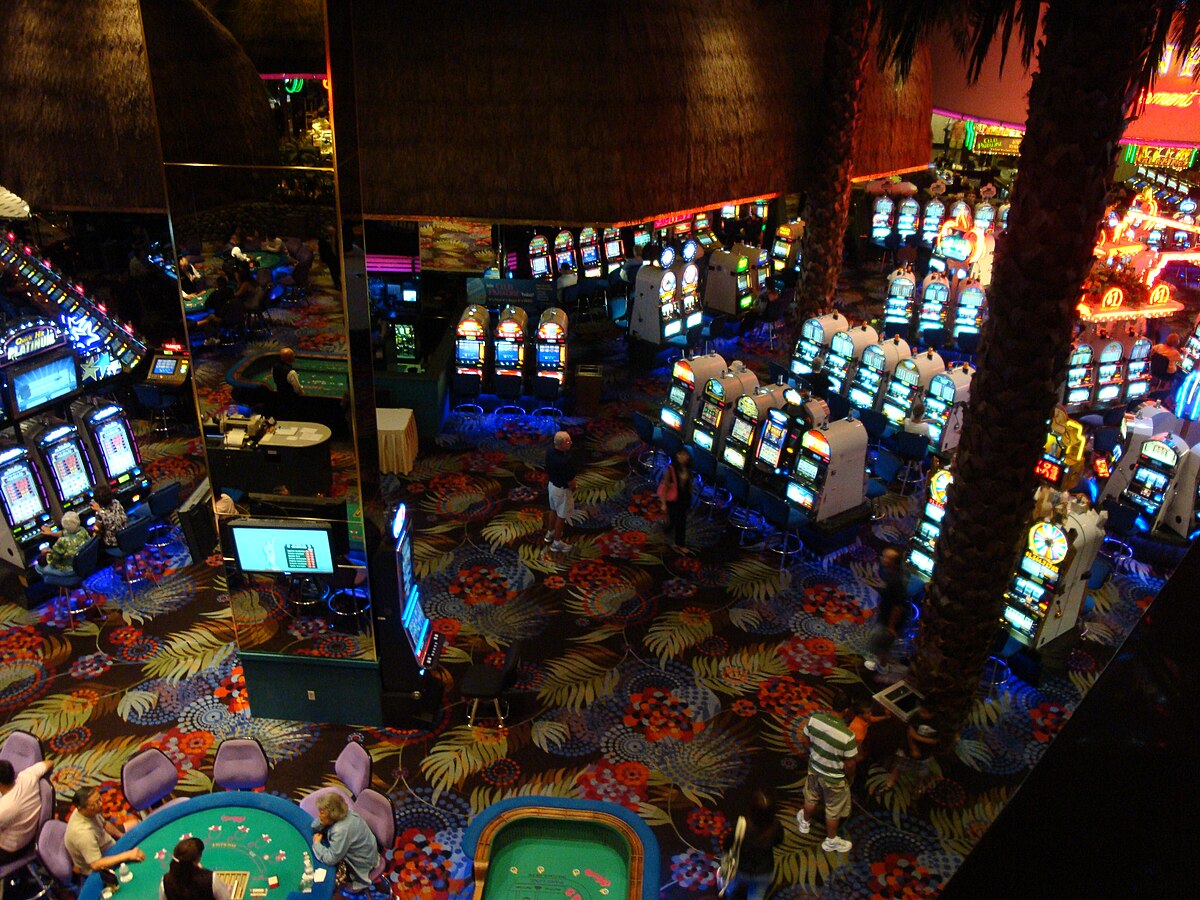
This casino floor layout displays table games managed by croupiers alongside rows of independent electronic gaming machines. Jim G from Silicon Valley, CA, USA, CC BY 2.0, via Wikimedia Commons
Gaming machines, including slot machines and pachinko, are played by single players without casino staff. Random number games rely on computerized generators or equipment to draw results for games like keno and bingo. Some games blend categories: roulette uses a live dealer alongside a wheel that generates random outcomes.
How the house edge works
The casino generates profit not by luck, but by paying winning bets below their true mathematical odds. True odds represent the payout that would occur if the casino took no profit margin. For example, if a player bets on a single number on a six-sided die, the true odds are 6 to 1, but a casino might only pay 4 times the wager.
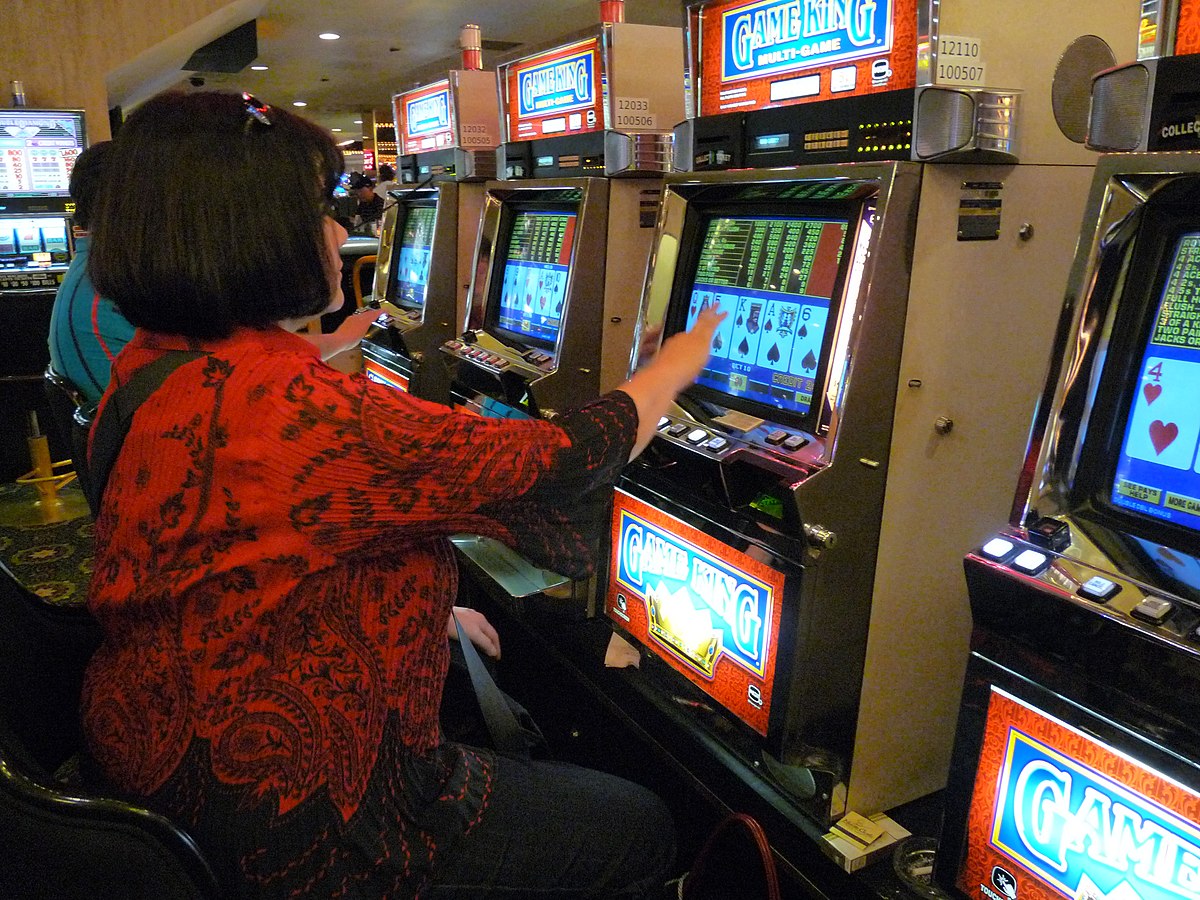
Slot machines operate with hidden reel weightings, creating house edges that can reach up to 15 percent. Craig Howell from San Carlos, CA, USA, CC BY 2.0, via Wikimedia Commons
This built-in profit margin is called the house edge, defined as the casino profit expressed as a percentage of the player's original bet. On an American roulette wheel with a 0 and a 00, the house edge is 5.26%, whereas a European wheel with a single zero has an edge of 2.7%. The edge varies across the floor: blackjack can drop as low as 0.3% under optimal play, while slot machines reach up to 15% and keno reaches up to 25%.
Skill and advantage play
Some casino games contain a skill element where player choices alter the mathematical outcome. In games like blackjack, mathematical basic strategy dictates the optimal move for every possible hand depending on the rules and deck count.
Players who use advanced skills to completely eliminate the house advantage are known as advantage players. Techniques like card counting track played cards from a shoe to spot shifts in probability, flipping the mathematical advantage from the casino to the player.
Test yourself
How does a casino game house edge guarantee profits over time?
Through the mathematics of large numbers. The house edge relies entirely on probability working out over thousands of bets rather than rigging any single round.
Does the house edge in a casino game require the game to be rigged?
No, it relies on probability.. The house edge is a mathematical reality built into the rules, not a result of cheating. If you play enough rounds, probability ensures the casino profits without the game needing to be rigged.
Play the lesson in edgi and the card is yours. It lands on your Map next to the ideas it connects to, and turns from matte to foil to gold as you learn more around it.
What is the difference between American and European roulette?
American roulette wheels have both a single zero and a double zero, giving the casino a 5.26% house edge. European roulette wheels feature only a single zero, which reduces the house edge to 2.7%.
What is an electronic table game?
Electronic table games are automated machine versions of traditional games like craps, roulette, and blackjack. They range from heads-up individual consoles to stadium setups where many players bet on terminals while watching a single dealer.
Do all casino games have the same house edge?
No, the house edge varies significantly depending on the game. Blackjack played with optimal basic strategy can have an edge as low as 0.3%, while keno can have a house edge as high as 25%.