Gambling is the wagering of money or something else of value on a random event with the intention of winning a prize. While individual players can win across a few bets, commercial operators design games with a built-in mathematical edge that guarantees a profit over high volumes of play. The activity spans ancient dice games to modern regulated casinos generating hundreds of billions of dollars annually.
By the edgi team We find the most surprising true thing about an idea and build a 60-second lesson around it.
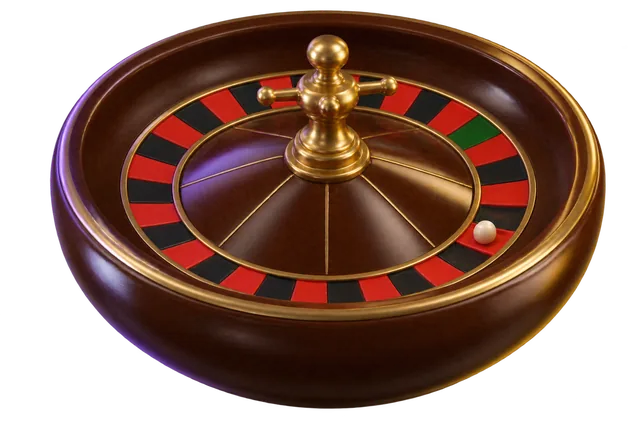
An American roulette wheel has 38 pockets: 1 through 36, plus a 0 and a 00. A bet on a single number pays 35 to 1. Those are the two numbers. So take the luck out of it. Put a dollar on every one of the 38 numbers at once, and one of them is certain to come up.
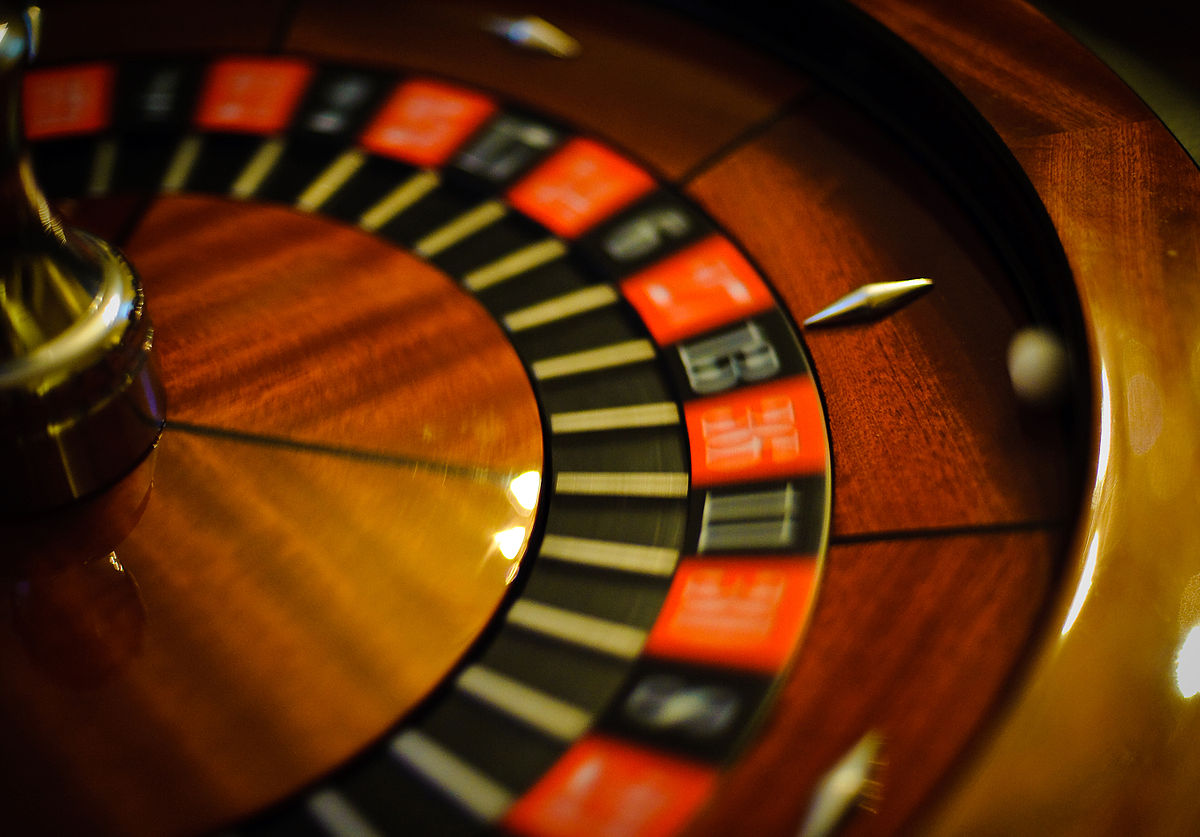
A close-up shot of a roulette wheel in motion, with the ball resting in a numbered slot. Conor Ogle from London, UK, CC BY 2.0, via Wikimedia Commons
It does. You collect your dollar back plus 35 more, which is $36, and you put $38 on the table to get it. You won the spin and you are two dollars down. Two dollars out of thirty-eight is 5.26 percent. That is the house edge: the gap between the true odds and what a win pays, printed in the rules where anyone can read it.
Volume is the weapon
5.26 percent is a weak weapon against one player. Over ten spins anything can happen, plenty of people walk out ahead, and the near misses in between keep the rest in their seats. Against a million spins it is overwhelming. Every extra bet drags the result closer to the average, and the average belongs to the house.
So the casino is not trying to beat you. It is manufacturing bets. Nevada's casinos won $15.6 billion in 2024 by keeping a few cents on each of an enormous number of them.
The building is the business
A casino floor is designed around that count. No clocks and no windows, so the hours are hard to notice. Free drinks, so you stay in the chair. Comps paid out in more time on the floor. Cash becomes chips once, at the table, and the chips stay on the felt. You hand money over a single time and then bet all night without opening your wallet again.
The Flamingo opened in Las Vegas on 26 December 1946 and set the template: wrap the arithmetic in a resort people want to be inside, and they will stay for days. The edge itself never changes. What the building buys is the number of times you meet it.
The Flamingo resort in Las Vegas in 1957, showing the original structure with a large vertical Flamingo sign. David Lofink, CC BY 2.0, via Wikimedia Commons
The three elements of a wager
Every gamble requires three specific components: consideration (the amount wagered), risk (a chance event), and a prize. If any of these three elements is missing, the activity is not gambling under the standard legal definition. The outcome can be immediate, like a single roll of the dice or spin of a roulette wheel, or spread out across months, like a wager on the winner of an entire sports season.
Stakes do not have to be official currency. Anything with perceived value can serve as consideration. Players have used marbles, collectible game pieces like Pogs, or trading cards from games such as Magic: The Gathering to place bets, creating a secondary market centered on the worth of the items.
A brief history of betting
People wagered on chance long before written records began. The earliest known six-sided dice appeared in Mesopotamia around 3000 BCE, evolving from carved animal bones known as astragali that were used thousands of years earlier. Playing cards, lotto games, and dominoes emerged in China between the 9th and 10th centuries CE.
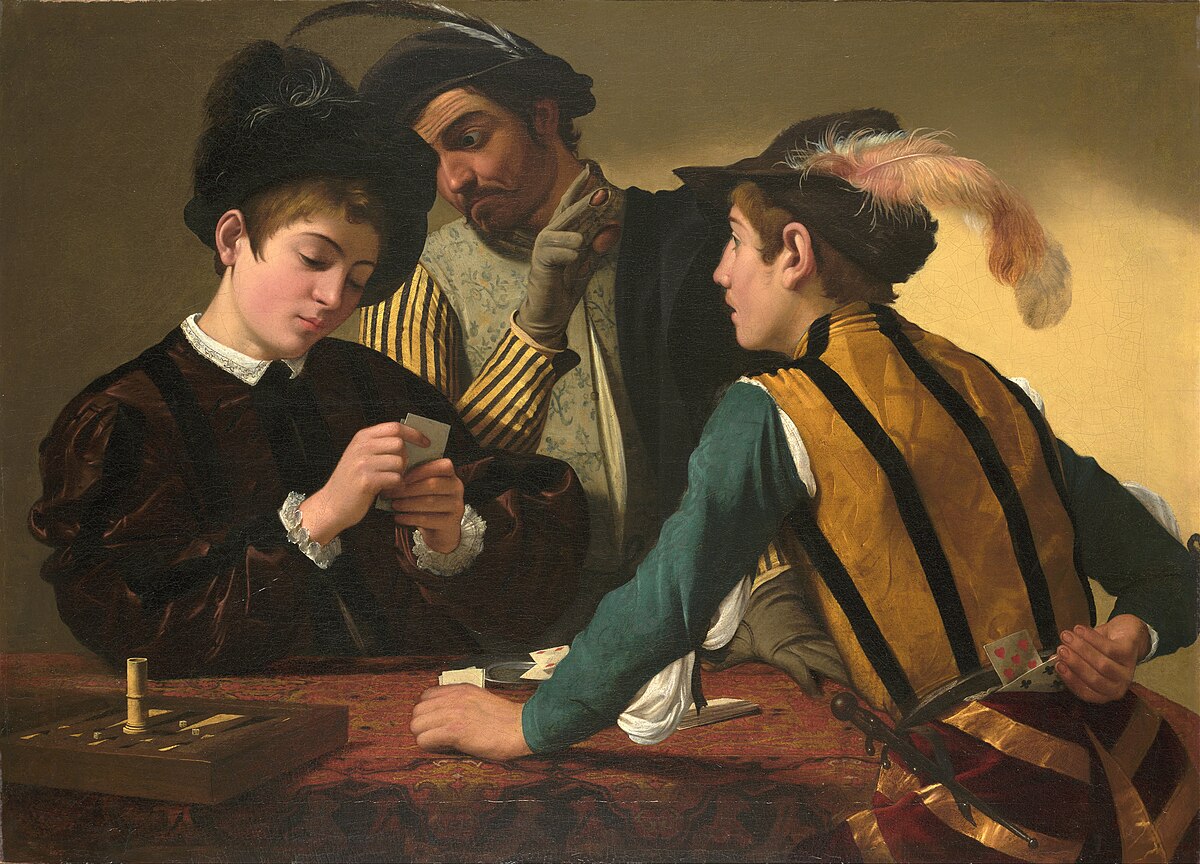
Caravaggio's 1594 painting The Cardsharps illustrates the centuries-long history of card games played for money. Caravaggio, Public domain, via Wikimedia Commons
Commercial venues designed purely for betting arrived later. Venice opened the first known casino, the Ridotto, in 1638. Poker, the most popular card game associated with gambling in the United States, evolved from a 17th-century Persian card game called As-Nas.
Regulation and the law
Governments handle gambling by banning it outright, heavily taxing it, or strictly licensing operators through agencies like the Nevada Gaming Control Board or the UK Gambling Commission. The legal gambling industry reached an estimated $335 billion worldwide in 2009. In places such as Macau and Monaco, legal operations supply a major share of total government revenue.
Regulators often enforce minimum age limits and require devices to be statistically random, preventing manufacturers from rigging games to make high payouts impossible. The law also draws a sharp line between gambling and insurance: while both depend on uncertain future outcomes, an insurance policy requires the buyer to hold a financial interest in the property itself, such as a home, independent of the wager.
Test yourself
A betting app drops its minimum deposit and adds a one-tap "repeat bet" button. What is it optimising?
Bet count, because a fixed edge only pays out across volume. Both of the others would raise the take on any single bet. Only one of the three raises the number of bets, and the number of bets is the only term in the house's arithmetic it can actually move.
A casino could raise its roulette edge from 5 percent to 15. Why might it not?
Because a visible bleed empties the table, and the edge is paid in hours. Payout floors do exist on some machines, but nothing stops a casino building a worse wheel; single-zero and double-zero wheels sit on the same floor at different edges. What stops it is that players leave, and a player who leaves stops placing bets.
What was the main purpose of 'skimming' in early Las Vegas casinos?
Taking untaxed profit. Skimming allowed organized crime to take untaxed cash directly from the casino's daily earnings before it was officially recorded.
Play the lesson in edgi and the card is yours. It lands on your Map next to the ideas it connects to, and turns from matte to foil to gold as you learn more around it.
What is the difference between gaming and gambling?
The word gaming traditionally refers to gambling activities specifically permitted by law. Today, the term is also used to describe playing video games or computer games that do not involve placing bets.
Can stolen money lost in a casino be recovered?
Under English common law precedents such as Lipkin Gorman v Karpnale Ltd, a gambling contract may not grant a casino bona fide purchaser status. This legal ruling allows victims to recover stolen funds gambled away by another person, minus specific legal defenses.