Human echolocationSeeing shapes and walls through sound
Human echolocation is the ability to detect and map objects by producing sounds and listening to the returning echoes. The brain calculates the distance, size, and material density of surroundings from these reflected sound waves. In people who are blind, this process can entirely replace sight by activating the visual areas of the brain to process acoustic space.
By the edgi team We find the most surprising true thing about an idea and build a 60-second lesson around it.
In the 1940s, researcher Karl Dallenbach set out to explain the mysterious obstacle sense reported by blind individuals. He blindfolded sighted students and had them walk toward a wall, discovering they could easily avoid collisions.
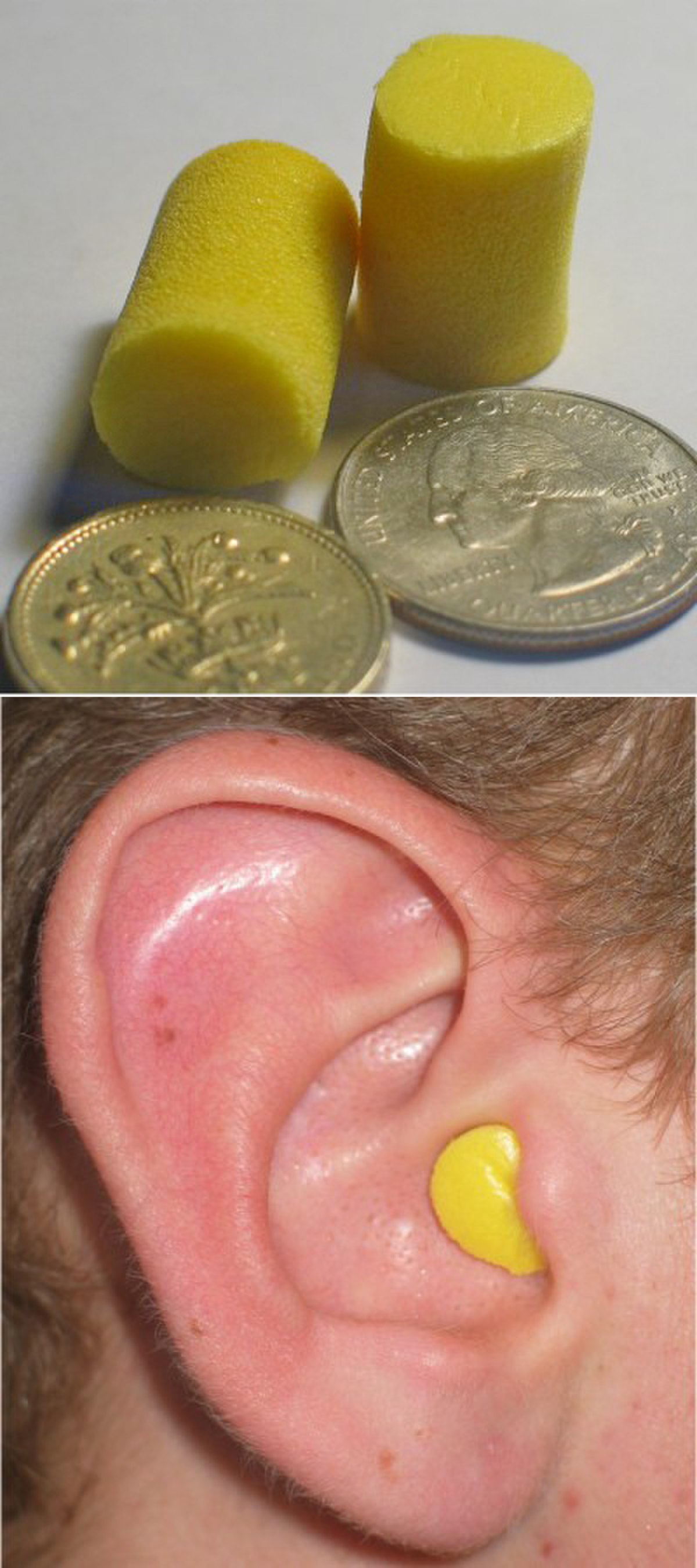
When he plugged their ears, however, their ability to sense the wall vanished instantly.
Two images of disposable foam earplugs: the top image shows two yellow earplugs next to a British 10 pence coin and a US quarter for scale, and the bottom image shows a yellow earplug inserted into a… Public domain, via Wikimedia Commons
Seeing with sound
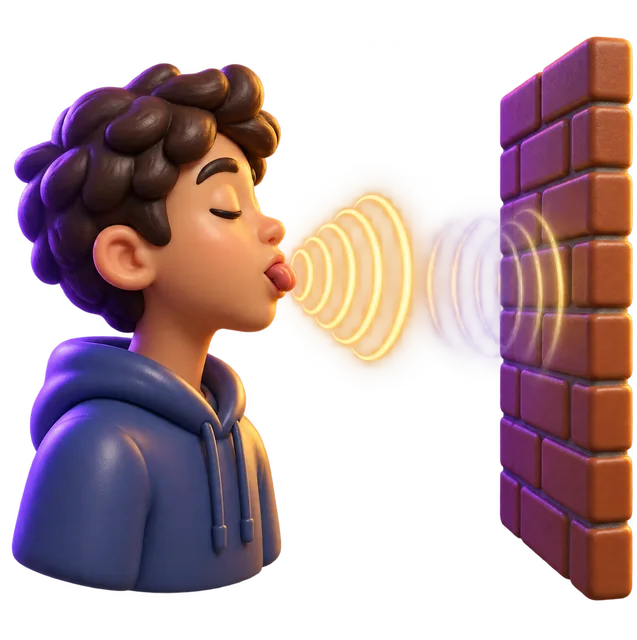
The secret engine of this spatial navigation is hearing, not a psychic power. By making sharp tongue clicks and listening to how the sound bounces back, humans can detect objects.
The brain interprets these returning echoes to determine an object's distance, size, and density.
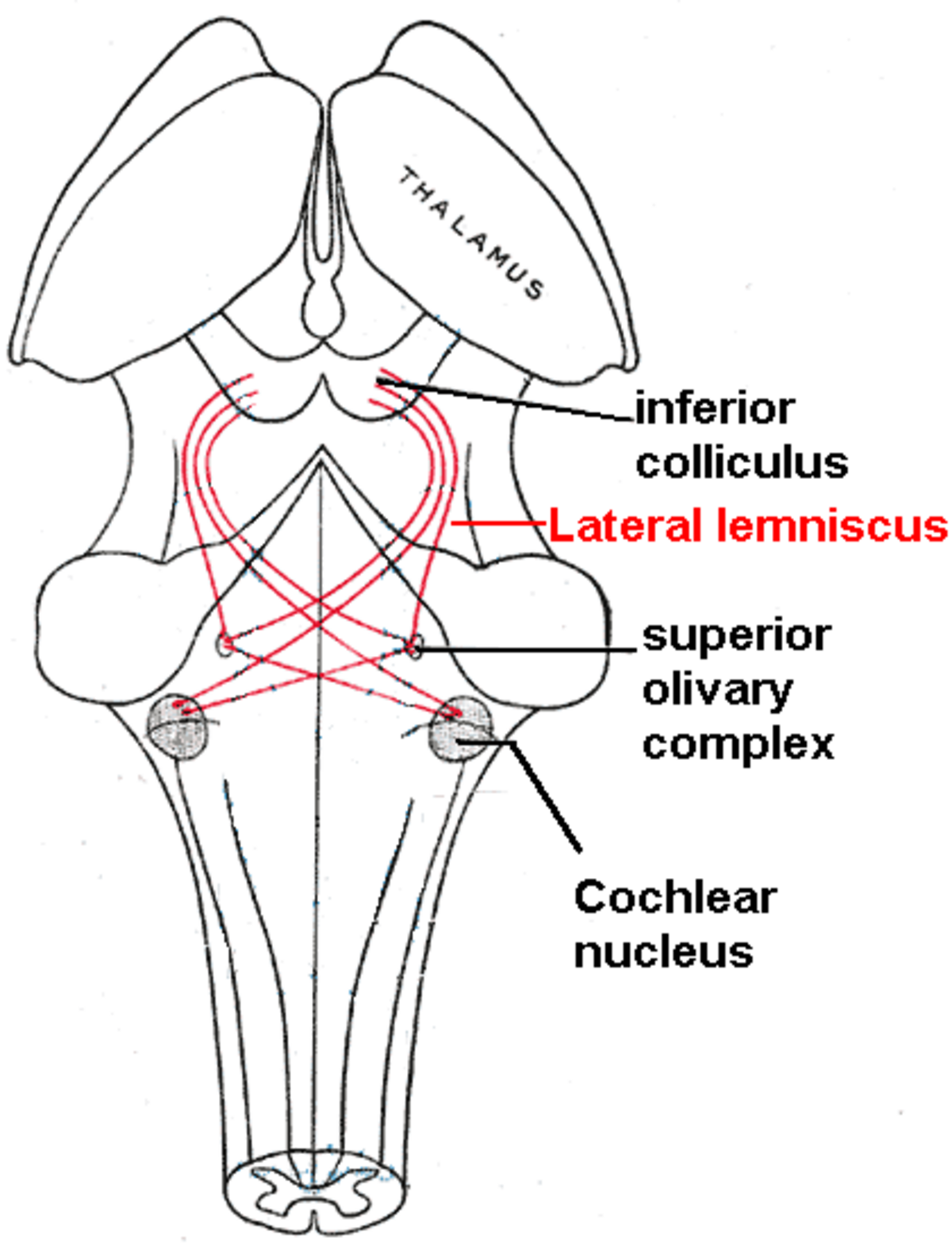
Diagram of the human brainstem and thalamus, highlighting the auditory pathways. User:Mikael Häggström, Public domain, via Wikimedia Commons
The visual cortex
Human echolocation is a striking example of sensory substitution, where one sense replaces another. Brain scans show that people who are blind repurpose their visual cortex to process these complex echoes.
Expert practitioners can even mountain bike through rugged terrain, distinguishing a metal pole from a wooden fence purely by sound.
How sound reveals shape and density
Echoes carry spatial information that functions much like reflected light. Both sight and hearing rely on detecting reflected energy waves. While eyes capture bounced light waves, ears capture bounced sound waves to construct a layout of the physical world beyond arm's reach.
Listeners can distinguish specific structures by tracking an echo's distance, direction, height, breadth, and solidity. An object that sounds tall and narrow is recognizable as a pole, while one that starts narrow at the bottom and spreads wide at the top registers as a tree. Solidity changes the acoustic return: a low, solid obstacle sounds like a table, a low and sparse object sounds like a bush, and a tall, broad, sparse structure indicates a fence.
How the brain processes echoes
Brain scans reveal that blind echolocators process acoustic reflections using the primary visual cortex, also known as V1. This visual area of the brain normally processes light in sighted individuals, but neuroplasticity allows it to reorganize and compute spatial echoes instead.
In a 2014 study by Thaler and colleagues, researchers recorded mouth clicks and their faint echoes using microphones inside the ears of blind echolocators standing near cars, flagpoles, and trees. When these recordings were replayed inside an fMRI scanner, the visual cortex lit up in response to the echoes, while auditory brain areas showed no extra activation. Sighted non-echolocators listening to the same audio showed no echo perception and no visual cortex activity.
Play the lesson in edgi and the card is yours. It lands on your Map next to the ideas it connects to, and turns from matte to foil to gold as you learn more around it.
What is the difference between active and passive echolocation?
Passive echolocation relies on listening to natural sounds already present in the environment as they bounce off obstacles. Active echolocation involves deliberately generating sharp sounds, such as tongue clicks, foot stomps, cane taps, or finger snaps, to create immediate echoes.
Why do sighted people struggle to notice echoes?
Sighted individuals usually experience an echo suppression phenomenon caused by the precedence effect, which filters out faint reflections. Sighted people with normal hearing can still learn to detect obstacles through sound when trained.
What physical activities can expert echolocators perform?
Trained echolocators can identify complex environments like doorways, ascending steps, curbs, and parked cars. Some use these sound cues to run, skateboard, rollerblade, play basketball, and ride mountain bikes through wilderness trails.