Laziness is the emotional reluctance to act or exert effort even when you have the physical or mental capacity to do so. Rather than a simple character flaw, it often stems from low motivation, distraction, or your brain conserving energy when the effort outweighs the expected reward. While long treated as a moral failing, modern science links it to dopamine responses and protective coping mechanisms against burnout.
By the edgi team We find the most surprising true thing about an idea and build a 60-second lesson around it.
Your brain is constantly weighing the metabolic cost of physical or mental exertion against its likely payout. When the cost of effort completely outpaces the perceived value of the result, your system defaults to doing nothing.
This natural conservation of energy is what we routinely label as laziness.
The wild cost
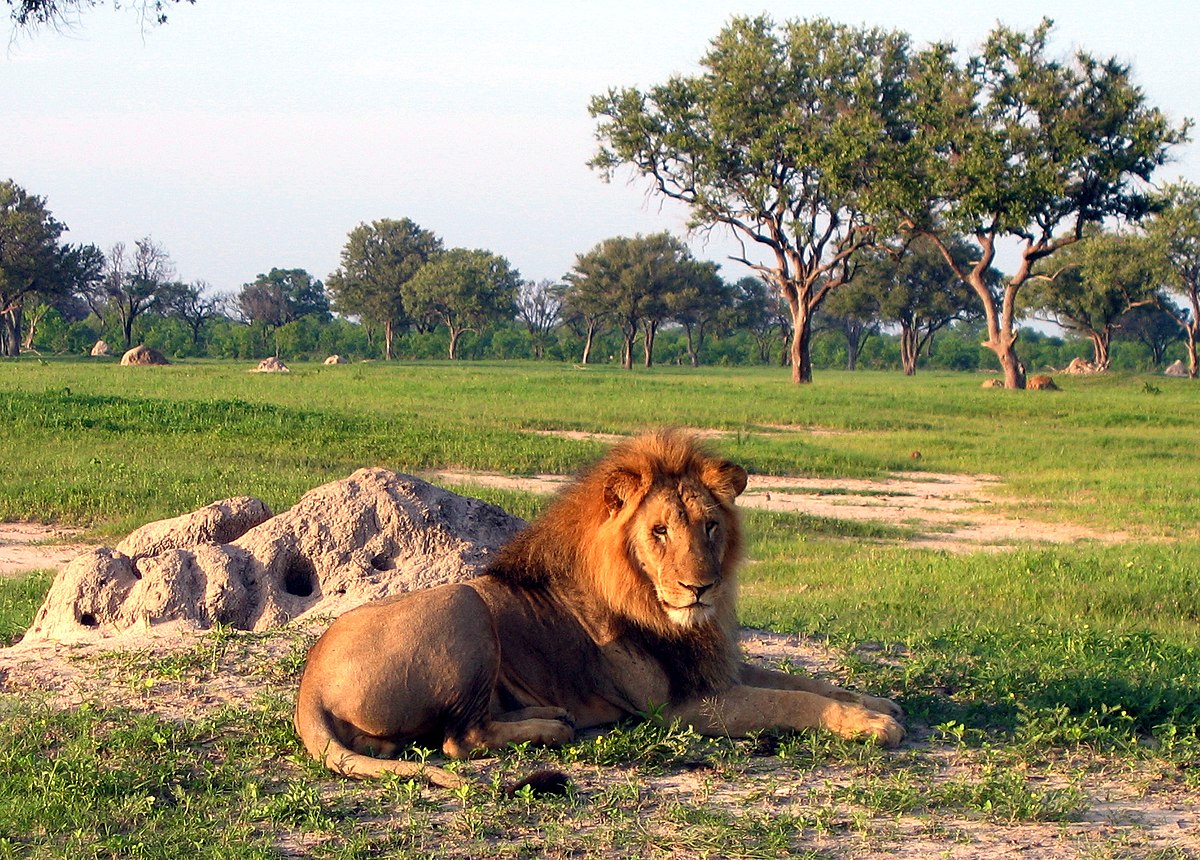
Lions spend up to twenty hours a day resting, not because they lack a strong work ethic. Hunting is metabolically expensive, and burning calories without a guaranteed meal can be fatal.
A male lion resting near a termite mound in a grassy savanna landscape with scattered trees in Hwange National Park. Laura (cardamom), CC BY 2.0, via Wikimedia Commons
Doing nothing isn't a character flaw; it is the default baseline for almost every animal on Earth.
The moral brand
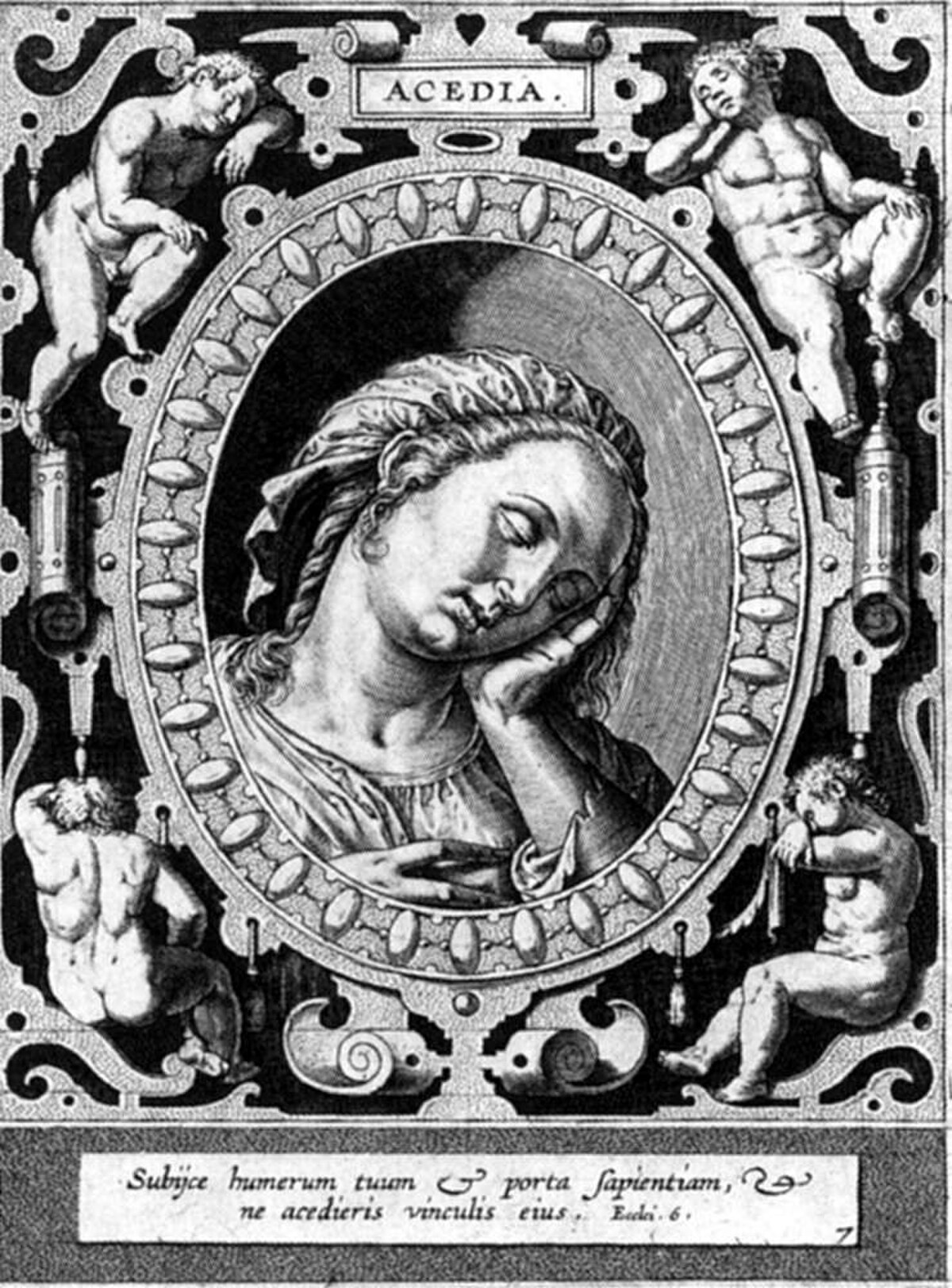
In the fourteenth century, the church rebranded this biological survival instinct as sloth, turning it into a deadly sin. Moralizing inactivity helped ensure laborers remained productive for feudal lords.
Detail from Hieronymus Bosch's "The Seven Deadly Sins and the Four Last Things," depicting Acedia (Sloth). Hieronymus Bosch, Public domain, via Wikimedia Commons
Modern psychology now views chronic unresponsiveness as a sign of burnout or a struggle with motivation rather than a sin.
What happens in the brain during laziness
In 1954, psychologist Leonard Carmichael pointed out that the word laziness did not appear in the index of most technical psychology books. Modern researchers analyze the condition through the lens of motivation, stimuli, and neurochemistry.
Over-stimulation and excessive distractions flood the brain with dopamine, the neurotransmitter responsible for reward and pleasure. When dopamine floods the system continuously, it desensitizes neural patterns and reduces your willingness to accept effortful, productive tasks. This desensitization also impairs the anterior insula, the specific brain region responsible for risk perception.
Psychologists also link disinclination toward effort to low self-confidence, a perceived lack of efficacy, or an aversion to failure. In these cases, inactivity acts as a protective coping mechanism to avoid negative outcomes.
Why economists view inactivity as rational
Economist Ludwig von Mises noted that physical and mental labor involves disutility, meaning effort is inherently painful compared to rest. People choose to work only when the expected return of their effort exceeds the lost satisfaction of giving up their leisure.
Nineteenth-century economist Frédéric Bastiat pointed out that idleness happens when people prioritize pleasant immediate effects over potentially larger, long-term rewards. In economic terms, choosing inactivity is often a calculation where the immediate pleasure of rest outweighs distant, uncertain gains.
Test yourself
When laziness occurs, does the brain treat physical or mental exertion primarily as a metabolic investment or as a measure of moral character?
A metabolic investment. Laziness functions as an energy conservation strategy where the brain weighs the metabolic cost against the expected reward rather than judging virtue.
Is inactivity best defined as a character flaw or an energy-saving strategy?
An energy-saving strategy. Evolutionary pressures favor efficiency over constant activity. What humans call laziness is often a biological adaptation to preserve resources when the payoff for action is low.
Play the lesson in edgi and the card is yours. It lands on your Map next to the ideas it connects to, and turns from matte to foil to gold as you learn more around it.
Avolition is a clinical symptom of medical and neurodevelopmental conditions such as ADHD, depression, autism spectrum disorders, and schizophrenia. Laziness is an emotional reluctance to exert effort, whereas avolition is a severe, involuntary deficit in the ability to initiate goal-directed behavior.
Is laziness always harmful?
No, researchers Thomas Goetz and John Eastwood found that aversive states like laziness can be adaptive for sparking change if approached mindfully. Inactivity can also serve as a necessary break, preventing the failure cycles and mental health strains that result from relentless exertion without rest.
What is the difference between abulia and lethargy?
Abulia is a formal medical term for a clinical reduction in motivation or willpower. Lethargy describes a physical or mental state of lacking energy and alertness.