MentalistWhy mind reading relies on stage conjuring
A mentalist is a theatrical performer who appears to read minds, predict the future, or demonstrate psychic abilities. Instead of using supernatural powers, mentalists rely on ordinary conjuring techniques, sleight of hand, and principles from human psychology. While they often present their work as body language analysis or psychological influence, classic magician trickery usually forms the backbone of their illusions.
By the edgi team We find the most surprising true thing about an idea and build a 60-second lesson around it.
A mentalist tells you, I sense a lingering regret about a professional choice. Your brain immediately scans your life, finds a bad job from five years ago, and locks onto it.
You become convinced they pulled that exact memory from your skull, when they actually cast a net broad enough to catch anyone.
A fishing net, lined with white buoys, is deployed in the ocean, capturing numerous fish. Kalfanet, CC BY-SA 4.0, via Wikimedia Commons
Cold reading
This technique is called cold reading, and it relies on rapid observation and psychological inference. Performers track micro-expressions, posture shifts, and clothing choices to narrow down your history before you even speak.
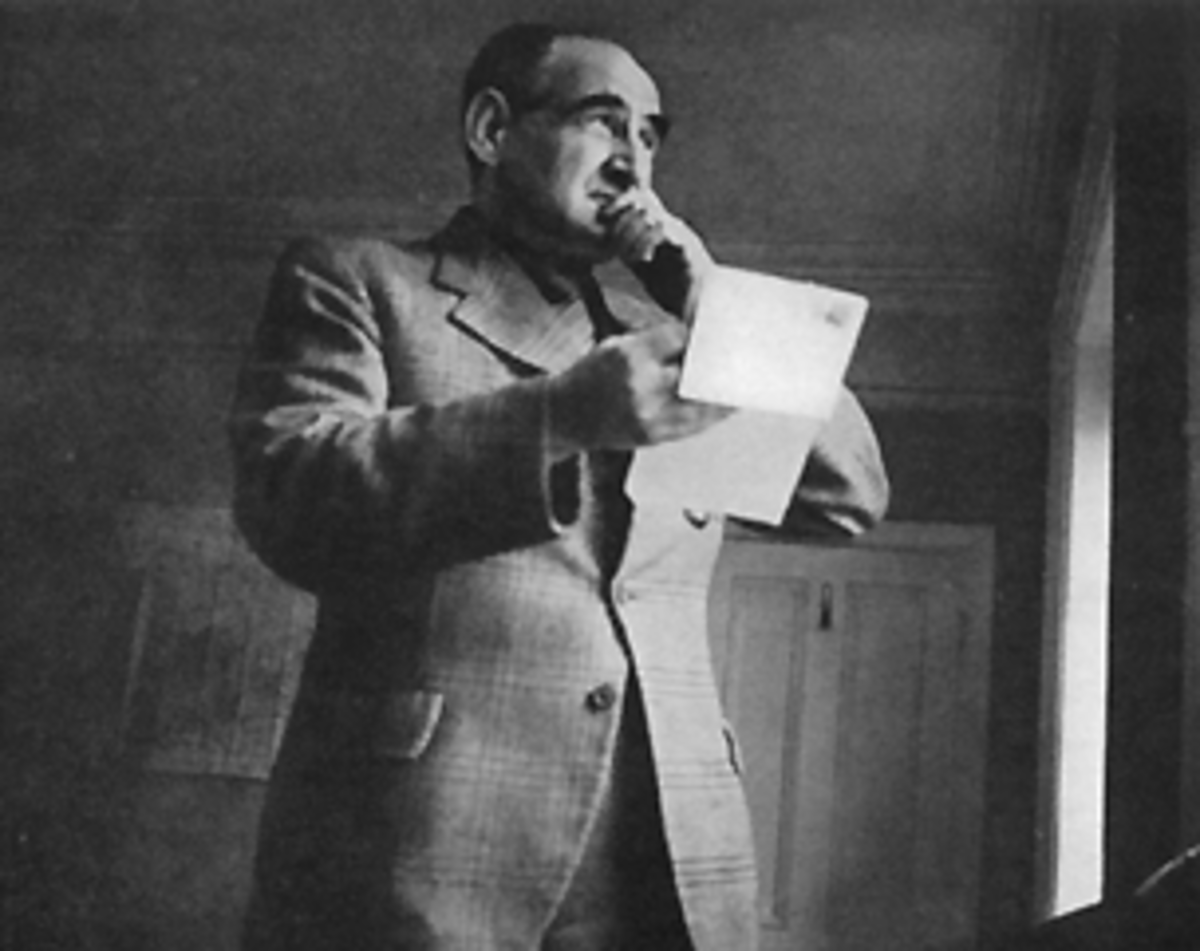
Black and white portrait of Frederick Marion, a mentalist, holding a piece of paper and speaking into a microphone. Josef Kraus (Frederick Marion)., Public domain, via Wikimedia Commons
Combine that visual data with linguistic traps, and a clever guess sounds like supernatural insight.
The real trick
The scariest part of mentalism is realizing how transparent human behavior actually is. Interrogators and salespeople use the exact same tricks to guide your decisions without you noticing.
Your private thoughts are often written all over your face.
Four busts depicting different facial expressions of a man, ranging from surprise to joy, anger, and sadness. Gert Germeraad, CC BY-SA 3.0, via Wikimedia Commons
How do mentalists simulate mind reading?
Mentalists often claim that their effects come entirely from reading micro-expressions, subtle body language, and psychological suggestion. While these behavioral cues exist, they are not reliable enough on their own to carry a whole performance. Framing the act as raw psychology is often a layer of misdirection that hides traditional magic tricks.
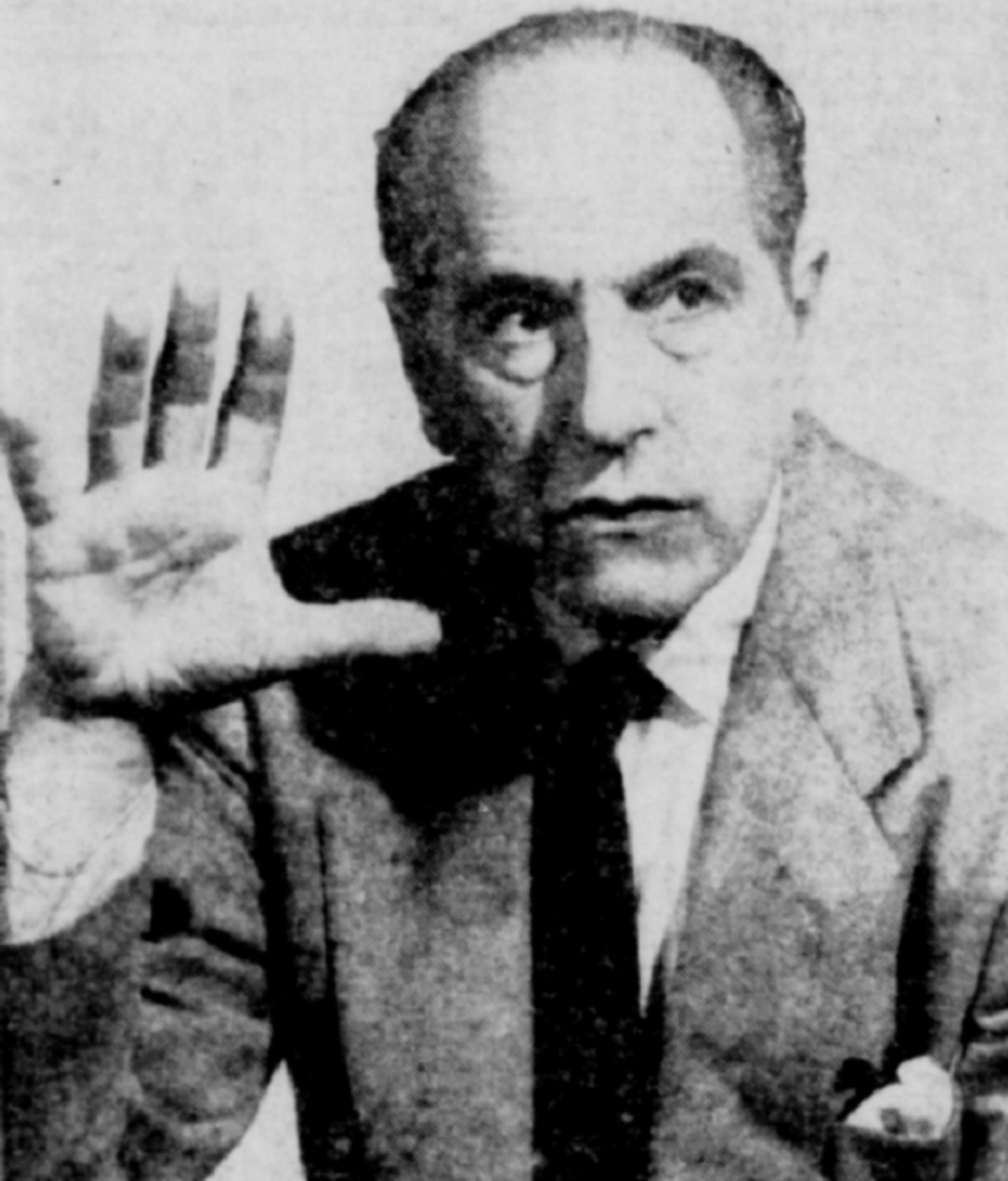
Joseph Dunninger, a prominent mentalist and debunker of fraudulent mediums, noted that his feats required decades of dedicated practice rather than psychic powers. AnonymousUnknown author, Public domain, via Wikimedia Commons
Performers routinely use sleight of hand to secretly access information written on pieces of paper, tucked into envelopes, or printed in books. Modern routines also incorporate electronic devices or smartphones to gather data from a distance, or even generate fake proof of a prediction after the participant reveals their choice.
What techniques shape a mentalist performance?
Mentalists blend physical manipulation with psychological tactics to steer audience perceptions. Misdirection diverts attention away from the secret method through lively chatter, dramatic gestures, or background music while the performer secretly executes a maneuver.
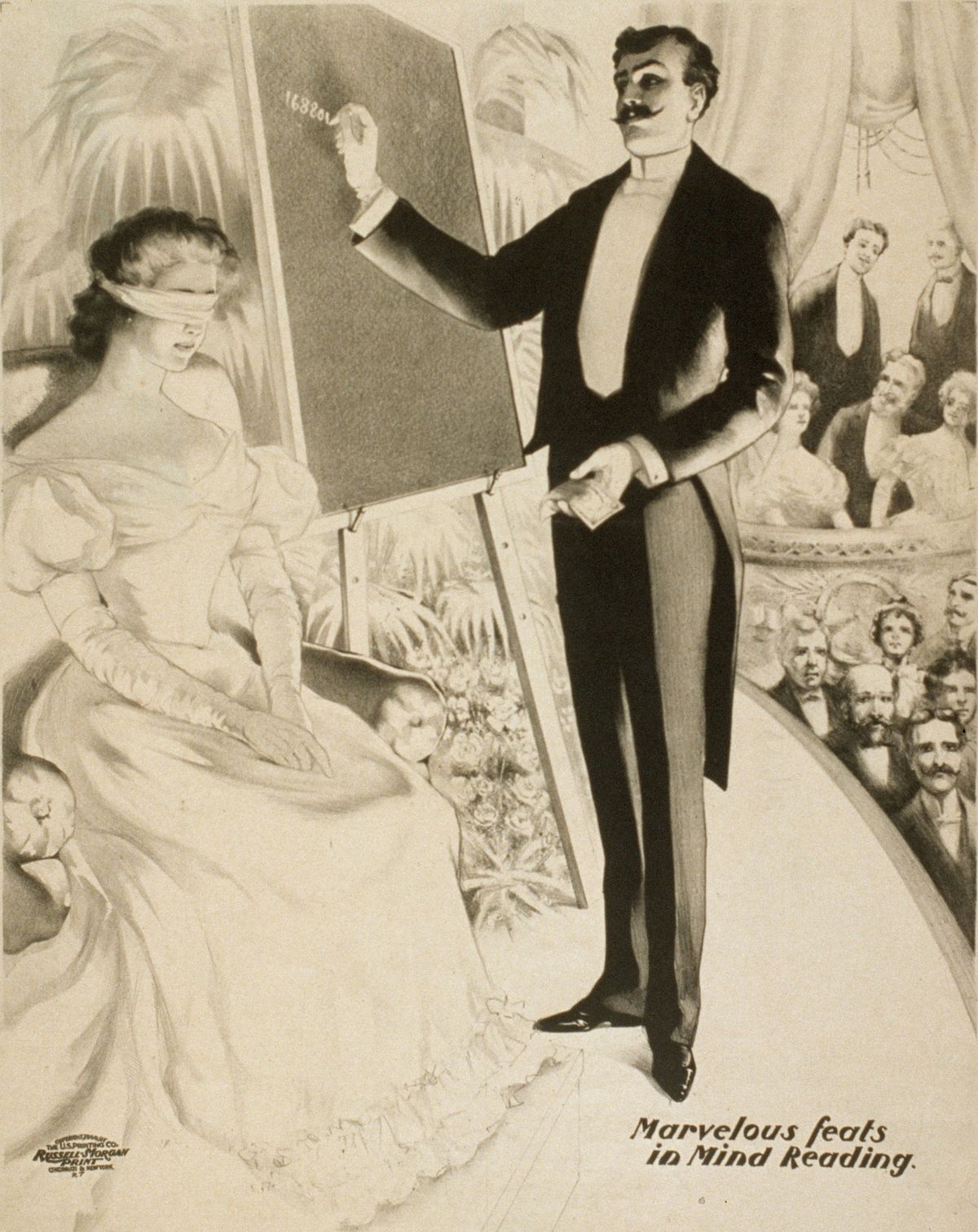
Early mind-reading theatrical acts adapted methods used by nineteenth-century spiritualists into secular entertainment. The U.S. Printing Co., Russell-Morgan Print, Cincinnati & New York., Public domain, via Wikimedia Commons
Performers also use suggestion to plant thoughts through subtle verbal cues and gestures. For information gathering, they use cold reading to infer personal details from visible reactions, or hot reading, which involves researching background information about participants before the show begins.
Test yourself
A mentalist says 'pick a number, not too obvious.' What is this wording doing?
Steering your pick with suggestion. The phrase narrows the likely answers by making obvious picks feel wrong. The performer shapes the choice with suggestion, so no mind reading is needed.
Ten strangers pick a number from 1 to 10 and a performer correctly predicts 7. What most likely explains it?
Many people pick 7 by habit. People tend to avoid 1, 10, and even numbers, so 7 comes up far more often than chance. A prediction built on that habit looks like mind reading.
A performer says, "Someone here lost a loved one," and a listener feels read. Why?
The listener fills in the details. A broad statement fits many people, and suggestion leads the listener to supply specific details and remember it as a precise hit.
Play the lesson in edgi and the card is yours. It lands on your Map next to the ideas it connects to, and turns from matte to foil to gold as you learn more around it.
What is the difference between a mentalist and a psychic?
Magicians Penn & Teller and James Randi note that mentalists are entertainers who achieve their illusions through practice, study, and conjuring skills. Psychics, by contrast, claim to possess genuine supernatural experiences or divine revelations.
How far back does mentalism go?
While ancient accounts describe oracles and seers, one of the earliest recorded modern mentalist acts was performed in 1572 by Girolamo Scotto, a diplomat and pioneer of sleight of hand. Modern acts trace many of their specific stage tests back to nineteenth-century mediums and spiritualists.
What is the difference between cold reading and hot reading?
Cold reading relies on real-time observations of a person's appearance, posture, and vocal responses to make calculated guesses. Hot reading involves collecting factual background data about audience members before the performance starts.