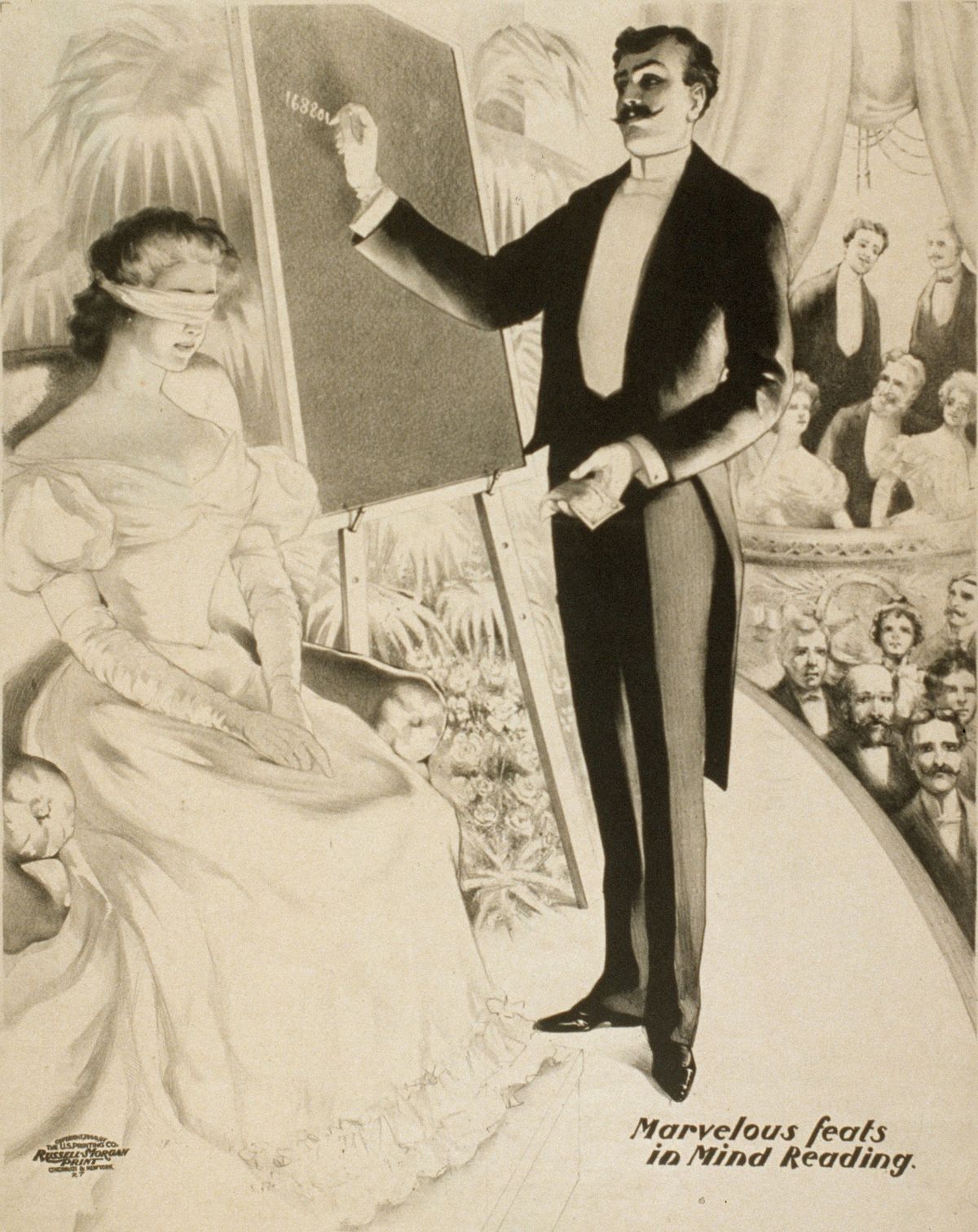
Cold reading is a set of techniques used by mentalists, fortune-tellers, and mediums to produce specific-sounding information about a person without any prior knowledge. The practitioner analyzes physical cues, offers high-probability statements, and lets the listener supply the actual meaning. It works because people naturally remember the correct guesses, forget the misses, and connect general claims to their own lives.
By the edgi team We find the most surprising true thing about an idea and build a 60-second lesson around it.
In 1948 Bertram Forer gave a personality test to 39 psychology students, and a week later handed each of them a page describing who they were. You have a great deal of unused capacity you have not turned to your advantage. At times you are outgoing and sociable, at other times wary and reserved.
He asked them to rate the fit out of 5. The average came back 4.26. Then he told them every student had been given the same page, which he'd assembled out of a newsstand astrology book. Each student tested the page against one person, themselves, and it passed. Nobody tests a description against everybody else, and that is the only test that catches the Barnum effect.
Shooting wide
Cold reading is Forer's page produced live. A reader who has never met you fires off a run of quick guesses, broad enough to fit anybody, and watches what you do with each one. A problem with the back or the neck. A name beginning with J. A piece of jewelry that belonged to someone who died. Fired fast enough, some of it lands.
The misses cost nothing, which is why there can be so many. A guess that goes nowhere is forgotten within seconds. The one that lands is remembered, and remembered as specific. The rainbow ruse covers both directions at once. You are generous with people you trust, but you have learned to hold something back. There is no honest answer to that except yes.
You are doing the reading
The reader says something about water. You say we scattered his ashes at the lake. An hour later you will remember that the reader mentioned the lake. That is the entire engine. The reader supplies the category, you supply the content, and the credit goes to whoever spoke first.
A horoscope is the same machinery with nobody in the room. It hands you the categories: a tension at work, a message you have been putting off. You arrive with the names and the dates. If you ever want to test one, answer everything with a flat yes or no and volunteer nothing at all. The reading dries up within a minute, because you were most of it.
How cold reading works
A cold reader starts by establishing cooperation, often telling the subject that vague images require their help to interpret. As the reader speaks, they observe the subject's age, clothing, hairstyle, manner of speech, and shifts in body language or facial expressions.
The reader fires off broad statements and watches for reactions. Promising responses are quickly refined and repeated back as confirmed facts, while incorrect guesses are discarded with little hesitation. The listener remembers the accurate hits and forgets the misses, creating the impression that the reader possesses secret knowledge.
Shotgunning and audience math
One common technique is shotgunning, where a performer throws out a series of very general statements to an entire group to see who responds. Mentioning common ailments like chest pain, heart disease, or a father figure with whom someone had disagreements guarantees a high statistical rate of success.
In a studio audience of 200 people, each person might know roughly 150 individuals. Calling out a common name like Margaret tests a collective network of roughly 30,000 people, virtually guaranteeing multiple direct hits that feel deeply personal to whoever stands up.
Test yourself
How does a cold reader successfully convince a client of possessing hidden psychic insight?
Prompting broad categories for clients to fill in. Cold readers offer broad categories like back pain or jewelry, leaving the client to supply the specific names and memories that make the reading feel real.
What makes a general personality description feel deeply specific to an individual?
Testing it against oneself alone. A statement feels uniquely personal when you only test it against your own life. Because everyone has moments of being both reserved and outgoing, it passes the single test.
"You're driven, though I sense you've been underestimated somewhere." Why does that land?
You supply the incident and credit them. Being underestimated somewhere is true of nearly every adult. You do the work of finding which time it was, and the specific memory that surfaces gets credited to the person who said only the vague half.
Play the lesson in edgi and the card is yours. It lands on your Map next to the ideas it connects to, and turns from matte to foil to gold as you learn more around it.
What is the difference between cold reading and hot reading?
Cold reading relies entirely on real-time observation, high-probability guesses, and audience feedback without prior knowledge. Hot reading involves secretly gathering specific information about a subject before the reading takes place.
What role does the Barnum effect play in cold reading?
The Barnum effect occurs when individuals believe broad, generic personality statements apply uniquely to them. Cold readers use these statements because listeners will actively search their personal memories to make the vague claim fit.