Psychology is the scientific study of the mind and behavior in both humans and nonhumans. It examines how biological brain processes, conscious thoughts, and social surroundings shape everyday decisions. Researchers use empirical experiments rather than guesswork to discover why people act, feel, and think the way they do.
By the edgi team We find the most surprising true thing about an idea and build a 60-second lesson around it.
Psychology isn't just about analyzing dreams or talking through feelings. It is the rigorous scientific study of the biological and social machinery that dictates your choices.
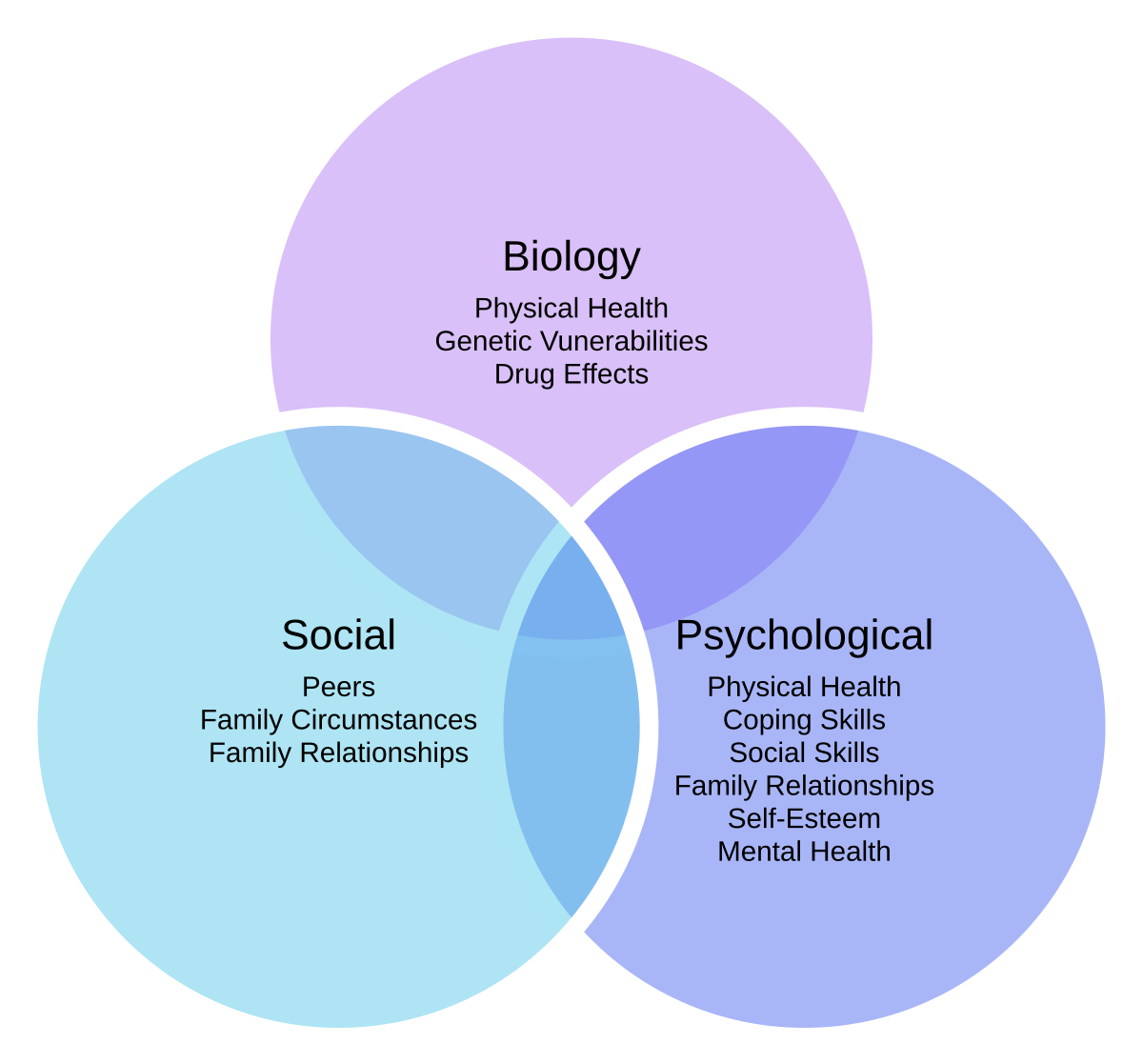
Venn diagram illustrating the biopsychosocial model of health, with three overlapping circles representing Biology, Social, and Psychological factors. Seth Falco, CC BY-SA 4.0, via Wikimedia Commons
It bridges the gap between the firing of a neuron and the abstract feeling of a memory or motive.
The context trap
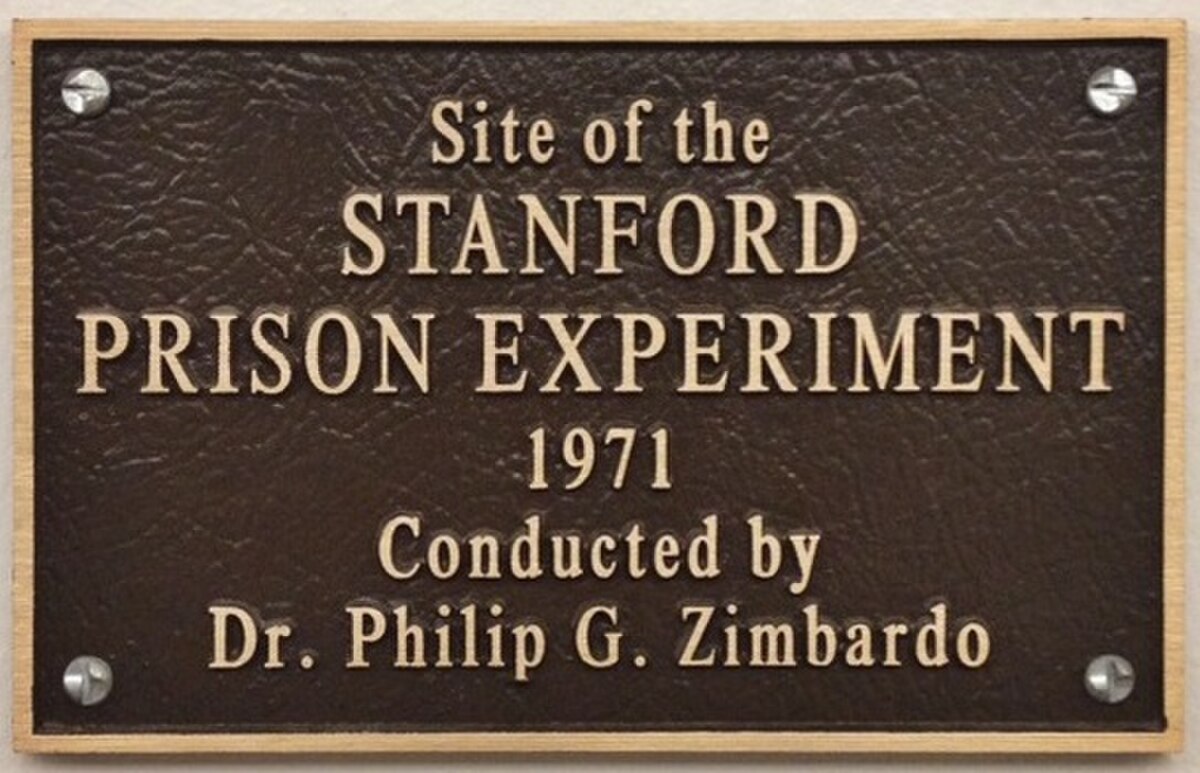
In 1971, Philip Zimbardo turned a university basement into a fake jail for a social experiment. He randomly assigned college students to be guards or prisoners.
A bronze plaque marking the site of the Stanford Prison Experiment, which reads "Site of the STANFORD PRISON EXPERIMENT 1971 Conducted by Dr. Eric. E. Castro, CC BY 2.0, via Wikimedia Commons
Within days, the guards became sadistic and the prisoners suffered trauma. The experiment proved that a powerful environment can override individual character in under a week.
The designed life
Today, these psychological insights are the blueprint for our digital world. Tech companies use behavioral psychology to design addictive interfaces, and retailers use it to nudge consumer behavior.
You are not just a passenger in your mind; you are a participant in a biological script written by evolution and edited by your surroundings.
How psychology connects biology to action
Psychology bridges the natural and social sciences by linking brain biology to observable behavior. Biological psychologists investigate how brain structures generate thought, emotion, and perception, directly connecting the field to neuroscience. Other researchers focus on social psychology, studying how interpersonal relationships, family dynamics, and group settings alter individual choices.
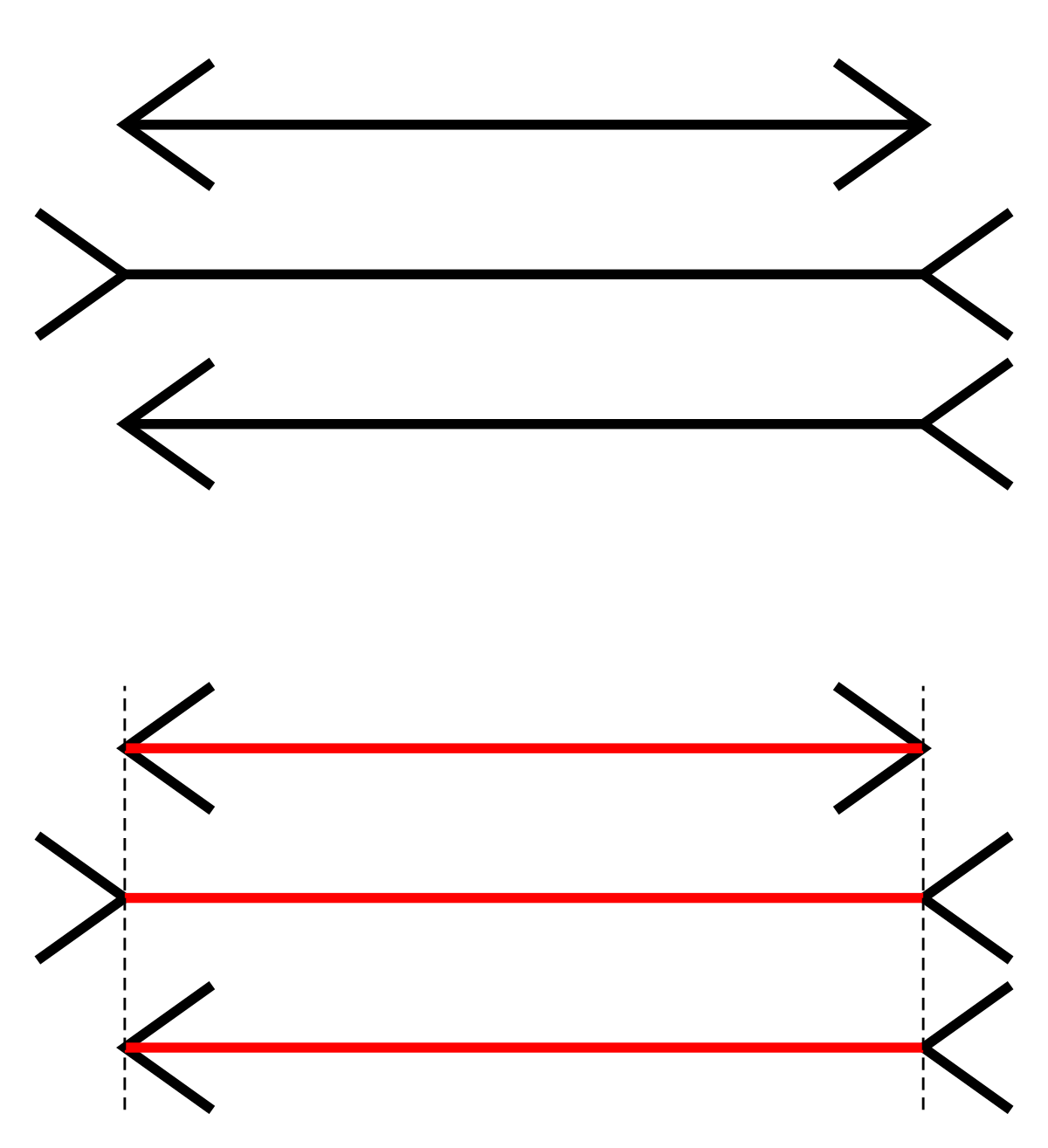
The Müller-Lyer illusion demonstrates how psychologists study shared perceptual phenomena to infer the inner workings of the mind. Fibonacci, CC BY-SA 3.0, via Wikimedia Commons
To uncover these connections, research psychologists use empirical methods to measure causal and correlational links between variables. They examine phenomena such as attention, motivation, intelligence, personality, and the unconscious mind. Rather than relying on folk psychology (the informal assumptions ordinary people hold about mental states), researchers use controlled experiments to test how the mind functions.
Where psychological science is applied
Psychological findings extend far beyond therapy rooms. While clinical and counseling psychologists assess and treat mental health disorders, other practitioners apply behavioral insights to practical fields such as education, sports, forensic science, media, and aging. Industrial and organizational psychologists use research on human behavior to improve workplaces and organizational design.
A developmental psychologist observes a child's interaction with a book to study cognitive growth and behavior. César Rincón, CC BY 2.0, via Wikimedia Commons
Psychologists also investigate development across the human lifespan. Developmental specialists observe how people interact with physical objects and social cues over time to track learning and mental growth. Across these diverse settings, the ultimate goal of the discipline is to understand human action and benefit society.
Test yourself
You need to know exactly when a brain response starts, to the millisecond. Which tool?
EEG, with scalp sensors. EEG records electrical activity in thousandths of a second. fMRI is slower because blood flow lags behind neural activity, though it shows location better.
What do researchers actually see when linking brain to thought?
Signals that travel with behavior. Scanners record blood flow or electrical activity. Researchers match those signals to what people do or report, so the link starts as a correlation.
You doubt a plan your whole team backs. Which step best protects your view?
Write your view down before discussion. Writing your view down before the group speaks removes the social cost of dissent, and the same research shows private answers resist group pressure far better than spoken ones.
Play the lesson in edgi and the card is yours. It lands on your Map next to the ideas it connects to, and turns from matte to foil to gold as you learn more around it.
The word comes from the Greek psyche, meaning spirit or soul, and logia, meaning study or research. Marko Marulić first used the Latin term psychiologia in the 1510s, and Steven Blankaart introduced the word to English in 1694.
What is the symbol commonly used for psychology?
The field is commonly represented by the Greek letter Psi (Ψ). This is the first letter of the Greek root word psyche.
How did early definitions of psychology evolve?
In 1890, William James defined psychology as the science of mental life and its conditions. In 1913, John B. Watson challenged this by proposing that psychology should be an objective experimental branch of natural science focused on predicting and controlling behavior.