The bandwagon effect is a cognitive bias where people adopt ideas, styles, or actions simply because others are doing it. As a trend gains followers, the rate of new people joining increases regardless of supporting evidence. People often use this popularity as a mental shortcut, assuming the crowd possesses better information or wanting to secure social acceptance.
By the edgi team We find the most surprising true thing about an idea and build a 60-second lesson around it.
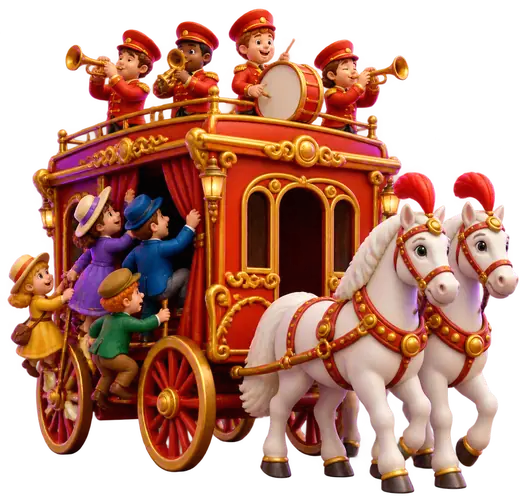
In 19th-century American politics, entertainers and politicians shared stages to draw large crowds. Entertainer Dan Rice used a dazzling, horse-drawn bandwagon to pull people into his political campaign events.
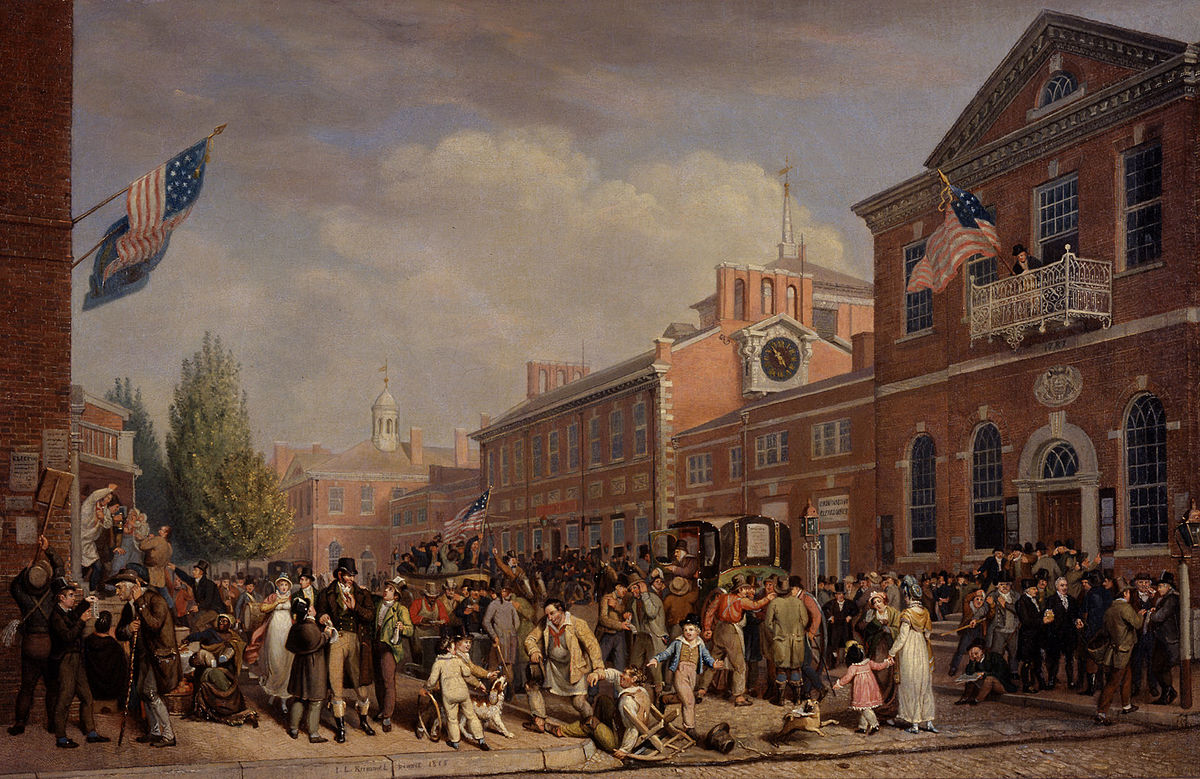
An oil painting by John Lewis Krimmel titled "Election Day 1815" depicts a bustling street scene in Philadelphia during an election. John Lewis Krimmel, Public domain, via Wikimedia Commons
Politicians quickly noticed a strange human habit: when citizens saw a massive, cheering crowd following the wagon, they rushed to join in.
Jumping on
People did not join because they checked the policy details; they joined because they feared missing out on a winning side. By the 1900 election, jumping on the bandwagon had become a standard way to describe social conformity.
The bandwagon effect is a cognitive bias where we assume a choice is correct simply because a lot of other people are making it.
The modern loop
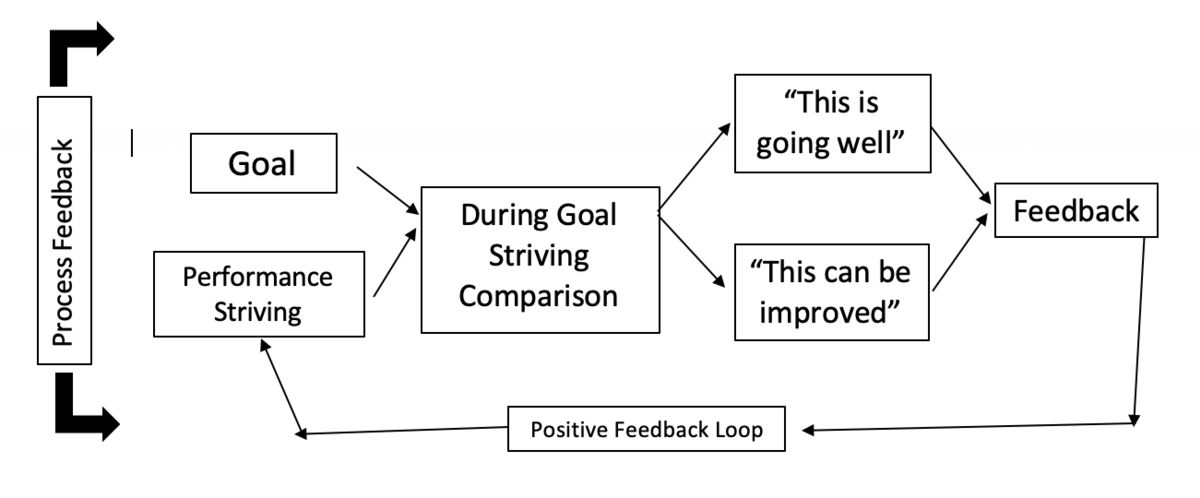
As a crowd grows, the individual cost of thinking drops, causing people to ignore their own private judgment. Popularity itself becomes the primary fuel for further growth, creating a self-reinforcing feedback loop.
A block diagram illustrating a process-based positive feedback loop. JackPWarrick, CC BY-SA 4.0, via Wikimedia Commons
Today, trending lists and like counts act as digital bandwagons, steering our attention through social proof.
Why do people follow the crowd?
People adopt group behaviors for several distinct psychological reasons. Normative social influence drives people to fit in and earn approval, protecting them from becoming the odd one out. Informational social influence occurs when individuals assume the crowd knows something they do not, treating high popularity as proof of correctness.
Bandwagoning also functions as an efficient mental shortcut. Evaluating evidence independently takes time and mental energy, so people rely on the choices of others to make fast decisions. A desire to back the winning side and an anxiety about missing out further push people to align with the majority.
How information cascades spread trends
Economists explain that bandwagon behavior often triggers an information cascade, where individuals systematically discard their own private signals to copy the actions of the group. A trend originally backed by only a single advocate can quickly swell into a dominant social force.
Because these cascades rely on very little real evidence, the resulting behaviors are surprisingly fragile. Fads and collective habits form rapidly through positive feedback loops, but they can be dislodged just as quickly when group sentiment shifts.
Where the phrase originated
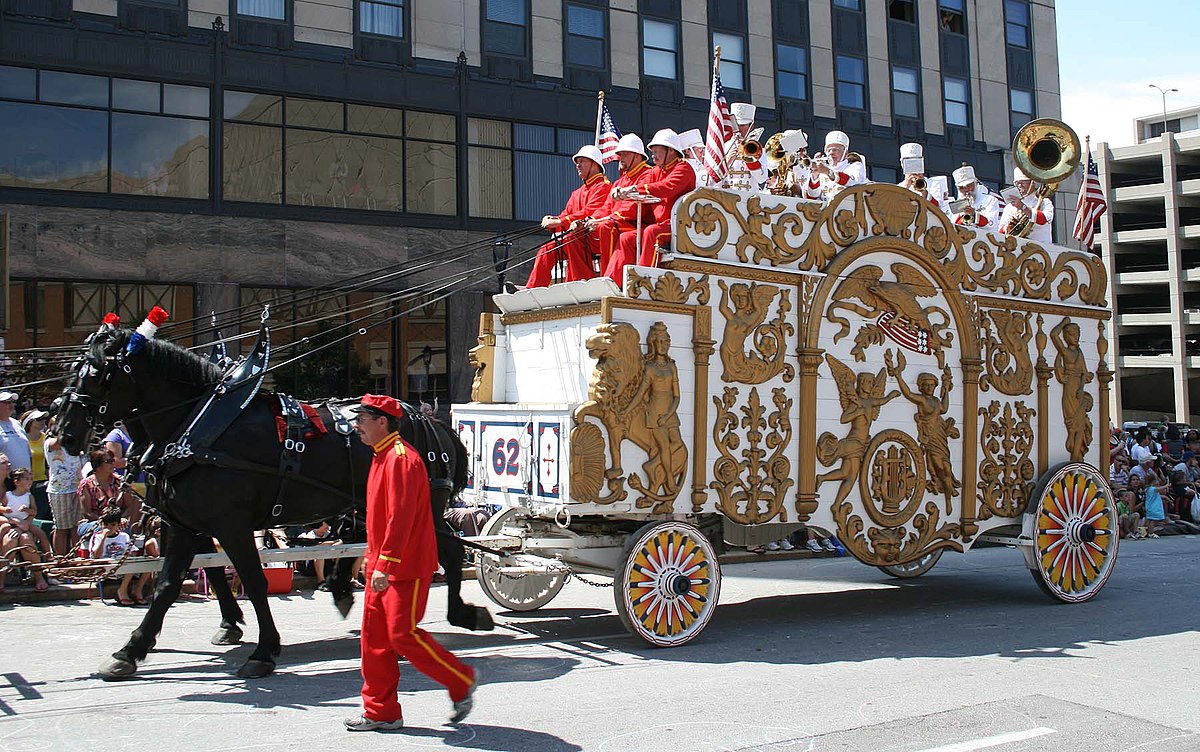
A literal bandwagon is a horse-drawn wagon built to carry musicians in a parade or circus. The political metaphor emerged in 1848 when circus clown Dan Rice invited presidential candidate Zachary Taylor to ride on his circus bandwagon.
A traditional parade bandwagon, the vehicle that inspired the political metaphor for conformity. Freekee, Public domain, via Wikimedia Commons
By William Jennings Bryan's 1900 presidential campaign, jumping on the bandwagon had turned into a derogatory term for unthinking opportunists who attached themselves to winning movements without evaluating the cause.
Test yourself
In the bandwagon effect, what makes popularity influence a person's choice?
Popularity is mistaken for proof the choice is right.. The bandwagon effect treats others' choices as proof that an option is right, which can crowd out private judgment.
What motivates people to join a crowd in the bandwagon effect?
The desire to join a perceived winner. The effect is driven by the fear of missing out on the winning side rather than logical agreement with specific policies or details.
In the context of the bandwagon effect, the '___ point' is the moment a trend gains enough momentum to become unstoppable.
tipping. The tipping point is when a minority belief crosses a threshold to become a dominant social norm.
Play the lesson in edgi and the card is yours. It lands on your Map next to the ideas it connects to, and turns from matte to foil to gold as you learn more around it.
The reverse bandwagon effect, or snob effect, is a cognitive bias where people deliberately avoid adopting a belief, style, or behavior simply because too many other people are doing it.
How was the bandwagon effect studied experimentally?
The 1950s Asch conformity experiment provided key empirical evidence showing how individuals vary in their tendency to conform to group opinion. Research expanded heavily in the 1980s as scholars evaluated how public opinion polls alter voter preferences.
In which fields does the bandwagon effect appear?
Researchers observe the bandwagon effect across economics, political science, sociology, medicine, and psychology. In social psychology, related patterns of group conformity are studied as herd mentality and groupthink.