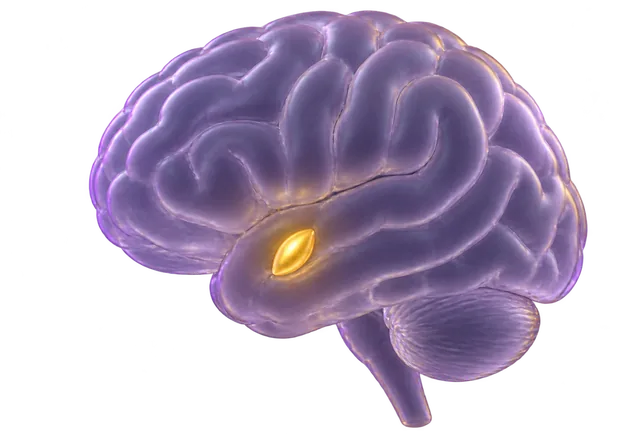
The amygdala is a pair of almond-sized clusters of neurons located deep inside the temporal lobes of the brain. It acts as an emotional processing hub, handling instincts like fear, aggression, and survival reflexes. Because it evaluates threats before your conscious thinking takes over, it can trigger instant reactions and permanently stamp important experiences into memory.
By the edgi team We find the most surprising true thing about an idea and build a 60-second lesson around it.
Buried deep in your temporal lobes are two almond-sized clusters of neurons called the amygdala. It is a key part of the limbic system, a network that governs your survival instincts rather than your logic.
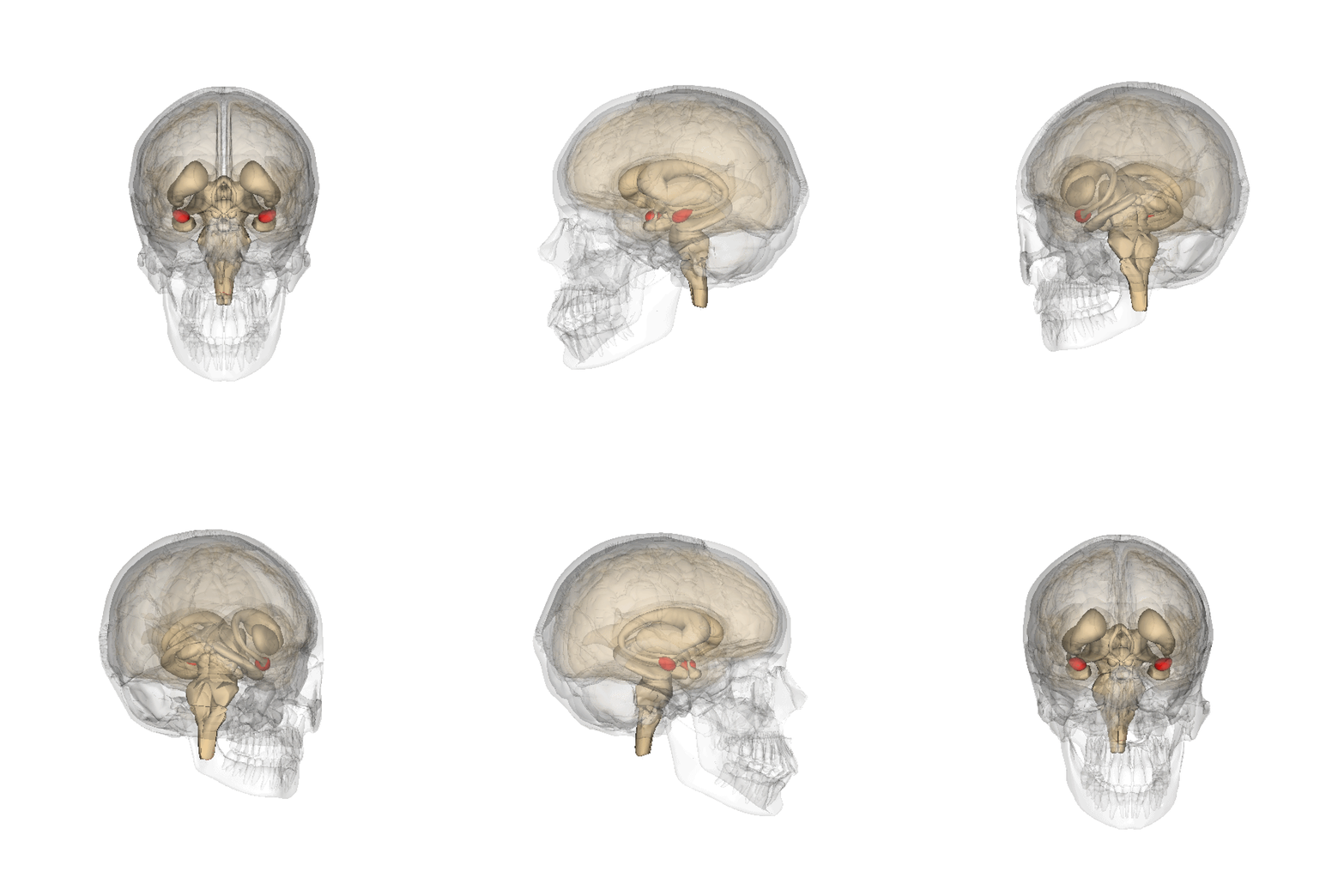
3D anatomical animation of a human skull and brain, highlighting the amygdala in red. Images are generated by Life Science Databases(LSDB)., CC BY-SA 2.1 jp, via Wikimedia Commons
If you see a snake, your amygdala fires before your conscious brain even registers the shape.
The fearless patient
In a rare condition called Urbach–Wiethe disease, the amygdala can calcify and stop working entirely. Researchers studied a patient known as S.M. who had this condition. She was intellectually normal but lived without the ability to feel fear.
She could walk through a haunted house or face a knife-wielding attacker with nothing but curiosity.
Painting by William Rickarby Miller from 1851 titled "Carl's Mill on the Pocantico River, Sleepy Hollow," depicting a wooden mill building with a water wheel next to a river and waterfall, surrounded… William Rickarby Miller, Public domain, via Wikimedia Commons
The amygdala hijack
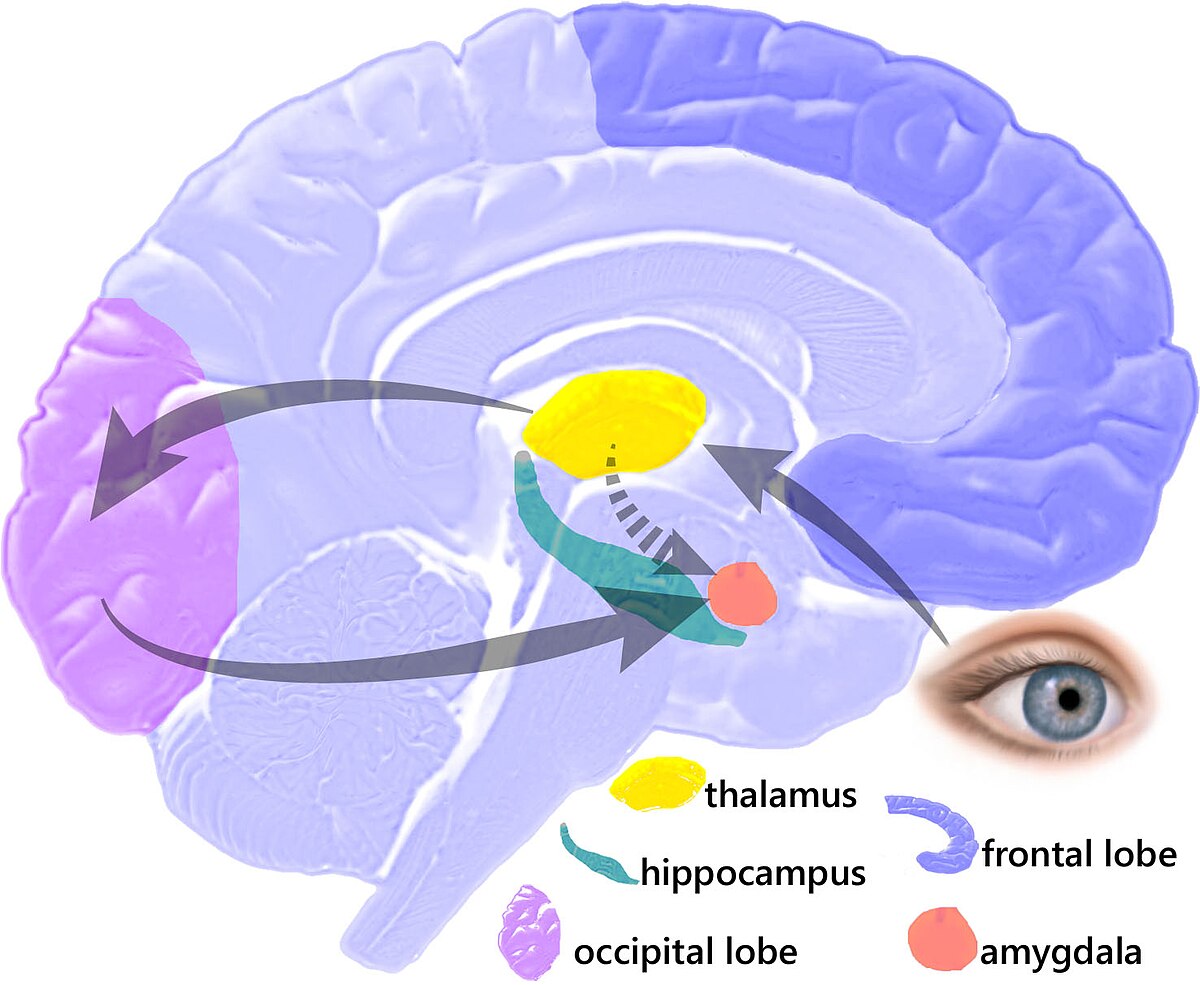
Under extreme stress, the amygdala can trigger an amygdala hijack. It essentially mutes your prefrontal cortex, the part of your brain responsible for planning and logic.
A diagram illustrating the amygdala hijack, showing neural pathways involved in a threat response to an emotional stimulus. ManosHacker, CC BY-SA 3.0, via Wikimedia Commons
This allows you to react instantly to a threat, but it is why you say things you regret when you are angry or panicked.
The importance filter
The amygdala is also your brain's importance filter. It tags memories with emotional weight, which is why a single traumatic event is burned into your mind, while your lunch from last Tuesday is forgotten.
It prioritizes survival over accuracy.
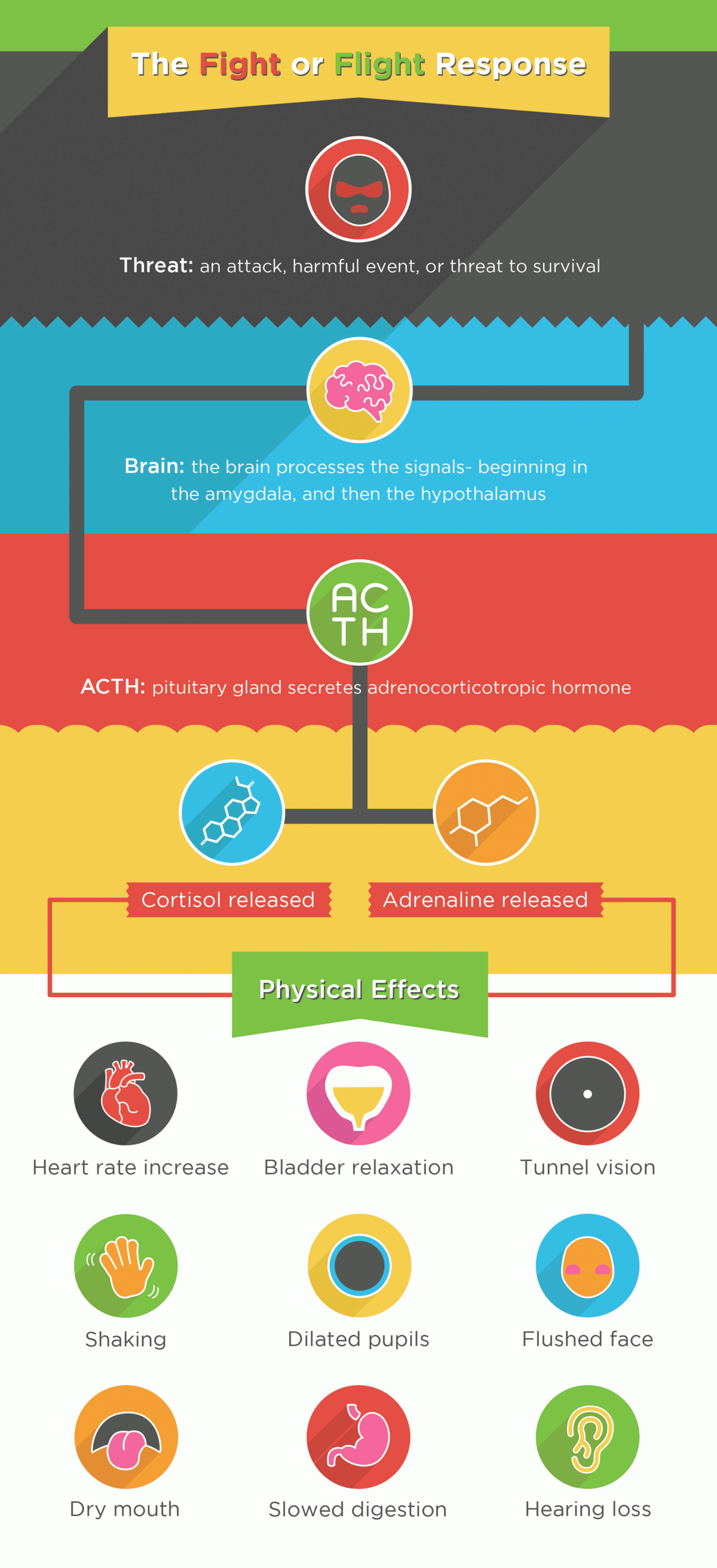
Diagram illustrating the "Fight or Flight Response" and its physical effects. Jvnkfood (original), converted to PNG and reduced to 8-bit by Pokéfan95, CC BY-SA 4.0, via Wikimedia Commons
How the amygdala is structured
First identified by anatomist Karl Friedrich Burdach in 1822, the amygdala is not a single uniform mass. It contains thirteen distinct nuclei, which are small clusters of specialized cells. In primates, the amygdala houses roughly 32 different types of neurons.
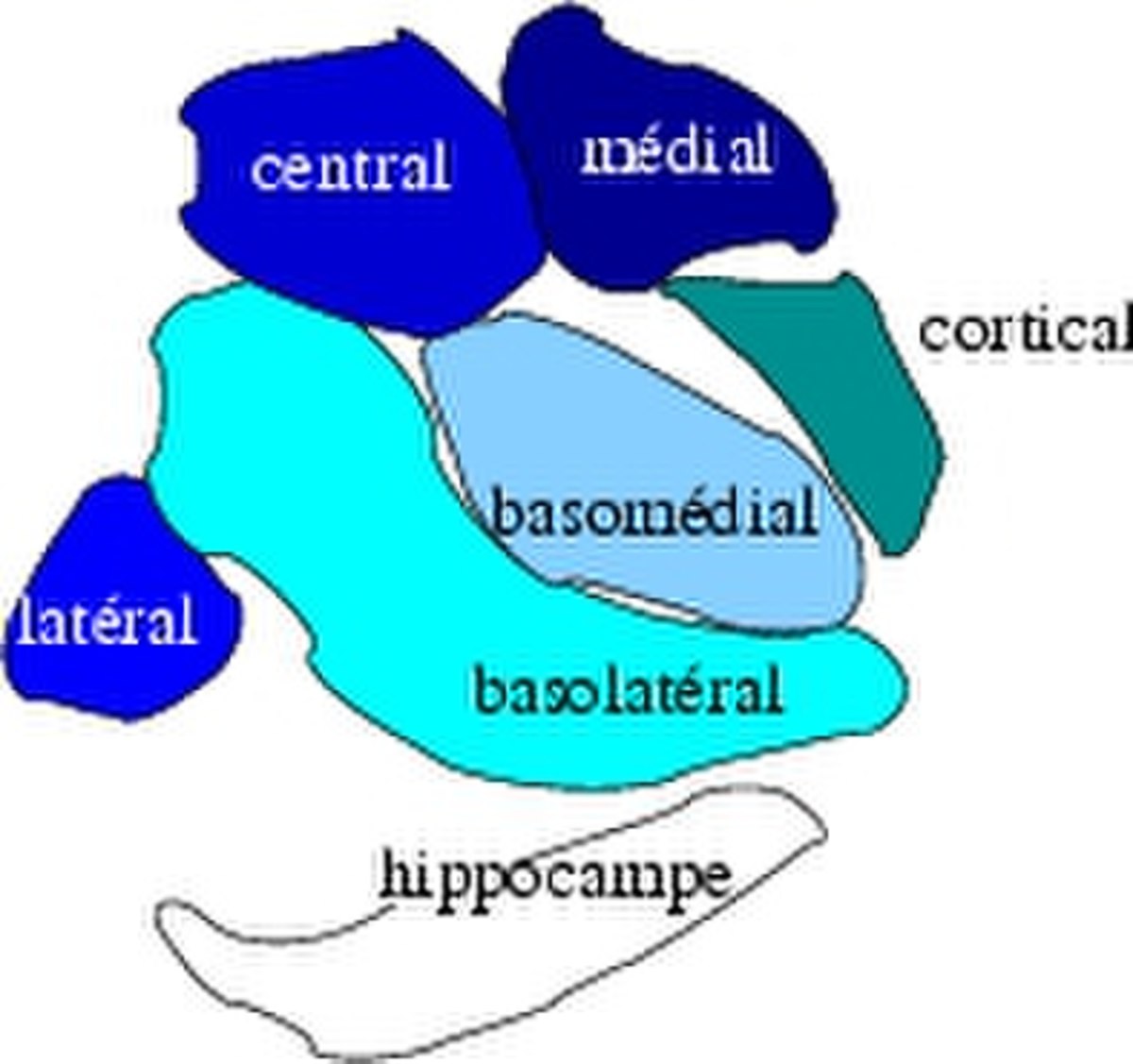
The main subdivisions of the amygdala, including the central, medial, and basolateral nuclei, each handle distinct emotional connections. CC BY-SA 3.0, via Wikimedia Commons
The major regions include the basolateral complex, the central nucleus, the cortical nucleus, and the medial nucleus. The central nucleus connects outward to the brainstem to command physical reactions. Meanwhile, the cortical and medial divisions connect directly to the hypothalamus and the olfactory system, linking scent and basic survival drives directly to emotion.
How the left and right sides divide labor
The left and right amygdalae manage independent memory systems while collaborating on emotional processing. The right amygdala specializes in processing negative emotions, especially fear conditioning and threat assessment. Electrical stimulation of the right side tends to trigger fear and sadness.
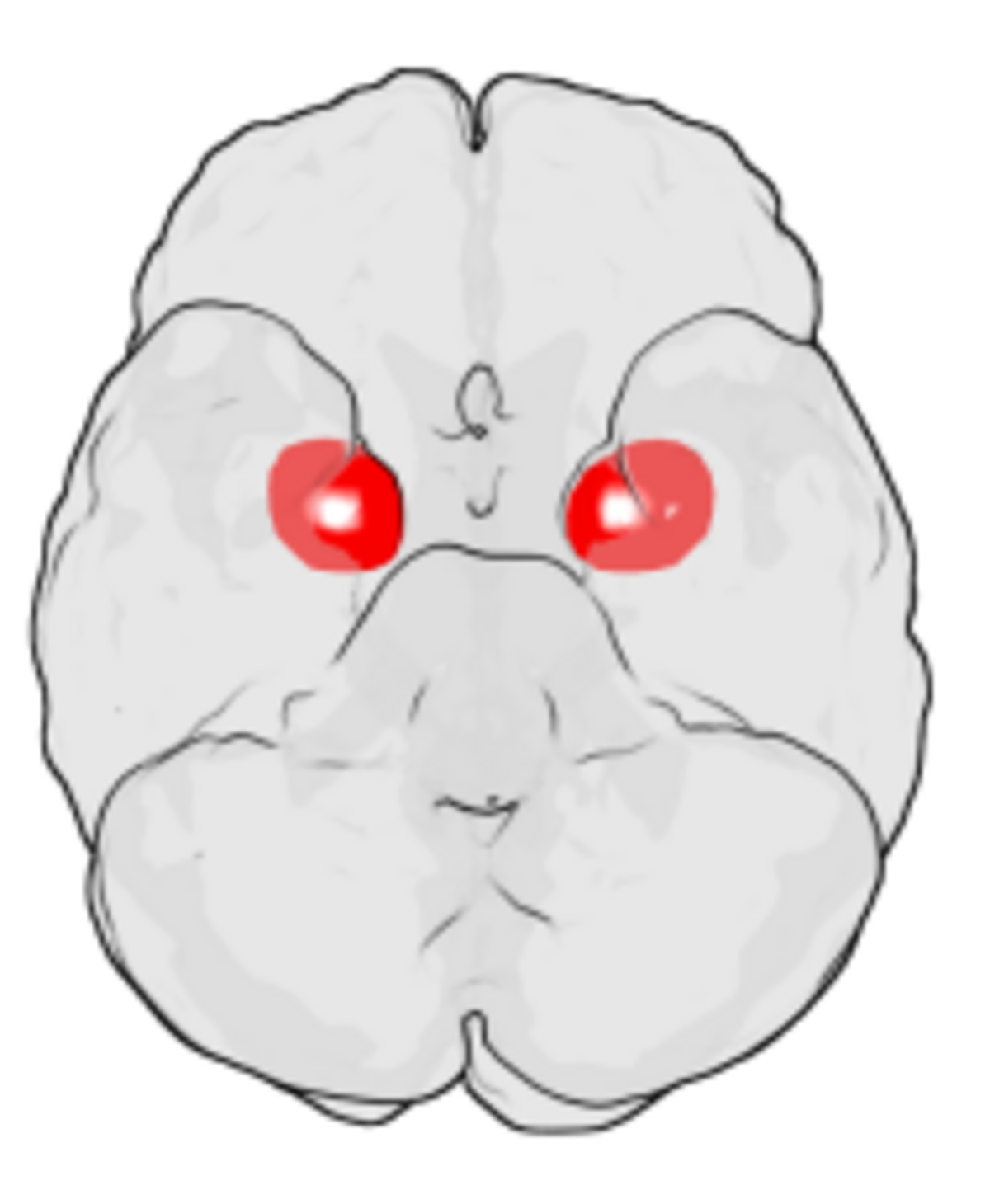
The paired amygdalae, highlighted here in red, sit symmetrically within the temporal lobes on either side of the brain. User Washington irving on en.wikipedia, CC BY-SA 3.0, via Wikimedia Commons
In contrast, the left amygdala can generate both pleasant emotions, like happiness, and unpleasant ones. It is also linked to the brain's reward circuits. Developmentally, the left amygdala matures first, reaching its peak size up to two years ahead of the right side.
Test yourself
What happens during an amygdala hijack when the brain experiences extreme stress?
It temporarily mutes the prefrontal cortex. During intense stress, the amygdala overrides logic by muting the prefrontal cortex so you can react immediately.
Does the amygdala function primarily as a center for logical planning or survival instincts?
Survival instincts. The amygdala governs rapid survival instincts rather than deliberate logic, firing instantly when a threat is perceived.
What is the primary function of the amygdala in emotional processing?
It tags memories with emotional weight. The amygdala acts as an importance filter, tagging memories with emotional significance rather than generating logical plans.
Play the lesson in edgi and the card is yours. It lands on your Map next to the ideas it connects to, and turns from matte to foil to gold as you learn more around it.
Raw scans show that men have amygdalae that are about 10.6% larger on average, but this matches their larger average body and brain sizes. When researchers control for total brain volume, there is no significant size difference between men and women.
What happens when the amygdala is damaged?
Damage can impair decision-making and eliminate normal fear responses, as seen in conditions like Urbach-Wiethe disease. Studies also show that damage to the left amygdala impairs decision-making more in women, whereas damage to the right amygdala impairs decision-making more in men.