LonelinessWhy your brain treats isolation like pain
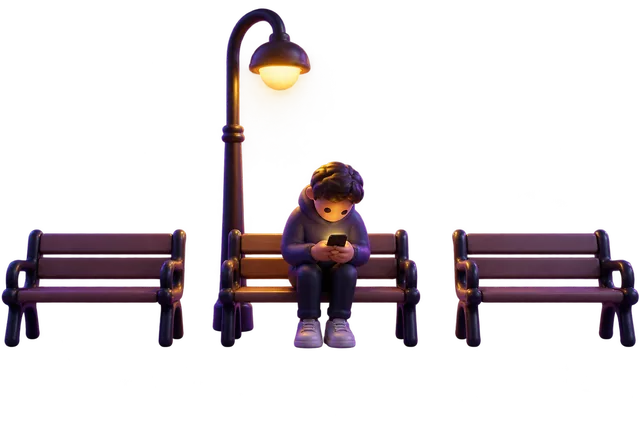
Loneliness is an unpleasant emotional reaction to perceived or actual social isolation. It acts as an involuntary biological alarm, producing social pain to push you back toward other people just as hunger pushes you to eat. While short-term loneliness is a normal survival mechanism, chronic loneliness triggers long-term stress that harms physical health.
By the edgi team We find the most surprising true thing about an idea and build a 60-second lesson around it.
You do not decide to feel lonely. It is a biological alarm system, as vital to your survival as hunger or thirst. Just as physical pain warns you to pull your hand from a flame, the social pain of loneliness warns you that your survival is threatened.
A hand holding a lit lighter, producing a bright flame against a dark background with a red glow. Ec-hasslau.de 8 July 2005 18:47 (UTC), Public domain, via Wikimedia Commons
For our ancestors, being alone meant certain death, so the brain evolved this distress to force you back into the safety of the group.
The hypervigilance trap
The late psychologist John Cacioppo discovered that chronic loneliness triggers social hypervigilance. Your brain begins scanning for social threats twice as fast as usual, flooding your system with cortisol.
This chronic stress is physically damaging; researchers have found its long-term impact on your heart is equivalent to smoking 15 cigarettes a day.
The backfire
The irony is that this defense mechanism often backfires. By scanning for rejection, you start to perceive threats that aren't there, leading you to pull away to protect yourself.
An artistic depiction titled "Loneliness in a Crowd," showing a young woman standing alone and looking directly at the viewer, surrounded by a blurred and indistinct crowd of people in an urban… Graehawk of Nanaimo/Canada, CC0, via Wikimedia Commons
You end up further isolated, the exact opposite of what your brain is trying to achieve.
What happens when loneliness becomes chronic?
About one in six people worldwide suffers from significant long-term loneliness. When isolation persists, the late psychologist John Cacioppo found that the brain enters a state of social hypervigilance. It notices social threats about twice as fast as normal, and loneliness is linked to higher levels of the stress hormone cortisol.
That stress takes a physical toll. A widely cited 2010 analysis of mortality studies put the risk of weak social connections on par with smoking 15 cigarettes a day. Over time, chronic loneliness correlates with higher risks of cardiovascular disease, high blood pressure, high cholesterol, obesity, depression, and substance use disorder.
Why does loneliness backfire?
Loneliness can create a self-perpetuating mindset. Because a hypervigilant brain constantly expects rejection, it often perceives social threats that do not exist. People then pull away to shield themselves, resulting in deeper isolation.
Edward Hopper's 1942 painting Nighthawks portrays individuals sitting apart in a diner, illustrating how people can feel isolated even in the company of others. Edward Hopper, Public domain, via Wikimedia Commons
External circumstances also trigger loneliness regardless of relationship status. It appears among married couples, people with successful careers, and individuals experiencing major life transitions such as bereavement, postpartum depression, or moving away from home.
How is chronic loneliness treated?
Medical treatments include starting psychotherapy or taking antidepressant medications. Psychological interventions often address the social awkwardness and negative thinking patterns that develop during prolonged isolation.
Paro, a robotic pet seal classified as a medical device by US regulators, represents one way animal interaction is used to help address loneliness. Aaron Biggs, Flickr user ehjayb, CC BY-SA 2.0, via Wikimedia Commons
Social approaches focus on rebuilding day-to-day contact with others. Common approaches include joining group exercise or religious groups, reconnecting with past colleagues or friends, adopting pets, and getting involved in local community activities.
Play the lesson in edgi and the card is yours. It lands on your Map next to the ideas it connects to, and turns from matte to foil to gold as you learn more around it.
Adolescents report the highest levels of loneliness. While actual social isolation tends to increase as people age, older adults generally grow less bothered by being alone.
What is the difference between social isolation and loneliness?
Social isolation is the objective lack of contact with other people. Loneliness is the subjective emotional distress felt when a person perceives their connections to be insufficient or absent.