Parkinson's law states that work expands so as to fill the time available for its completion. Originally coined by naval historian C. Northcote Parkinson in a 1955 essay, it also describes how administrative organizations continuously grow regardless of how much work exists to do. The pace of a task is dictated by the time allotted to it rather than the effort the task inherently requires.
By the edgi team We find the most surprising true thing about an idea and build a 60-second lesson around it.
C. Northcote Parkinson wrote one line in The Economist in 1955 that outlasted everything else in the essay: work expands so as to fill the time available for its completion. That is Parkinson's law. To show the shape of it he made somebody up: an elderly lady with a free day, setting out to write one postcard to her niece.
She spends an hour finding the card, another hunting for her spectacles, half an hour looking up the address, an hour and a quarter composing, and twenty minutes deciding about an umbrella.
A magnificent navy on land
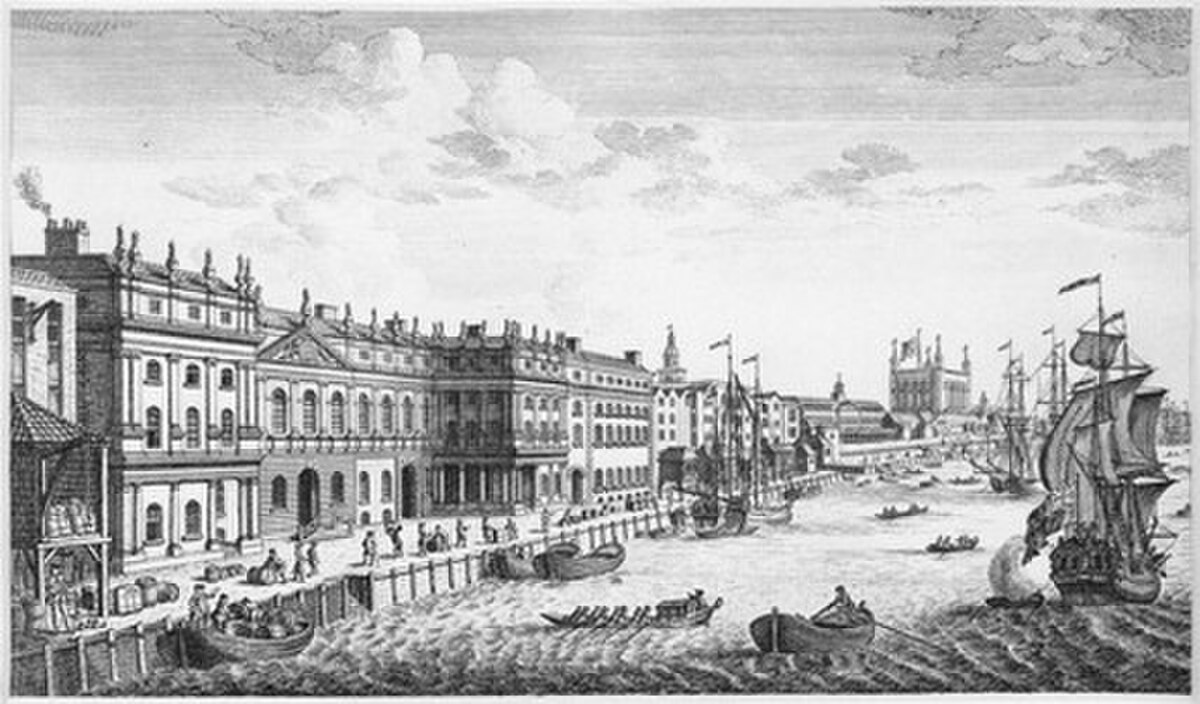
Parkinson was a naval historian, and his evidence was a staffing table. Between 1914 and 1928 the Royal Navy lost two thirds of its capital ships, 62 down to 20, and about a third of its men. The Admiralty office in London went the other way over the same fourteen years. Officials there rose from 2,000 to 3,569, an increase of 78 percent.
Parkinson called the result a magnificent navy on land. The officials had come loose from the amount of work there was for them to do, which is how bureaucracy grows.
What actually expands
Nothing in the job itself grows. What grows is everything around it: a second draft nobody asked for, a font decision, a fresh start because the opening felt wrong. Psychologists gave people a task that takes five minutes, and allowed some of them five minutes and the others fifteen. The fifteen-minute group used the fifteen.
Then everybody got the same task again with no limit at all. The people who had been given fifteen minutes were still slower. So the pace is not set by the job. It is set by the last container the job was put in, and it follows you out of that container into the next one.
Why organizations grow when work declines
Parkinson observed that the British Colonial Office reached its largest staff size at the exact moment it was merged into the Foreign Office because the British Empire had run out of colonies to administer. Bureaucratic staff counts grew by five to seven percent each year regardless of actual operational needs.
This organizational expansion is driven by two distinct mechanisms: officials seek to multiply subordinates rather than rivals, and those officials inevitably create internal work for one another. The promotion of staff requires hiring assistants, and circulating internal memos consumes time that produces no outside output.
Parkinson created a mock-scientific mathematical formula to model this annual staff increase based on hiring age, retirement age, hours spent on internal micropolitics, and files completed.
Related rules: bike-shedding and comitology
Parkinson expanded his observations into a 1957 book that outlined the law of triviality, which states that the time spent on any agenda item is inversely proportional to the money involved. A committee will debate the inexpensive bike shed for hours while approving an expensive nuclear reactor with almost no discussion.
He also studied comitology, which examines how decision-making bodies grow inefficient as their membership climbs. Historical English governing groups, starting from small councils of five to eight members, consistently lost power and relevance as their headcounts ballooned into dozens or hundreds of seats.
Test yourself
Does Parkinson's law imply that the core complexity of a given task physically grows over time?
No. The inherent work does not grow; rather, the peripheral tasks, second-guessing, and preparation expand to fill the available time.
When Parkinson's law operates on a project with an extended deadline, what typically expands to fill the time?
The polish and surrounding details. People do not change the core requirements; instead, they add extra drafts, formatting decisions, and hesitation around the edges.
You spend a slow week on a job that needed a day. What about next week's job?
You will work slowly on that too. Given fifteen minutes for a five-minute task, people use the fifteen. Handed the same task again with no limit at all, the ones who had the fifteen minutes were still slower than the ones who had five. The pace came from the container, and it does not stay in the container.
Play the lesson in edgi and the card is yours. It lands on your Map next to the ideas it connects to, and turns from matte to foil to gold as you learn more around it.
The Stock-Sanford corollary is a humorous summary of Parkinson's law which states that if you wait until the last minute, the task only takes a minute to do.
Where did the idea of Parkinson's law come from?
Parkinson developed the concept from his experience in the British Civil Service and historical naval records. He noted that the British Admiralty added officials between 1914 and 1928 even as its fleet of capital ships dropped by two thirds.