Timeboxing is a planning method that sets a strict maximum period of time for an activity and refuses to extend it. Instead of moving the deadline when work falls behind, the team reduces the project scope and delivers whatever fits into the time slot. This flips traditional planning by making time fixed and features flexible.
By the edgi team We find the most surprising true thing about an idea and build a 60-second lesson around it.
Ordinary planning settles what the finished thing has to contain, then asks how long that will take. The contents are fixed and the date is what moves. Timeboxing reverses the order. You fix the date first, and what goes in is whatever fits inside it.
So yes, something gets left out. The box makes you choose what, in advance, while you still care. You can promise the date or you can promise the contents. A box picks the date.
Borrowed from software
The idea comes out of software, where the list grows faster than the work does. That is scope creep, and Scrum answers it with a fixed box: a sprint's length cannot be extended, so if the work does not fit, the work gets cut. Teams working this way sort the list up front into must have, should have, could have and won't have, so the cut is decided while things are calm, not in the last week.
What a box actually buys
A timebox does not make anybody work faster. What it takes away is the option to keep going. Without a stop, a job absorbs whatever time it is given, which is Parkinson's law. The box is the stop.
A box also changes what running out means. When the date is fixed and the contents are not, running out is how you find out how big the job really was. A box you extend because the work is unfinished is an ordinary deadline again.
How timeboxing manages triple constraints
Traditional project management balances three constraints: time, cost, and scope, with quality sitting at the center. Standard projects fix the scope first. When deliverables run late, managers either extend the deadline or hire more people. Both choices create delays, balloon costs, and frequently reduce quality.
Timeboxing treats the schedule as the independent variable. Time and quality stay fixed, which leaves scope as the only flexible constraint. When a project hits its limit, lower-priority features are dropped rather than extending the calendar. Teams often use prioritization schemes like the MoSCoW method, sorting tasks into must have, should have, could have, and won't have before work begins.
Adoption across software development
Adopting timeboxing more than tripled developer productivity at DuPont in the 1980s, where some applications were fully completed in the time previously budgeted just to write specifications. The technique became a standard practice in Agile, Rapid Application Development, and Extreme Programming.
In Scrum, development is organized into fixed units called sprints that typically run under 30 days. Sprint planning, reviews, and retrospectives are strictly timeboxed as well. Author Steve McConnell notes that timeboxes in Rapid Application Development run between 60 and 120 days, though he warns that timeboxing works only when stakeholders agree to cut features rather than compromise on quality.
Personal productivity and time management
On a personal scale, timeboxing is often referred to as timeblocking. Individuals allocate short blocks, such as thirty minutes, to discrete tasks like household chores or single work assignments.
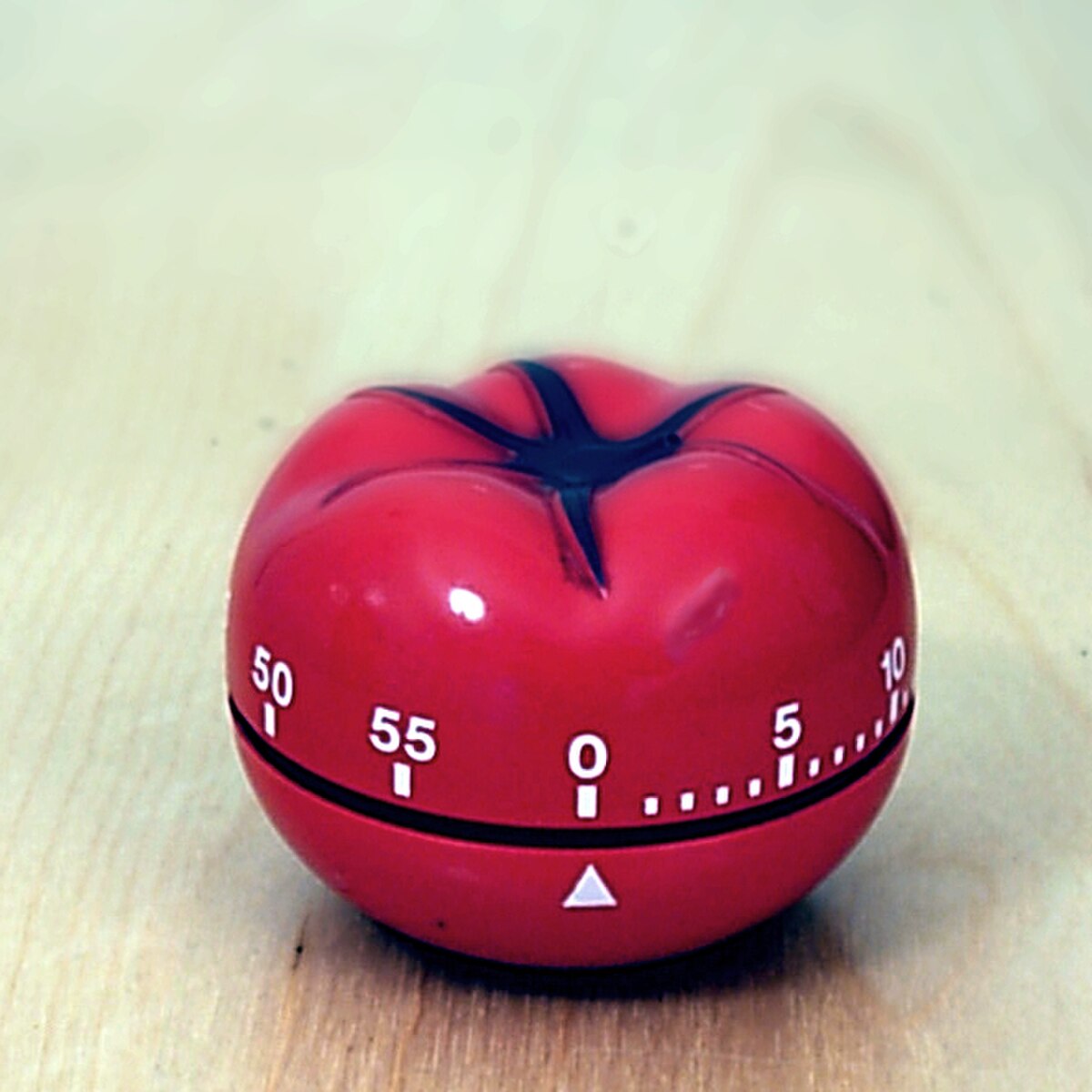
This practice curbs perfectionism by preventing open-ended work. Setting a hard boundary creates urgency, maintains focus, and keeps minor tasks from expanding to consume entire days. The Pomodoro Technique relies on this mechanism through 25-minute periods of focused concentration separated by recovery breaks.
Test yourself
The timebox ends and the work is unfinished. What has gone wrong?
Nothing, that is the box working. An ordinary deadline fixes what must be delivered and lets the date move. A timebox does the reverse, so an unfinished list is the output you were expecting: the box has just told you how big the job really was. The thing that would break it is extending it, which turns it back into an ordinary deadline.
A team fixes its release date and refuses to move it. What has to move instead?
What goes into the release. Something has to absorb the gap between the plan and reality, and there are only four candidates: the date, the contents, the hours or the quality. Fix the date and stay silent and the hours and the quality absorb it quietly. Naming the contents in advance is the whole point, which is why the list gets sorted into must have, should have, could have and won't have before the deadline arrives.
Play the lesson in edgi and the card is yours. It lands on your Map next to the ideas it connects to, and turns from matte to foil to gold as you learn more around it.
What happens if work is unfinished when the timebox ends?
The work stops and unfinished, lower-priority deliverables are cut from that cycle. Extending the window turns the boundary back into an ordinary flexible deadline.
How does timeboxing reduce risk in large projects?
It identifies tasks with uncertain durations and prevents planning errors, like poor task breakdown, from compounding into major delays. It also lets teams incorporate feedback and newly discovered insights at the end of each iteration.