Time management is the practice of consciously planning and controlling how much time you spend on specific activities. Instead of just making work faster, it acts as a sorting process that balances jobs, personal interests, and family responsibilities. Gaining control over daily schedules gives people more choices in how they direct their effort.
By the edgi team We find the most surprising true thing about an idea and build a 60-second lesson around it.
Between the 1920s and the 1960s the American home filled up with machines. The washing machine, the vacuum cleaner, the refrigerator, the electric iron. In 1924 a full-time housewife spent about 52 hours a week on housework. In 1966, with every one of those machines in the house, she spent about 55.
The machines worked. Laundry and cooking really did take less time, and the hours went into shopping, errands, driving and looking after children.
A sorting problem
Speeding a task up does not hand the time back to you. It hands the time back to the day, and the day has a list. That makes time management a sorting problem, not a speed problem. Sorted into what? Dwight D. Eisenhower liked to quote a university president: I have two kinds of problems, the urgent and the important. The urgent are not important, and the important are never urgent.
Efficiency asks how fast a thing gets done. Prioritization asks which of the two piles gets done at all. Only one of those changes what is in the day.
What wins the sort
Urgency announces itself with a date. Importance announces nothing at all, so it loses the sort by default. And the date does not even have to be real. Researchers offered people two three-minute jobs. The better-paying one stayed open for 24 hours; the worse-paying one expired in 10 minutes, which risked nothing, since three minutes fits inside ten.
With no clock on either job, 13 percent took the worse-paying one. With the fake ten-minute clock on it, 31 percent did. The deadline changed no payoff and carried no information. It only made one job look like it was leaving.
Which is why the tools that help are sorting tools. None of them makes anything quicker. They decide what does not get done.
How do common prioritization systems work?
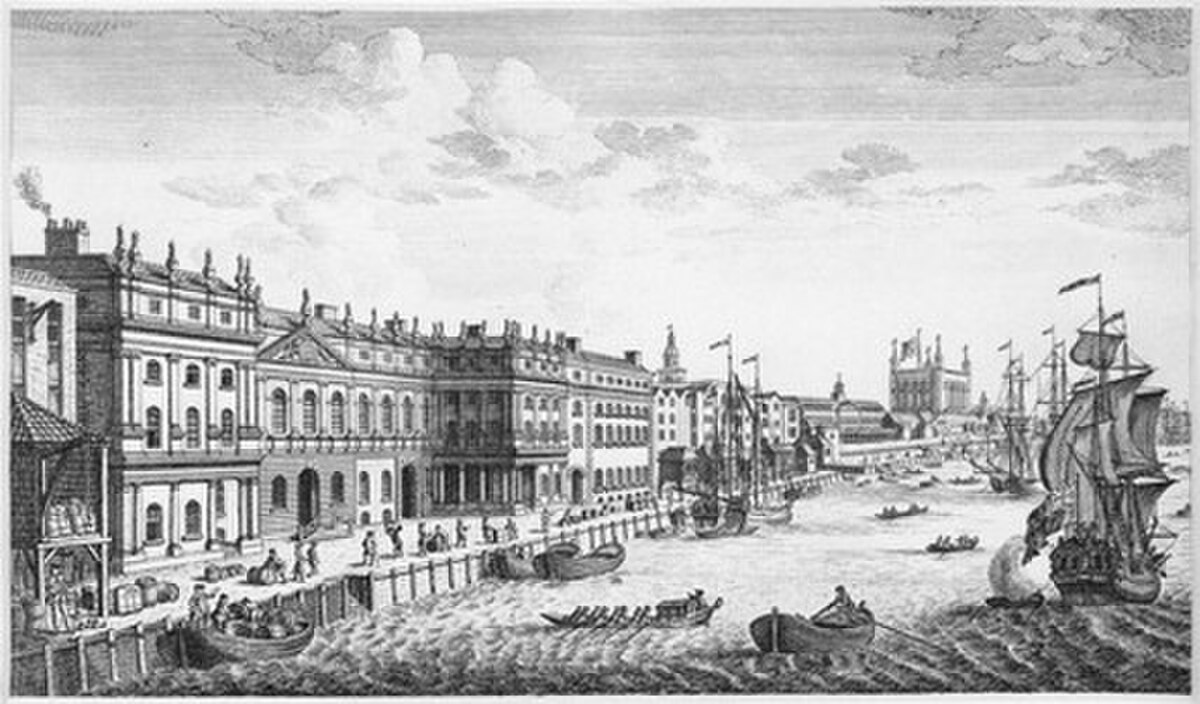
Consultant Ivy Lee advised Charles M. Schwab, president of Bethlehem Steel Corporation, to write a numbered list of tasks arranged strictly by importance and complete them one by one. In 1973, Alan Lakein introduced the ABC system, where users label items as A for top priority, B for secondary importance, and C for the lowest tier, assigning numbers like A-1 to rank within categories.
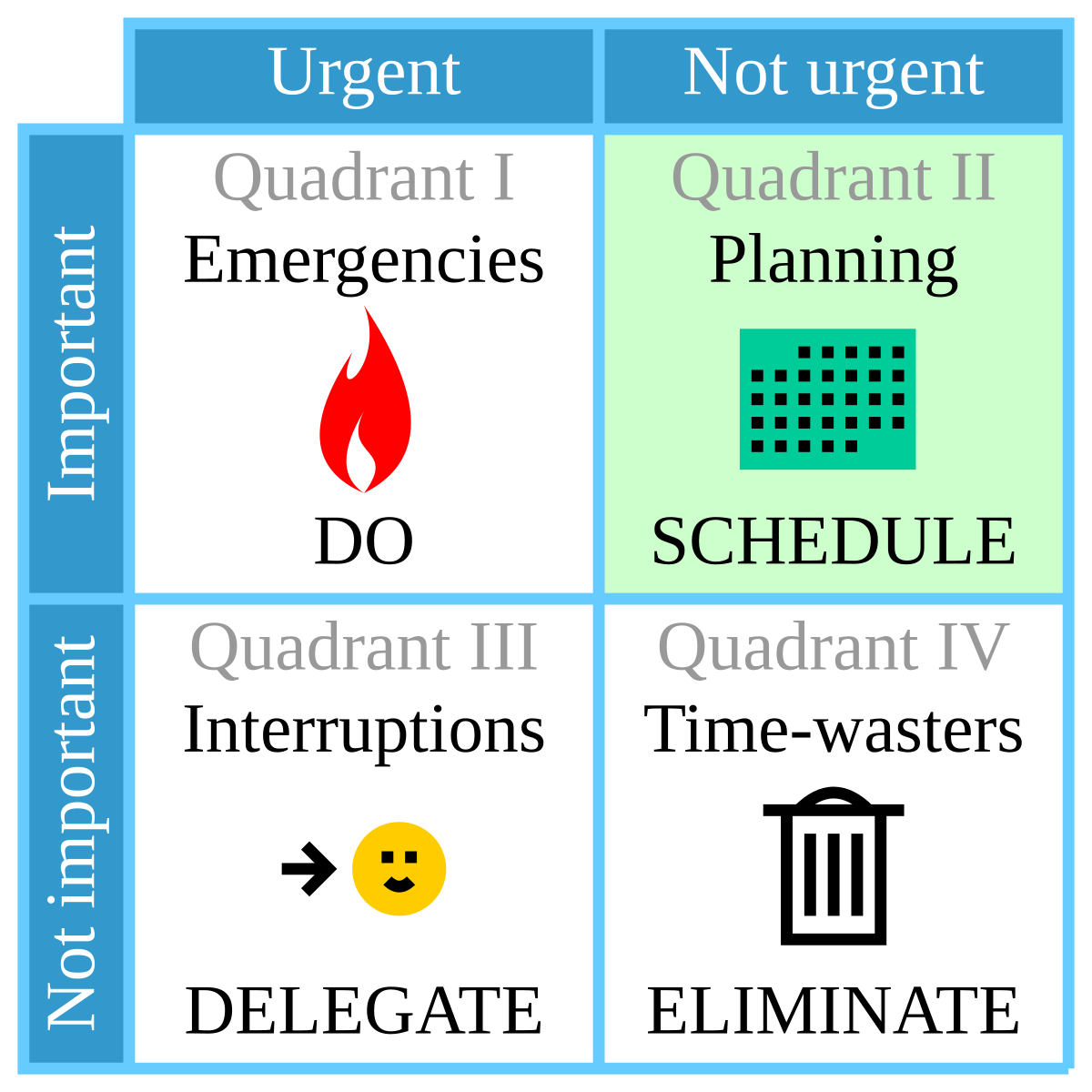
An Eisenhower box sorts tasks into four quadrants by comparing urgency against importance to clarify what to do first. Cmglee, CC BY-SA 4.0, via Wikimedia Commons
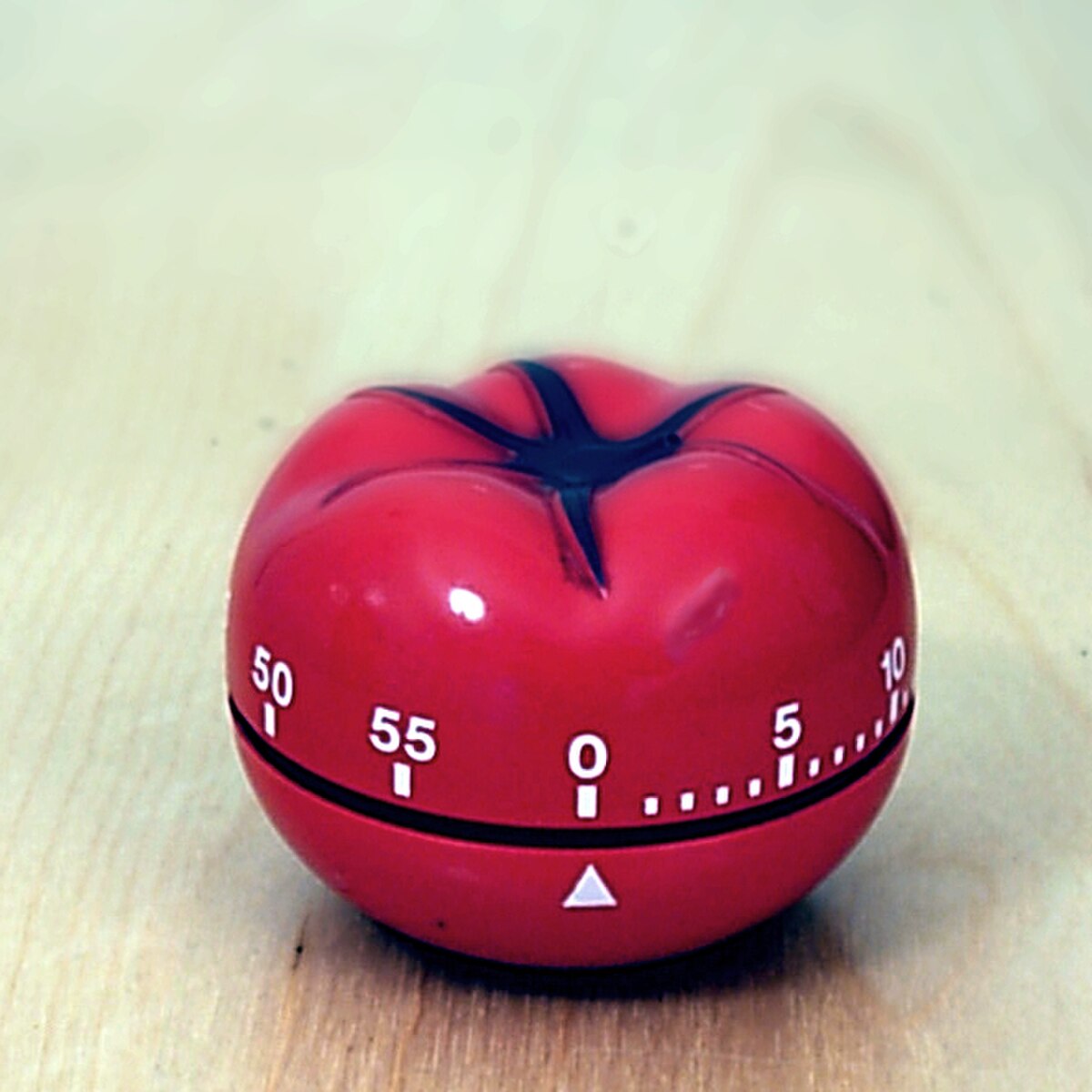
Other systems focus on external tracking and short time blocks. David Allen created Getting Things Done (GTD), which advises writing down every task so ideas do not take up mental energy, completing small tasks instantly, and breaking large projects into smaller steps. Francesco Cirillo developed the Pomodoro Technique in the late 1980s using a tomato kitchen timer, dividing effort into 25-minute working intervals followed by five-minute breaks, with a 15-to-30-minute break after every four cycles.
How do cultural views shape time management?
In America and Northern European countries like Germany, Switzerland, and England, time is perceived linearly, flowing steadily from one moment to the next. These monochronic cultures prefer doing one thing at a time, valuing punctuality, deadlines, and efficiency to prevent wasted minutes.
Southern European cultures in Spain, Portugal, and Italy follow a multi-active or polychronic view, where people prefer doing several tasks at once and place higher value on conversations and meeting quality over strict schedules. In cyclical cultures across Asia, such as China and Japan, time is viewed as unlimited because seasons and days repeat in cycles, prompting people to deliberate deeply on decisions and value long-term relationships over rigid timetables.
Test yourself
Is time management primarily a speed problem or a sorting problem?
A sorting problem. Speeding up tasks simply hands the saved time back to the day to be filled with more tasks. Effective time management requires choosing which activities belong on the schedule at all.
When practicing time management, why do urgent tasks frequently crowd out important ones?
Urgency announces itself with a date. Urgency comes with explicit deadlines and alarms that demand attention, whereas true importance is quiet and silent, causing it to lose the daily sort by default.
Why do small deadlines beat big payoffs when you pick what to do next?
Urgency shows, importance does not. People were given a choice of two three-minute jobs: one paying more with a 24-hour window, one paying less with a 10-minute one. Nothing was actually at risk. With no deadlines, 13 percent took the worse-paying job; with the fake clock, 31 percent did. The deadline carried no information and won anyway.
Play the lesson in edgi and the card is yours. It lands on your Map next to the ideas it connects to, and turns from matte to foil to gold as you learn more around it.
Created by Hyrum W. Smith, the Franklin Planner is a ring-binder system that links daily tasks directly to personal values and long-term goals. It combines Lakein's ABC categories with numerical rankings to sort daily entries.
What medical conditions can disrupt time management?
Chronic difficulty managing time can stem from attention deficit hyperactivity disorder (ADHD). Diagnostic criteria include trouble starting tasks, disorganization, difficulty following through, and struggles with running multiple projects at once.