Sleep is a reversible state of reduced consciousness and physical activity where the body rests and sensory responses drop. Far from shutting down, the brain cycles through active electrical patterns that rebuild cellular energy and clean out waste products accumulated during waking hours. This nightly maintenance restores immune function, stabilizes mood, and preserves memory.
By the edgi team We find the most surprising true thing about an idea and build a 60-second lesson around it.
For decades, science assumed sleep was just a passive, quiet state. That changed in 1953 when researchers Eugene Aserinsky and Nathaniel Kleitman hooked Aserinsky’s young son to an EEG machine.
They watched the boy's eyes dart rapidly under his lids, revealing bursts of brain activity as intense as being wide awake. They had discovered REM sleep, proving the brain was hard at work while the body was still.
The nightly scrub
While you are out, your brain undergoes a physical transformation to clean itself. Brain cells actually shrink slightly, opening up channels for cerebrospinal fluid to rush through.
This fluid flushes out metabolic waste like beta-amyloid, while enzymes break down the adenosine you built up awake, clearing the cognitive fog for tomorrow.
The master clock
This isn't just about feeling tired; it is governed by your circadian rhythm. This internal biological clock signals the pineal gland to release melatonin when light fades.
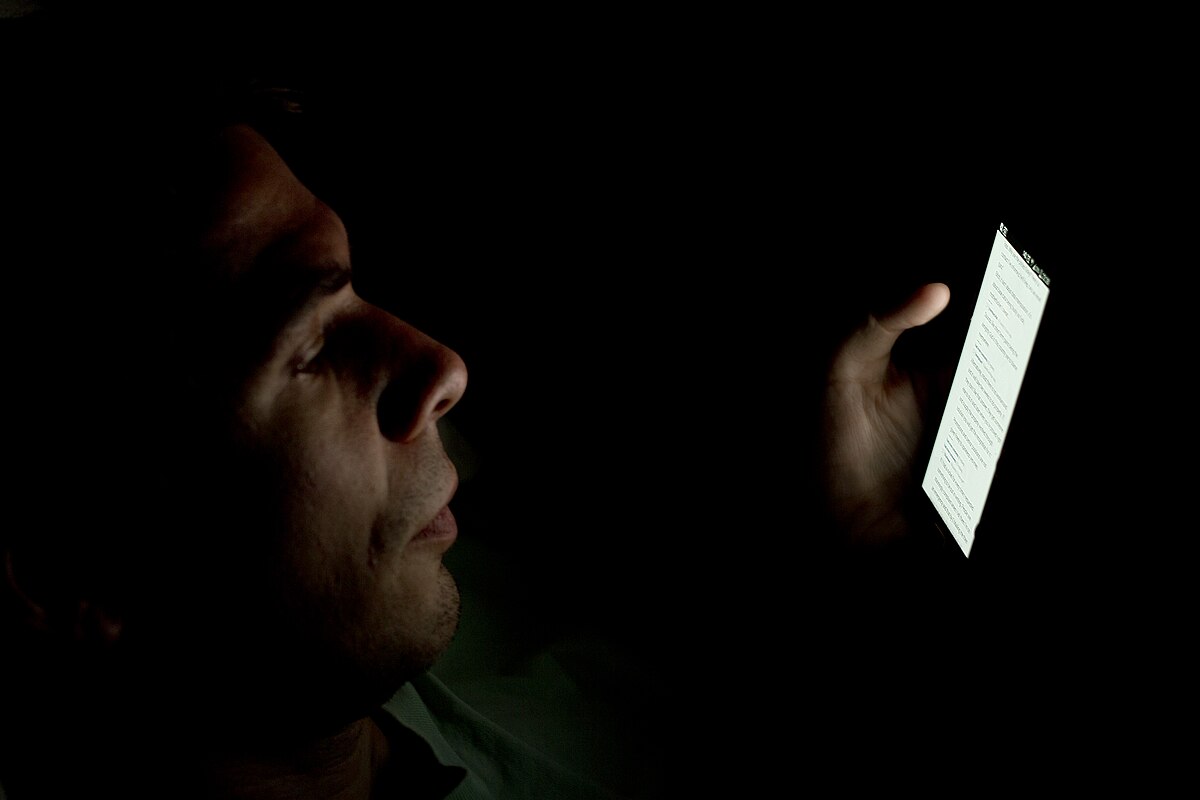
When we disrupt this cycle with screens or jet lag, the brain’s cleaning schedule breaks, leaving the mental trash behind.
A person is shown in profile in a dark room, looking intently at the bright screen of a smartphone held in their hand. Japanexperterna.se from Japan, CC BY-SA 2.0, via Wikimedia Commons
The stages of non-REM and REM sleep
A normal night consists of four to six ninety-minute cycles alternating between non-rapid eye movement (NREM) and rapid eye movement (REM) sleep. NREM sleep begins first, progressing through stages N1, N2, and N3. During stage N3, also known as slow-wave or delta sleep, body temperature drops, heart rate slows, and the brain produces slow delta waves while releasing bursts of growth hormone.
REM sleep represents paradoxical sleep: the brain produces fast, desynchronized waves and eyes dart rapidly under closed lids, yet skeletal muscles become virtually paralyzed. Most vivid dreams occur during REM. The standard progression runs from N1 to N2, down into N3, back up through N2, and into REM. Stage N3 dominates the early part of the night, while REM periods grow longer closer to morning.
How sleep restores energy and cleans the brain
The awake brain consumes twenty percent of the body's total energy. During quiet non-REM sleep, cerebral energy demand drops steeply, allowing brain regions to rebuild their supplies of adenosine triphosphate (ATP), the primary molecule used for short-term cellular energy storage.
Sleep is an ancient behavior going back hundreds of millions of years, originating largely to purge metabolic debris. Deep rest puts organ systems into an anabolic state, rebuilding muscle and skeletal tissue while secreted prolactin supports immune health. Simultaneous physiological tests such as electroencephalography for brain waves, electrooculography for eye movements, and electromyography for muscle tone track these restorative shifts.
Test yourself
Why might waking two hours early cost you more REM sleep than deep sleep?
REM is concentrated late in the night. Deep sleep is front-loaded in the night and REM stretches longer in the final hours, so a shortened night loses mostly REM.
When does the brain do much of its memory consolidation?
During sleep, with less new input. Sleeping people retested after a task often improve more than people who stayed awake, because the brain stabilizes new memories offline.
A traveler lands in a new time zone and feels sleepy at noon. What is most likely off?
Their internal clock is set to the old zone. The circadian rhythm still follows the old time zone, so its night signals arrive at the wrong local hour. It adjusts as light exposure shifts the clock.
Play the lesson in edgi and the card is yours. It lands on your Map next to the ideas it connects to, and turns from matte to foil to gold as you learn more around it.
What brain waves appear during different sleep stages?
Fully alert concentration generates high-frequency beta or gamma waves, which give way to alpha waves when resting with eyes closed. Theta waves emerge as you drift into light sleep stages N1 and N2, while large, slow delta waves dominate deep stage N3 sleep.
How does blue light interfere with sleep cycles?
The internal biological clock promotes sleep in darkness by signaling the pineal gland to release the hormone melatonin. Blue light emitted by smartphones, televisions, and outdoor lighting mimics daylight, suppressing melatonin production and throwing off the natural circadian rhythm.
What is polysomnography?
Polysomnography is a comprehensive measurement used in specialized sleep laboratories to monitor sleep states. It simultaneously collects electroencephalography (EEG) for brain waves, electrooculography (EOG) for eye movements, and electromyography (EMG) for skeletal muscle activity.