ClickbaitHow misleading links exploit the curiosity gap
Clickbait is online text or thumbnail links designed to manipulate people into clicking through to content that is often misleading, sensationalized, or low quality. It works by presenting an enticing premise while deliberately withholding key details. Creators use this tension to drive page views and ad revenue rather than deliver genuine value.
By the edgi team We find the most surprising true thing about an idea and build a 60-second lesson around it.
Clickbait works by creating a curiosity gap, a mental itch that your brain physically struggles to leave unscratched. By providing a tantalizing setup but withholding the conclusion, the headline forces you to click just to resolve the tension.
Three fictional clickbait advertisements, or "chumbox" ads, designed to create an information gap and encourage curiosity. Lord Belbury, CC BY-SA 4.0, via Wikimedia Commons
The goal isn't to inform you, but to hijack your neurobiology for a split-second of engagement.
The upworthy formula
In the early 2010s, sites like Upworthy and BuzzFeed perfected the art of testing dozens of headlines for a single story. They discovered that the most effective headers used a simple two-part structure: a relatable premise followed by a shocking, hidden result.
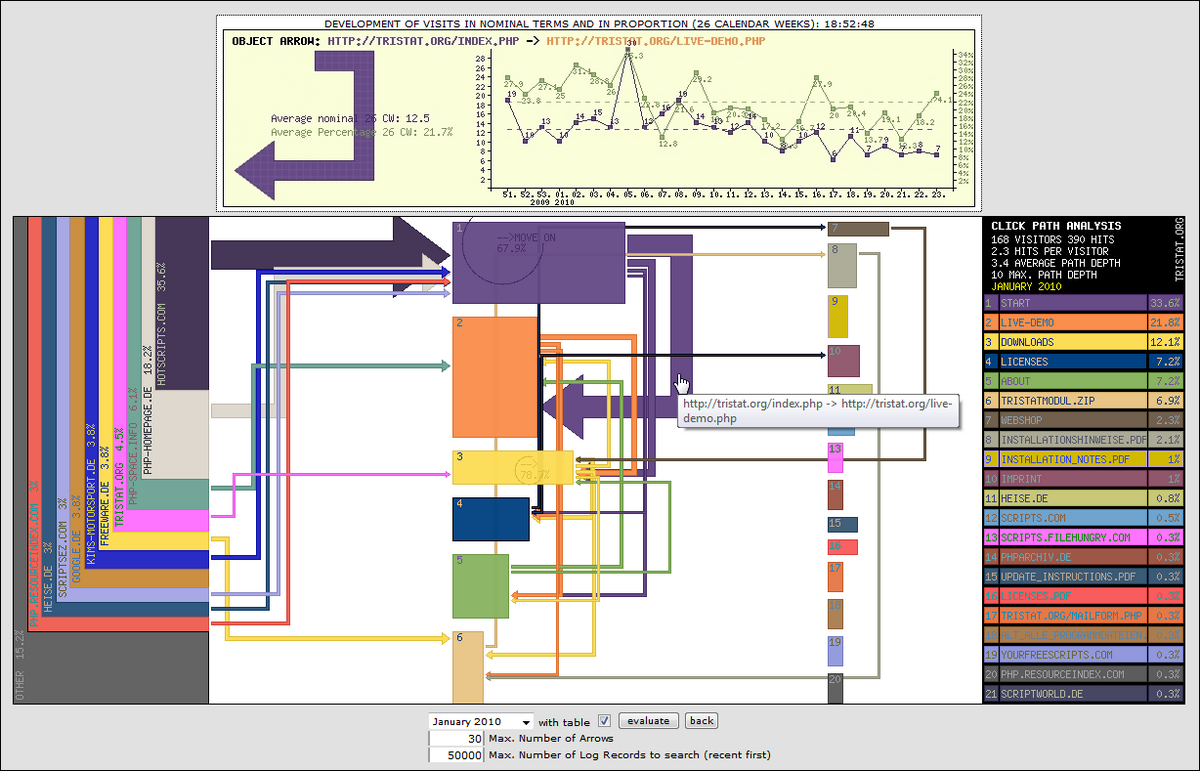
A "Clickpath Analysis" diagram visualizes user navigation on a website, showing referring pages on the left and a network of arrows and rectangles representing movement quantity. KTB, CC BY-SA 3.0, via Wikimedia Commons
This became the era of you won't believe what happened next, a formula designed to exploit our natural desire for narrative closure.
The bigger picture
While often dismissed as a harmless listicle, this tactic is frequently used to drive traffic toward misinformation. It thrives on sensationalism, turning the internet into a high-stakes battle for your dopamine-driven attention.
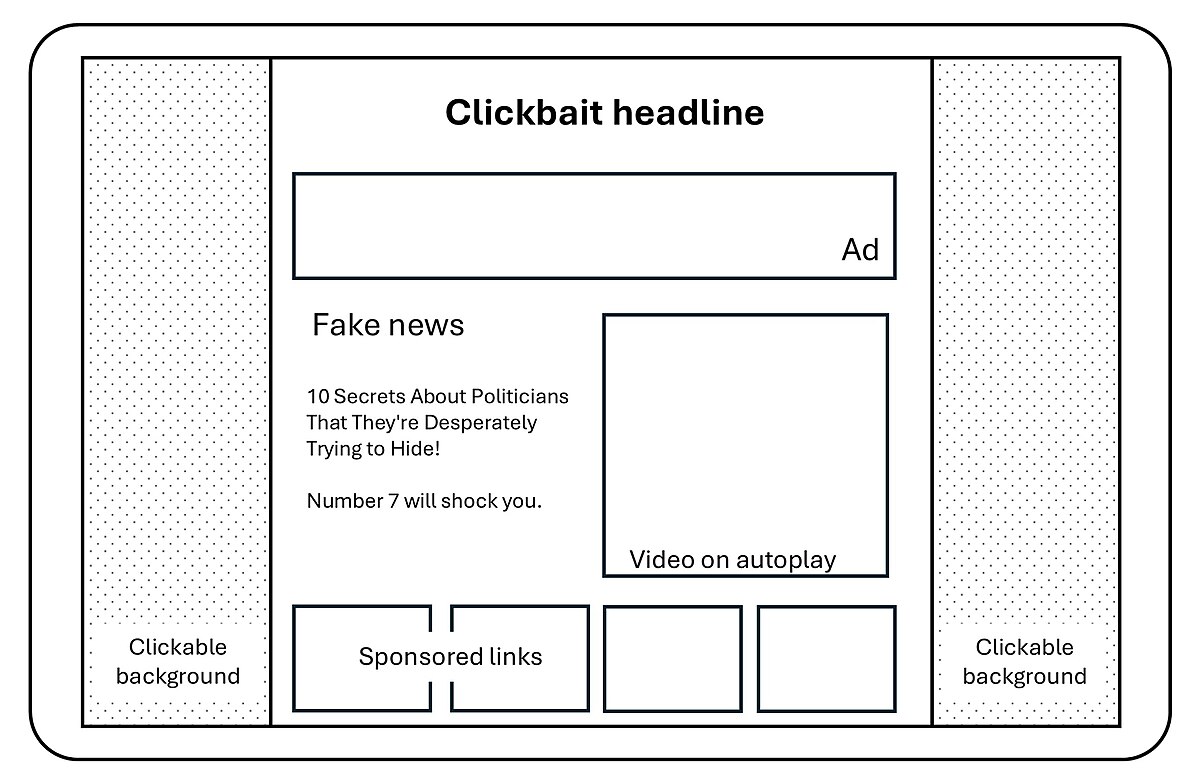
A diagram illustrates the layout of a "Made for Advertising" (MFA) website, designed to monetize fake news, featuring a "Clickbait headline," an "Ad" banner, and a "Fake news" section with a headline… Carlos Diaz Ruiz, CC BY 4.0, via Wikimedia Commons
How does clickbait work?
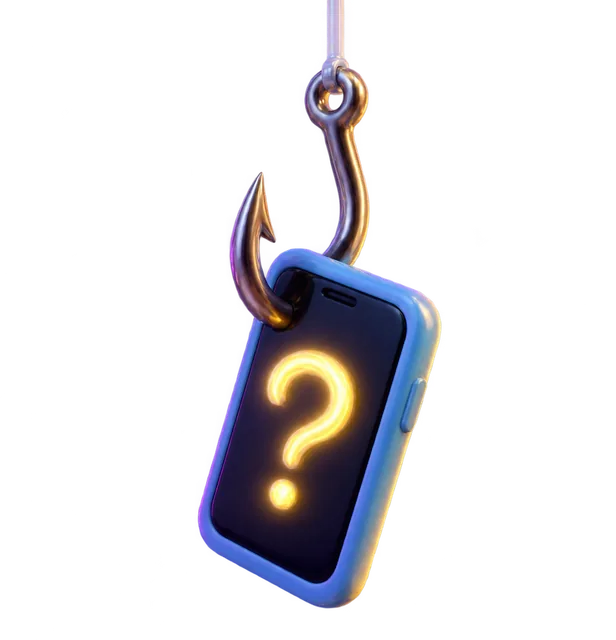
Clickbait relies on the curiosity gap, providing enough information to spark interest but withholding the conclusion so the reader must click to resolve the tension. The bait suffix comes from fishing, where a hook is hidden inside an enticing treat to trick fish into biting.
The underlying mechanics mirror offline marketing tactics like bait-and-switch. Online headlines often overpromise and underdeliver, leading to unoriginal articles that merely restate the title or copy facts from other news outlets. YouTube metrics confirm that videos with hyperbolic or misleading titles consistently achieve higher click-through rates than straightforward ones.
Historical roots and modern uses
Clickbait descends directly from yellow journalism, an older print tradition that prioritized scandal, exaggeration, and unverified rumors over well-researched news. In extreme cases, modern operators use these links for phishing attacks to steal personal user data or install malicious files.
Beyond commercial ad revenue, clickbait has reshaped political discourse. Publishers across the ideological spectrum generate outrage by packaging cultural conflicts into shareable short-form content. Manipulative engagement bait prompts users to comment, like, and share, turning simple emotional reactions into scalable revenue.
Play the lesson in edgi and the card is yours. It lands on your Map next to the ideas it connects to, and turns from matte to foil to gold as you learn more around it.
No. An eye-catching headline that accurately describes what is in the article is not clickbait. The defining characteristic of clickbait is misrepresentation, dishonesty, or intentional omission.
What is engagement bait?
Engagement bait is manipulative content crafted specifically to provoke artificial user interactions like likes, tags, shares, and comments. Creators monetize these interactions to amplify products or specific narratives.
How does click fraud differ from clickbait?
Clickbait misleads readers about content to gain page views, while click fraud involves a severe technical disconnect on the other side of the link. Click fraud often includes malicious code or deceptive automated schemes.