Filter BubbleWhy your search results hide the other side
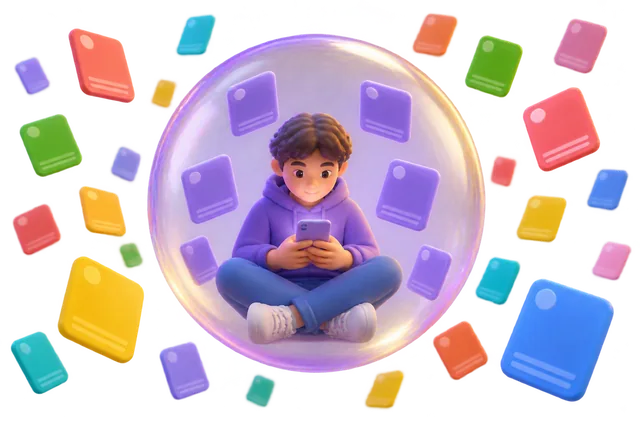
A filter bubble is a state of intellectual isolation created when algorithms personalize what you see online based on your past clicks, search history, and location. Instead of showing everyone the same web, platforms quietly filter out content that challenges your worldview and amplify what you already agree with. This creates a customized information feed that makes your personal biases feel like universal consensus.
By the edgi team We find the most surprising true thing about an idea and build a 60-second lesson around it.
In 2011, internet activist Eli Pariser noticed that two friends searching for Egypt on Google got wildly different results. One saw tourism ads and protest news, while the other saw strictly financial reports and investment portfolios.
A portrait of Eli Pariser, author of "The Filter Bubble", speaking at a podium with a screen behind him displaying the text "If you like this, you'll like that.". Knight Foundation, CC BY-SA 2.0, via Wikimedia Commons
Algorithms use your location, click history, and search habits to build a custom information stream.
The invisible wall
This selective curation is known as a filter bubble. Instead of acting as a shared public library, the internet functions as a series of private silos tailored to your biases.
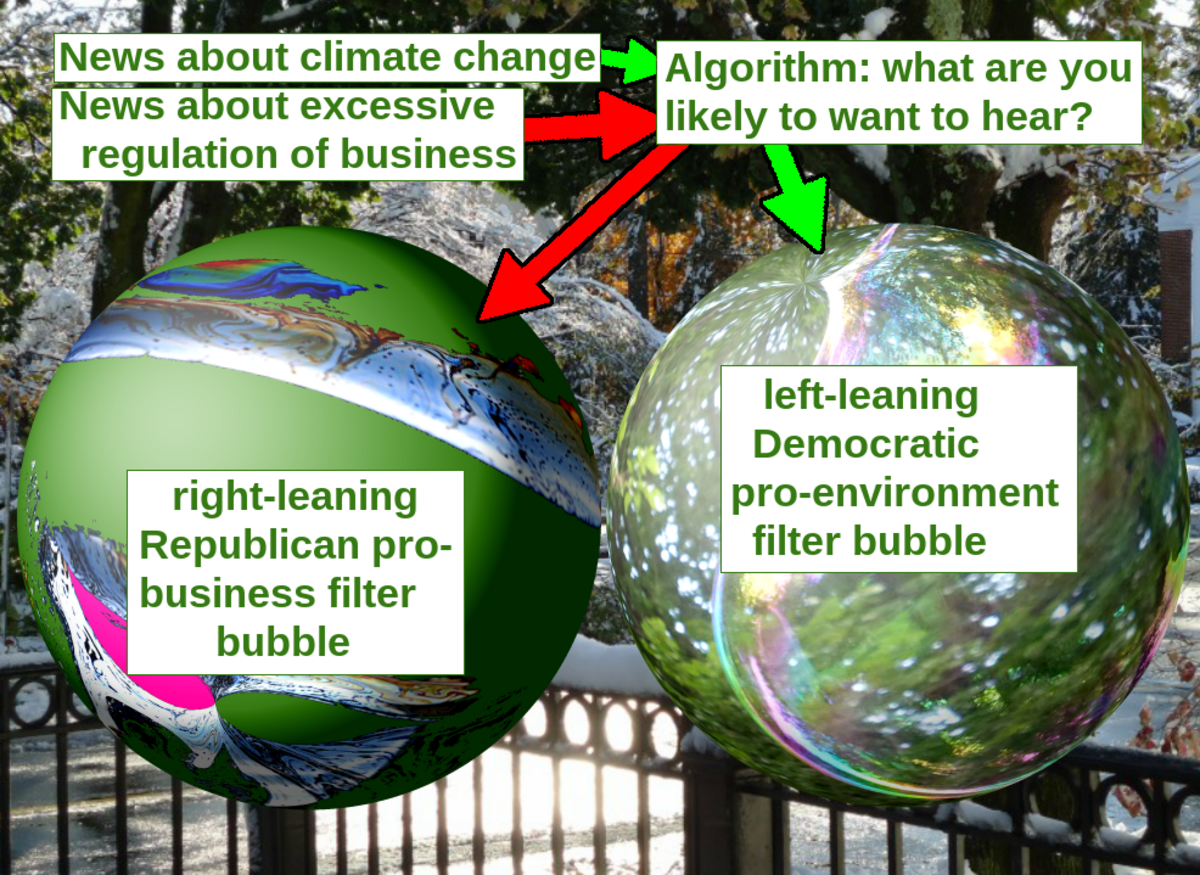
An illustration depicting two distinct ideological filter bubbles, a 'right-leaning Republican pro-business filter bubble' (green) and a 'left-leaning Democratic pro-environment filter bubble'… Tomwsulcer, CC0, via Wikimedia Commons
You aren't just shown content you like; you are quietly shielded from everything that might challenge your worldview.
The consequence
When algorithms constantly reinforce what you already believe, they create an echo chamber of agreeable ideas. This loss of a common baseline of facts accelerates political polarization, making opposing views seem bizarre or malicious.
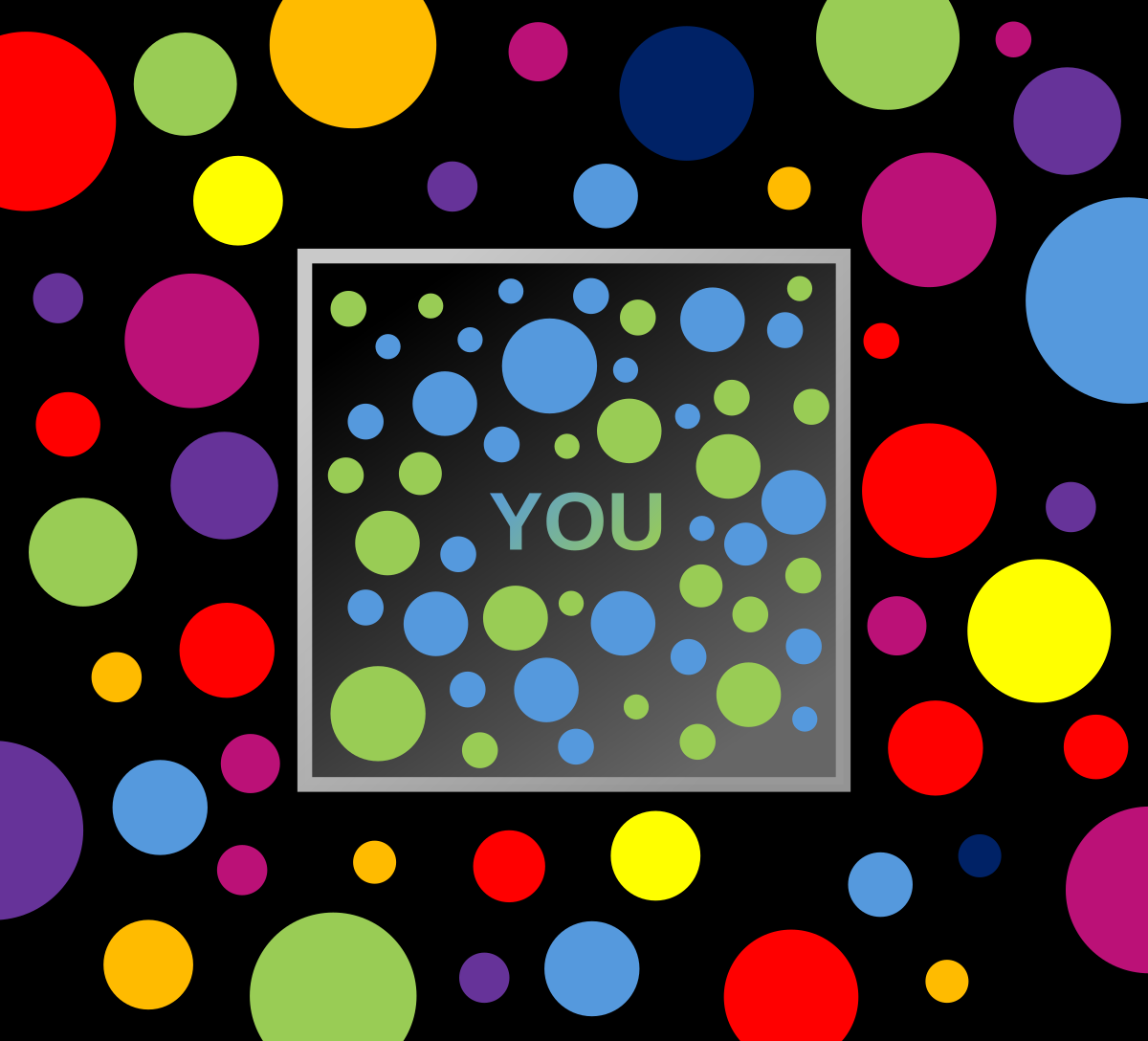
Abstract illustration of an echo chamber, featuring a central square labeled "YOU" surrounded by smaller, similarly colored circles, which are themselves surrounded by a wider array of multicolored… Evbestie, Dabmasterars, Belbury, CC BY-SA 4.0, via Wikimedia Commons
Escaping the bubble requires actively diversifying your information diet to find the voices the algorithm hides.
How algorithmic curation builds your bubble
In 2011, a Google engineer revealed to internet activist Eli Pariser that the search engine checked 57 separate data signals to customize a single user's search results. These signals include your physical location, the type of computer you use, and tracking cookies stored in your browser. One Wall Street Journal study found that the top 50 internet sites installed an average of 64 tracking beacons on visitors' computers.
Pariser broke this personalization down into a three-step cycle. First, algorithms track your behavior to figure out who you are and what you like. Second, platforms deliver content and services that best match your profile. Third, systems fine-tune the recommendations over time to narrow the fit, letting your past identity dictate your future media diet.
Examples of personalized search results
Identical search terms can produce completely different information for two people on the same day. In one test, Pariser had two users search Google for 'BP'. One received investment news about the company, while the other received news regarding the Deepwater Horizon oil spill.
This curation frequently goes unnoticed by users. A report cited by The Guardian noted that more than 60 percent of Facebook users were entirely unaware of algorithmic curation on the platform, assuming instead that their feeds showed every single update published by their friends and followed pages.
Group bubbles and cyberbalkanization
Filter bubbles do not operate only on individual users; they also isolate entire groups. When algorithmic curation divides the broader internet into closed communities of like-minded people, sociologists refer to the outcome as cyberbalkanization or the splinternet.
These collective bubbles remove common factual baselines from public discussion. Pariser warned that shielding communities from conflicting viewpoints undermines civic discourse, leaves populations more vulnerable to propaganda, and reinforces echo chambers that amplify misinformation.
Test yourself
What makes a filter bubble different from simply seeing content you enjoy?
It also limits exposure to challenging views. Personalized algorithms can reinforce your interests while shielding you from opposing views, narrowing the information you encounter.
How does a filter bubble function to shape an individual's online experience?
It proactively filters out diverse viewpoints.. Filter bubbles curate content to match your existing biases. Rather than providing variety, they actively hide challenging information, reinforcing your specific perspective.
Play the lesson in edgi and the card is yours. It lands on your Map next to the ideas it connects to, and turns from matte to foil to gold as you learn more around it.
Internet activist Eli Pariser coined the term around 2010 and popularized it in his 2011 book, The Filter Bubble, as well as a May 2011 TED talk.
What data do platforms use to personalize content?
Platforms track your physical location, the type of computer you use, search history, links clicked, followed pages, and data stored in tracking cookies. They also monitor interactions with past media, such as movies added to queues or articles shared.
What is cyberbalkanization?
Cyberbalkanization, also called the splinternet, occurs when algorithmic curation divides internet users into insulated sub-groups. Members of these online communities interact primarily with like-minded peers and lose exposure to opposing perspectives.