Attention EconomyWhy information creates human scarcity
The attention economy is a business model where companies treat human attention as a scarce commodity and compete to capture as much of your time as possible. When information becomes abundant, the limited hours a person has to focus become the valuable resource. Digital platforms monetize this focus directly through online advertising.
By the edgi team We find the most surprising true thing about an idea and build a 60-second lesson around it.
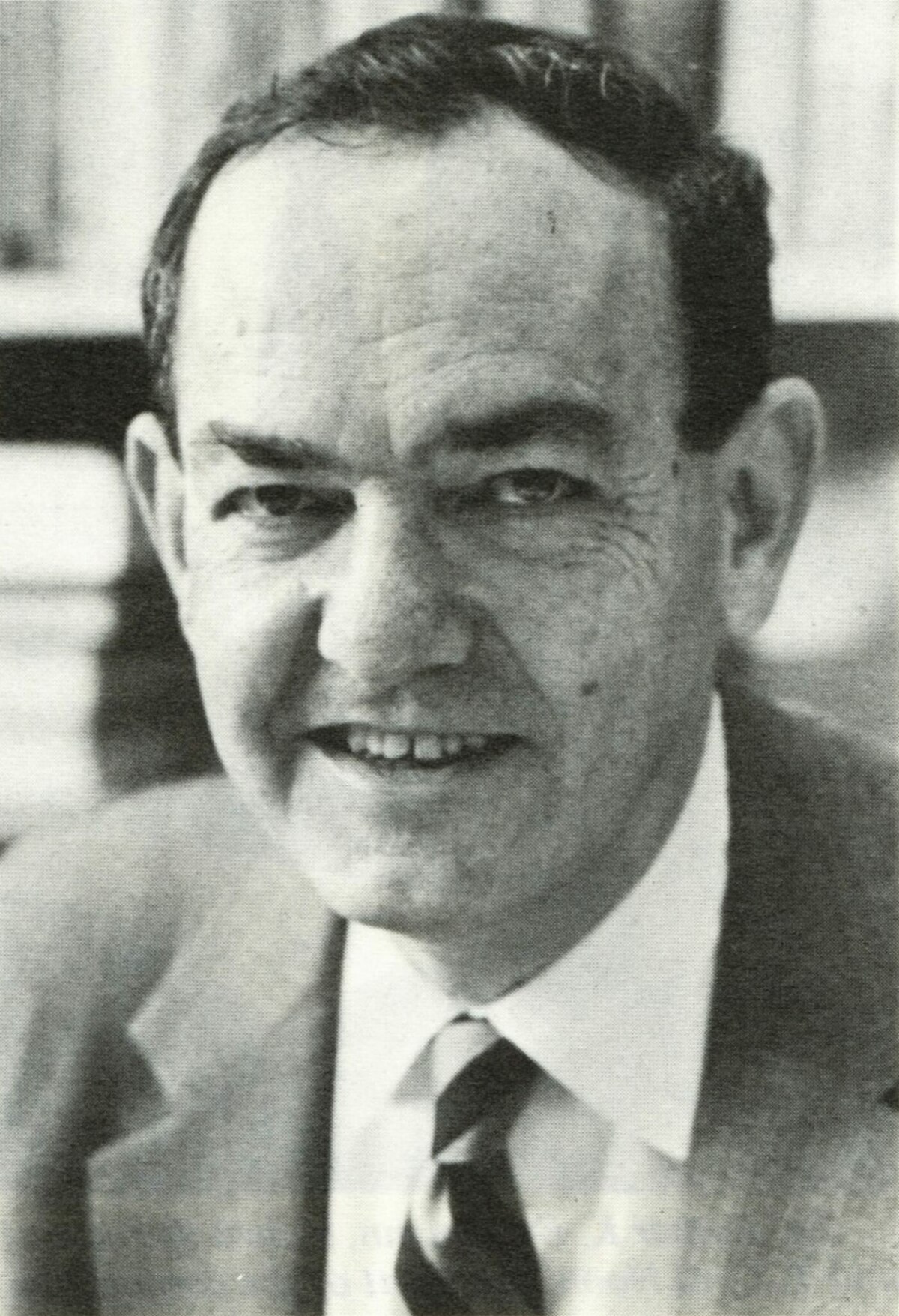
In 1971 an economist named Herbert A. Simon put it in one line. Information consumes attention, so a wealth of information creates a poverty of attention. He was writing about office memos, decades before the web. Once information is abundant, it stops being scarce, and whatever it eats becomes scarce instead.
A black and white portrait of Herbert A. Rochester Institute of Technology, Public domain, via Wikimedia Commons
What it eats is a person reading it. People have limited waking hours, which is why an attention economy trades in seconds of a human being rather than in articles.
A number an engineer can move
The advertising half of this is well known. Meta took in about 164 billion dollars in 2024, and roughly 98 cents of every dollar of it was online advertising. Platforms cannot see attention as a single number. A company chooses an observable signal, such as watch time, then tries to move it.
YouTube published its choice. Until 2012 its recommendations chased view counts, which reward a good thumbnail and say nothing about what happened after the click. So the target changed to watch time: not how many people clicked, but how long they stayed. Views dropped about 20 percent immediately, and the company kept the change.
What the number does
In that recommendation change, view counts fell about 20 percent while YouTube kept optimizing watch time. A metric can shape what gets recommended, made, and rewarded. It is not the only signal or business constraint, but it is the quantity the system can optimize directly.
Watch time is only one sign of attention. On its own, it cannot tell an hour you wanted from an hour you lost, unless the company adds other signals.
How does human attention become a scarce resource?
In 1971, economist Herbert A. Simon pointed out that information consumes the attention of its recipients. A wealth of information therefore creates a poverty of attention. Cognitive science and neuroscience show that humans have limited processing resources at any given time. Concentrating mental effort on one item excludes other perceivable information.
A Japanese sound truck broadcasts audio into public spaces, capturing the attention of listeners without their consent. Hustvedt, CC BY-SA 3.0, via Wikimedia Commons
Thomas H. Davenport and John C. Beck defined attention as focused mental engagement on a particular item, where a person notices something, attends to it, and decides whether to act. Because waking hours cannot expand, attention functions as a finite good with quantifiable economic value.
Sound trucks demonstrate how physical environments also compete for this limited resource by forcing passersby to listen.
How do digital platforms monetize attention?
Advertising-driven businesses turn captured time into revenue. For example, Meta took in roughly 164 billion dollars in 2024, with about 98 cents of every dollar coming from online advertising.
Because companies cannot measure attention directly as a single abstract concept, they optimize observable signals. In 2012, YouTube shifted its recommendation engine away from raw view counts, which only rewarded clicking on a thumbnail, and began optimizing for watch time. Even though view counts dropped about 20 percent immediately, the company kept the change to favor total time spent on the site.
To keep users engaged, platforms collect behavioral patterns and demographic data, creating personalized feeds designed to trigger dopamine release through novel content and social feedback.
What are the negative externalities of the attention model?
In economic theory, market transactions can produce unintended costs on third parties, known as negative externalities. When platforms maximize engagement for advertising revenue, one outcome is the amplification of disinformation, because sensational content circulates widely for profit.
The model also drives surveillance capitalism, where platforms collect and sell personal data to third parties without informed consent. In academic science, researchers have noted that public media exposure and press mentions increasingly shape how a scientist's work is valued, sometimes leading to publicized findings that lack reproducibility.
Test yourself
A team hits its target metric every quarter and the product feels worse. Why?
The metric missed part of the experience. A metric can improve while the experience it approximates gets worse. A team can optimize the number honestly and still miss what users value.
What can a product team optimize directly?
A measurable product metric. A product team can optimize an observable metric such as watch time. The metric may reflect attention or satisfaction, but it does not measure either perfectly.
Play the lesson in edgi and the card is yours. It lands on your Map next to the ideas it connects to, and turns from matte to foil to gold as you learn more around it.
Psychologist and economist Herbert A. Simon first theorized the concept in 1971. Writers such as Michael Goldhaber and Thomas H. Davenport popularized the terms in the mid-1990s.
How does the attention economy affect mental health?
Platforms design engagement loops that stimulate the release of dopamine when users view novel content or receive feedback. Prolonged use and social media addiction have been linked to depression, anxiety, and low self-esteem.