Echo chamber: how repetition turns opinions into facts
An echo chamber is an environment where you only encounter information that reinforces your preexisting beliefs, shielded from opposing viewpoints. Repeated exposure inside this closed system convinces people that their shared assumptions are objective truths. This process can warp credibility, increase political polarization, and lead to cognitive biases like confirmation bias.
By the edgi team We find the most surprising true thing about an idea and build a 60-second lesson around it.
An echo chamber is a media environment where you only encounter beliefs that reinforce what you already think. Information circulates inside a closed system, insulated from outside rebuttal or criticism.
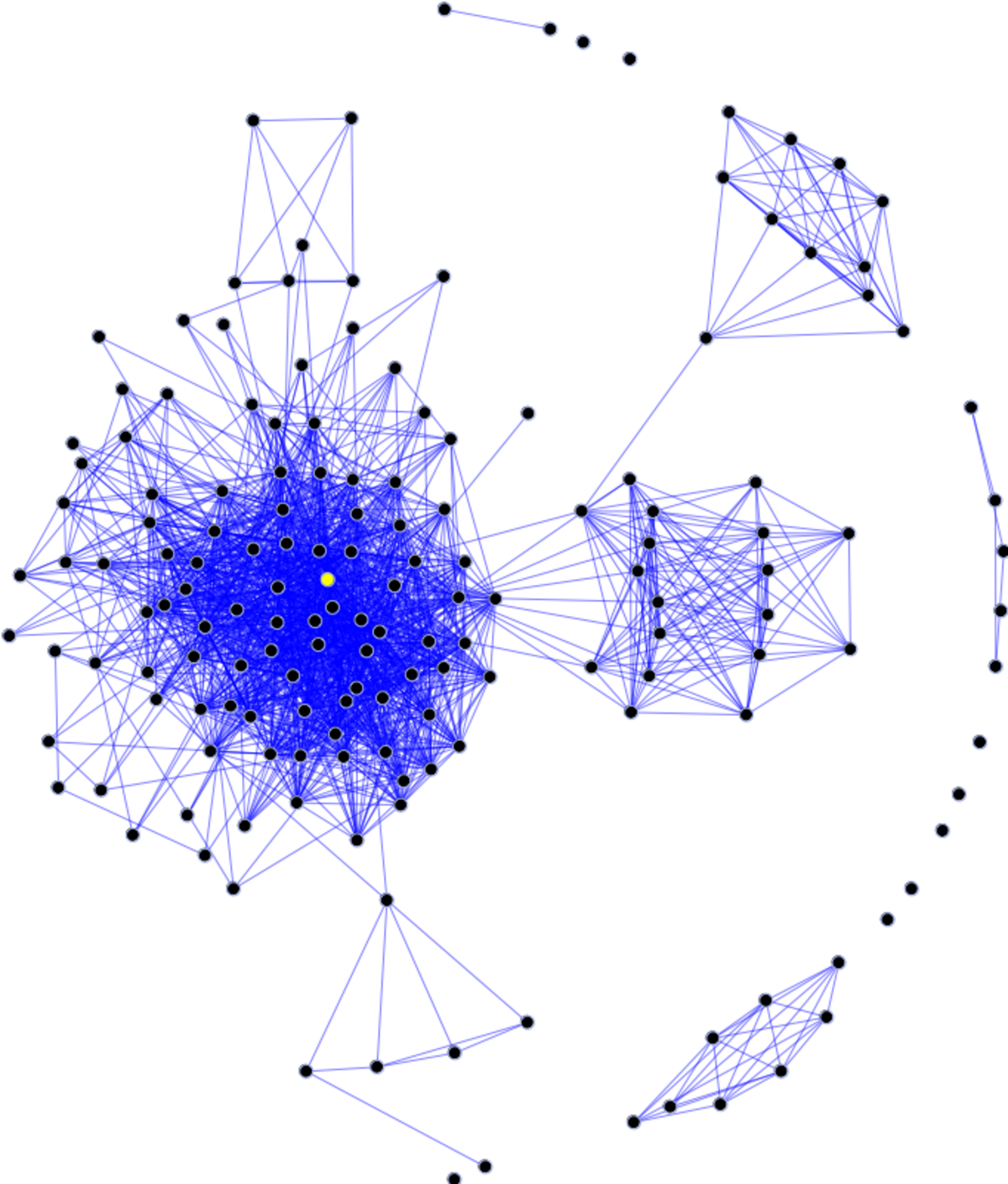
A social network diagram displays users forming separate, distinct clusters, illustrating the concept of echo chambers. Screenshot taken by User:DarwinPeacock, CC BY 3.0, via Wikimedia Commons
Without dissenting voices to question the premise, your starting assumptions start to look like objective facts.
The bias machine
This environment triggers heavy confirmation bias, the mental habit of favoring information that matches your worldview. It also causes correlation neglect, leading people to see strong patterns where none exist.
As opposing perspectives vanish entirely, extreme views begin to look moderate compared to everything else in the room.
The digital bubble
Algorithms on social media quietly accelerate this process by showing you content you are already likely to click. A closely related concept is the filter bubble, where personalized search results and feeds curate your reality.
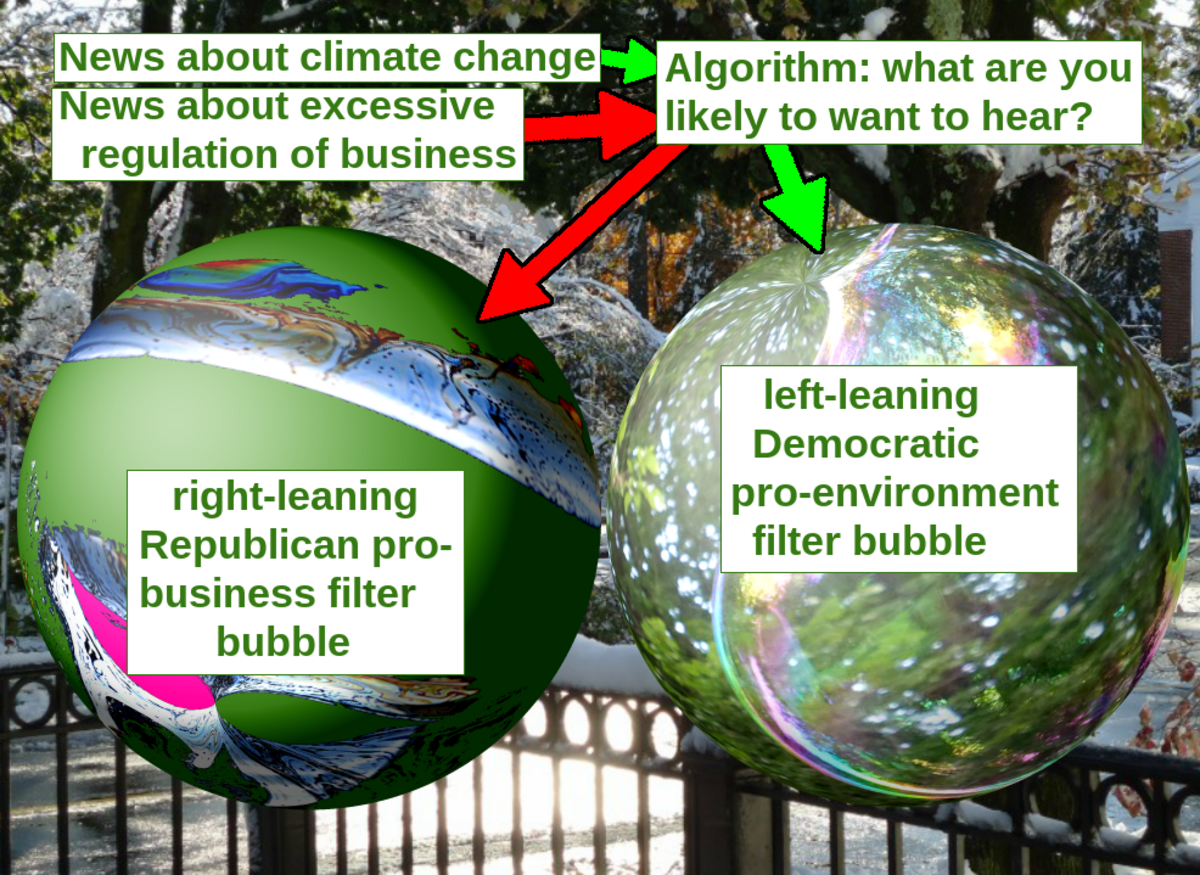
An illustration depicting two distinct ideological filter bubbles, a 'right-leaning Republican pro-business filter bubble' (green) and a 'left-leaning Democratic pro-environment filter bubble'… Tomwsulcer, CC0, via Wikimedia Commons
The result is deep political polarization, where rival groups are not just disagreeing, but living in entirely different factual universes.
How does an echo chamber form?
The term comes from acoustics, describing a hollow enclosure where sound waves bounce around, repeat, and amplify the initial noise. In media, an echo chamber forms when like-minded people cluster together and continually share ideas without outside rebuttal. Over time, claims get repeated, overheard, and repeated again, often in exaggerated forms, until members assume an extreme variation of the original claim is true.
This dynamic triggers specific cognitive biases. Confirmation bias leads members to collect supportive information while disregarding contradictory evidence. Correlation neglect causes people to see patterns where none exist, while selection bias limits what information enters the group in the first place.
How do algorithms accelerate the loop?
Social media platforms like Facebook, Google, and Twitter replace the traditional news editor with personalized algorithms. These systems track user actions, including clicks, likes, shares, and viewing time, to prioritize similar posts in a user's feed.
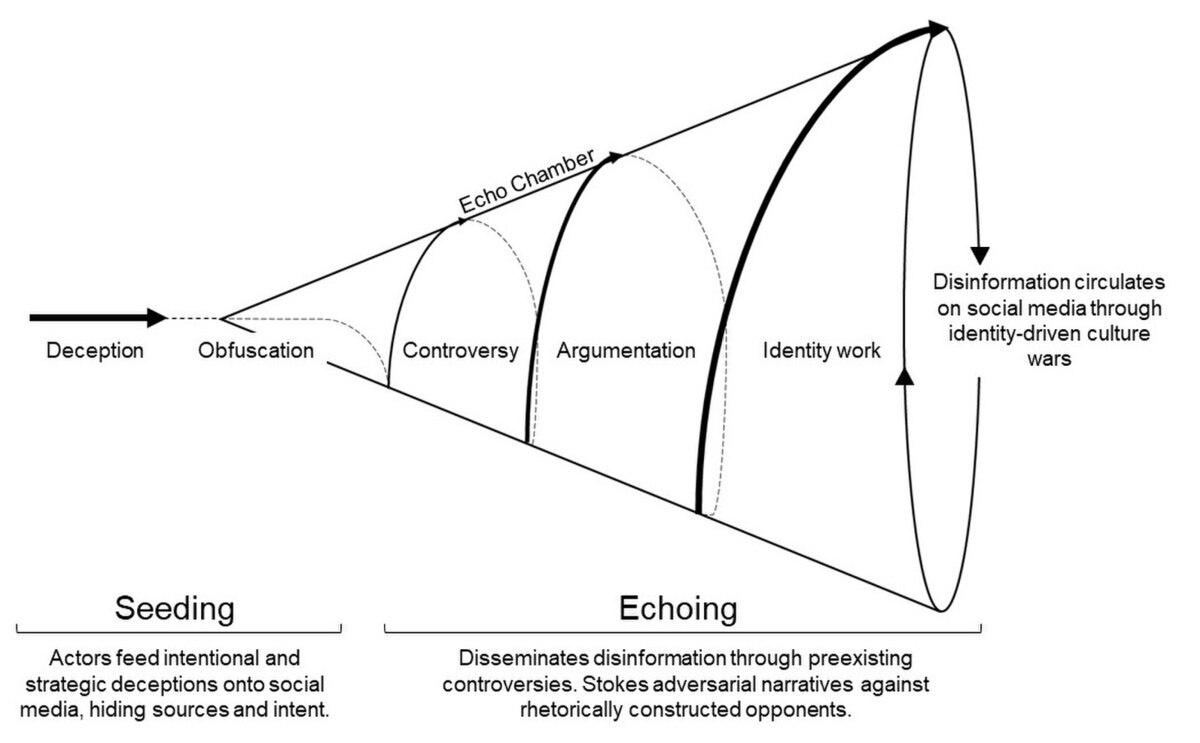
This chart illustrates how an echo chamber operates in two stages, beginning with an initial claim and spreading through repetitive sharing among peers. Diaz Ruiz, C. and Nilsson, T.; MexFin, CC BY-SA 4.0, via Wikimedia Commons
This automated curation creates an algorithmic filter bubble that feeds users what they want to believe. Studies show online homophily: people are far more likely to friend and follow users who share their political ideology. Combining selective sharing with algorithmic feeds reduces exposure to diverse perspectives and reinforces shared viewpoints.
Play the lesson in edgi and the card is yours. It lands on your Map next to the ideas it connects to, and turns from matte to foil to gold as you learn more around it.
Neotribalism is an emerging term for the homogenizing effect observed in online communities. It describes how internet users form tight-knit, distinct social groups based on shared ideologies.
Are members of an echo chamber uninterested in the truth?
Echo chambers do not necessarily erode a person's desire for truth. Instead, they manipulate perceived credibility so that members accept only specific, aligned institutions as trusted authorities.