Stoicism is an ancient Greek and Roman philosophy that treats virtue and rational judgment as the highest goods in human life. It teaches people to focus strictly on what they can control while accepting what they cannot. Rather than eliminating human emotion, it builds emotional resilience by training the mind to avoid destructive reactions and live in harmony with reason.
By the edgi team We find the most surprising true thing about an idea and build a 60-second lesson around it.
Stoicism starts with a simple, brutal filter: what can I control, and what can I not? This is the dichotomy of control. You cannot control the weather, the economy, or other people's opinions.
A gray illustration of a traditional balance scale, symbolizing justice. DTR, Public domain, via Wikimedia Commons
Trying to change those things is a recipe for anxiety. The Stoic ignores them to focus entirely on their own character and actions.
The proof
This philosophy was practiced by both a slave and an emperor. Epictetus, born into slavery, taught that while a master could chain his leg, no one could chain his will.
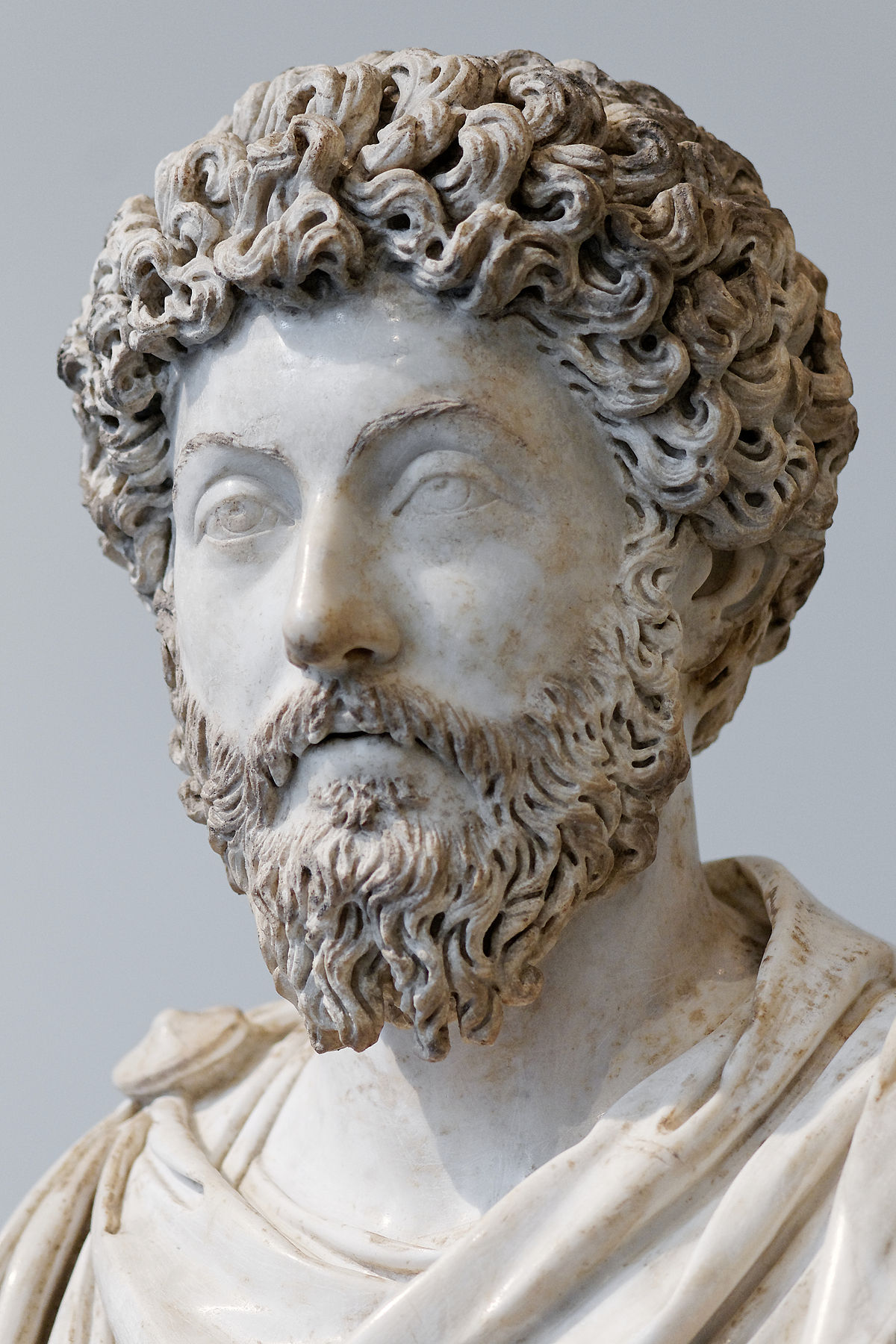
Centuries later, Marcus Aurelius wrote his Meditations while leading a war-torn empire, reminding himself that an obstacle isn't a problem, it's fuel for action.
Marble bust of the Roman emperor and Stoic philosopher Marcus Aurelius, depicting him with curly hair and a full beard. CC BY 2.5, via Wikimedia Commons
The misconception
People often mistake Stoicism for being a robot without feelings. It is actually about emotional resilience. It is the courage to look at reality without being shattered by it.
Several Moai statues, large monolithic human figures carved by the Rapa Nui people, stand on a grassy hillside on Easter Island under a blue sky with white clouds. Aurbina, Public domain, via Wikimedia Commons
It is not about having no emotions; it is about not letting your emotions have you.
How Stoic philosophy works
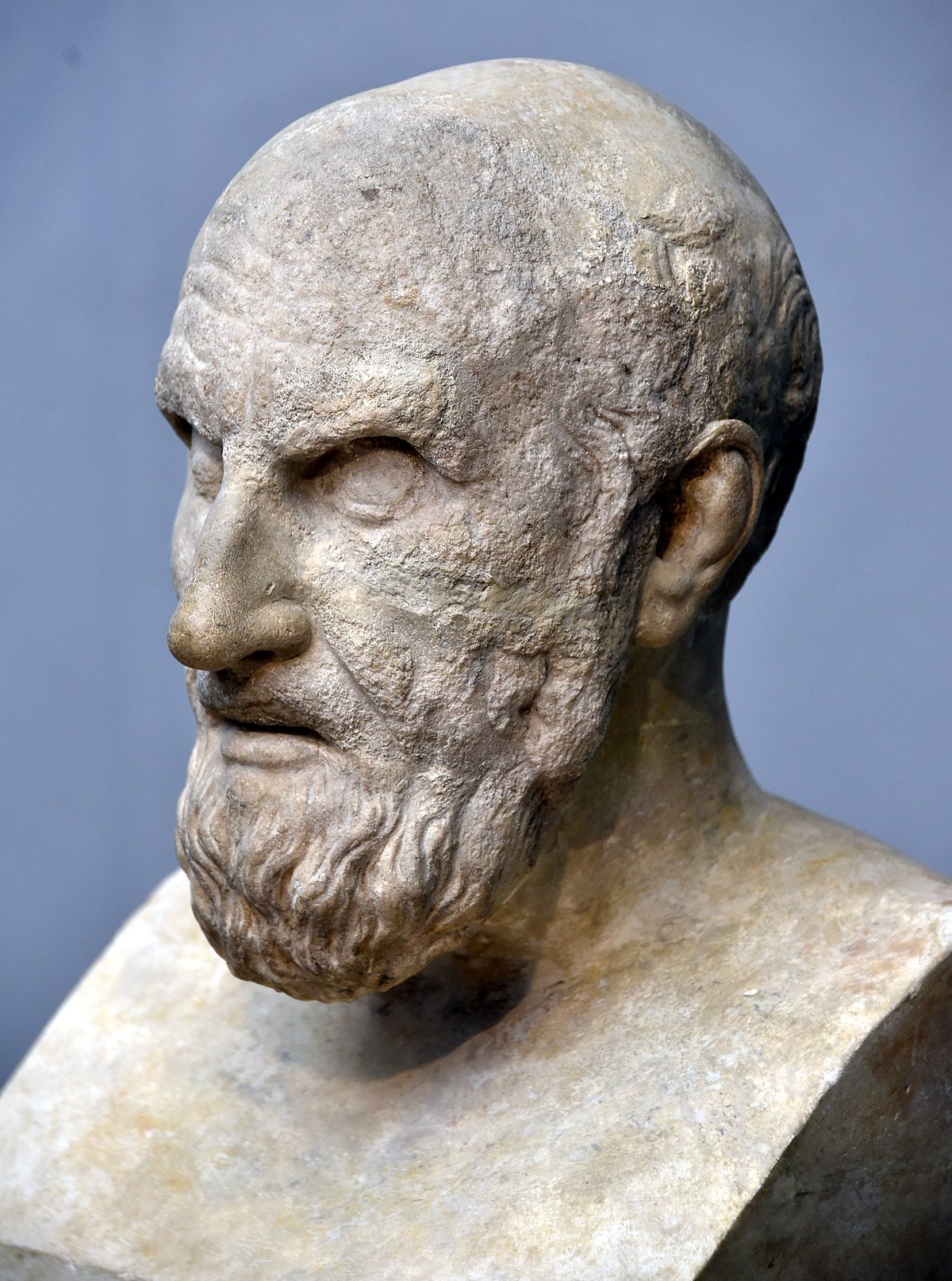
Stoics organized their entire philosophical system into three interconnected branches: logic, physics, and ethics. Logic trains the mind to tell truth from falsehood, physics explains how the universe follows rational order, and ethics directs how a person should act. Under this system, ethics cannot function without logic because moral choices require clear reasoning.
Chrysippus, the third leader of the Stoic school, molded the movement's systematic approach and developed its logic. Osama Shukir Muhammed Amin FRCP(Glasg), CC BY-SA 4.0, via Wikimedia Commons
The primary goal of Stoic ethics is lifelong flourishing, or eudaimonia, achieved by living in accordance with reason and nature. Stoics viewed intense anxieties, passions, and insecurities as mistaken judgments about external events. By evaluating situations through calm problem-solving and self-disciplined practice, a person prevents destructive emotions from taking over.
Where Stoicism began and evolved
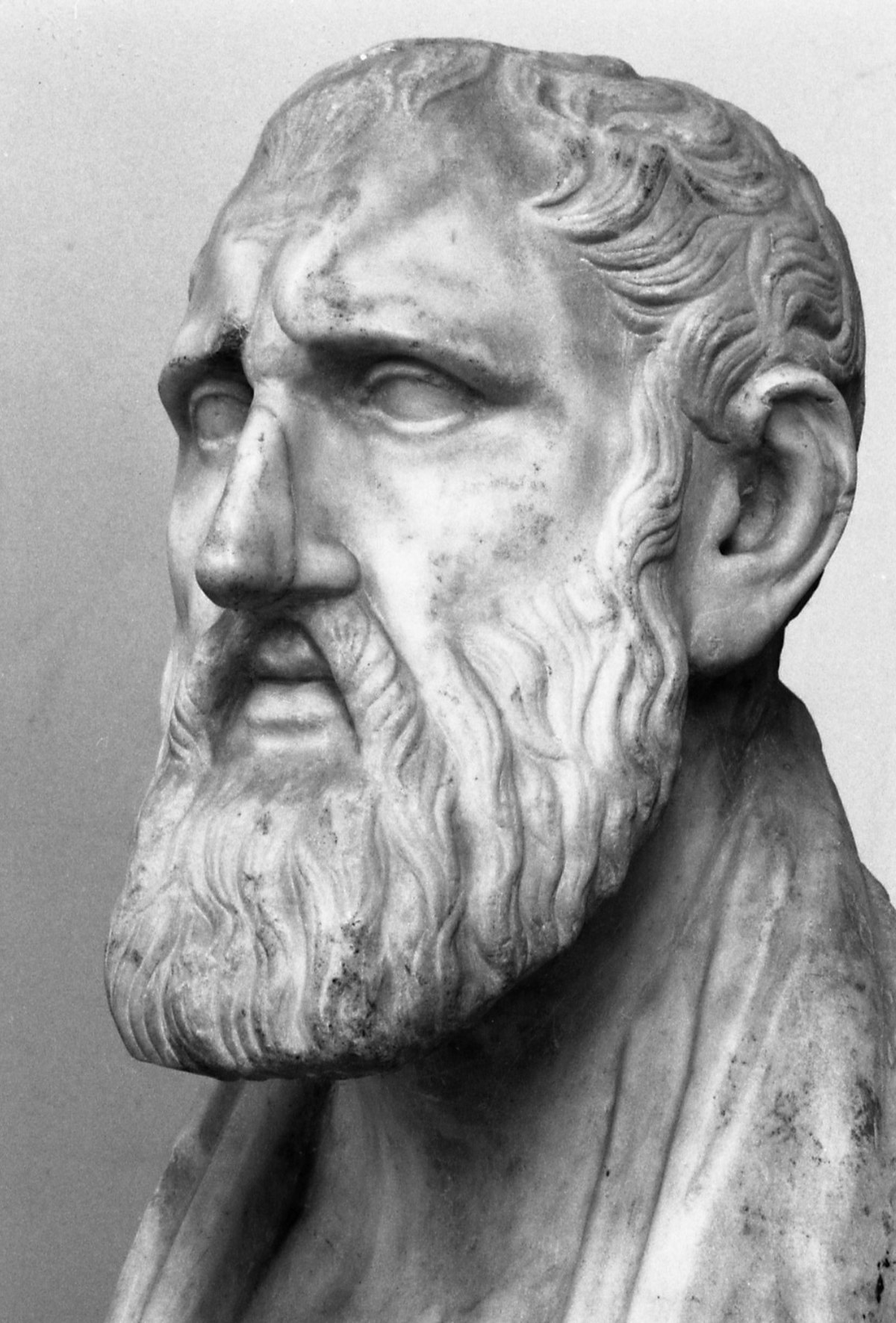
Zeno of Citium founded the school around 300 BCE in Athens, holding open discussions at the Stoa Poikile, a painted public colonnade. The movement was initially called Zenonism, but followers abandoned the name so the philosophy would not turn into a cult around an imperfect founder.
A bust of Zeno of Citium, who founded Stoicism in the public Agora of Athens near the end of the fourth century BCE. Paolo Monti, CC BY-SA 4.0, via Wikimedia Commons
Scholars divide the tradition into three eras: the Early Stoa under Greek leaders like Zeno and Chrysippus, the Middle Stoa, and the Late Stoa in the Roman Imperial era. None of the complete written works from the first two Greek phases survived. Modern readers rely entirely on surviving texts from Roman figures such as Seneca, Epictetus, and Emperor Marcus Aurelius.
Stoic logic and modern influence
Stoic thinkers built one of the two major systems of classical logic, pioneering propositional logic based on complete statements called assertibles. An assertible, such as 'it is raining this afternoon,' holds a truth value of true or false depending on when it is stated.
Although the philosophy declined as Christianity spread through the Roman Empire, its ideas survived through Neostoicism in the Renaissance. Today, Stoic principles directly inspire modern cognitive therapies and structured problem-solving methods.
Test yourself
What did Epictetus say about a grieving friend?
Sympathize aloud, but don't collapse inside. He allowed outward sympathy, even groaning with them, while warning against being overwhelmed inwardly. Stoicism aimed at steadiness, not numbness.
A parent is seriously ill. Which response is most Stoic?
Focus on visiting and asking questions. The Stoic sorts what is in your control, such as your actions and judgments, from what is not, such as the diagnosis, and puts effort into the first.
A friend's father is dying. Which response best fits the Stoic dividing line?
Sit with them and take over small errands. Presence and errands are your own choices, so they are in your control. Their father's health and their feelings are not, so promising or correcting aims at the wrong target.
Play the lesson in edgi and the card is yours. It lands on your Map next to the ideas it connects to, and turns from matte to foil to gold as you learn more around it.
It takes its name from the Stoa Poikile, a painted covered walkway in the public Agora of Athens. Zeno of Citium chose to gather and teach his students there instead of in a private school.
Did Stoics believe their leaders were perfect?
No, they did not view their founders as completely wise. They intentionally dropped the original name Zenonism to avoid creating a cult of personality around Zeno.
Which original Stoic writings still exist today?
Only texts written during the Late Stoa in the Roman Imperial period have survived intact. The earlier foundational works by Greek leaders like Zeno and Chrysippus survive only as fragmentary quotations in later records.