Marcus Aurelius was a Roman emperor and Stoic philosopher who governed the Roman Empire from 161 to 180 AD. He was the last of the Five Good Emperors, ruling at the end of the Pax Romana, a two-century period of relative peace and stability. While managing major wars and a devastating epidemic, he recorded his personal reflections on duty and self-control in private notes now known as Meditations.
By the edgi team We find the most surprising true thing about an idea and build a 60-second lesson around it.
Marcus Aurelius was the Roman Empire's most powerful ruler, yet he spent his reign trapped on its violent northern frontiers. While his peers built marble monuments to their own glory, Marcus spent his nights in a military tent writing notes to himself.
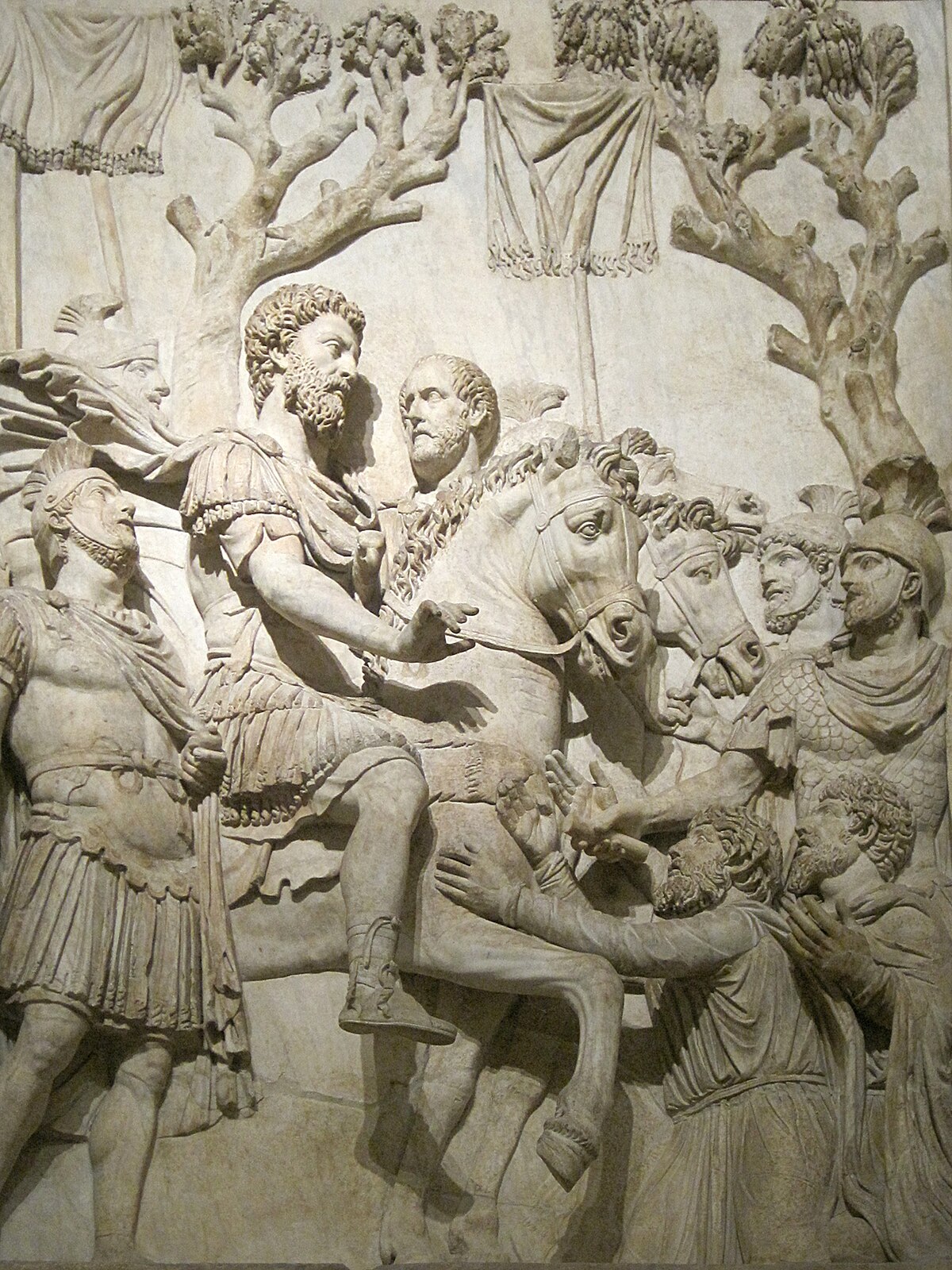
Roman marble relief from an honorary monument to Marcus Aurelius, depicting the submission of Germanic tribes. inconnu, Public domain, via Wikimedia Commons
He called these entries his private training, a psychological toolkit for remaining calm amid constant chaos.
A secret survival guide
We know this diary today as Meditations. It was never meant for publication; it was a rough collection of thoughts for his own eyes only. Inspired by the teachings of the former slave Epictetus, Marcus used the book to remind himself that power is fleeting and fame is meaningless.
He practiced Stoicism in the mud of a war camp, reminding himself that he could not control the empire, only his own reaction to it.
The end of an era
Marcus was the last of the Five Good Emperors and the final ruler of the Pax Romana. His death in 180 AD signaled the end of two centuries of relative stability, as the throne passed to his unstable son, Commodus.
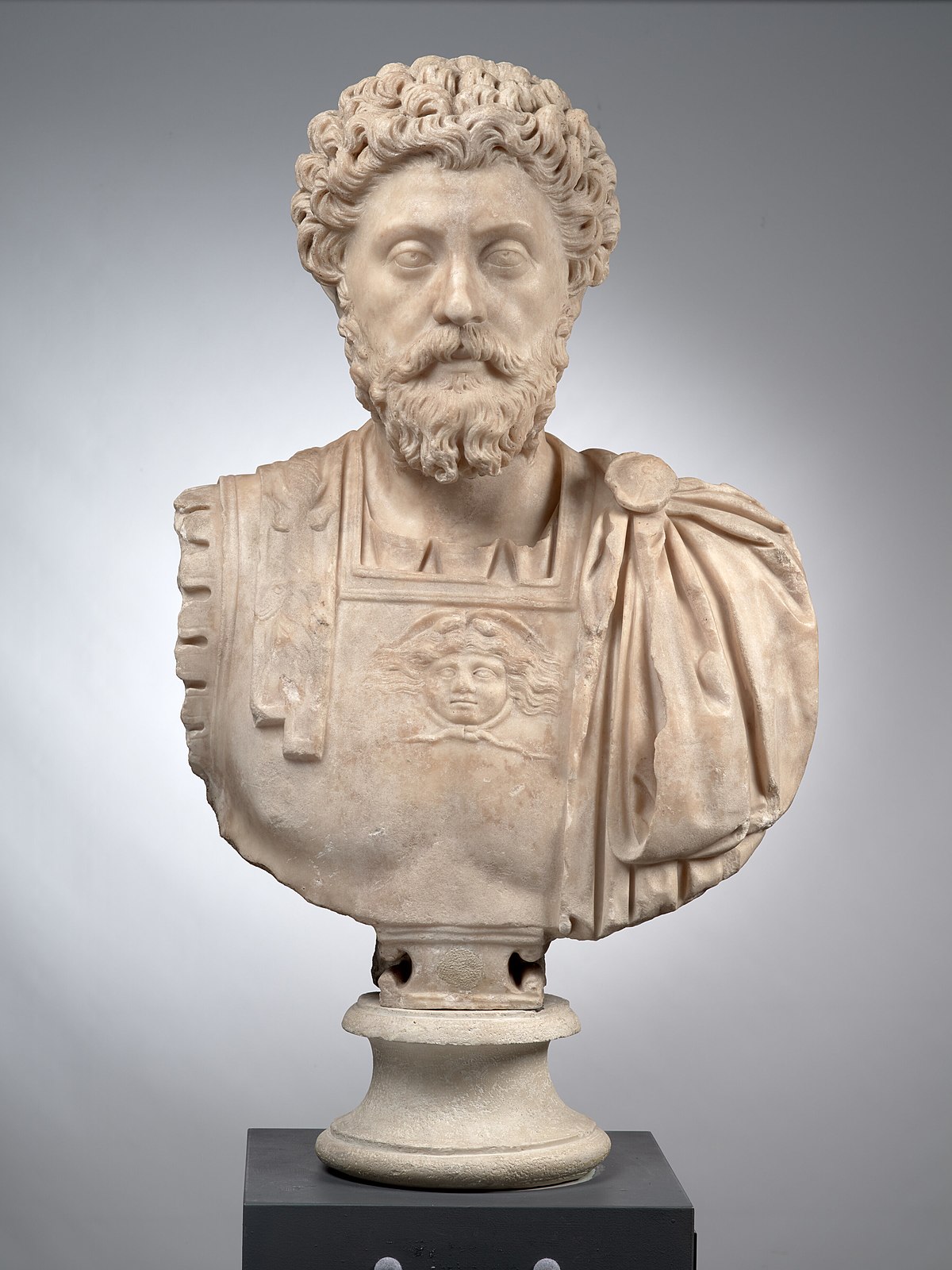
Marble bust of Marcus Aurelius, depicted with curly hair and a beard, wearing a cuirass with a gorgoneion on the chest and a paludamentum draped over his left shoulder. Daniel Martin, CC BY-SA 4.0, via Wikimedia Commons
The diary he never wanted the world to see survived by sheer chance, eventually becoming the most famous manual for stoic endurance in history.
How did Marcus Aurelius come to power?
Marcus Aurelius did not inherit the throne through direct royal descent. In 138 AD, the emperor Hadrian selected Marcus's uncle, Antoninus Pius, as his successor on the condition that Antoninus adopt both Marcus and Lucius Verus. Hadrian died later that same year, elevating Antoninus to emperor and making Marcus an imperial heir.
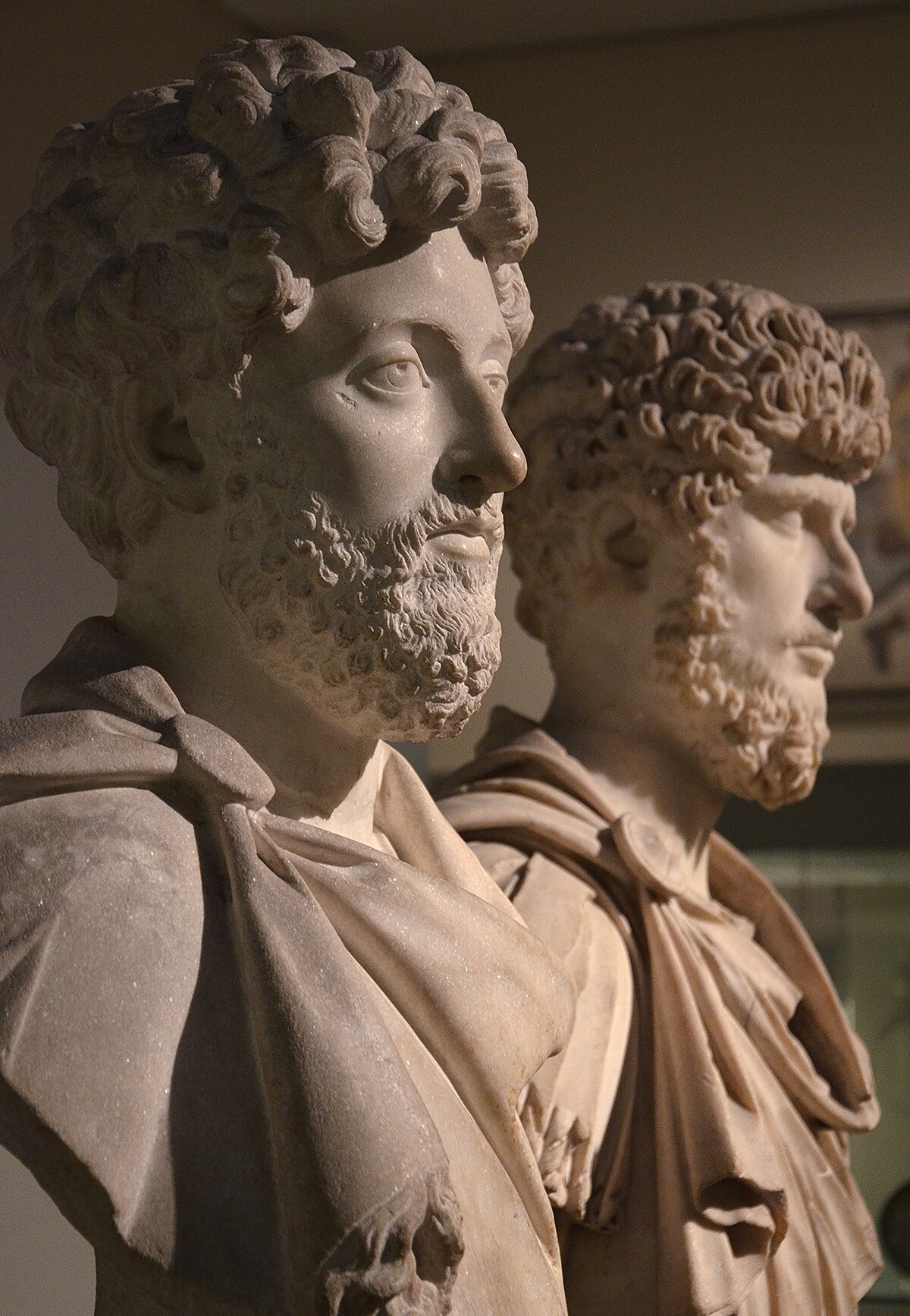
These busts show Marcus Aurelius alongside Lucius Verus, who ruled together as co-emperors starting in 161 AD. Carole Raddato from FRANKFURT, Germany, Public domain, via Wikimedia Commons
To prepare for leadership, Marcus studied Greek and Latin under prominent tutors, including Marcus Cornelius Fronto and Herodes Atticus. He also held political office early, serving as Roman consul in 140, 145, and 161. When Antoninus died in 161, Marcus took the throne and governed as co-emperor alongside his adoptive brother Lucius Verus.
What crises defined his reign as emperor?
Marcus Aurelius oversaw an empire facing continuous conflict and disease rather than sustained peace. In the East, Roman forces fought the Parthian War against a revitalized Parthian Empire and the Kingdom of Armenia. Along the northern frontier, Marcus led campaigns known as the Marcomannic Wars to defeat Germanic and Sarmatian tribes, including the Marcomanni, Quadi, and Iazyges.
Around 165 or 166 AD, the Antonine Plague broke out across the empire, killing between five and ten million people and possibly claiming the life of Lucius Verus in 169. Amid these crises, Marcus debased the imperial currency by reducing the silver purity of the denarius. When Marcus died in 180 AD, his biological son Commodus succeeded him, bringing an end to the era of the Five Good Emperors.
Test yourself
Why might someone in absolute control of their environment still need a mental survival guide?
External power does not secure inner calm. Power over others does not translate into control over one's own internal reactions. A survival guide is necessary because external stability remains fragile regardless of one's status.
Is a private journal written for self-improvement meant to be a record or a tool?
It is a tool for self-regulation. Many view journals as historical archives of their own lives. In truth, the most effective journals function as psychological equipment, designed to shape the writer's mindset in real-time.
If a person writes purely for themselves, how does the tone usually differ from a public text?
It avoids performing for an audience. Public writing is often performative and seeks to manage perception. Private reflection is stripped of the need to impress, allowing for raw, functional honesty aimed at solving internal problems.
Play the lesson in edgi and the card is yours. It lands on your Map next to the ideas it connects to, and turns from matte to foil to gold as you learn more around it.
Meditations is a private collection of personal notes and reflections on Stoic philosophy written by Marcus Aurelius. It was never intended for public distribution, but it survived to become one of the primary historical sources for ancient Stoicism.
What physical monuments to Marcus Aurelius survive today?
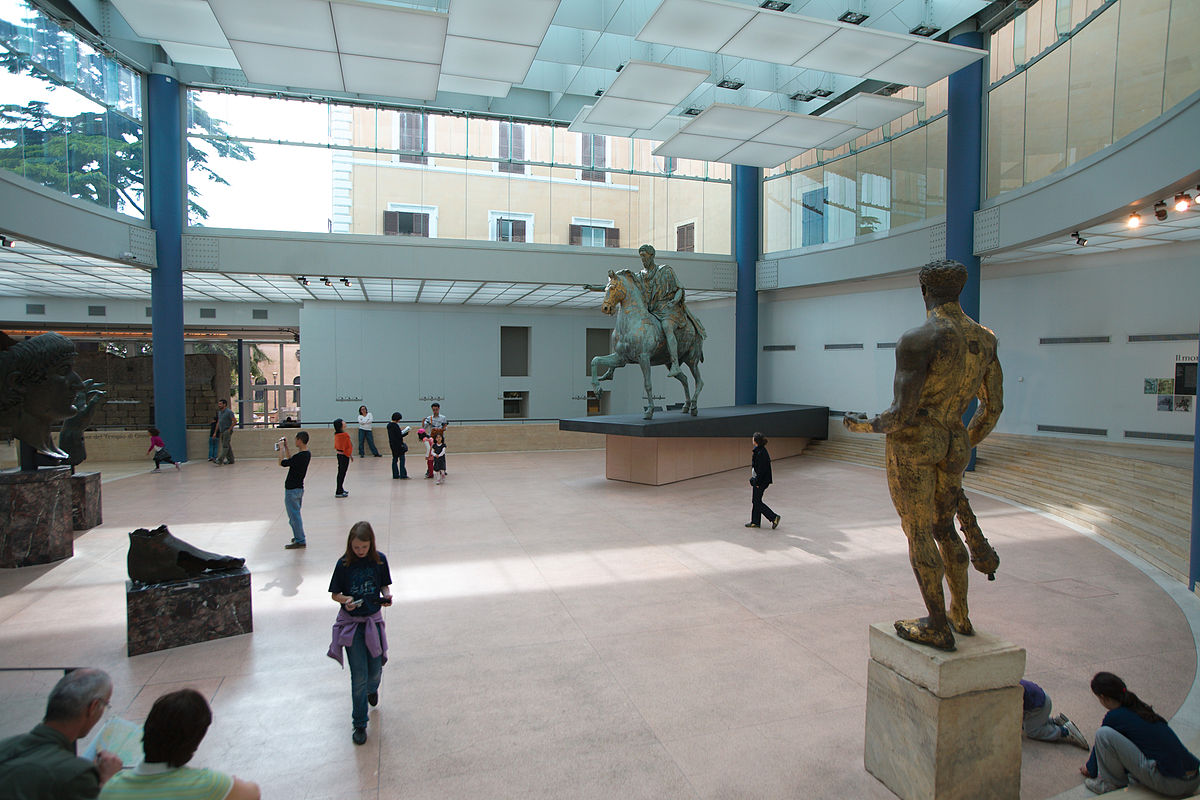
An equestrian statue and a triumphal column dedicated to Marcus Aurelius still stand in Rome. Both monuments were built during antiquity to commemorate his military campaigns and victories.
What was Marcus Aurelius's relationship with early Christians?
Persecutions of Christians increased across the Roman Empire during his reign, but historical evidence does not directly link Marcus to their execution. Contemporary Christian apologists like Tertullian and Justin Martyr praised him, and no surviving Christian records from that period place direct blame on the emperor.