MeditationsThe private wartime journal of a Roman emperor
Meditations is a collection of private notes and reflections written by Roman Emperor Marcus Aurelius to guide his own behavior using Stoic philosophy, a school of thought centered on reason, duty, and emotional control. He wrote the text entirely for himself rather than an audience, scribbling entries while leading military campaigns on the frontiers of Rome. Today, it survives as one of the most direct records of ancient philosophy put into daily practice.
By the edgi team We find the most surprising true thing about an idea and build a 60-second lesson around it.
Marcus Aurelius, the most powerful man in Ancient Rome, never intended for his notes to be published. He scribbled them in Greek while commanding brutal military campaigns on the Danubian frontier.
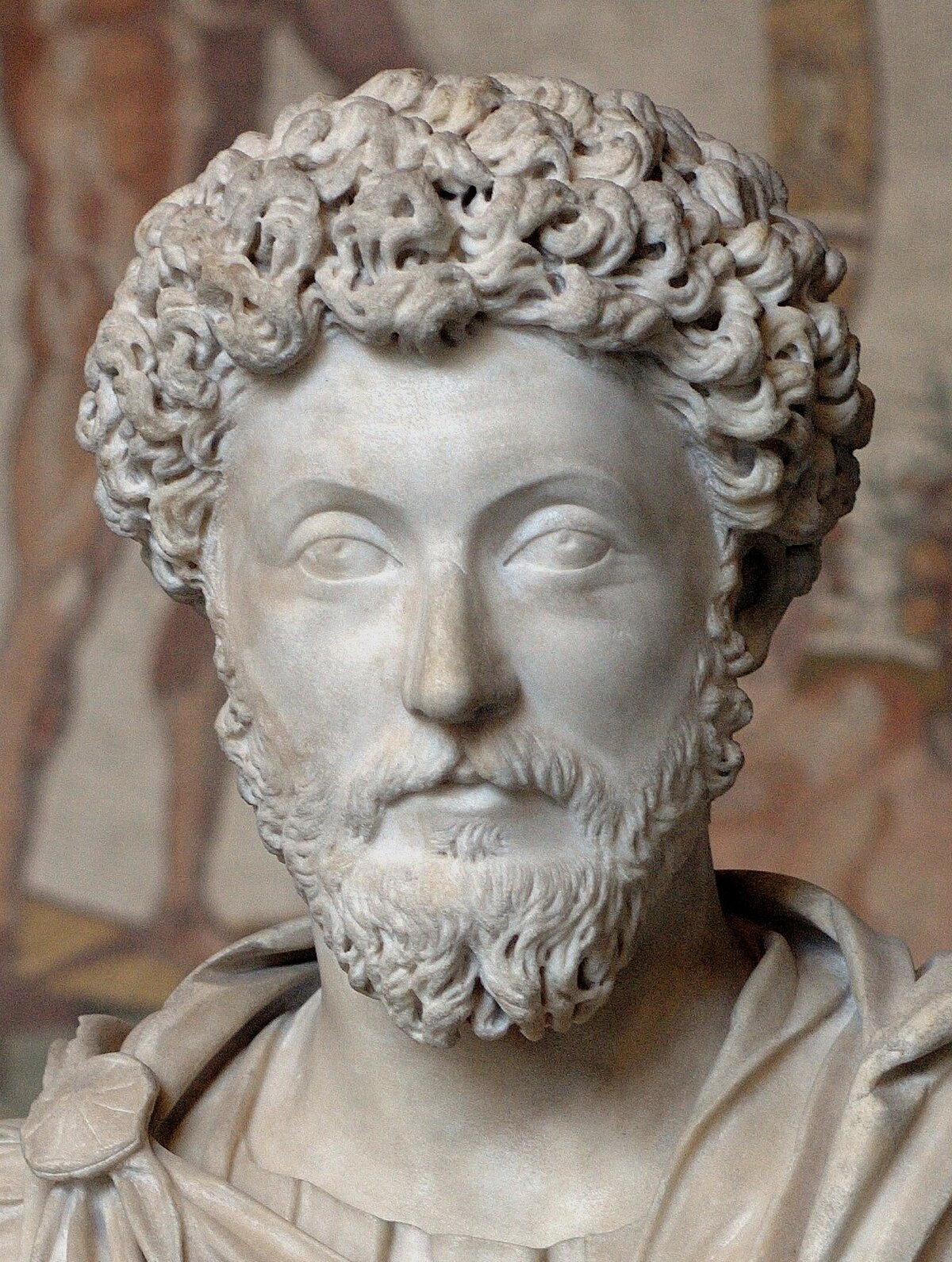
Marble bust of Marcus Aurelius, the Stoic Roman emperor, depicting him with curly hair and a beard. Marie-Lan Nguyen, Public domain, via Wikimedia Commons
The manuscript, titled To Himself, was essentially a private mental hygiene kit.
Recursive self-improvement
The text lacks the polish of professional philosophy. It is raw, repetitive, and deeply honest. He used these pages to practice Stoicism, constantly reminding himself that his royal robes were just wool dyed with crushed snail guts.
He was trying to shrink his ego before it grew as large as his empire.
The emperor and the slave
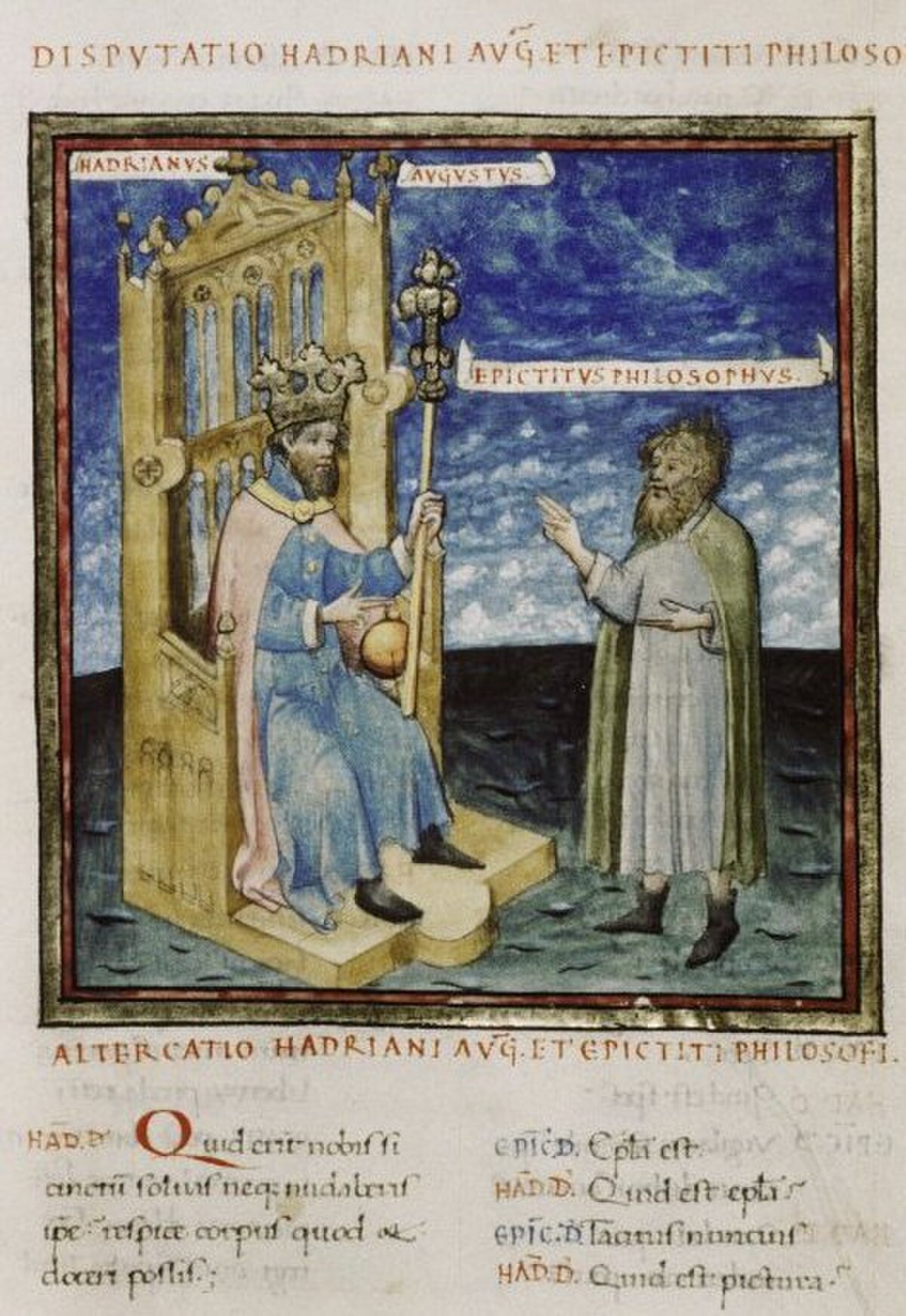
Aurelius frequently quoted Epictetus, a man born into slavery who became one of the greatest Stoic teachers. By studying the captive, the emperor realized that his crown didn't exempt him from the universal human struggle for composure.
A 15th-century manuscript illustration titled "DISPUTATIO HADRIANI AVG. Unknown authorUnknown author, Public domain, via Wikimedia Commons
He treated his mind as a fortress, turning philosophy into a tool to remain decent while holding absolute power.
How Meditations was written
Marcus Aurelius wrote the 12 books of Meditations in Koine Greek between 161 and 180 AD, mostly during the final decade of his reign. He penned several sections while directing military operations on the northern frontier. Internal notes in the text specify that he wrote the first book along the Granova River in the territory of the Quadi, and the second book while stationed at Carnuntum.
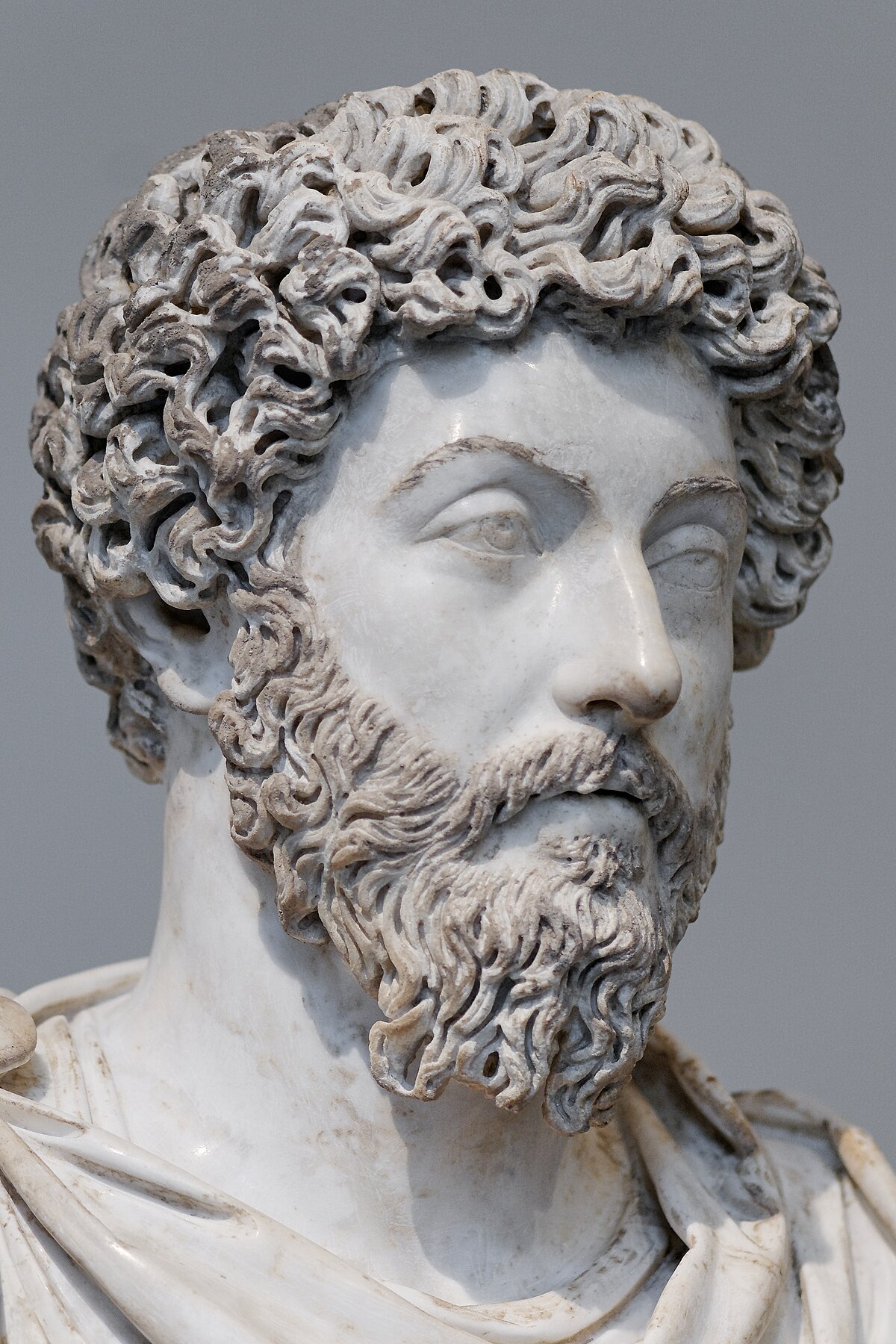
A marble bust of Roman Emperor Marcus Aurelius, who ruled from 161 to 180 AD and authored Meditations as personal notes to himself. Public domain, via Wikimedia Commons
The collection had no formal title in antiquity, as the emperor never intended it for public readership. The entries range from isolated single-sentence reminders to extended multi-paragraph reflections. Because these were personal notes meant to maintain his own mental discipline, the passages follow no strict chronological order across the 12 books.
Core Stoic principles in the text
A central practice across the writings is stripping events down to initial impressions without adding emotional interpretations. Marcus Aurelius argued that an individual cannot be harmed by others unless they allow their own reaction to overpower them. To prevent anger and distress, he urged separating what is within personal control from external things like fame, wealth, or the opinions of others, which he viewed as neutral.
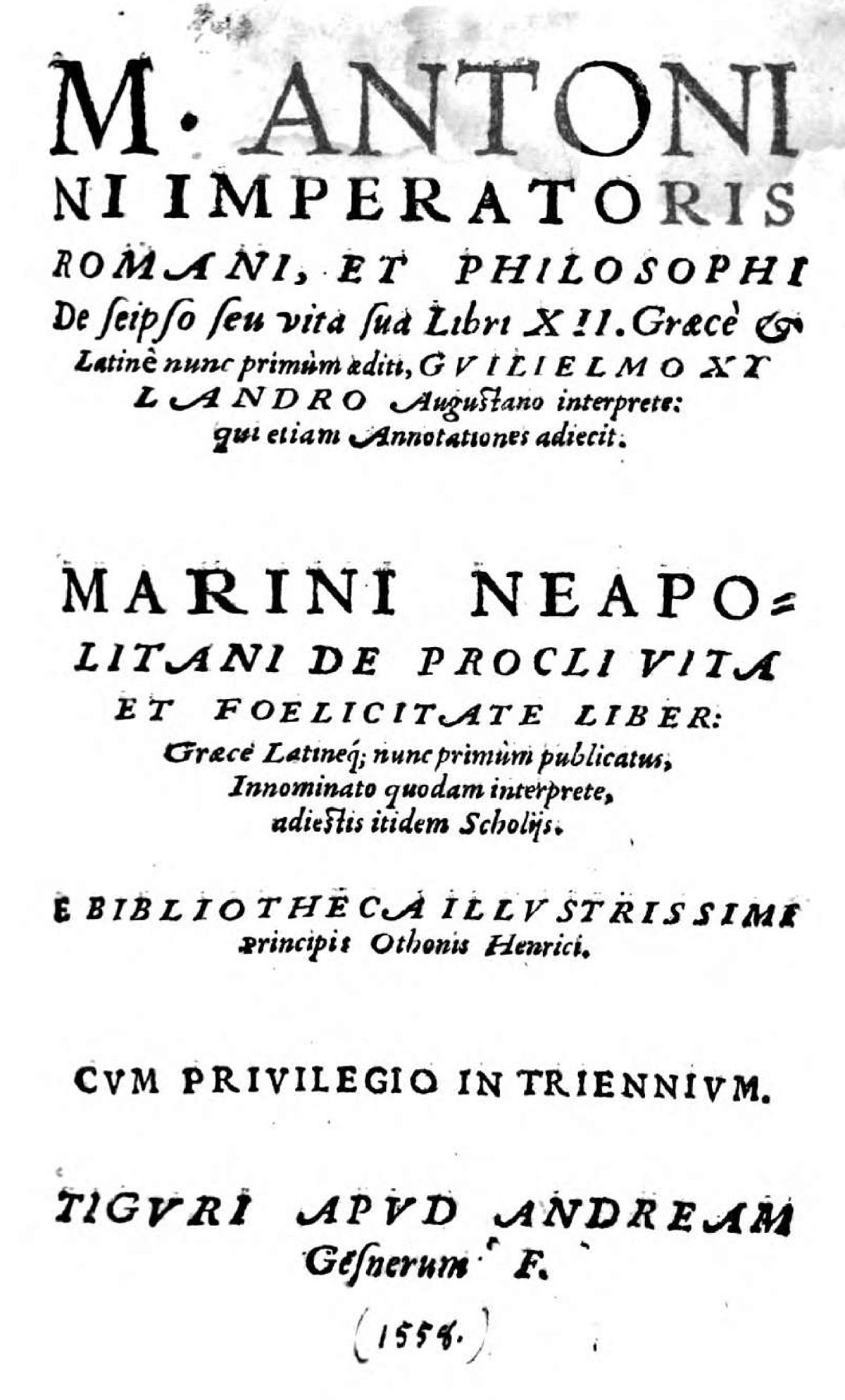
The title page of a 1558 printed edition of Meditations, preserving the text under one of its early titles in Greek and Latin. Marcus Aurelius, Public domain, via Wikimedia Commons
The entries frequently return to the concept of the logos, the orderly and rational principle governing the cosmos. Aurelius used this cosmic perspective to view human life as brief and rapidly changing between infinite spans of time before birth and after dissolution. Aligning his choices with reason allowed him to focus on ethical duties, civility, and self-restraint while holding unchecked imperial authority.
Test yourself
Which best describes the original purpose of a person's private journal?
A tool to regulate personal thoughts. Private journals are primarily for internal calibration, not performance. Assuming they are meant for a later audience confuses the record-keeper's intent with the historian's discovery.
Who was this set of notes originally intended to influence?
The author himself. Many assume such famous writings were drafted as manifestos for others. In reality, the work was a private tool for psychological survival and ego-management.
Play the lesson in edgi and the card is yours. It lands on your Map next to the ideas it connects to, and turns from matte to foil to gold as you learn more around it.
What original title did Marcus Aurelius give the work?
Marcus Aurelius gave the work no official title because he wrote it as a private journal. Later Greek references and manuscripts labeled it Ta eis heauton, which translates to 'Things Unto Himself' or 'To Himself'.
How did the manuscript survive from antiquity to the modern era?
The earliest confirmed direct mention of the text dates to around 907 AD, when Bishop Arethas of Caesarea discovered a deteriorating copy and had it transcribed. That transcribed volume became the likely ancestor of all surviving medieval manuscripts and printed editions.