Amyloid betaThe brain fragment that acts like a prion
Amyloid beta is a small protein fragment naturally produced and released by brain cells every day. It becomes dangerous when misfolded molecules act as seeds, triggering a chain reaction that clumps fragments into toxic clusters and plaques. These deposits accumulate outside neurons and contribute to the nerve damage seen in Alzheimer's disease.
By the edgi team We find the most surprising true thing about an idea and build a 60-second lesson around it.
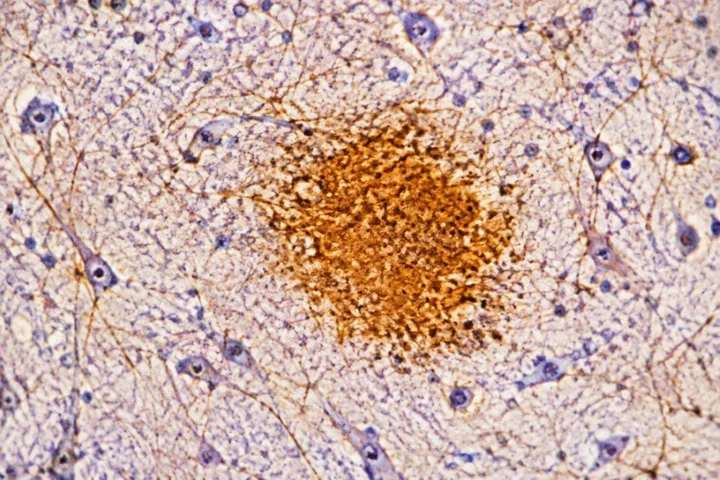
In 1906, Alois Alzheimer examined the brain of his patient, Auguste Deter, who had suffered from severe memory loss. Using a new silver staining technique, he spotted dense, dark clusters of protein clogging the spaces between her brain cells.
He called them plaques. They were the first physical evidence of a disease that had previously been a total mystery.
The brain's trash
Amyloid beta is a peptide, a small protein fragment, produced naturally by your brain cells every day. Usually, the brain’s cleanup crew breaks these fragments down and flushes them away.
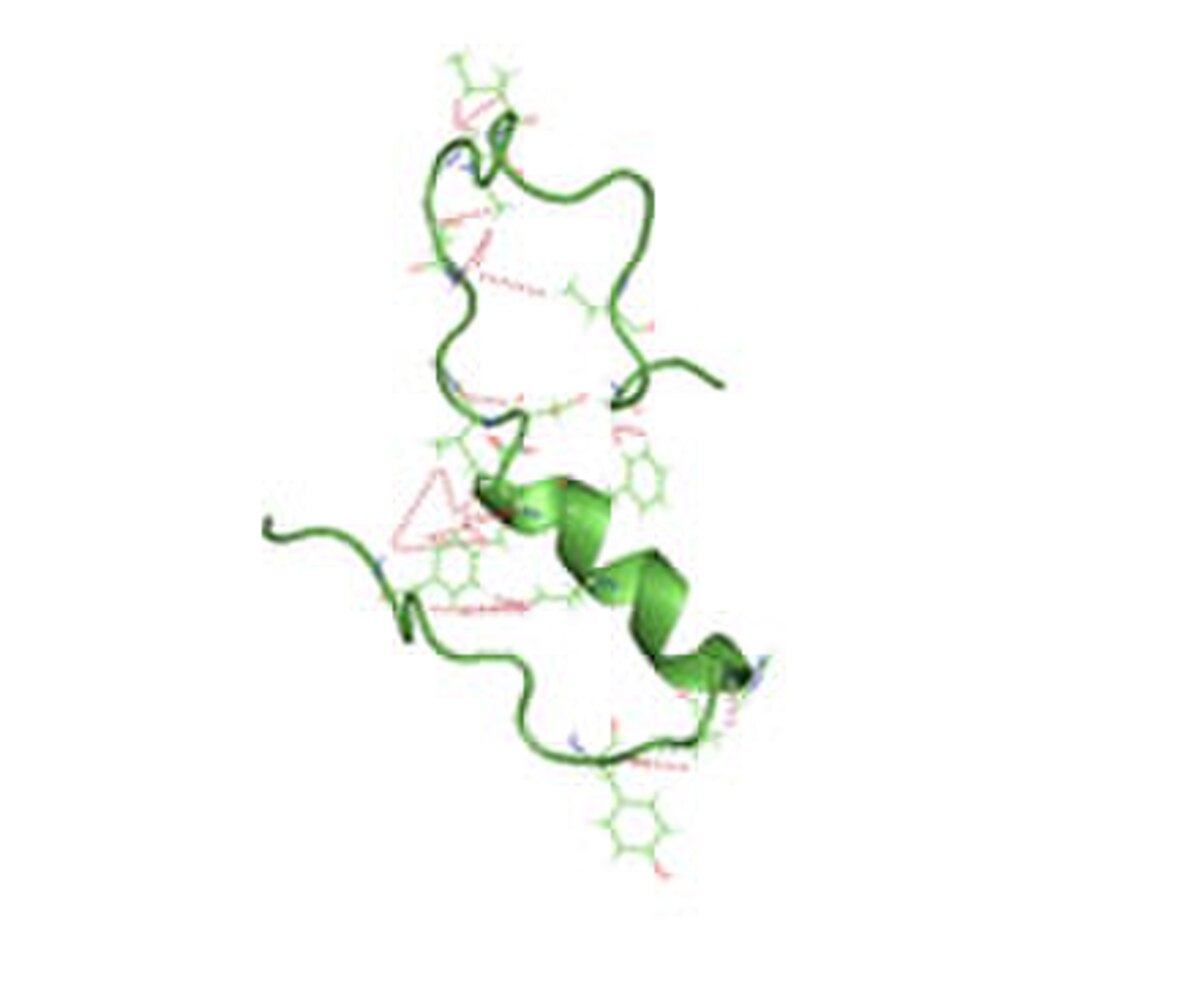
Molecular model of an amyloid beta protein, showing its folded structure with alpha-helices and beta-sheets. jeff brender (biophysik), CC BY-SA 3.0, via Wikimedia Commons
But in Alzheimer's, these peptides become sticky and clump together into insoluble plaques. They act like biological sediment, gumming up the gaps where neurons are supposed to pass signals to one another.
A double-hit disaster
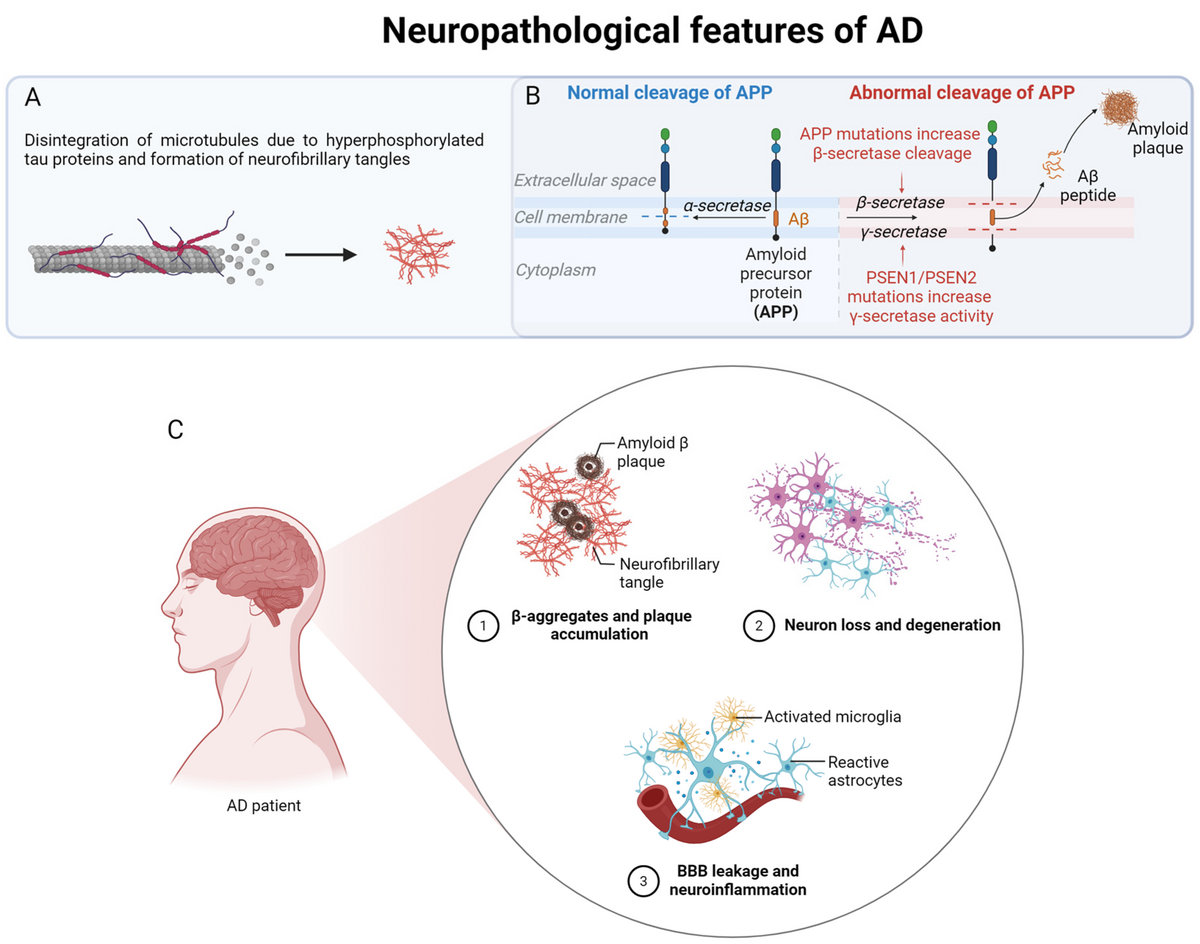
For years, scientists debated if these plaques were the cause of the disease or just a symptom. We now know they act in concert with another protein called tau, which collapses the internal scaffolding of the cells themselves.
It is a one-two punch: amyloid plaques block the signals from the outside, while tau tangles destroy the cell from the inside.
Diagram illustrating the neuropathological features of Alzheimer's disease (AD). Vidovic, N and Spittau, B, CC BY 3.0, via Wikimedia Commons
How amyloid beta forms and clumps
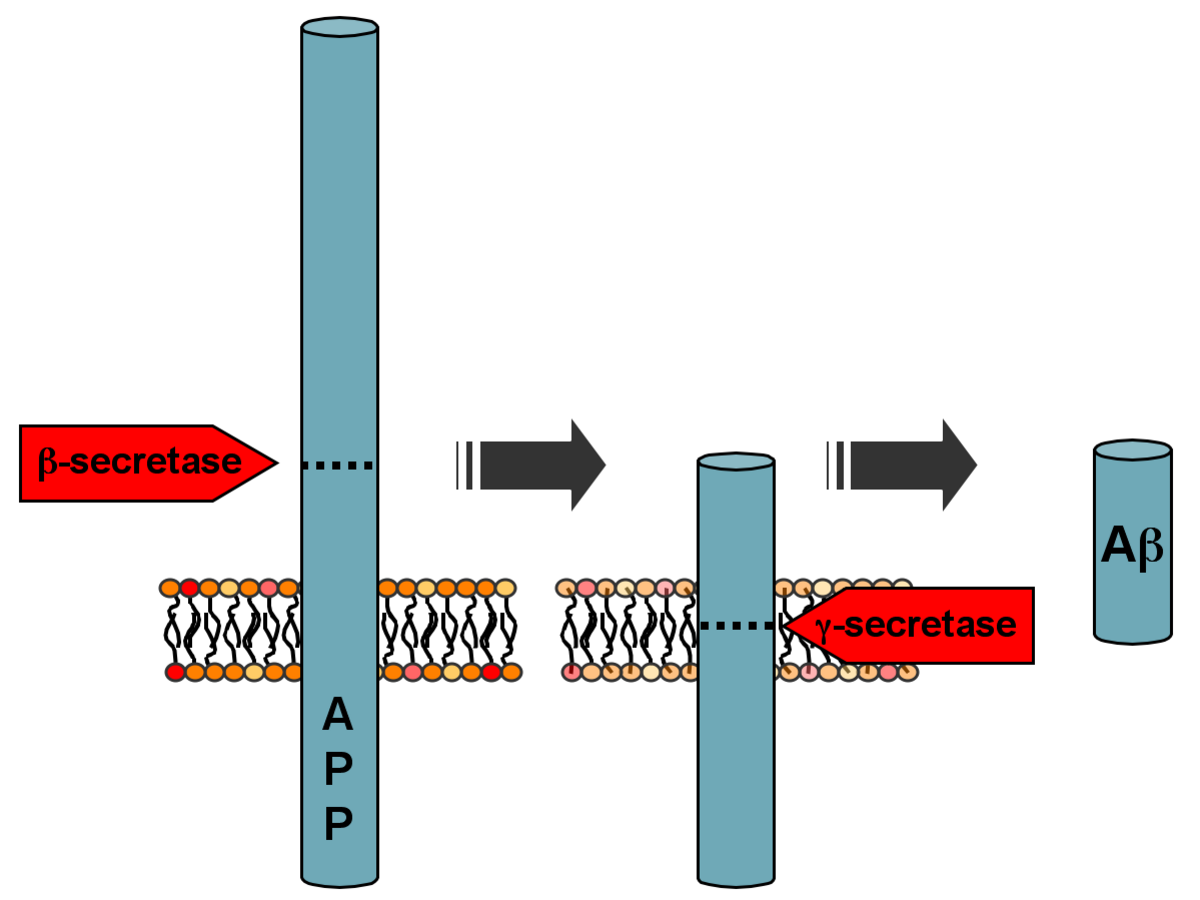
Amyloid beta originates from a larger protein embedded in cell membranes called amyloid precursor protein, or APP. Two enzymes named beta-secretase and gamma-secretase cut this larger protein sequentially to release fragments between 36 and 43 amino acids long. Both neurons and oligodendrocytes produce and release these pieces into the surrounding brain fluid.
This diagram shows the sequential cuts made by beta-secretase and gamma-secretase to release amyloid beta fragments from the larger amyloid precursor protein in the cell membrane. Ipeltan at English Wikipedia, Public domain, via Wikimedia Commons
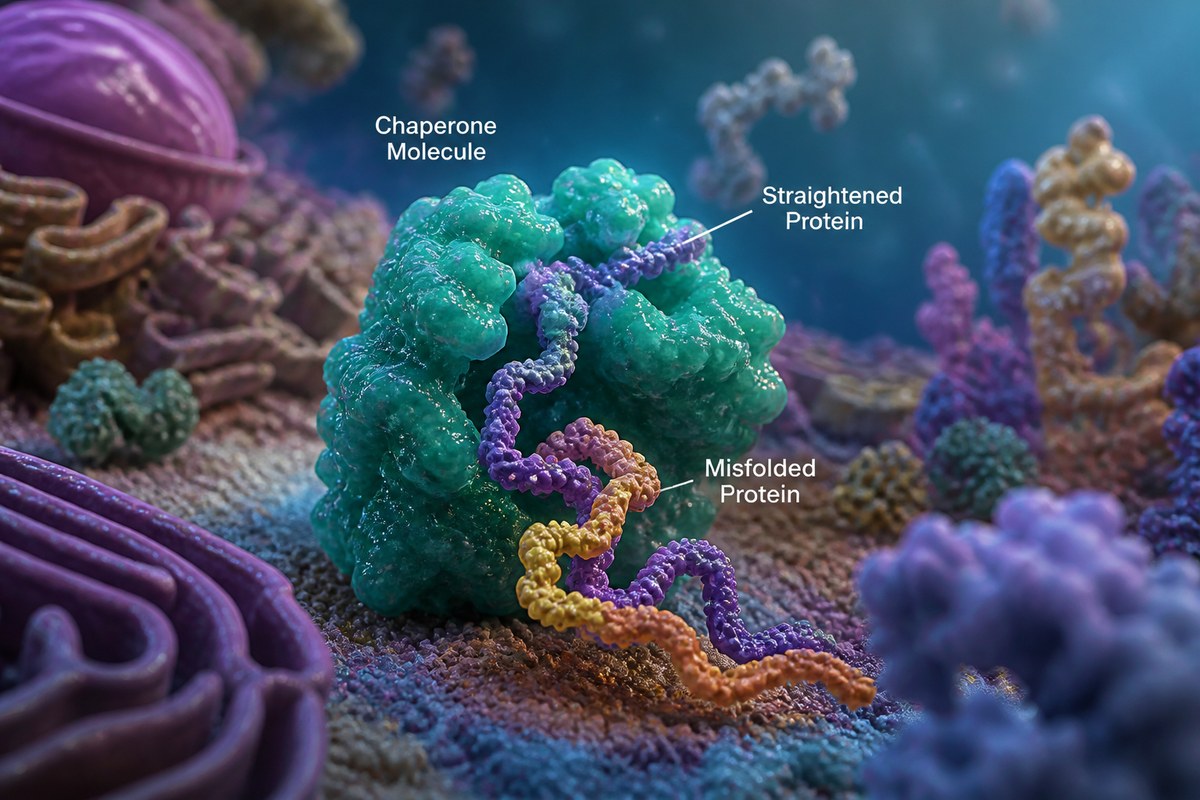
The most common versions released are Aβ40 and Aβ42. The longer Aβ42 fragment is more hydrophobic, making it far more prone to clumping together. Small soluble clusters called oligomers form first, and these flexible assemblies are the most toxic state to nerve cells. They can trigger other amyloid beta molecules to misfold in a chain reaction similar to a prion infection.
Over time, these misfolded clusters assemble into insoluble fibrils and dense amyloid plaques. While vascular deposits lining cerebral blood vessels consist mainly of the shorter Aβ40, the plaques scattered between brain cells are rich in Aβ42.
How the brain clears the peptide
The brain removes amyloid beta through several specialized enzymes and waste networks. Proteases such as insulin degrading enzyme and presequence protease recognize and break down these fragments directly. The remaining metabolic waste is swept away by the glymphatic system, which significantly speeds up its clearance rate while you sleep.
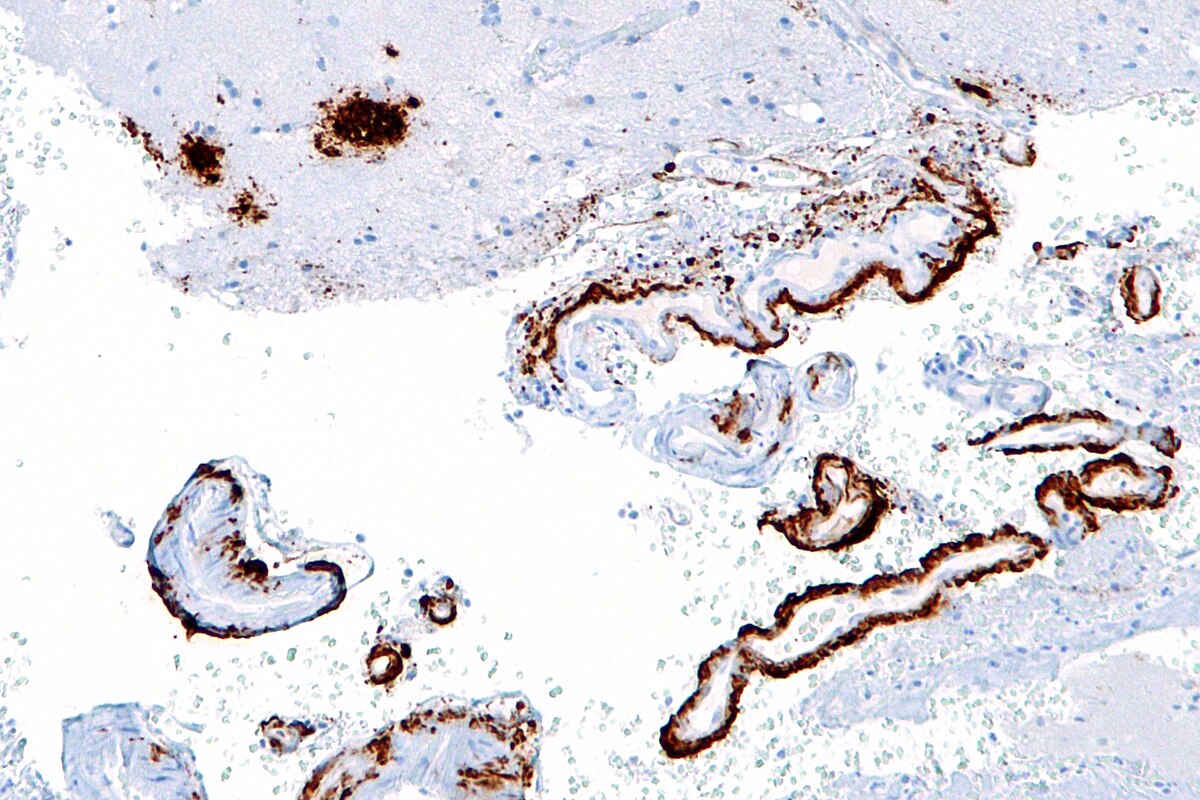
Brown immunostaining highlights amyloid beta accumulating in both cortical plaques on the left and surrounding cerebral blood vessel walls on the right. Nephron, CC BY-SA 3.0, via Wikimedia Commons
When clearance fails or production surges, amyloid beta accumulates in brain tissue and blood vessel walls. In cerebral amyloid angiopathy, the peptide coats cerebral blood vessels and contributes to vascular lesions. Misfolded amyloid beta can also encourage the tau protein inside neurons to misfold, compounding damage to brain cells.
Test yourself
How do amyloid beta peptides function in a healthy human brain?
They are produced and cleared daily.. Amyloid beta is a natural byproduct of daily brain activity. Disease occurs only when normal clearing mechanisms fail and the peptides accumulate.
In a healthy human brain, are amyloid beta peptides present?
Yes, they are produced daily.. Amyloid beta is a natural byproduct of normal brain activity. The disease pathology arises specifically when the brain's cleaning mechanisms fail, allowing this protein to accumulate.
Play the lesson in edgi and the card is yours. It lands on your Map next to the ideas it connects to, and turns from matte to foil to gold as you learn more around it.
What is the normal purpose of amyloid beta in the brain?
Its exact normal function remains unknown, and animal tests show that removing it entirely causes no obvious loss of physiological function. Researchers have found evidence that it may help activate kinase enzymes, regulate cholesterol transport, act as a transcription factor, protect against oxidative stress, or provide anti-microbial defense.
Do amyloid plaques always cause Alzheimer's disease?
Not necessarily. Although amyloid beta drives early-onset Alzheimer's, many people with brain plaques never develop the disease. Soluble oligomers outside of plaques appear to be the most toxic form, leading researchers to investigate whether large plaques are a primary cause of damage or a response to an ongoing disease process.
Where else does amyloid beta accumulate in the body?
Amyloid beta circulates naturally in blood plasma and cerebrospinal fluid, and it builds up in adults with Down syndrome alongside cognitive and motor decline. Increased peptide levels have also been found in several cancers, particularly liver cancer, and human breast cancer cells show higher expression of its precursor protein.