Protein foldingHow chains find their shapes in microseconds
Protein folding is the physical process where a linear chain of amino acids, the basic chemical building blocks made by a cell, collapses into a specific three-dimensional shape. This final shape, called the native state, is required for the protein to do its job. While random searching through all possible shapes would take longer than the age of the universe, real proteins fold spontaneously in fractions of a second.
By the edgi team We find the most surprising true thing about an idea and build a 60-second lesson around it.
Imagine a microscopic string of amino acids that needs to twist into a complex 3D shape to work. For a typical protein, the number of possible configurations is greater than the number of atoms in the entire observable universe.
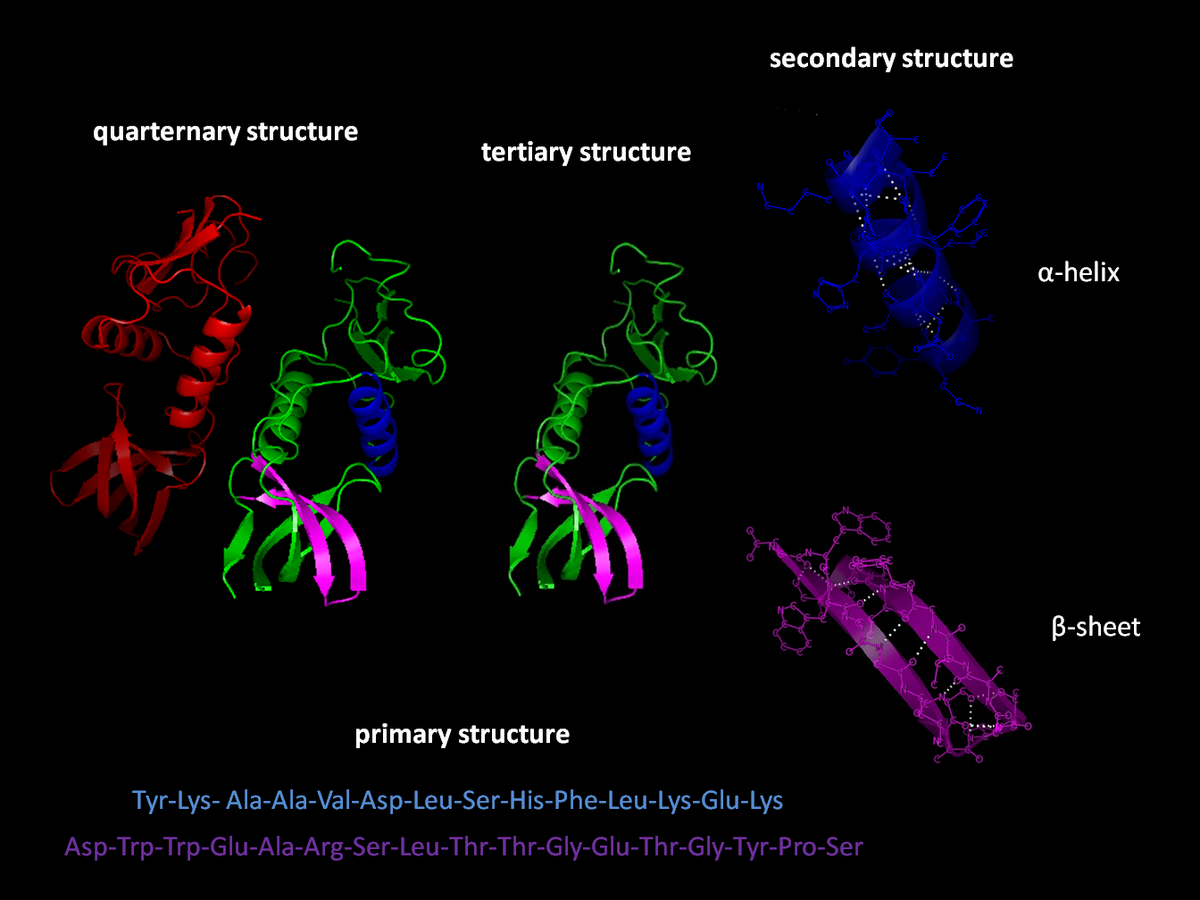
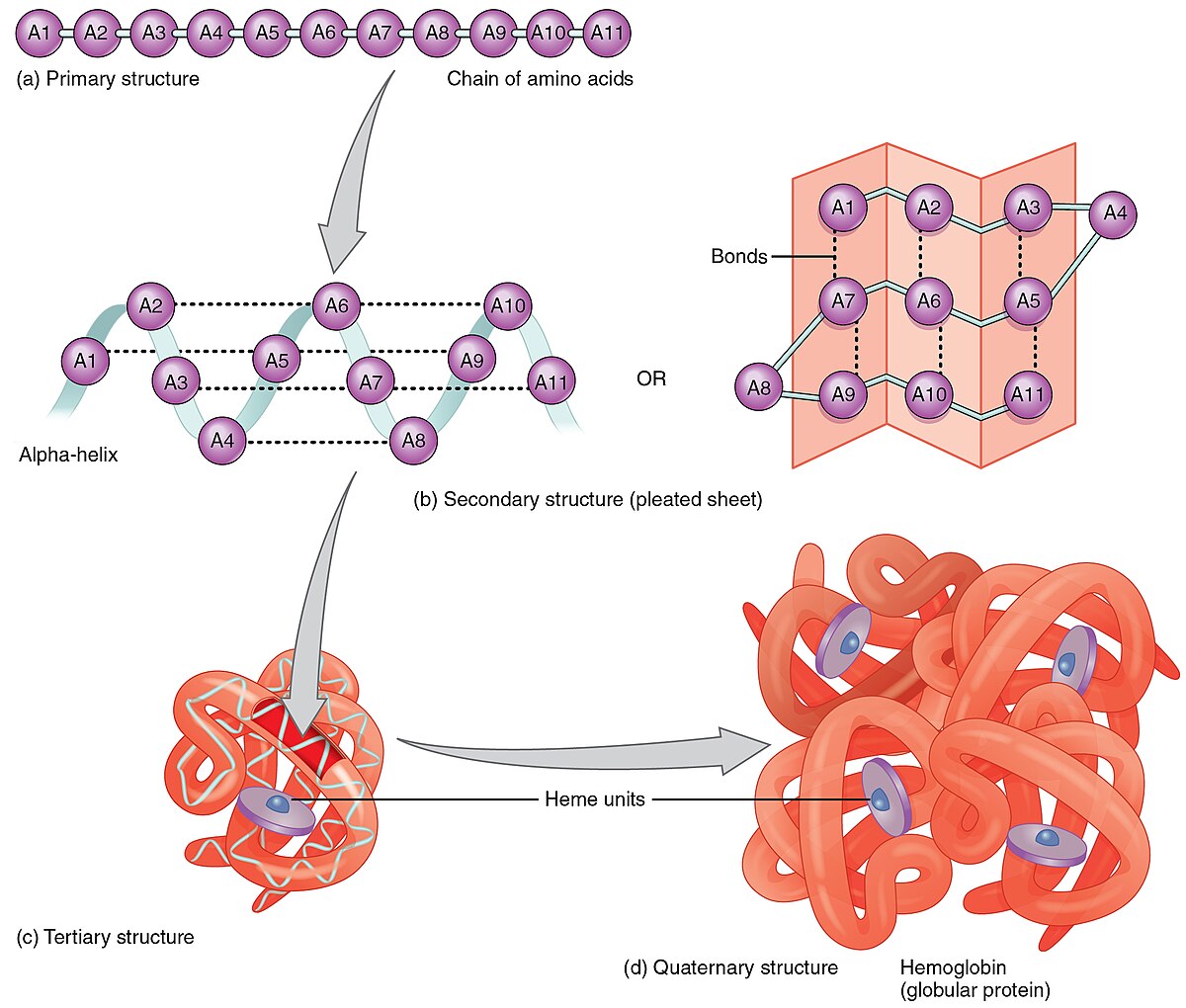
Diagram illustrating the four levels of protein structure: primary, secondary, tertiary, and quaternary. Holger87, CC BY-SA 3.0, via Wikimedia Commons
If it tried every shape by random chance, it would take longer than the age of the universe to finish. This is known as Levinthal's paradox.
The internal map
Proteins don't wander blindly. They fold spontaneously, almost like a collapsing house of cards that always lands perfectly. The instructions are built into the protein's primary structure, the specific sequence of amino acids.
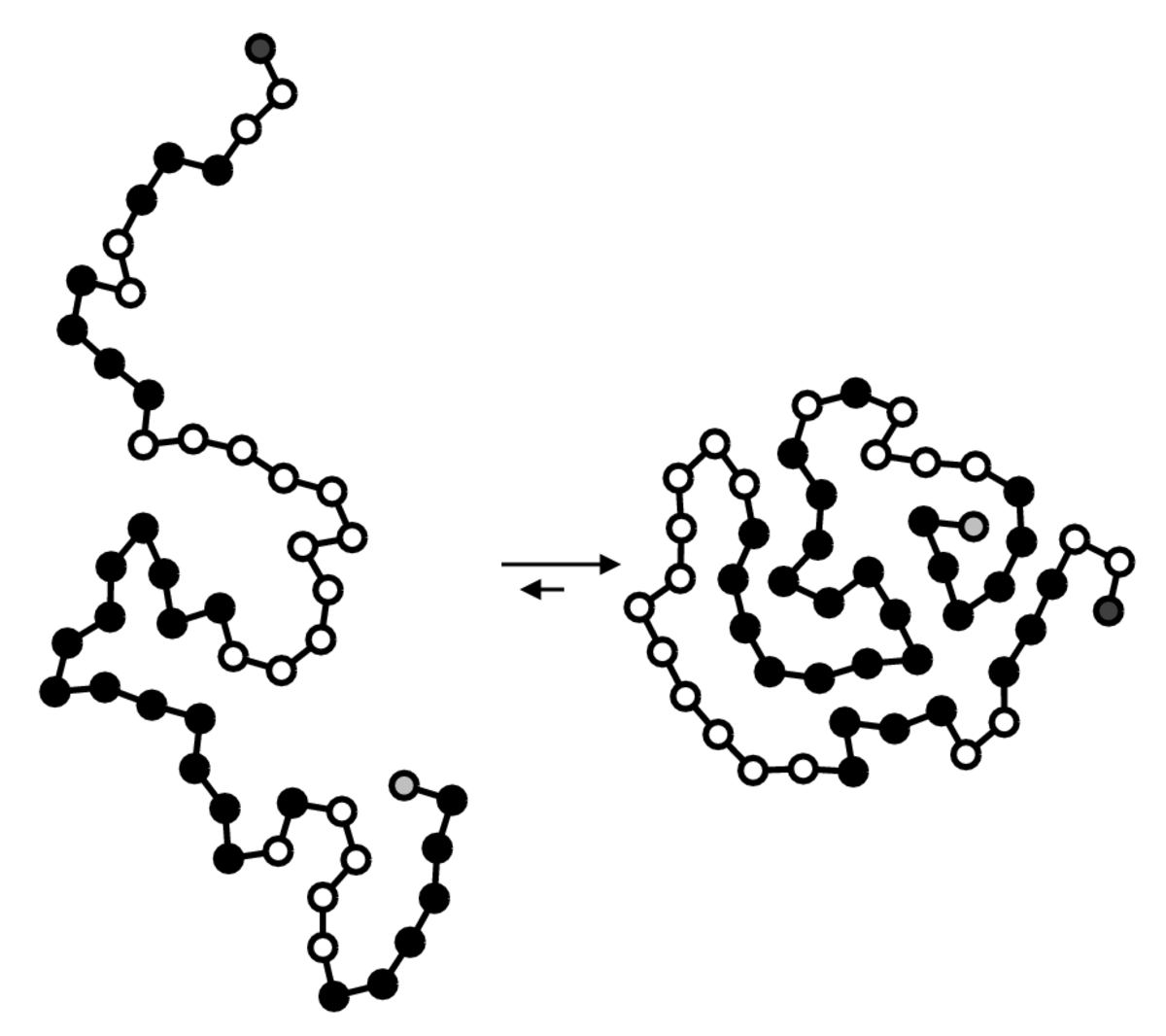
Schematic diagram illustrating protein folding via hydrophobic collapse, showing an unfolded polypeptide chain on the left and a compact, folded structure on the right. Tomixdf (talk), Public domain, via Wikimedia Commons
This principle, called Anfinsen's dogma, means the final shape is essentially predetermined by its starting ingredients.
When it goes wrong
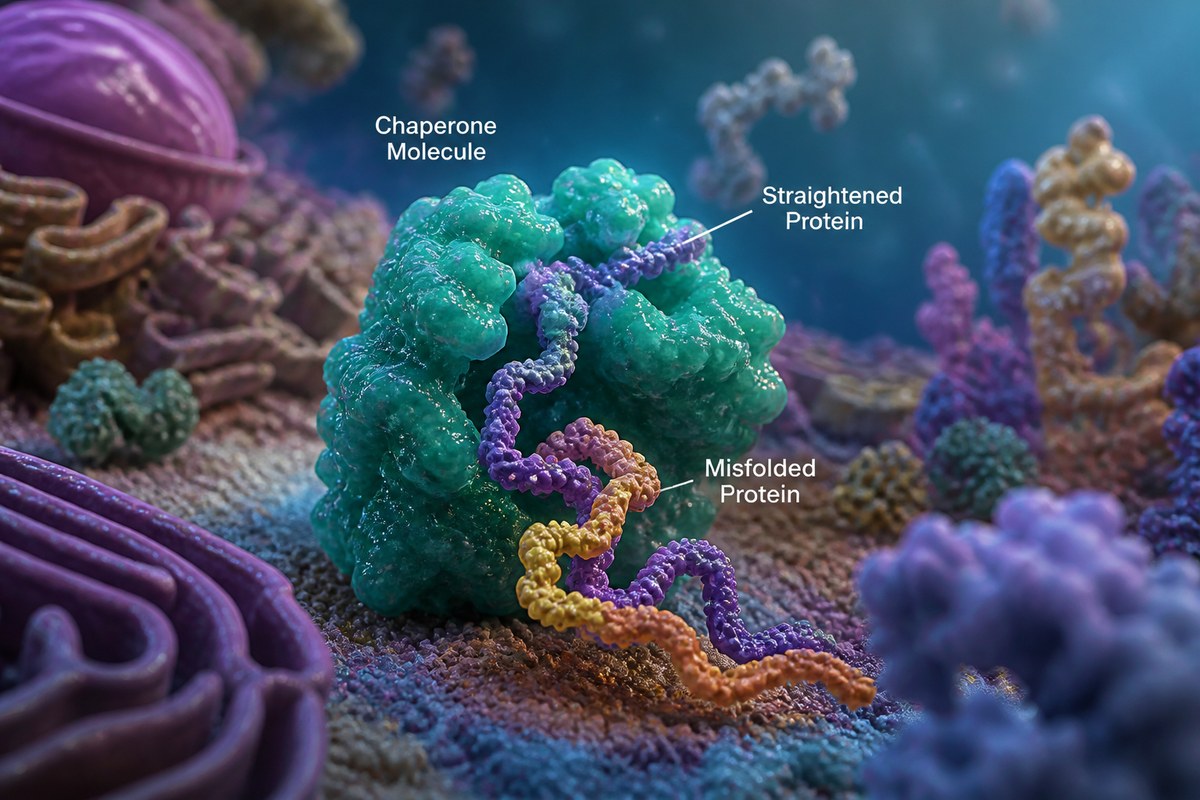
A tiny error in this folding process can turn a life-sustaining protein into a toxic mess. Some misfolded proteins, like a prion, act like a contagion. They force healthy proteins to adopt their broken, useless shape in a deadly chain reaction.
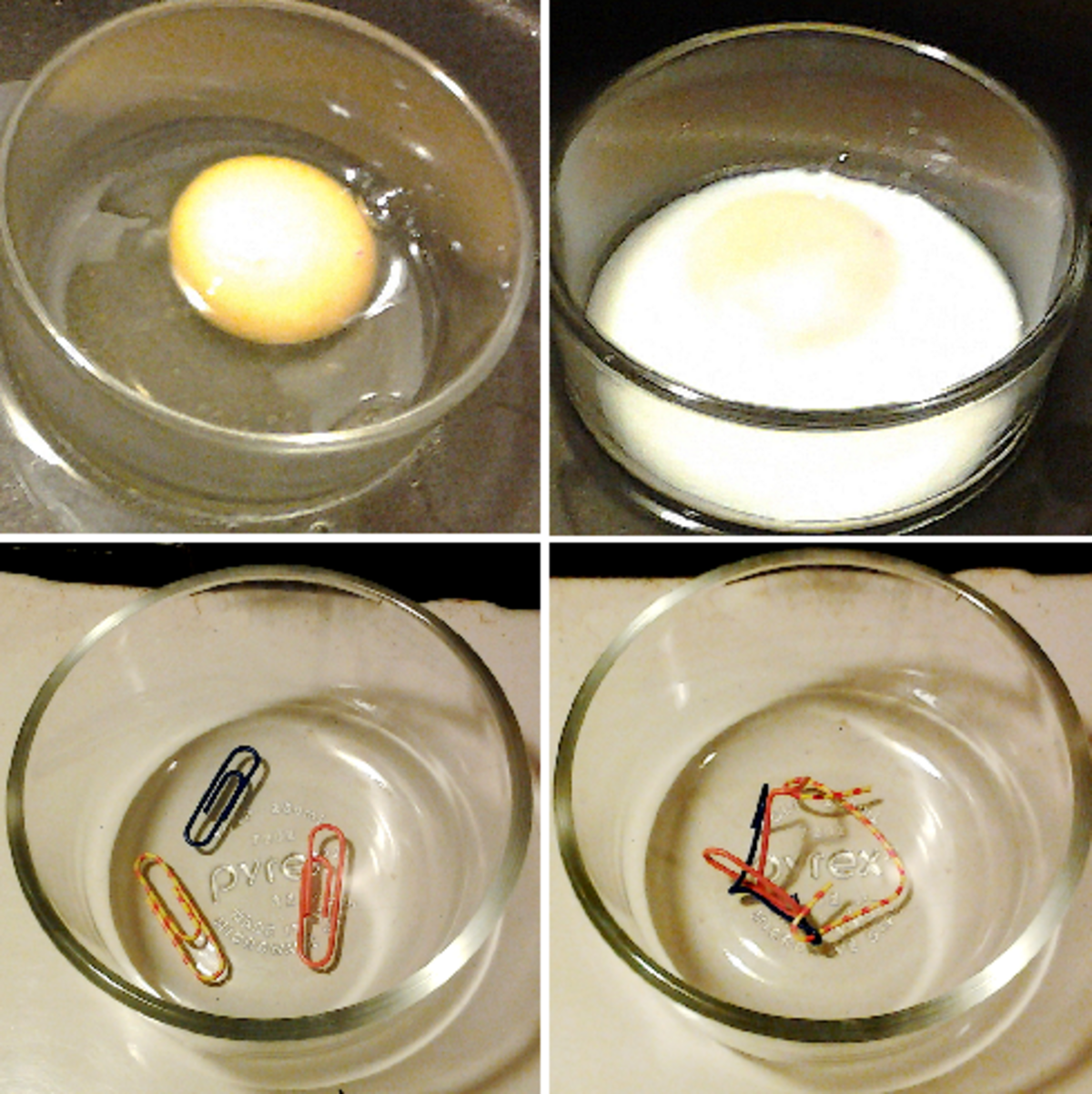
A four-panel image illustrating protein denaturation using an egg and paperclips. RMADLA, CC BY-SA 3.0, via Wikimedia Commons
These tangles are implicated in diseases like Alzheimer's and Parkinson's.
The ai solution
For 50 years, predicting this 3D shape from a list of ingredients was the holy grail of biology. In 2020, an AI called AlphaFold cracked the code, accurately predicting the structure of nearly every known protein.
It turned a decades-long biological mystery into a computational problem, paving the way for custom-designed medicine.
How does a protein fold into shape?
A protein begins folding even while the ribosome is still translating its amino acid chain. The linear sequence of amino acids, called the primary structure, dictates both the final shape and the pathway to get there. As folding begins, hydrogen bonds quickly stabilize local arrangements like spiral alpha helices and pleated beta sheets.
Protein structure organizes hierarchically from a linear amino acid chain into secondary helices and sheets, tertiary folds, and quaternary multi-chain assemblies. OpenStax College, CC BY 3.0, via Wikimedia Commons
Next, tertiary structure forms as water pushes water-fearing hydrophobic amino acids into the interior core, leaving water-loving hydrophilic portions on the exterior. Covalent disulfide bridges between cysteine residues further lock the structure in place. In some proteins, multiple folded chains assemble together into a larger quaternary structure to become fully active.
How fast does protein folding happen?
The fastest protein folding reactions take only a few microseconds. Very small single-domain proteins up to a hundred amino acids long usually snap into place in a single step within milliseconds.
Larger proteins fold more slowly. Outside the cell, complex proteins can take minutes or hours because they must navigate intermediate checkpoint states, often slowed down by proline isomerization. The total folding time depends directly on the protein's size, contact order, circuit topology, and external conditions like temperature and pH.
What happens when proteins misfold?
Proteins that fail to fold correctly usually become useless, but some turn toxic. Misfolded proteins can aggregate into amyloid fibrils, which are associated with neurodegenerative disorders like Alzheimer's and Parkinson's disease. Infectious varieties of these misfolded proteins, called prions, force healthy proteins into their defective shapes.
Incorrect folding is also responsible for many allergies when the immune system encounters unfamiliar protein shapes. When fully folded proteins lose their shape due to heat or chemical changes, such as during cooking or burns, they undergo denaturation, reverting to an unfolded state.
Test yourself
How does a complex molecule reliably find its correct shape so fast?
It follows a built-in folding path. Testing every option takes longer than the universe's age. Instead, local chemical attractions pull the molecule straight down a pre-set energy pathway.
How does a protein find its working shape?
It follows an internal map. If proteins randomly sampled shapes, they would never finish. They fold spontaneously because their specific sequence of amino acids acts like a blueprint for the final, lowest-energy structure.
Properly folded proteins exist in their lowest possible thermodynamic energy state.
True. Native protein states are usually the most stable at the global minimum of free energy.
Play the lesson in edgi and the card is yours. It lands on your Map next to the ideas it connects to, and turns from matte to foil to gold as you learn more around it.
Denaturation is the process where a folded protein loses its three-dimensional structure and returns to an unfolded state. It occurs during cooking, burns, and in specific protein disorders.
Do identical amino acid sequences always fold the exact same way?
Not always. Environmental conditions like temperature, pH, salt concentration, and the surrounding solvent influence how a sequence folds into its final structure.
What force drives the folding process?
Folding is primarily driven by hydrophobic interactions, where water forces nonpolar amino acids to cluster together inside the protein. It is also stabilized by hydrogen bonds and van der Waals forces.