Tau proteinWhy tangles track dementia better than plaques
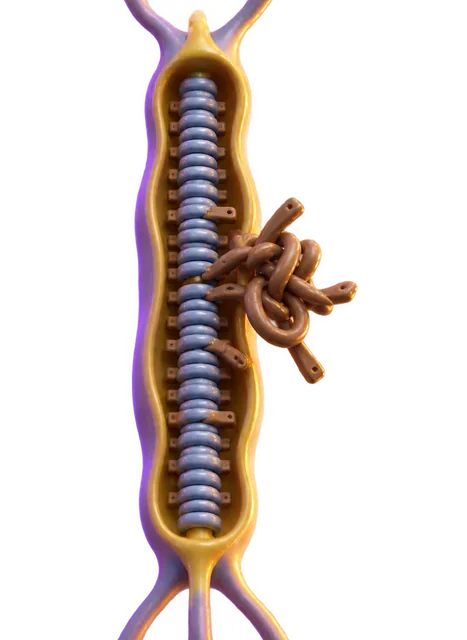
Tau protein is a structural helper inside brain cells that binds to and stabilizes microtubules, which are the tiny tube-like tracks neurons use to move nutrients. In a healthy brain, it keeps these cellular transport highways aligned and intact. When tau detaches and misfolds, it aggregates into toxic tangles whose spread through the brain closely matches the clinical severity of dementia.
By the edgi team We find the most surprising true thing about an idea and build a 60-second lesson around it.
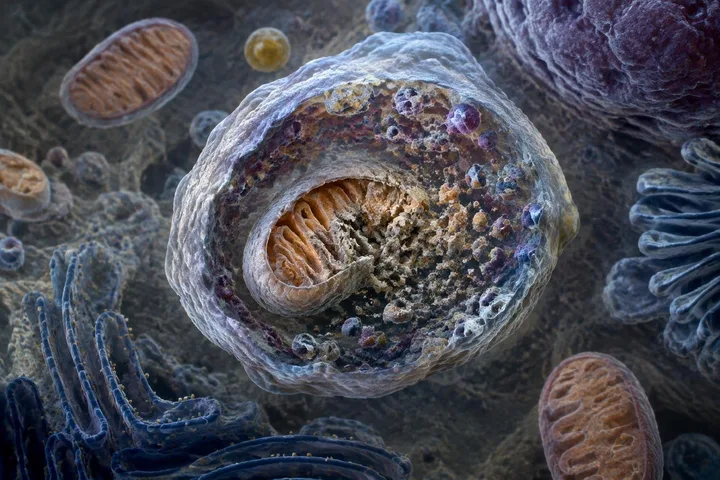
Inside every neuron, tiny tubes called microtubules act as highways for transporting nutrients. Tau proteins are the structural ties that keep these highways stable and aligned.
Without them, the axons would buckle and the cell would effectively lose its ability to send signals.
When the ties break
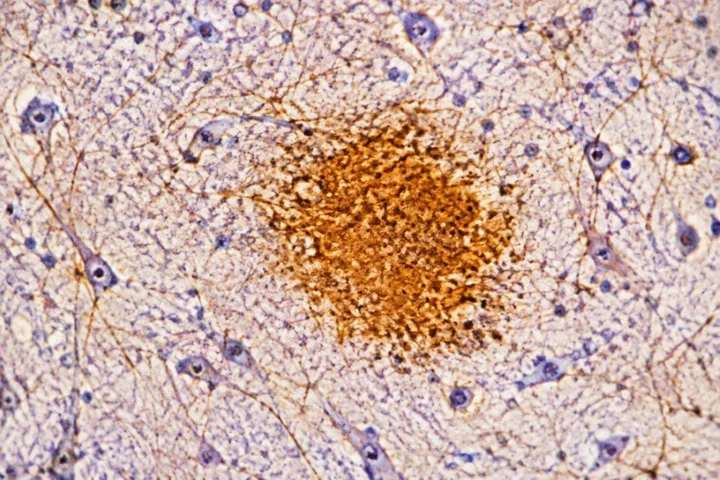
In 1906, Alois Alzheimer discovered dark clumps in the brain of a patient with severe memory loss. We now know these are neurofibrillary tangles, created when tau proteins lose their grip on microtubules.
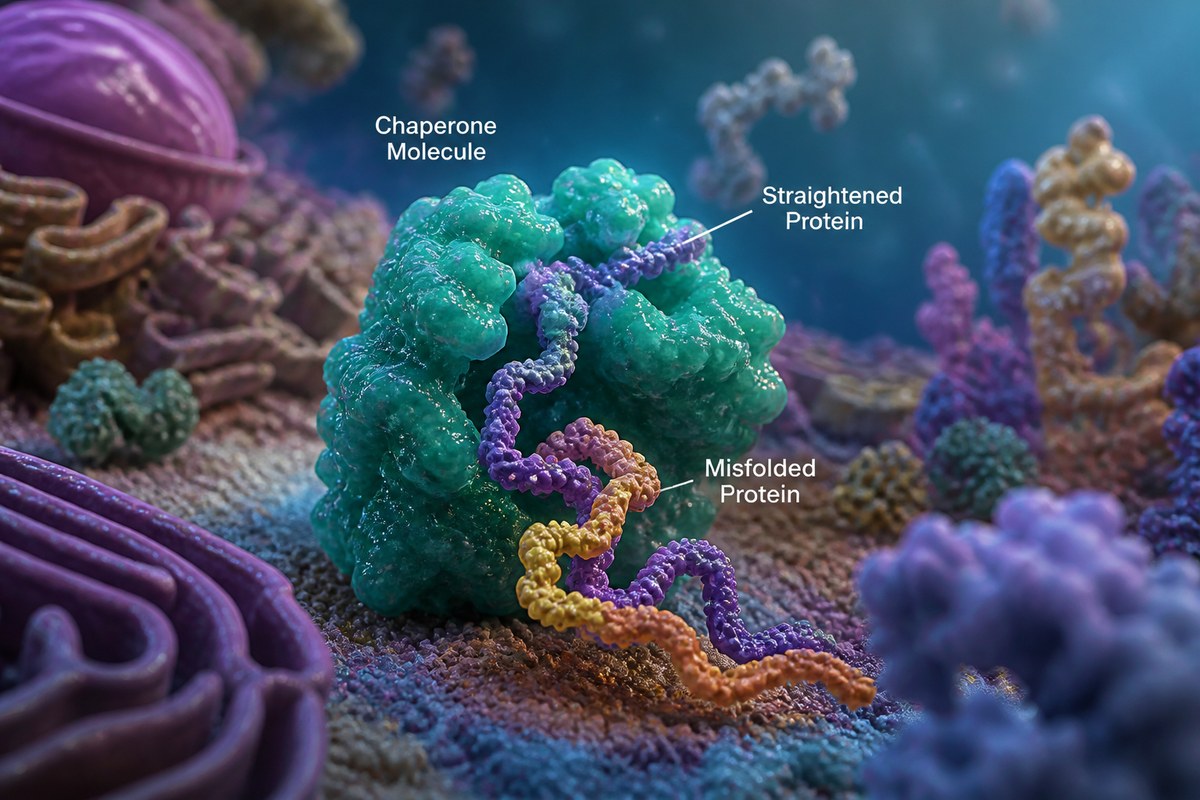
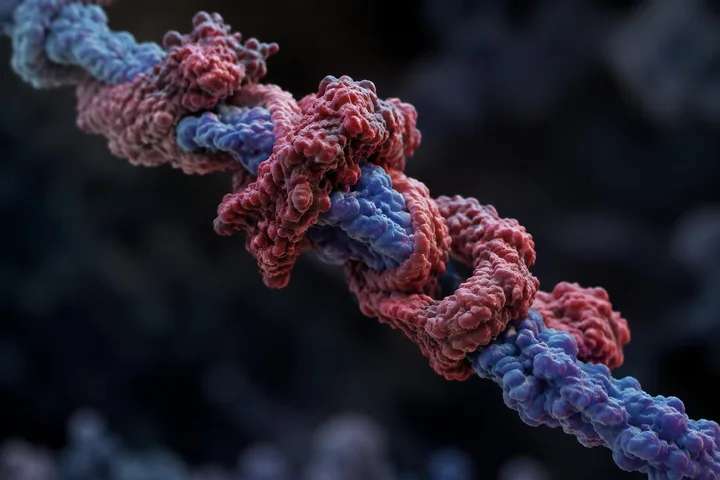
Instead of stabilizing the tracks, the detached proteins misfold and stick to each other, creating a toxic sludge that chokes the cell.
The real executioner
While researchers long focused on amyloid beta, the number of tau tangles correlates much more closely with the severity of dementia. As neurons die, the tangle buildup spreads through the brain, effectively erasing the networks that hold your memories and personality.
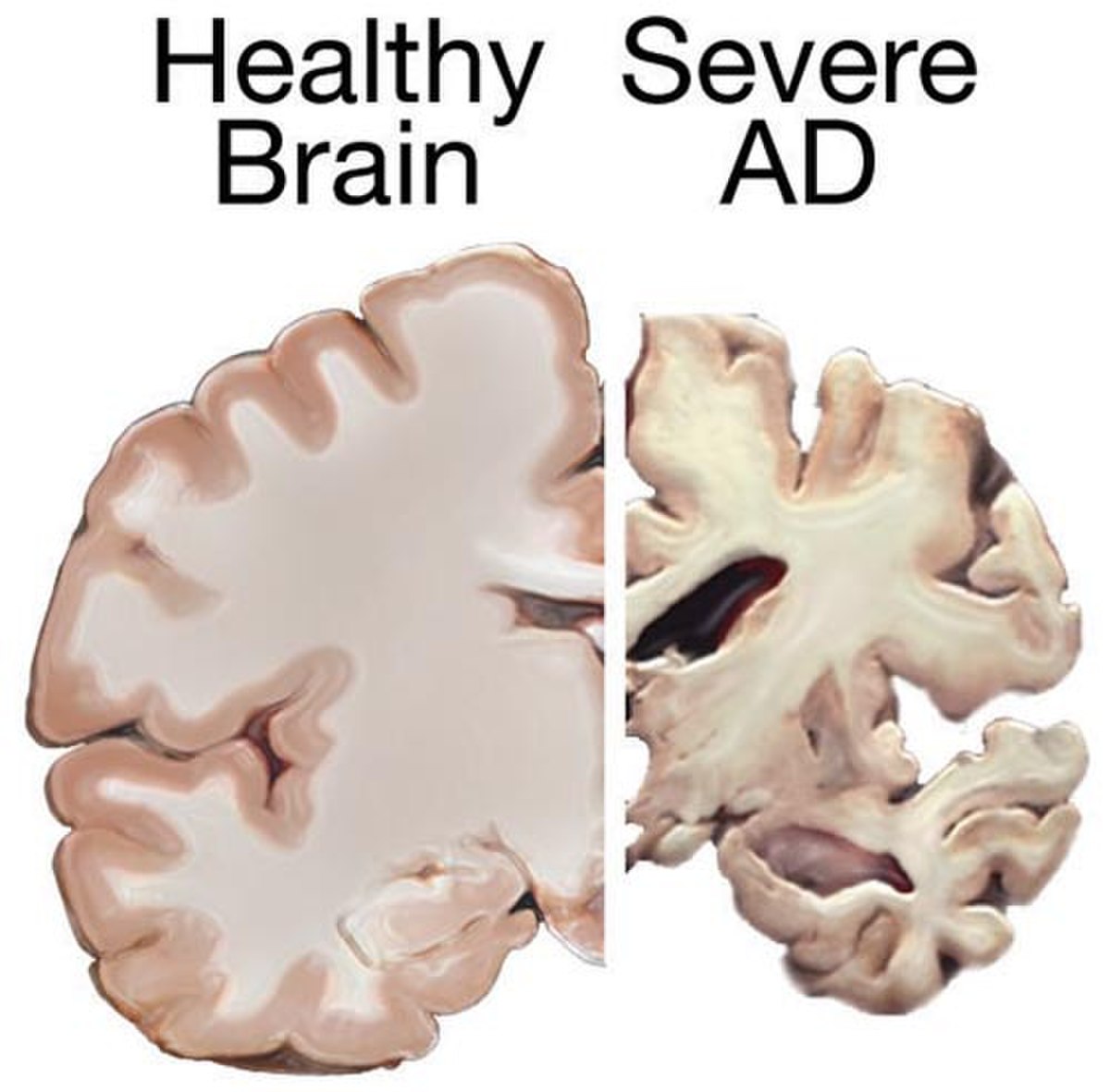
Comparison of a healthy brain (left) and a brain with severe Alzheimer's disease (right), showing significant atrophy and enlarged ventricles in the diseased brain. National Institutes of Health, Public domain, via Wikimedia Commons
Current medical research is now racing to find ways to stabilize these proteins before the scaffolding begins to fail.
How tau stabilizes nerve cells
First identified in 1975 as heat-stable proteins essential for assembling microtubules, tau proteins are intrinsically disordered molecules produced by the MAPT gene on human chromosome 17q21. In human brain tissue, alternative splicing produces six distinct tau isoforms ranging from 352 to 441 amino acids. These isoforms feature either three or four positively charged binding domains at their carboxy-terminus.
Chromosome 17 contains the MAPT gene at band 17q21, which encodes all six isoforms of tau found in the human brain. Own work, Public domain, via Wikimedia Commons
Because microtubules carry a negative charge, these positively charged binding domains lock tau onto the tracks. The isoforms with four binding repeats provide significantly stronger stabilization than those with three. While present at low levels in dendrites and non-neuronal cells like astrocytes, tau concentrates primarily in the distal sections of axons, keeping the neuron long structural highways intact while permitting flexible remodeling.
What controls tau detachment and tangles
The longest tau isoform contains 79 potential phosphorylation sites on its serine and threonine residues, with normal tau typically phosphorylated at roughly 30 of them. Kinases like PKN add phosphate groups to tau, loosening its hold on microtubules, while phosphatases such as PP2A and PP2B strip phosphates away to restore binding.
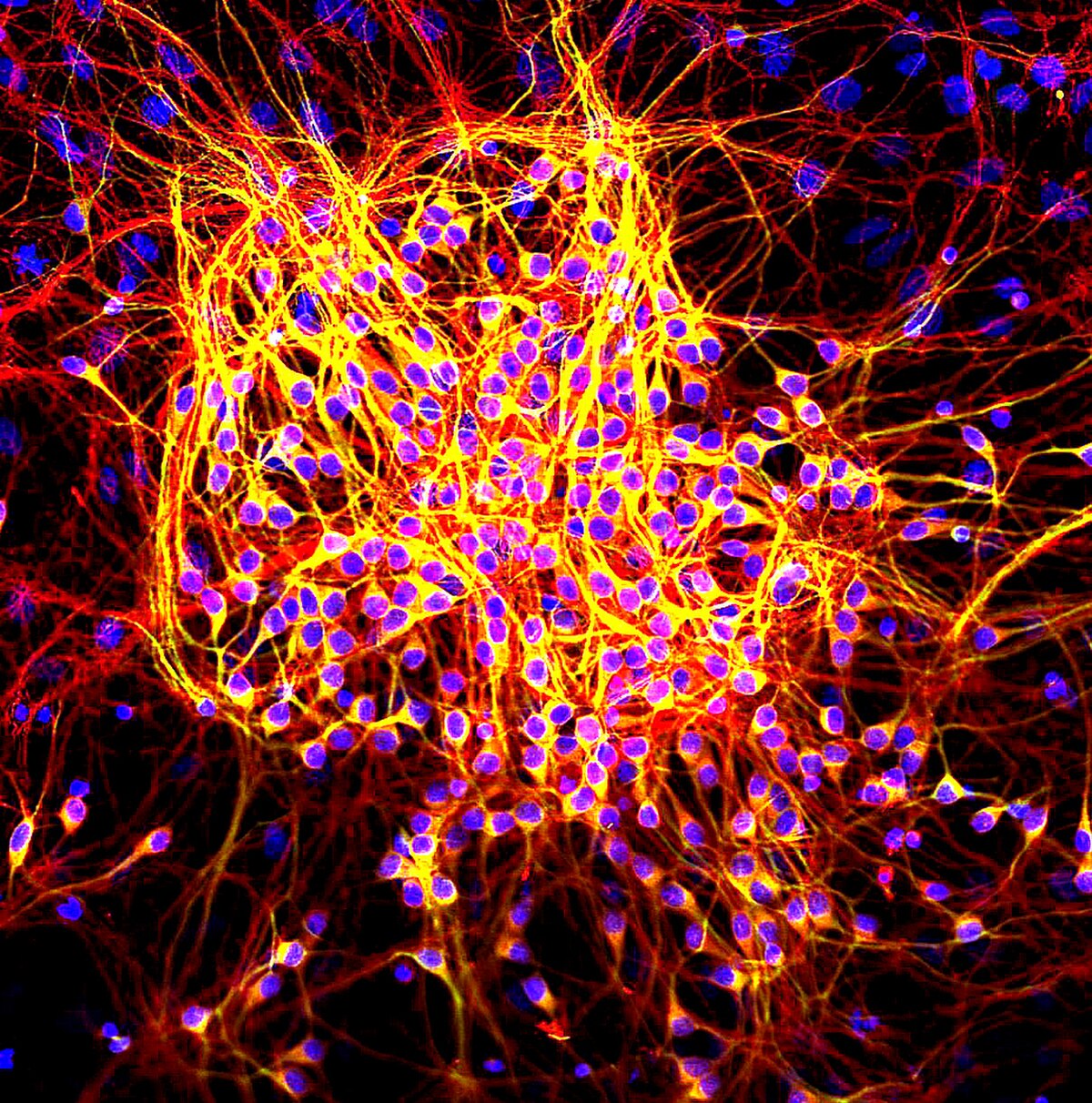
Immunofluorescence staining highlights tau proteins concentrated inside axons in red, contrasting with MAP2 proteins confined to dendrites and cell bodies in green. GerryShaw, CC BY-SA 4.0, via Wikimedia Commons
When kinases over-phosphorylate tau, the protein detaches entirely from the microtubule skeleton. Free-floating tau misfolds and clumps together into neurofibrillary tangles, a pathological hallmark of Alzheimer's disease, frontotemporal dementia, and Parkinson's disease. Beyond structural failure, tau also binds directly to ribosomes, acting as a negative regulator of mRNA translation and altering synaptic function.
Test yourself
What makes tau proteins dangerous in Alzheimer's disease?
They detach and clump together. Tau isn't harmful when it's doing its job of holding neural tracks together. The damage happens when it lets go, misfolds, and tangles into toxic clumps.
True or false: Alzheimer's is caused primarily by toxic plaques choking cells.
False. While amyloid plaques are a hallmark, the internal collapse of cellular highways caused by tau tangles correlates much more closely with the actual progression of cognitive decline.
Play the lesson in edgi and the card is yours. It lands on your Map next to the ideas it connects to, and turns from matte to foil to gold as you learn more around it.
The MAPT gene exists in two orientations known as haplogroups H1 and H2. Haplogroup H1 is associated with a higher risk of certain dementias like Alzheimer's disease and shows increased expression of alpha-synuclein, whereas H2 is found almost exclusively in populations of European ancestry.
What happens when animals lack the tau protein?
Tau knockout mice develop normal brains because other microtubule-associated proteins compensate early in life. As they age, these mice develop muscle weakness, hyperactivity, altered sleep cycles with reduced non-rapid eye movement sleep, and impaired fear conditioning.