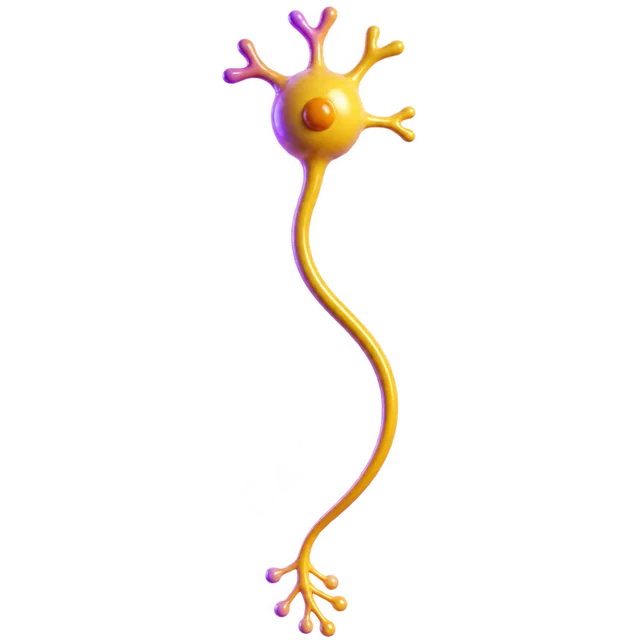
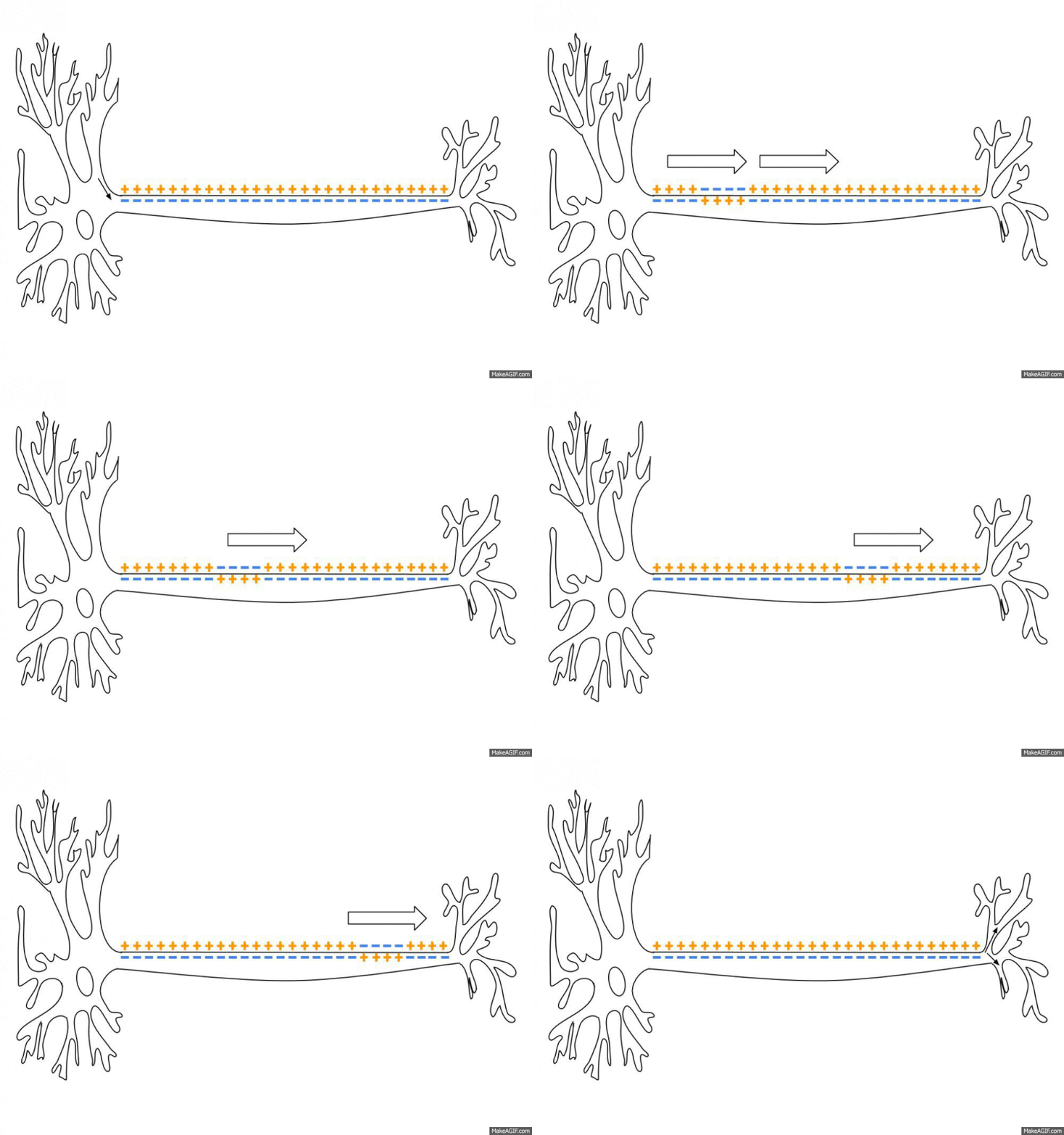
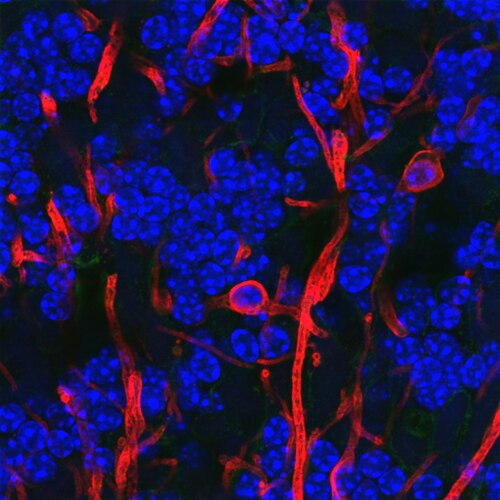
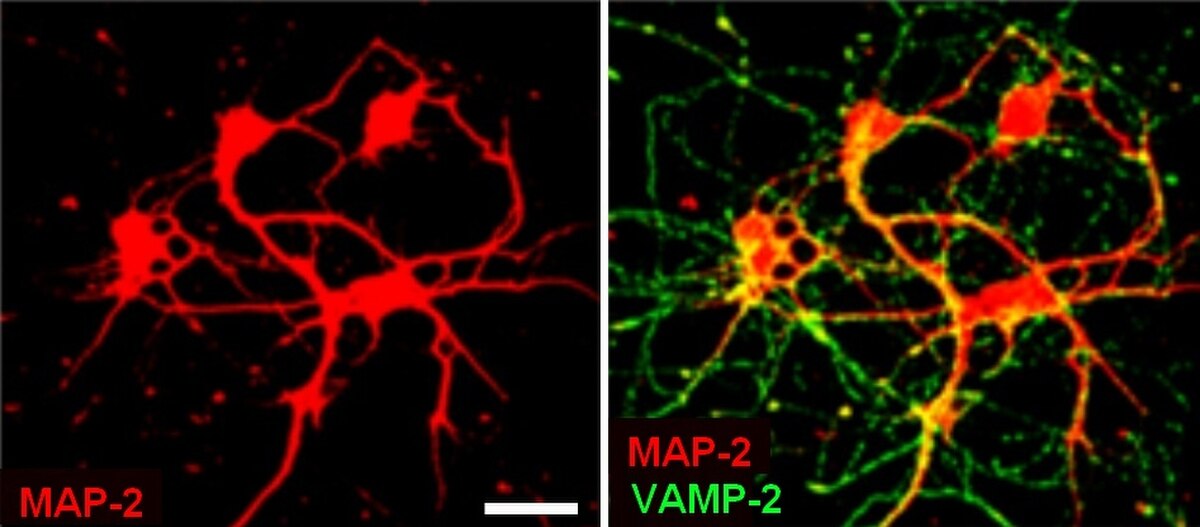
An axon is the long, slender cable that extends from a nerve cell to send electrical signals to other cells. While most are microscopic, single human axons can stretch over three feet from your lower spine down to your big toe. Instead of using metallic wires, they pump sodium and potassium across their membranes to push signals forward.
By the edgi team We find the most surprising true thing about an idea and build a 60-second lesson around it.
A neuron is a microscopic cell, but its axon acts like a long-distance cable. In your longest neurons, the axon starts in your lower spine and terminates in your big toe.
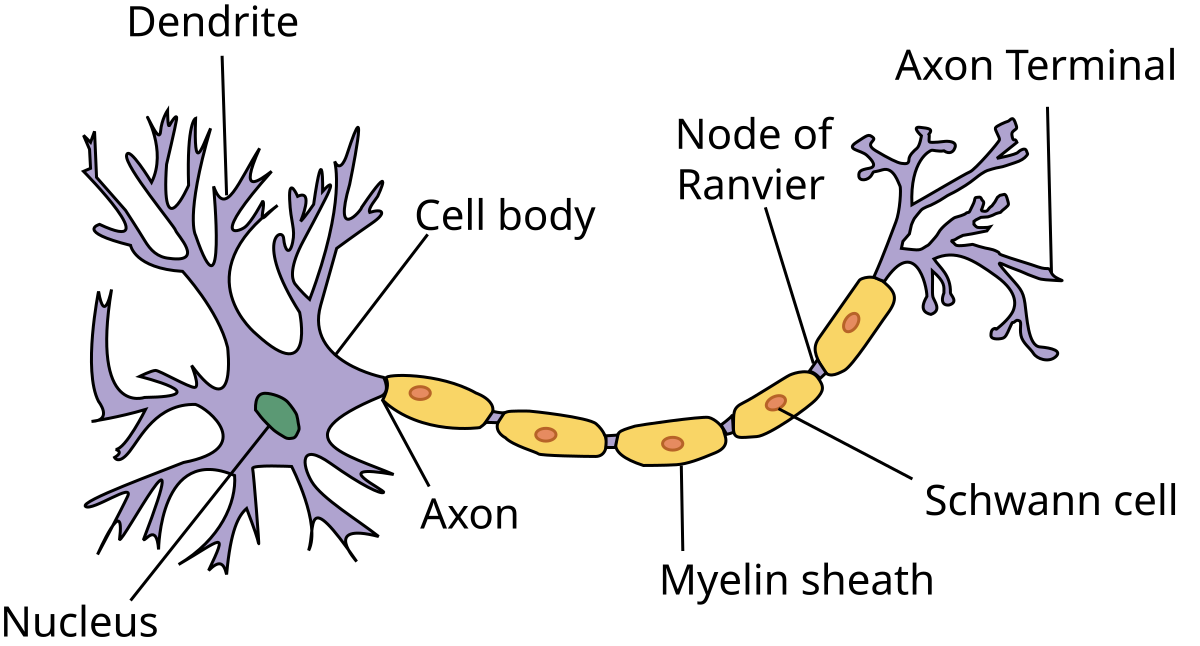
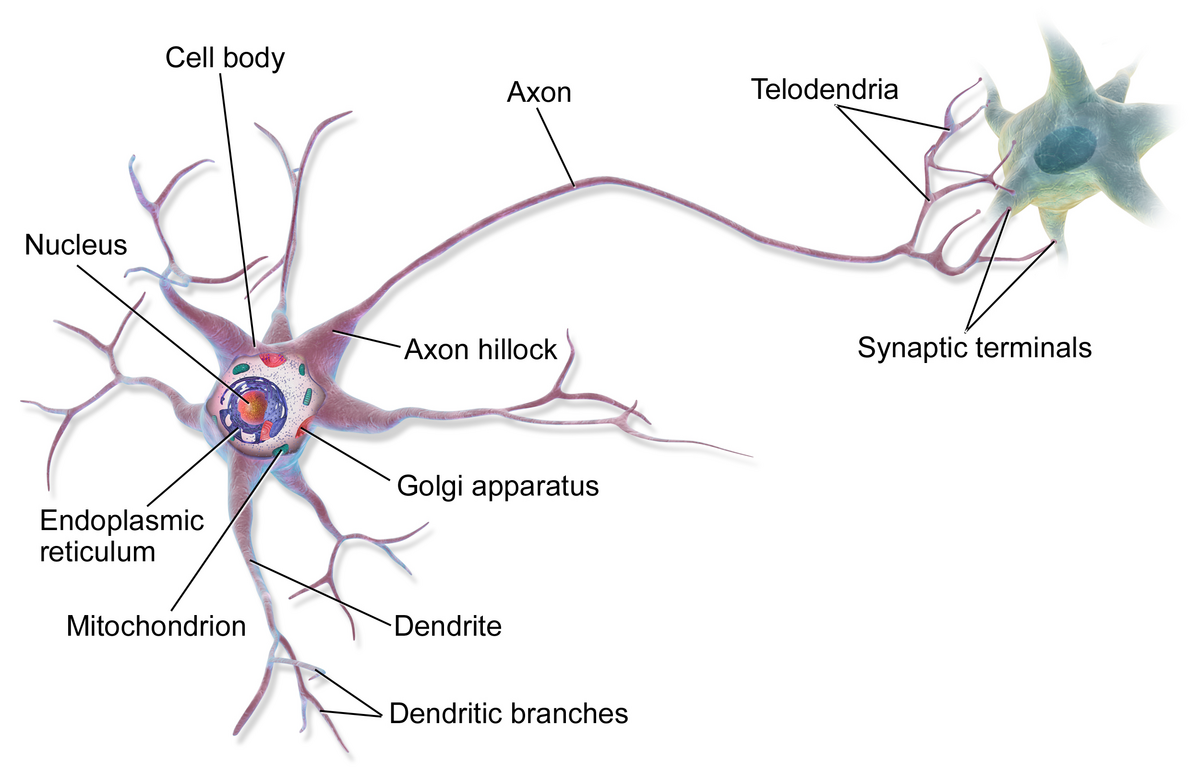
Diagram illustrating the structure of a typical neuron in the peripheral nervous system. User:Dhp1080, CC BY-SA 3.0, via Wikimedia Commons
That is a single biological structure that can be over three feet long.
The squid connection
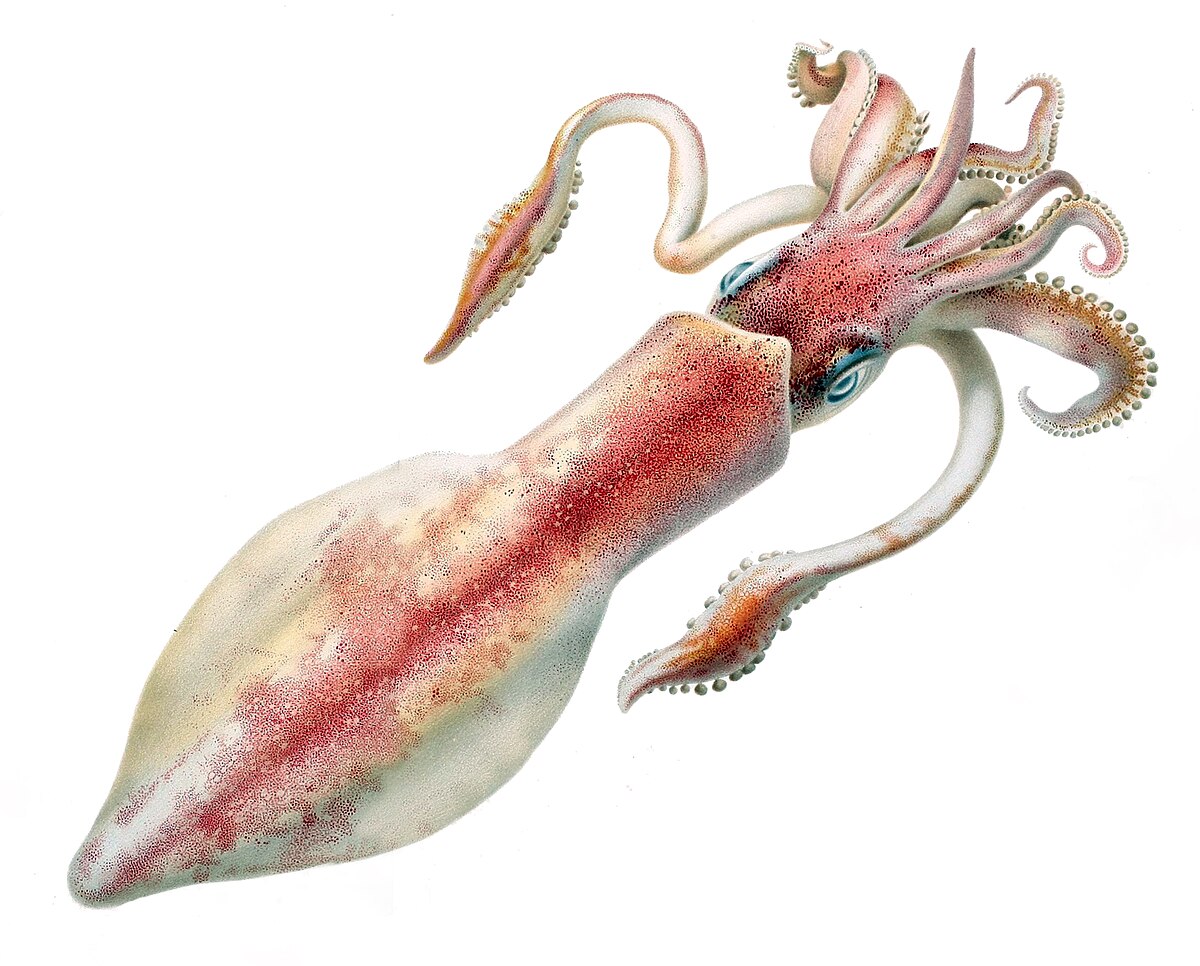
We learned how nerves fire by studying the Atlantic squid in the 1930s. Their axons are 1,000 times thicker than ours, wide enough to insert an electrode inside.
An illustration of a longfin inshore squid (Doryteuthis pealeii) with a reddish-pink mantle and white body, featuring prominent eyes and tentacles. Comingio Merculiano (1845–1915), Public domain, via Wikimedia Commons
We discovered they aren't copper wires; they are biological pumps swapping sodium and potassium to push a signal forward.
The need for speed
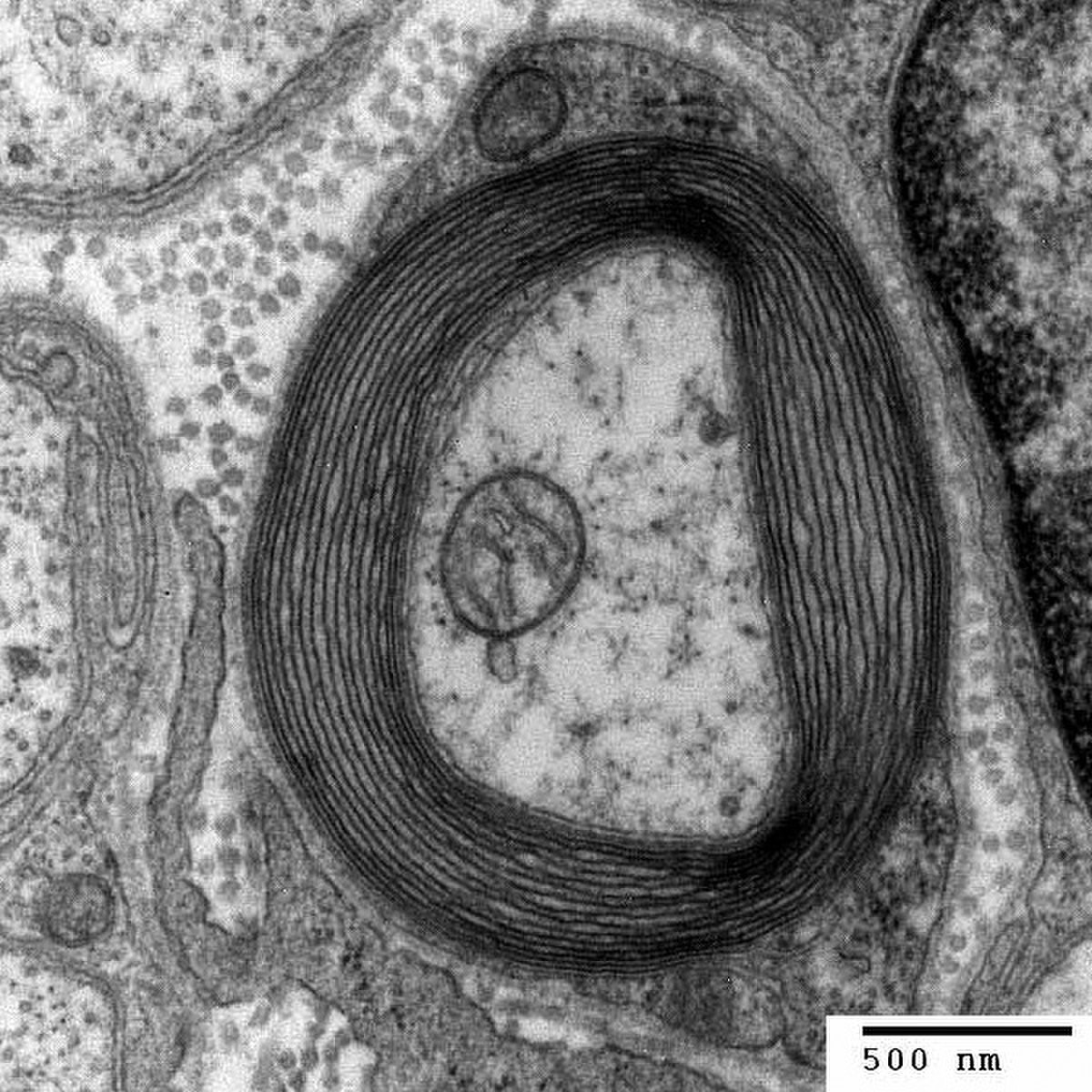
Electricity doesn't travel well through wet tissue, so axons need help. Many are wrapped in myelin, a fatty insulation that acts like the plastic coating on a power cord.
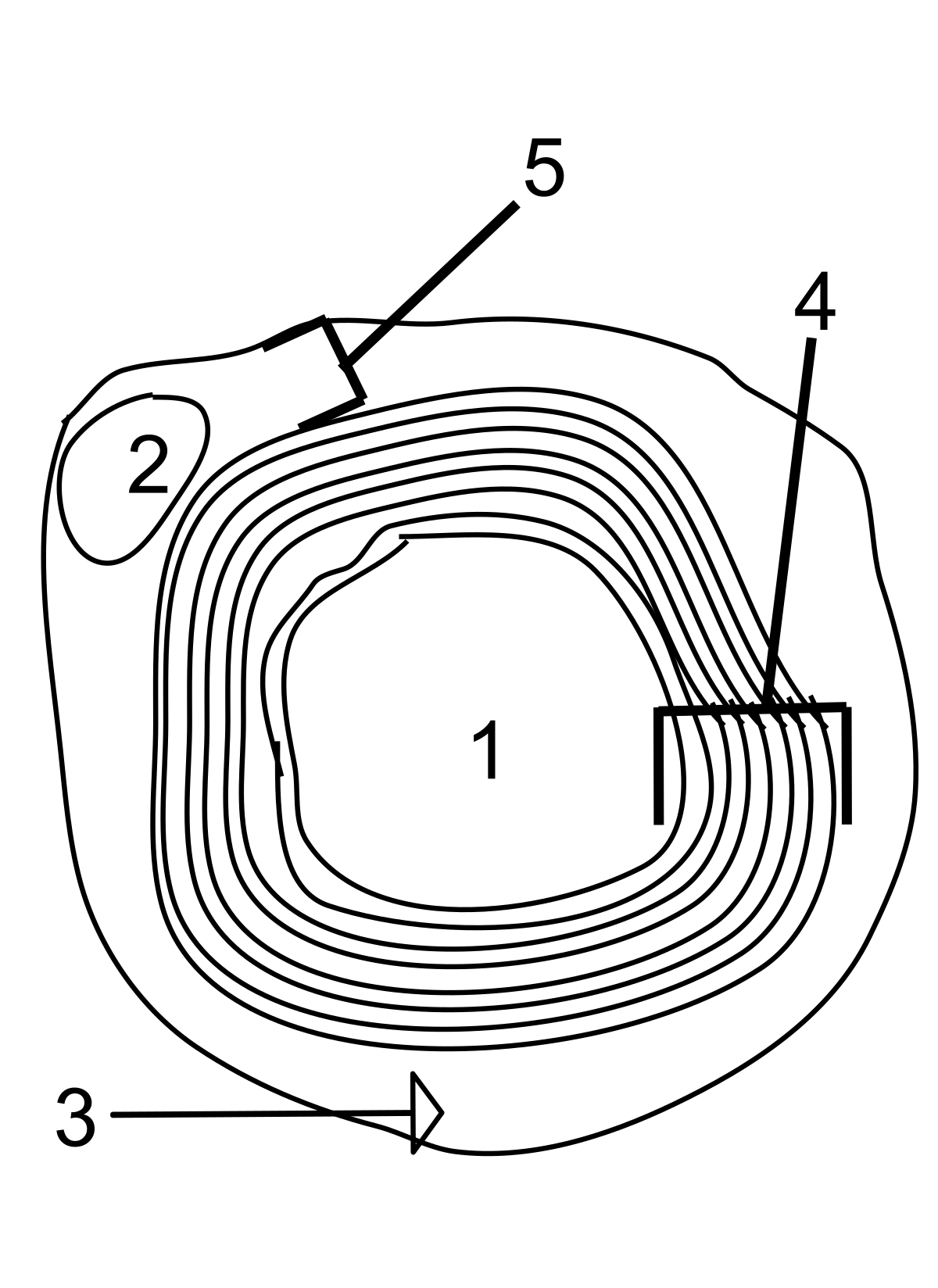
A transmission electron micrograph (TEM) shows a myelinated axon in cross-section, revealing the concentric layers of the myelin sheath surrounding the axon. user:Roadnottaken, CC BY-SA 3.0, via Wikimedia Commons
This allows the action potential to leap from gap to gap, moving at lightning speeds.
How do axons transmit signals?
Axons conduct electrical impulses known as action potentials away from the neuron cell body. To speed up transmission through wet tissue, many axons are wrapped in a fatty insulating coating called myelin. In the peripheral nervous system, Schwann cells produce this myelin sheath, while oligodendrocytes provide it in the central nervous system.
This cross section shows how a Schwann cell wraps around an axon to create the protective myelin sheath. Ralph Walterberg, CC BY-SA 3.0, via Wikimedia Commons
The insulation is broken by evenly spaced gaps called nodes of Ranvier. Signals jump from gap to gap in a process called saltatory conduction, allowing impulses to move much faster than they would along unmyelinated fibers.
What is the anatomy of an axon?
An axon is wrapped in a membrane called the axolemma and filled with cytoplasm known as axoplasm. Unlike dendrites, which taper and stay close to the cell body to receive signals, axons maintain a constant radius and can extend across long distances.
The labeled parts of the neuron show the long axon leading away from the cell body toward terminal branches. BruceBlaus, CC BY 3.0, via Wikimedia Commons
At its end, an axon divides into branches called telodendria. Each branch terminates in a swollen end-foot called an axon terminal, which forms a junction called a synapse with another neuron, muscle, or gland. A single axon can generate thousands of these terminals, allowing one cell to communicate with multiple brain regions at the same time.
Axon bundles in the brain and body
When axons travel together, they form bundles. In the peripheral nervous system, these bundles are called nerves or fascicles. In the central nervous system, they are called nerve tracts.
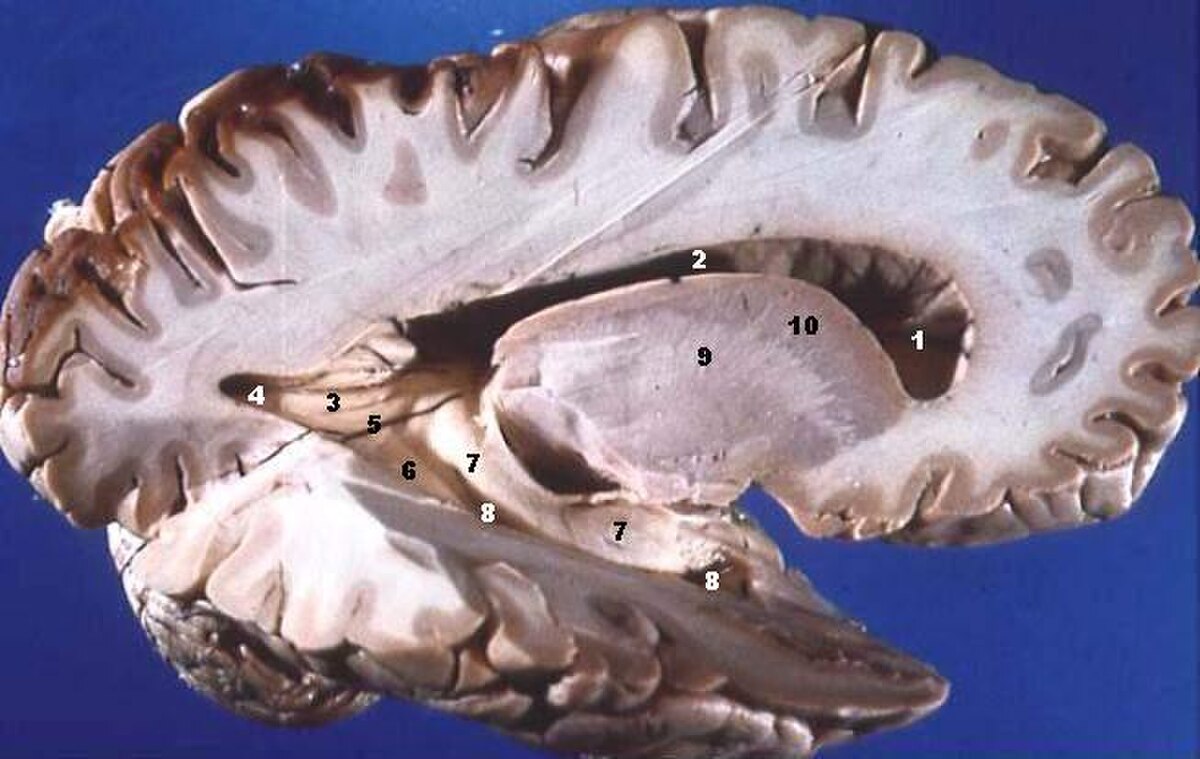
A dissected brain displays the contrast between the pale myelinated axon tracts of white matter and the darker grey matter. John A Beal, PhD Dep't. of Cellular Biology & Anatomy, Louisiana State University Health Sciences Center Shreveport, CC BY 2.5, via Wikimedia Commons
Bundles of myelinated axons make up the brain tissue known as white matter, which gets its pale color directly from the fatty myelin. The largest white matter tract in the human brain is the corpus callosum, which connects the two cerebral hemispheres.
Test yourself
How does myelin help an axon carry signals quickly through wet tissue?
It lets the signal jump between gaps in the insulation. Myelin insulates the axon, so the action potential travels between exposed gaps. The signal is still produced by the axon's biological mechanisms, not metal-like conduction.
A long axon carries a signal from the spine to the foot. What best describes it?
One extended part of a single neuron. An axon can extend from a neuron's cell body to a distant target, so a long spine-to-foot axon can be one continuous cellular structure.
Do axons transmit signals like metal wires or biological pumps?
Biological pumps. Axons do not conduct current passively like copper wires. They actively swap ions using biological pumps to propagate electrical impulses.
Play the lesson in edgi and the card is yours. It lands on your Map next to the ideas it connects to, and turns from matte to foil to gold as you learn more around it.
What is the difference between an axon and a dendrite?
Dendrites are short, tapering branches that receive incoming signals near the cell body. Axons are long fibers with a constant thickness that carry outgoing signals toward other cells.
How large can an axon get?
Most human axons are microscopic, measuring around one micrometer across. In contrast, the giant axon of an Atlantic squid is roughly one millimeter wide, which is about the thickness of a small pencil lead.
Can a single neuron have more than one axon?
Neurons rarely have more than one axon. Multiple axons emerging from a single cell body are unusual but can occur in certain invertebrates, such as in lobster cardiac ganglia.