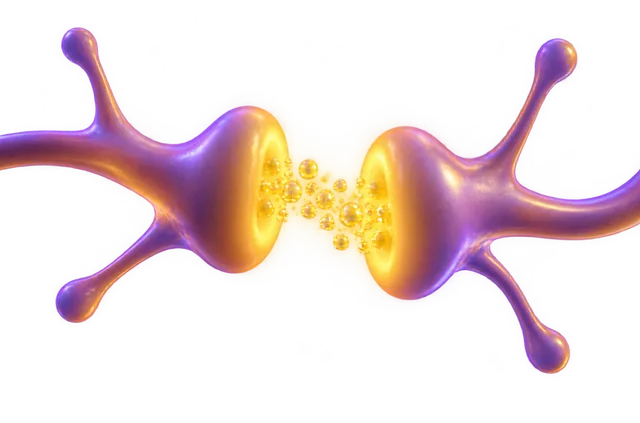
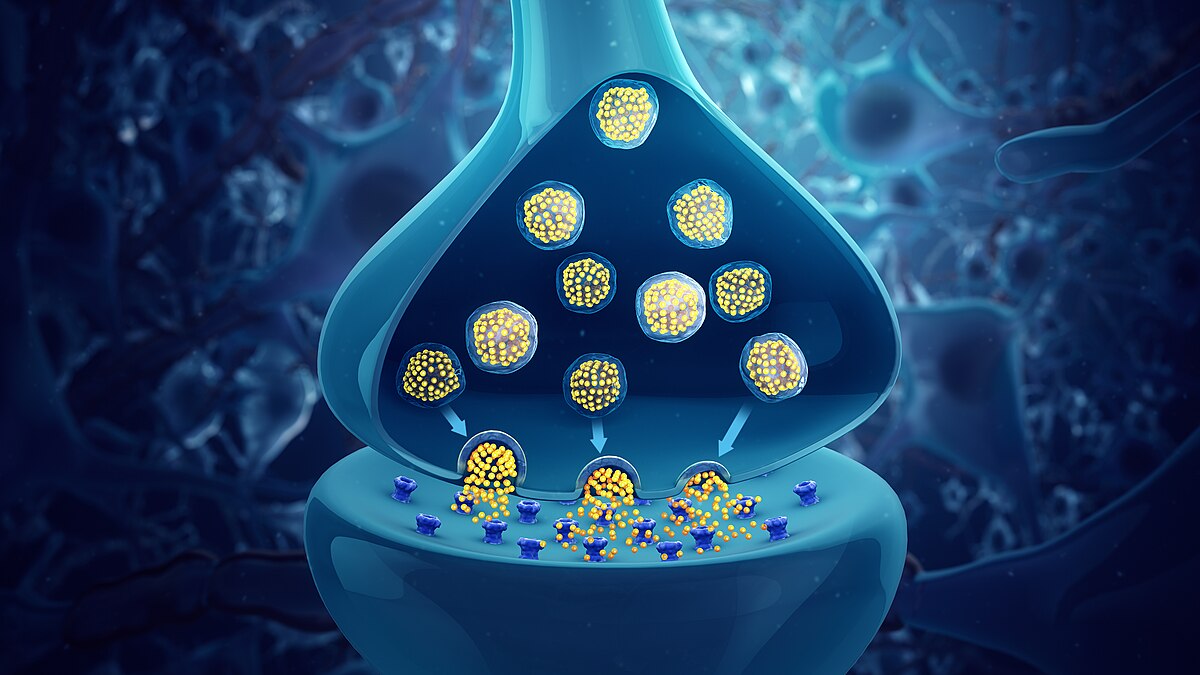
A synapse is the microscopic junction where a nerve cell passes signals to another cell. Instead of forming a single continuous wire, your brain uses these tiny gaps to transmit and process information. These junctions constantly adapt and change as you learn new behaviors.
By the edgi team We find the most surprising true thing about an idea and build a 60-second lesson around it.
Your brain is not a solid, continuous circuit board. It is a dense forest of 86 billion individual neurons, all separated by microscopic gaps.
These junctions are called synapses. Since electricity cannot jump the void, your brain needs a translator.
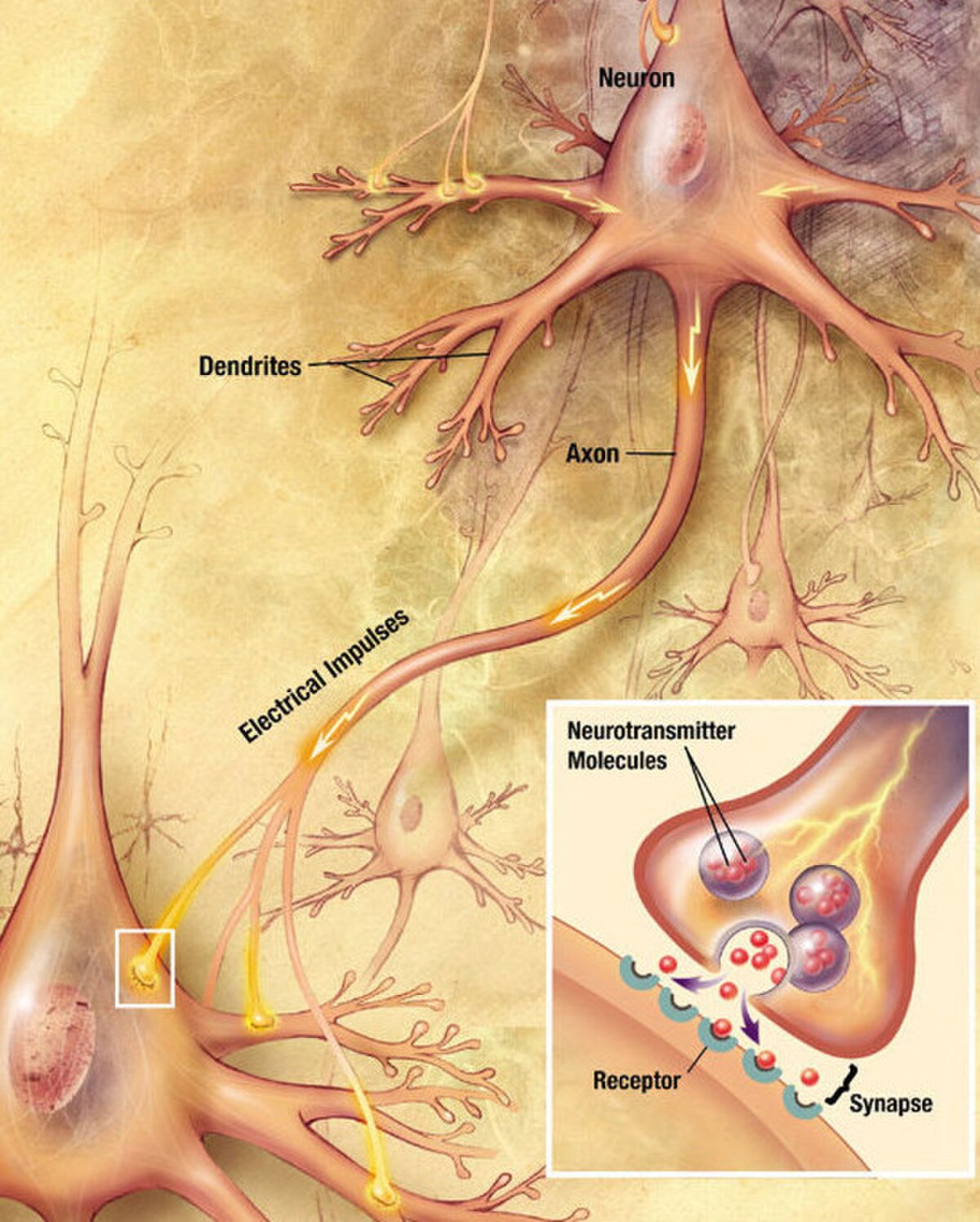
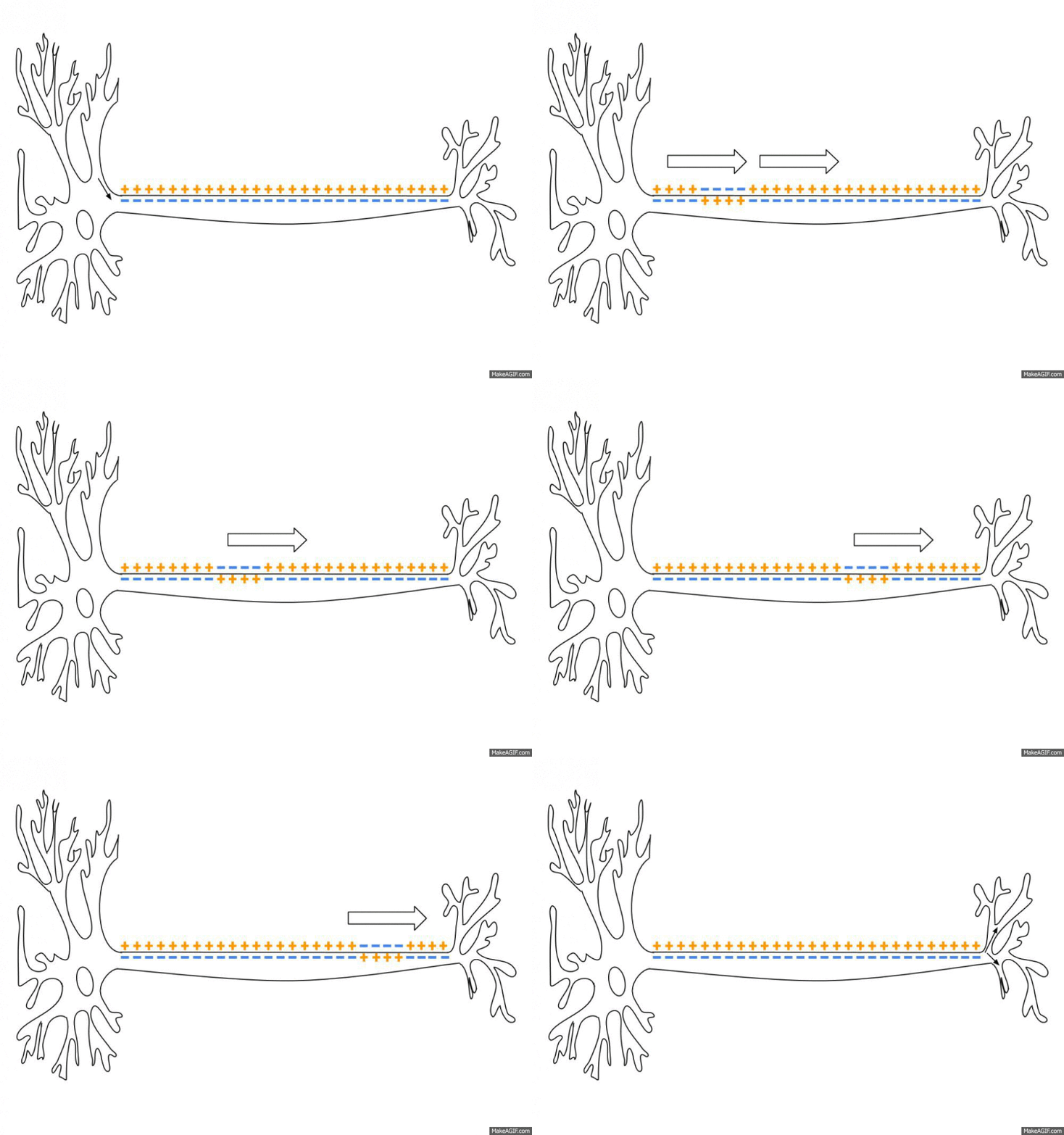
Diagram illustrating a chemical synapse, showing two neurons with dendrites and an axon. user:Looie496 created file; Illustrator: Christy Krames, MA, CMI, for US National Institutes of Health, National Institu, Public domain, via Wikimedia Commons
The frog heart dream
In 1921, scientist Otto Loewi dreamed of a way to prove how nerves communicate. He put two frog hearts in saline, then stimulated the nerve of the first to slow it down.
He poured the liquid from the first heart onto the second. The second heart slowed down too.
Liquid mercury is being poured from a glass beaker into a shallow glass petri dish, forming a collection of silvery, reflective droplets and puddles. Bionerd, CC BY 3.0, via Wikimedia Commons
He had proven nerves release chemicals to bridge the gap.
The adaptable bridge
This chemical relay is why you learn. When you repeat a thought or action, these synaptic gaps physically change, becoming more efficient at passing the signal.
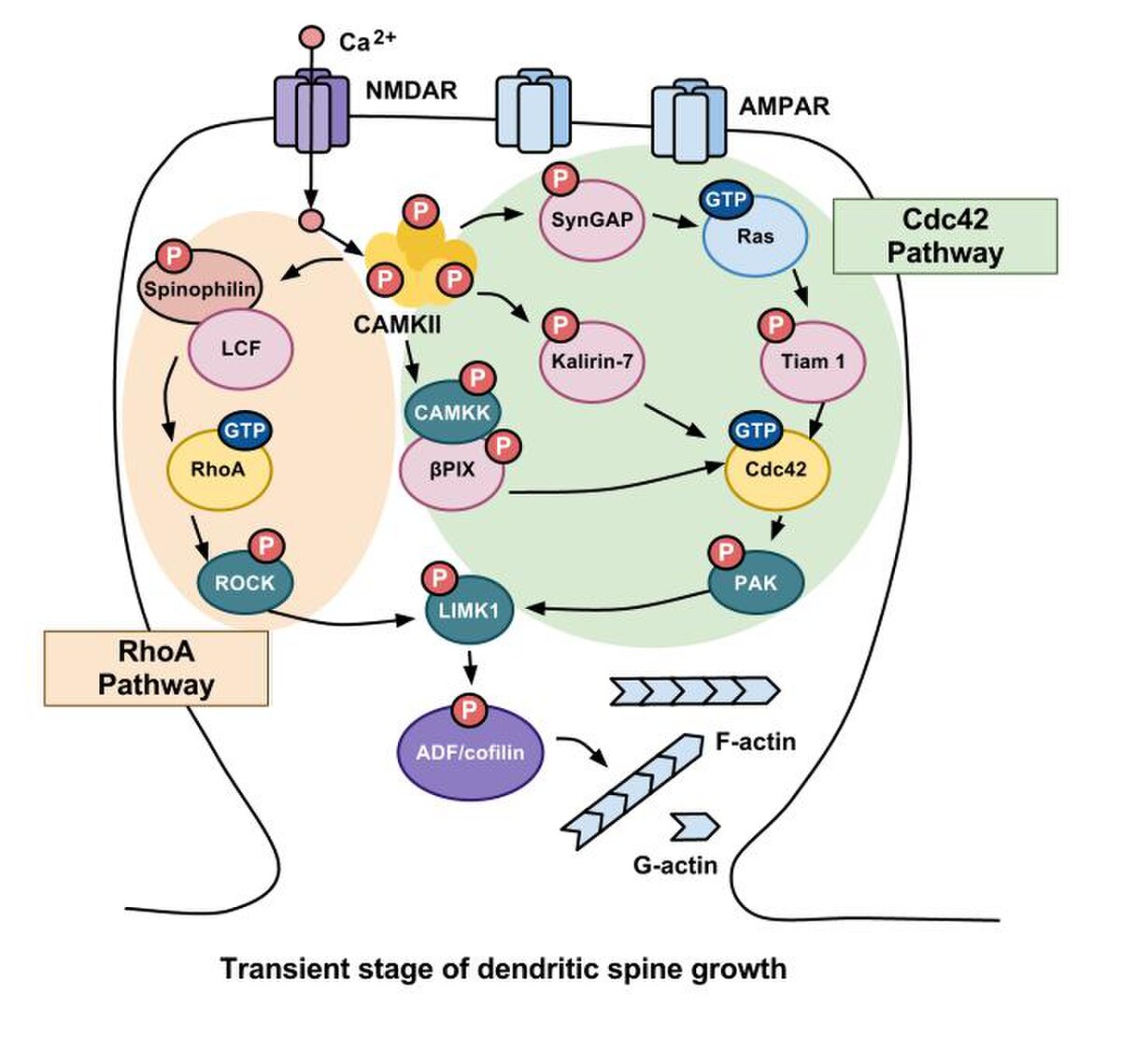
Diagram illustrating the transient stage of dendritic spine growth, detailing the RhoA and Cdc42 pathways activated by calcium influx through NMDA receptors. Itzy, CC BY-SA 3.0, via Wikimedia Commons
This is known as synaptic plasticity. You are literally sculpting the bridges inside your head every time you learn something new.
How does a chemical synapse work?
Light microscopes could never prove the physical gap between neurons because the space measures only about 20 nanometers wide. Confirmation came in the 1950s when electron microscopes revealed the separate membranes of the presynaptic and postsynaptic cells.
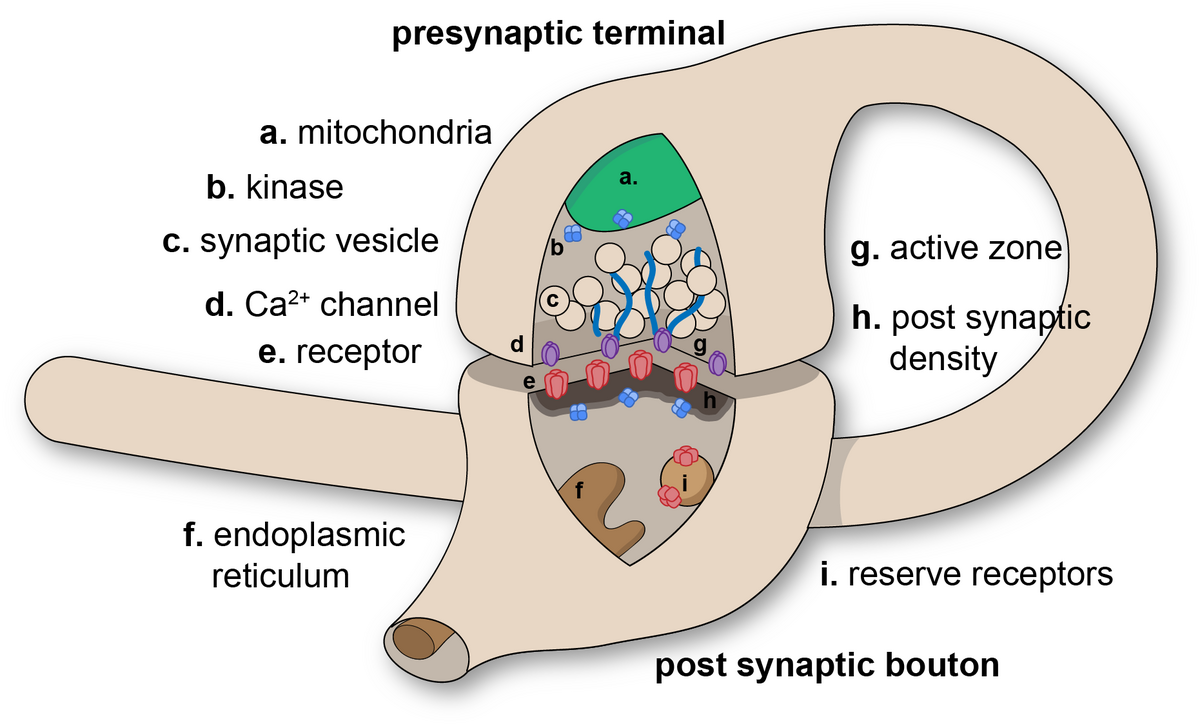
In a chemical synapse, electrical activity in the presynaptic cell opens voltage-gated calcium channels. This triggers the release of neurotransmitters across the gap to bind with receptors on the postsynaptic membrane. The receiving cell is either excited or inhibited depending on the neurotransmitter and receptor types.
Synaptic adhesion molecules project from both sides and stick together to anchor the junction in place. Non-neuronal cells called astrocytes also monitor this activity and help regulate the signaling process.
Chemical vs electrical synapses
Not all synapses rely on chemical messengers. Electrical synapses connect cells directly through channels called gap junctions, allowing ions and electrical current to flow instantly without neurotransmitters.
A chemical synapse converts an electrical signal into a chemical release to cross the junction between cells. Curtis Neveu, CC BY-SA 4.0, via Wikimedia Commons
Electrical synapses permit bidirectional signaling and synchronize network activity in the brain. Chemical synapses offer more complex control, either exciting a cell to fire or inhibiting it from doing so. Some junctions, known as mixed synapses, combine both mechanisms to deliver a fast electrical pulse alongside a slower chemical signal.
Test yourself
At a synapse, what could repeated practice change to make signaling more efficient?
The strength or efficiency of the connection. Synaptic plasticity changes how efficiently connections pass signals; learning does not require neurons to fuse or touch.
At a synapse, what carries a signal across the gap between cells?
Chemical messengers released by the sending cell. The cells are separated by a gap, so the sending cell releases chemicals that carry the signal across it.
How do neurons cross the gap at a synapse?
By releasing chemical messengers. Because neurons do not touch, electrical signals cannot cross directly. They trigger the release of chemicals that bridge the gap.
Play the lesson in edgi and the card is yours. It lands on your Map next to the ideas it connects to, and turns from matte to foil to gold as you learn more around it.
Can a non-neuronal cell send signals across a synapse?
Yes. Specialized epithelial receptor cells in sensory systems like the auditory, vestibular, and tactile systems serve as presynaptic sources that transmit signals directly to neurons.
Who came up with the word synapse?
English neurophysiologist Charles Sherrington introduced the term in an 1897 physiology textbook. Classical scholar Arthur Woollgar Verrall suggested it from the Greek word meaning conjunction or to fasten together.
Can a neuron form a synapse with itself?
Yes. When an axon loops back to form a chemical or electrical synapse on dendrites of the exact same neuron, the junction is called an autapse.