NeurotransmittersChemical messengers across the gap
A neurotransmitter is a chemical messenger released by a nerve cell to send a signal across a microscopic gap to another cell. This receiving cell can be another neuron, a muscle, or a gland. Instead of touching directly, billions of cells rely on these chemical sprays to trigger, slow down, or fine-tune biological activity.
By the edgi team We find the most surprising true thing about an idea and build a 60-second lesson around it.
Your neurons never physically touch one another. There is always a tiny, invisible distance between them. This junction is called a synapse. To send a signal across this void, the brain converts electrical pulses into a chemical spray.
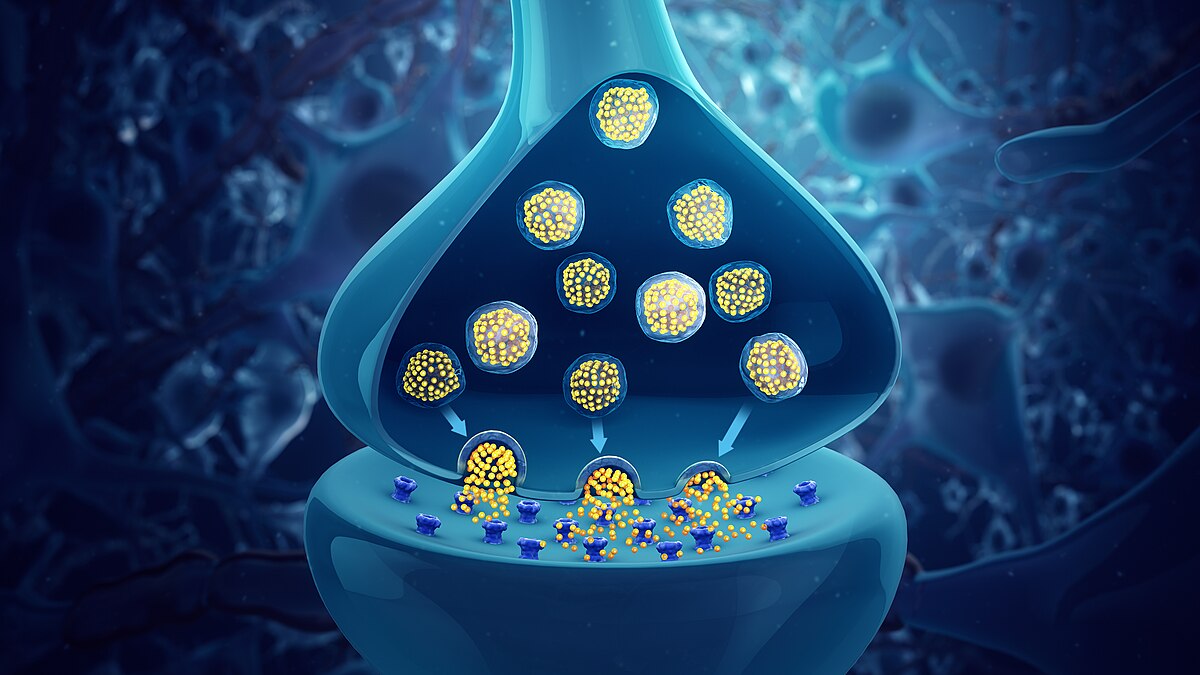
3D illustration of a synapse showing synaptic vesicles containing neurotransmitters being released into the synaptic cleft and binding to receptors on the postsynaptic neuron. https://www.scientificanimations.com/, CC BY-SA 4.0, via Wikimedia Commons
The receiving cell then catches these molecules, turning the chemical signal back into a new electrical impulse.
The frog heart proof
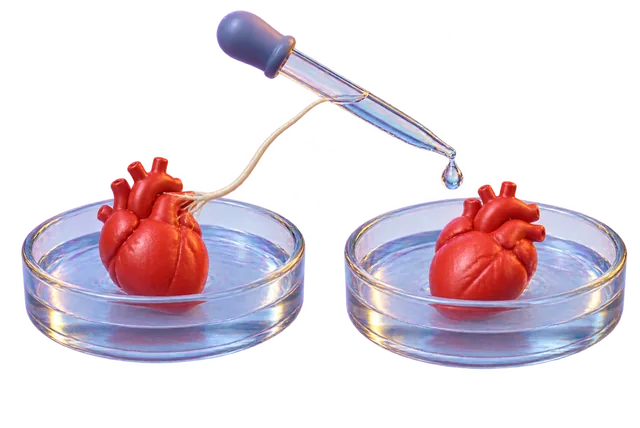
In 1921, scientist Otto Loewi had a dream about an experiment that proved this connection. He stimulated the nerve of one frog heart to slow its beat, then transferred the fluid surrounding it to a second heart.
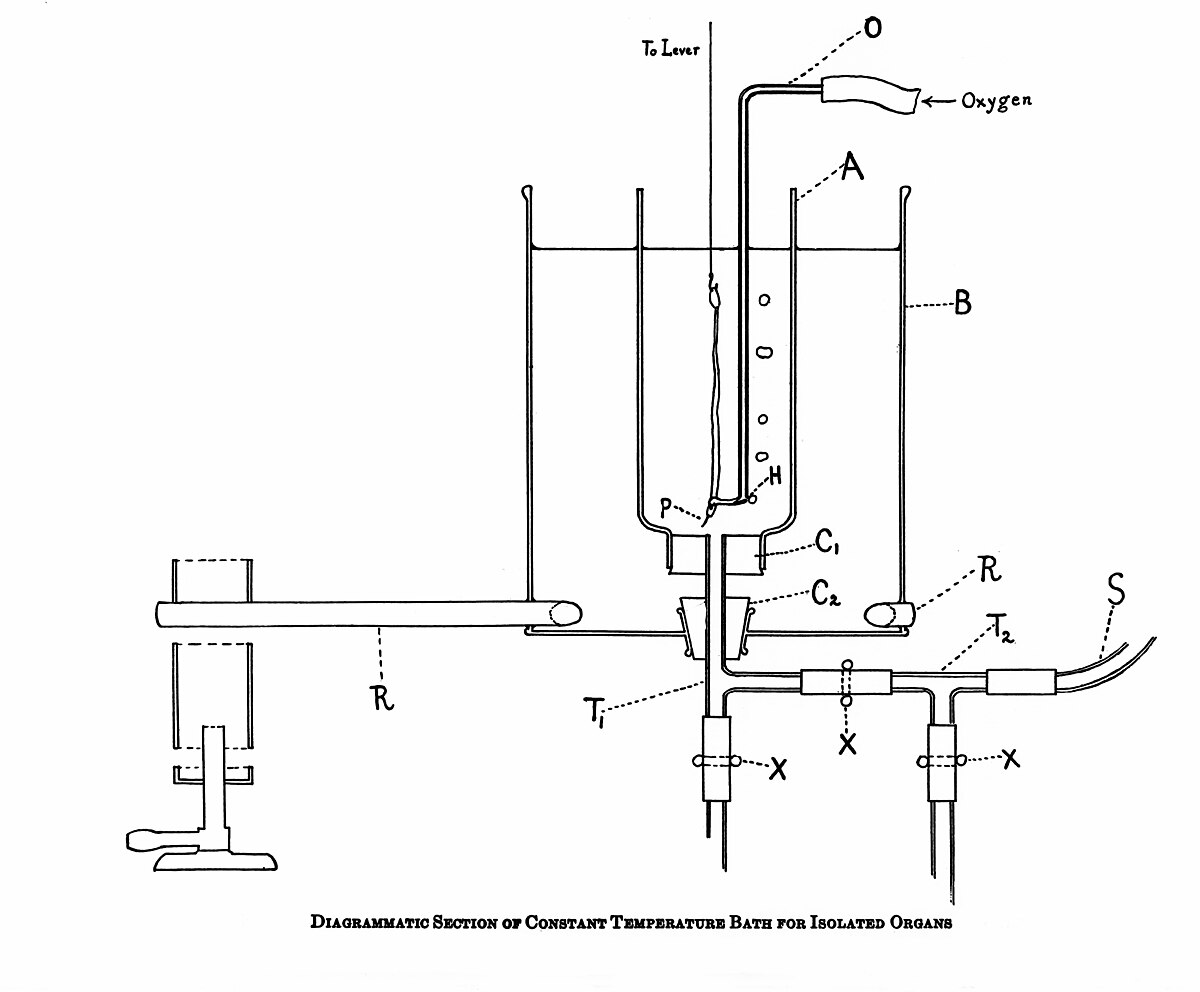
Diagram of a constant temperature bath for isolated organs, featuring a central chamber (A) immersed in a larger bath (B). CC BY 4.0, via Wikimedia Commons
The second heart slowed down instantly without any electrical contact, proving that nerves communicate via chemicals, not just electricity.
The chemical hack
These messengers, like dopamine or serotonin, dictate everything from your focus to your mood. Modern pharmacology is essentially the art of hacking these chemical handshakes.
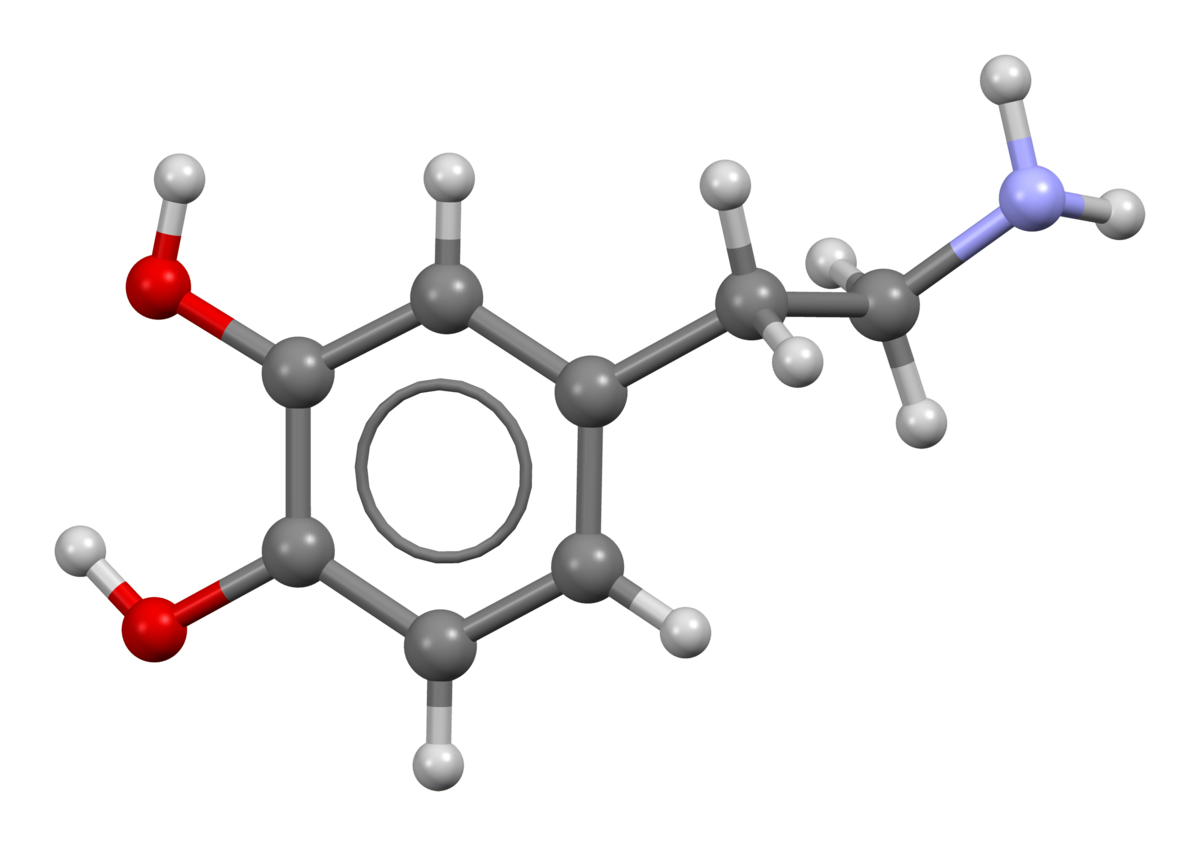
3D ball-and-stick model of a dopamine molecule, showing carbon atoms in gray, oxygen atoms in red, nitrogen atoms in blue, and hydrogen atoms in white. Ben Mills, Public domain, via Wikimedia Commons
By tweaking how these molecules bind to receptors, we can treat everything from depression to chronic pain.
How signals cross the synaptic cleft
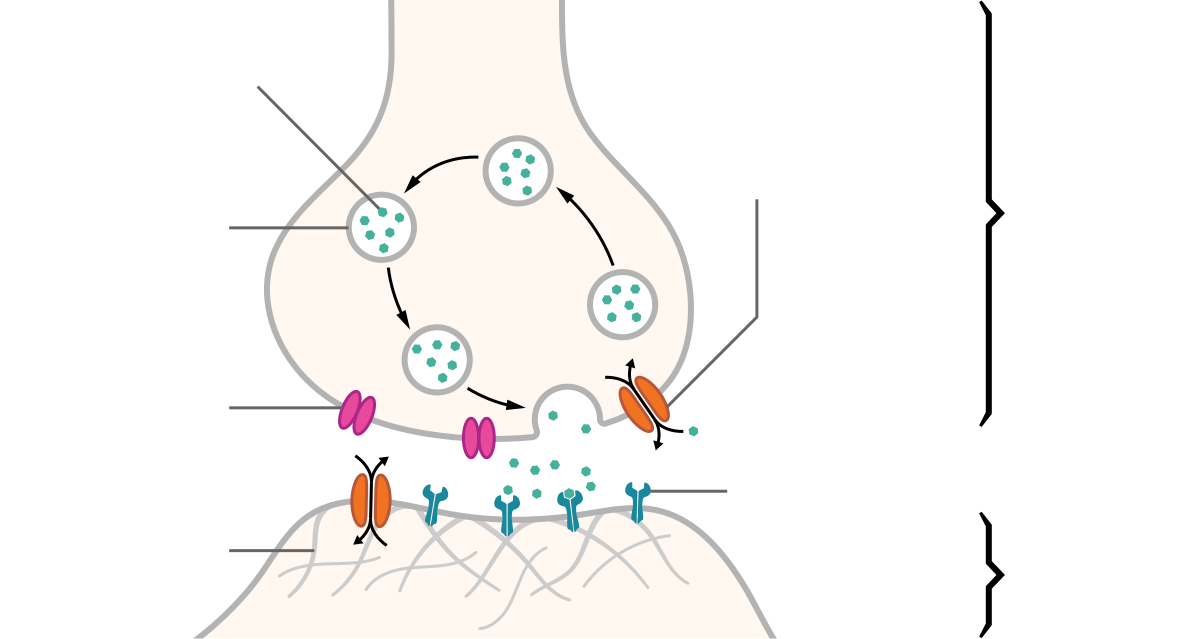
Nerve cells do not form continuous physical wires. Between the sending neuron and the target cell lies a fluid gap 20 to 40 nanometers wide called the synaptic cleft. When an electrical impulse known as an action potential reaches the end of an axon, it triggers tiny bubble-like packages called synaptic vesicles to fuse with the outer membrane. These vesicles dump their neurotransmitter payload into the gap.
Neurotransmitter molecules release from presynaptic vesicles into the synaptic cleft and latch onto receptors on the postsynaptic membrane. Thomas Splettstoesser (www.scistyle.com), CC BY-SA 4.0, via Wikimedia Commons
The released molecules float across the cleft and latch onto specialized receptors on the receiving cell surface. The identity of these receptors determines the result. Binding can excite the receiving cell to fire its own electrical pulse, inhibit it from firing, or modulate its behavior.
How the brain clears the signal
A chemical signal cannot linger indefinitely, or the target cell would remain permanently activated. The nervous system clears neurotransmitters out of the gap using three main routes: reuptake, enzymatic breakdown, and diffusion.
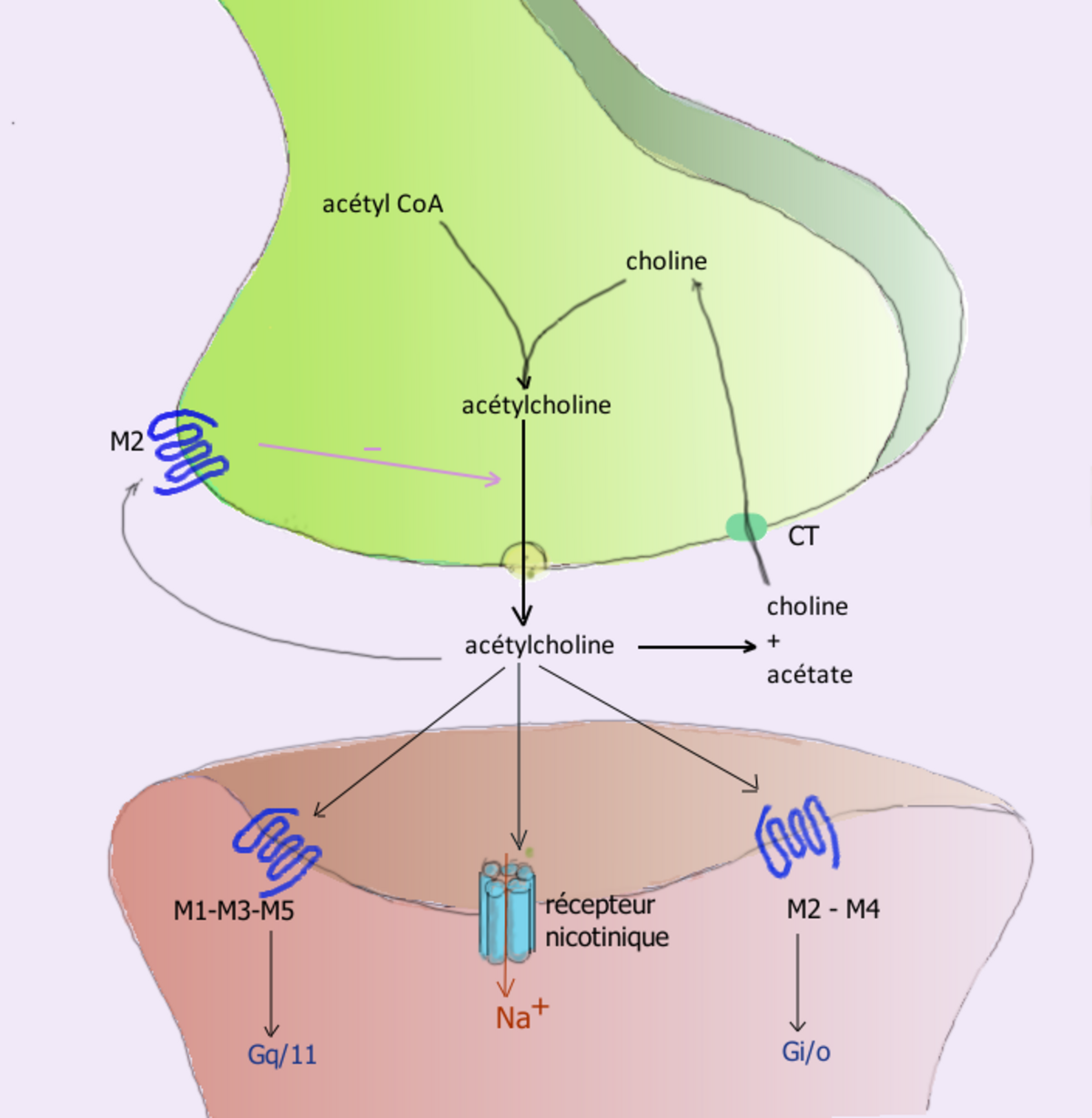
The enzyme acetylcholinesterase cleaves acetylcholine in the synaptic cleft, breaking it into acetic acid and choline to shut off the signal. Pancrat, CC BY-SA 3.0, via Wikimedia Commons
In reuptake, transport proteins on the sending neuron pump molecules directly back into the cell for reuse. Cocaine works by blocking this reuptake pump for dopamine, trapping dopamine in the synapse so it keeps firing its receptors.
Other messengers are dismantled right in the gap. Acetylcholine, the first discovered neurotransmitter, is split apart by the enzyme acetylcholinesterase, after which the remaining choline is reabsorbed to build fresh transmitter molecules. Astrocytes, a type of glial cell, absorb transmitters that diffuse away, while waste products filter out through the liver and kidneys.
What neurotransmitters are made of
Neurons synthesize more than 100 known neurotransmitters, often building them from simple dietary precursors like amino acids with just a few chemical reactions. For instance, the amino acid tryptophan converts into serotonin.
Transmitters fall into distinct chemical groups, including amino acids like glutamate and GABA, monoamines like dopamine and norepinephrine, and larger protein chains called neuropeptides. Even dissolved metabolic gases such as nitric oxide and carbon monoxide act as neurotransmitters, diffusing outward immediately after production without ever being stored inside vesicles.
Test yourself
How do neurotransmitters bridge the physical gap between two adjacent neurons?
By floating across as chemical signals. Neurons do not physically touch or pass electricity directly across the synapse; instead, they convert electrical pulses into chemical messengers.
Do neurons directly bridge the gap between each other via continuous electrical contact?
False. Neurons do not physically touch; they maintain a microscopic gap called a synapse and rely on chemical molecules to transmit signals across that space.
Chemical signals called ___ cross the synapse to relay information.
neurotransmitters. Neurotransmitters are the chemical messengers that cross the synapse to relay signals between neurons.
Play the lesson in edgi and the card is yours. It lands on your Map next to the ideas it connects to, and turns from matte to foil to gold as you learn more around it.
What happens after a neurotransmitter is broken down?
Enzymes dismantle the molecule within the synaptic cleft. The presynaptic neuron often reabsorbs the leftover chemical fragments, such as choline from split acetylcholine, and recycles them into new neurotransmitters.
Do all neurotransmitters get stored in vesicles before release?
No. While most conventional transmitters sit in synaptic vesicles until an action potential arrives, gaseous messengers like nitric oxide and carbon monoxide are synthesized on demand and diffuse out immediately without vesicle storage.