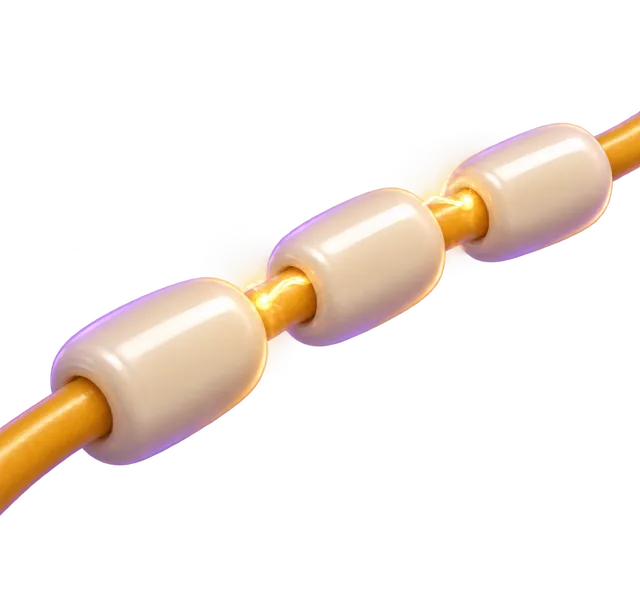
Myelin is a fatty coating that wraps around nerve fibers to insulate them and speed up electrical signals. Instead of crawling continuously along the nerve, the signal recharges and jumps across tiny gaps along the sheath. Without this insulation, electrical impulses leak out and slow down, impairing movement, sensation, and thought.
By the edgi team We find the most surprising true thing about an idea and build a 60-second lesson around it.
Nerve impulses don't flow like water in a pipe; they move like a frog jumping across lily pads. This process is called saltatory conduction, derived from the Latin word for to jump.
It forces the electrical signal to skip over segments of the nerve, massively increasing speed.
The fatty insulator
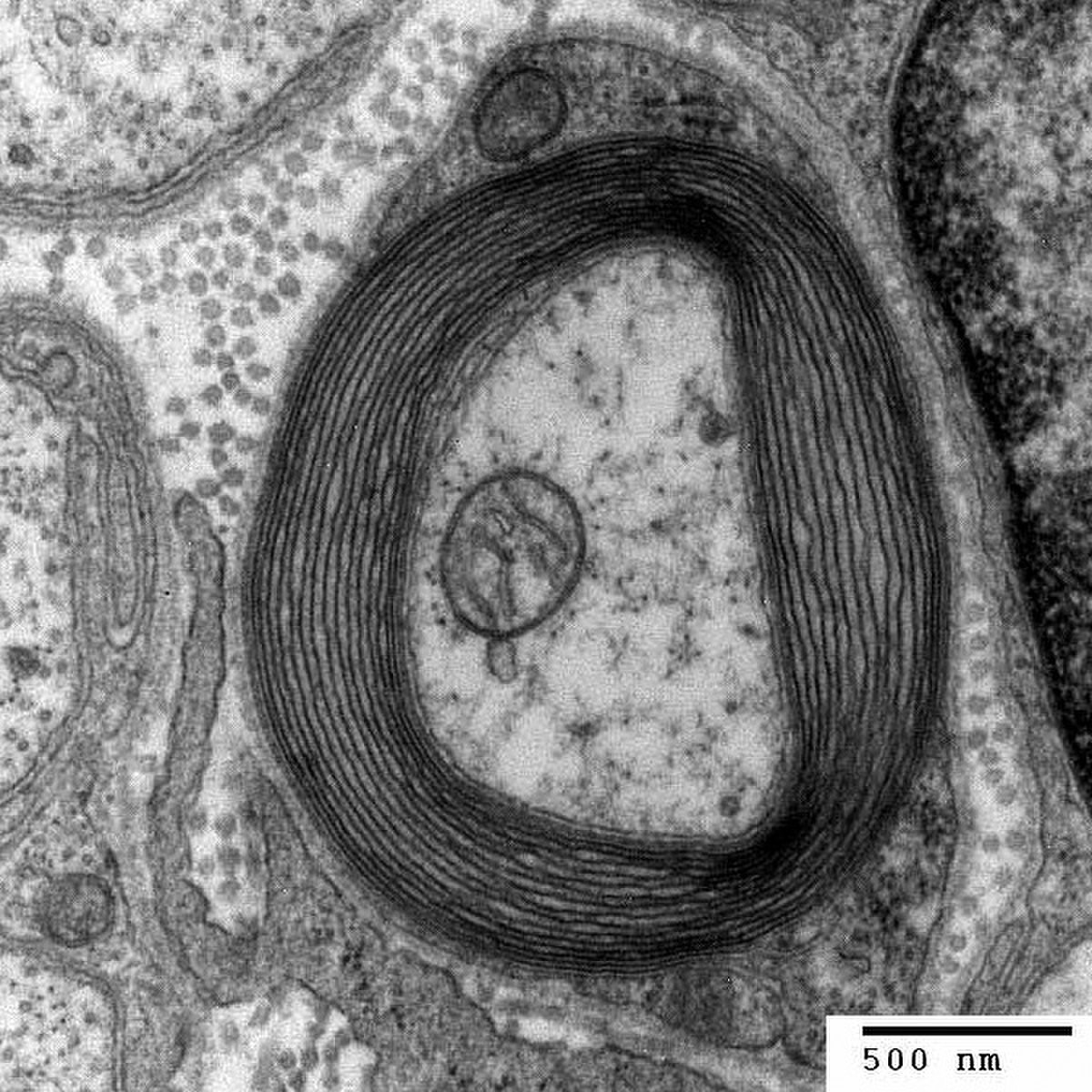
Myelin is essentially biological electrical tape made of lipids and proteins. In the 1850s, Rudolf Virchow first identified this substance, though he initially mistook it for simple structural marrow.
Transmission electron micrograph of a cross-section of a myelinated PNS axon, showing multiple concentric layers of myelin surrounding the axon. user:Roadnottaken, CC BY-SA 3.0, via Wikimedia Commons
Specialized cells called oligodendrocytes and Schwann cells tightly wrap their own membranes around nerves to create this high-speed coating.
The gaps that matter
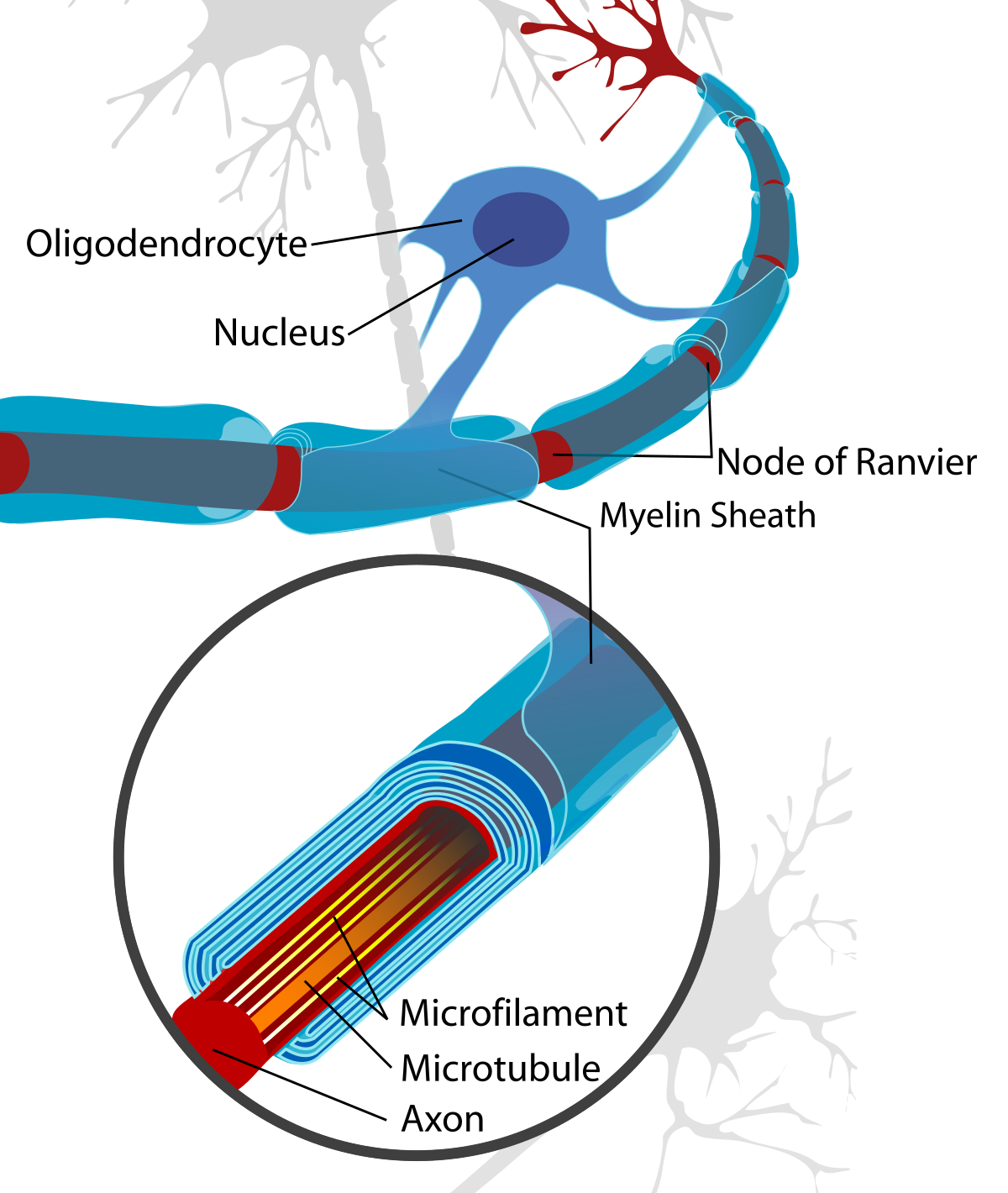
The myelin sheath is not a continuous wire covering. It has tiny gaps called the Node of Ranvier. These gaps allow the signal to recharge, effectively boosting it as it travels.
Without this fatty sheath, the electrical signal would leak out and dissipate long before it reached its target.
The high-speed network
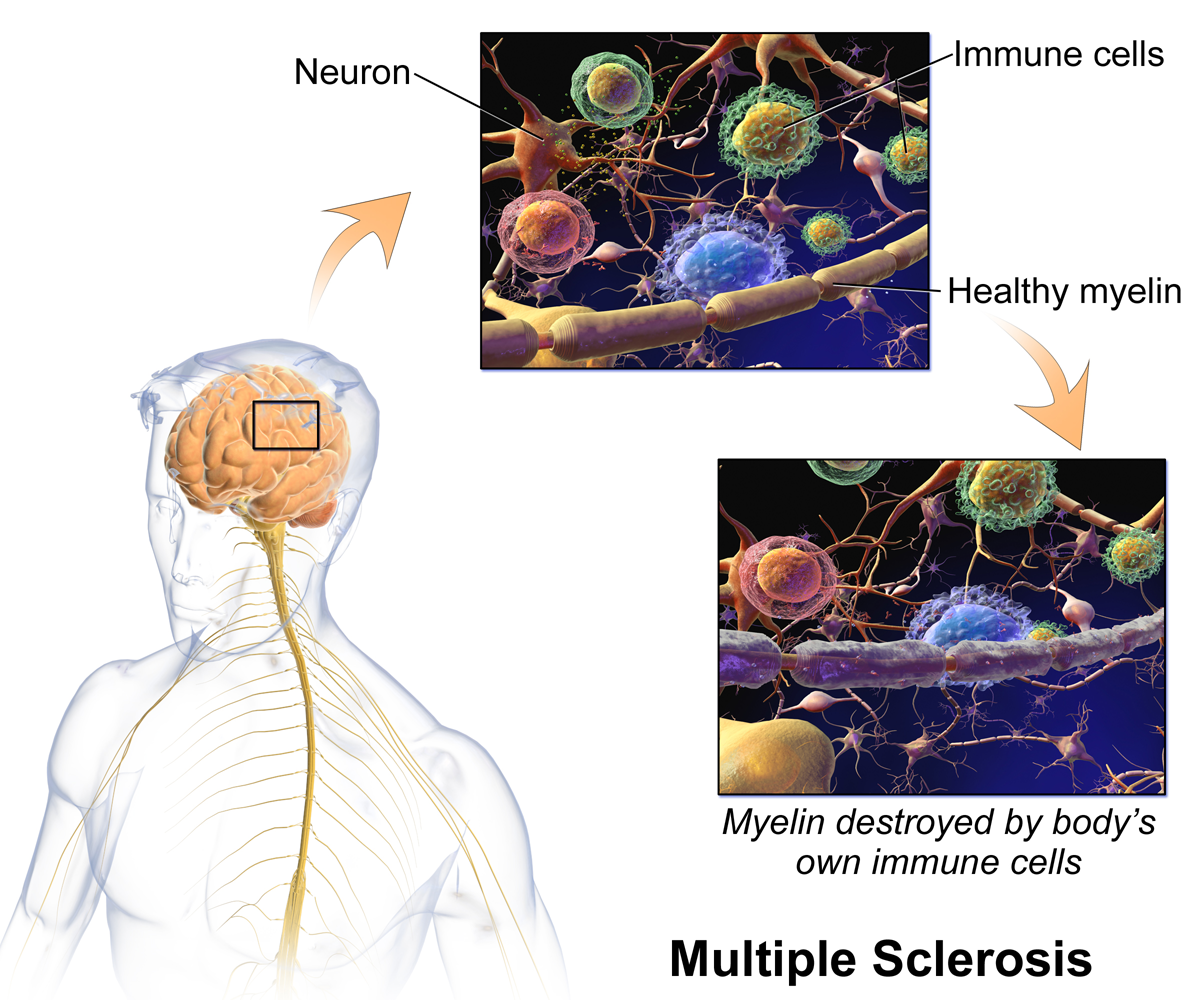
When this insulation is damaged, as in Multiple Sclerosis, the signal leaks and slows down. It is the difference between a high-speed fiber optic cable and a fraying, corroded wire.
A diagram illustrating the pathology of Multiple Sclerosis, showing a healthy neuron with intact myelin and immune cells, contrasted with a neuron where myelin is destroyed by the body's own immune… BruceBlaus, CC BY-SA 4.0, via Wikimedia Commons
Our agility relies entirely on this microscopic layer of fat.
How saltatory conduction speeds up signals
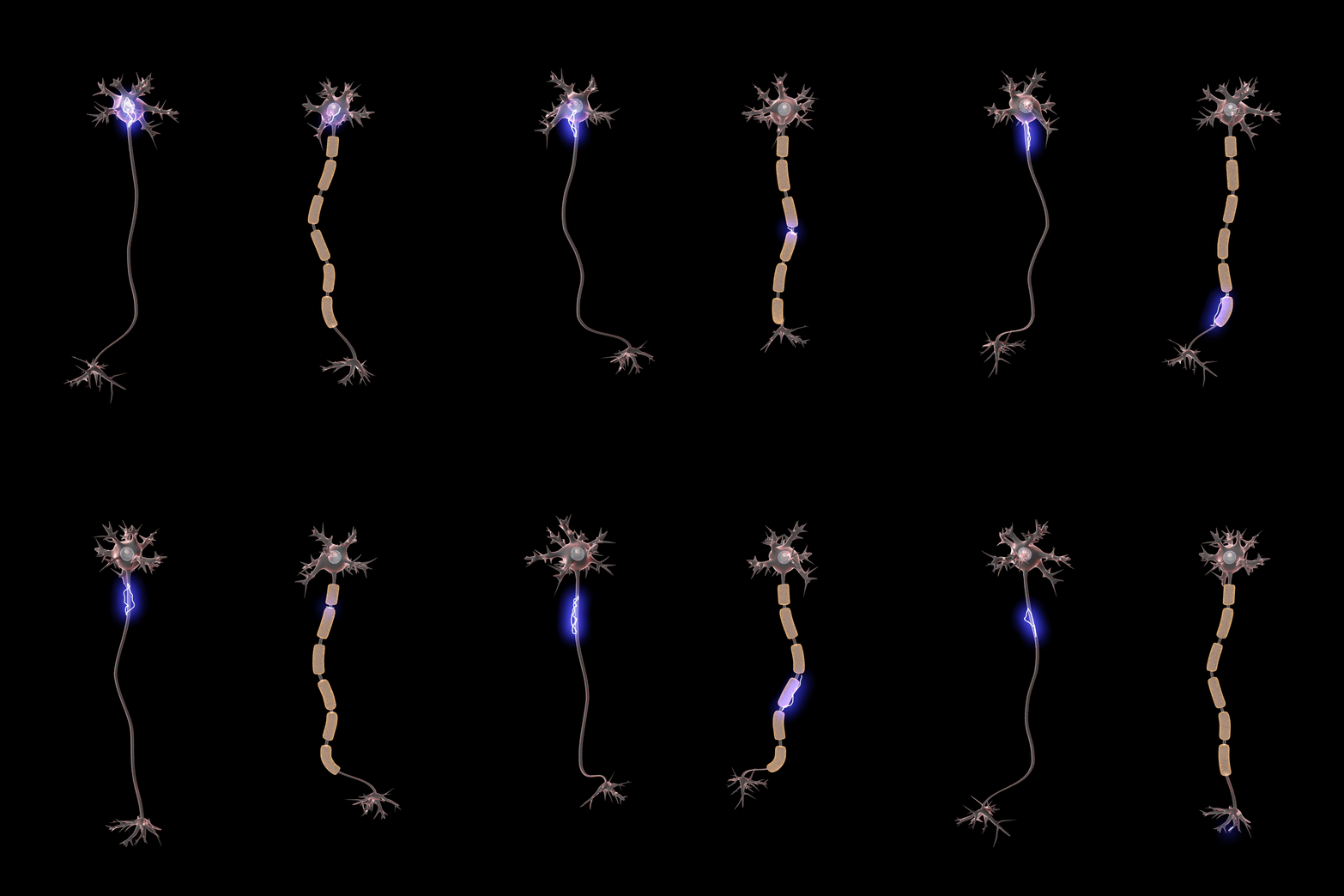
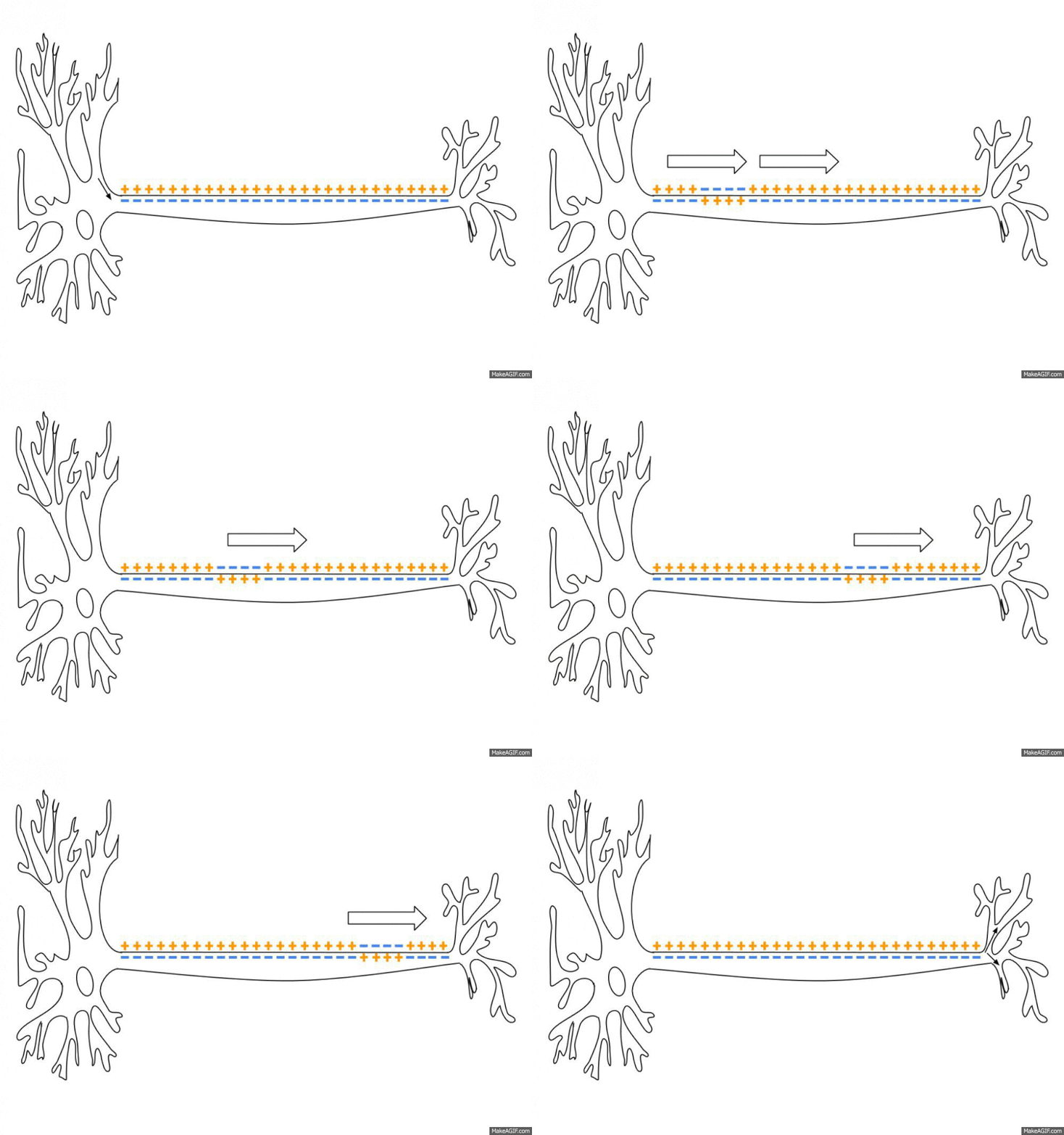
A nerve impulse in a myelinated axon does not travel like water through a pipe. It jumps from one microscopic gap to the next in a process called saltatory conduction, derived from the Latin word for jumping.
Action potentials move much faster along myelinated axons because the electrical charge hops between exposed nodes instead of traveling continuously. Dr. Jana, CC BY 4.0, via Wikimedia Commons
The myelin sheath breaks at regular intervals called nodes of Ranvier, each roughly one micrometer long. While the covered sections block electrical charge, the nodes pack dense clusters of voltage-gated sodium channels. Positively charged sodium ions flood into the axon at an open node, restore the signal strength, and diffuse rapidly inside the cell to trigger the next node downstream.
This jumping mechanism allows vertebrate nerve impulses to travel far faster than they could along uninsulated fibers of the same size. At the end of the line, the signal triggers the release of neurotransmitters across a synapse to activate other cells.
What myelin is made of
Myelin is roughly 40 percent water by mass, while its dry weight is 60 to 75 percent lipid and 15 to 25 percent protein. Its main fat component is a glycolipid named galactocerebroside, reinforced by cholesterol and sphingomyelin. Because it is rich in lipids, myelin appears white, giving rise to the name white matter for dense nerve tracts such as the corpus callosum.
An oligodendrocyte extends cellular projections to wrap protective layers of myelin around multiple axon segments. Neuron_with_oligodendrocyte_and_myelin_sheath.svg: *Complete_neuron_cell_diagram_en.svg: LadyofHats derivative work: And, Public domain, via Wikimedia Commons
Non-neuronal helper cells called glia build these protective layers. In the central nervous system, oligodendrocytes extend foot processes to wrap multiple nearby axons at once. In the peripheral nervous system, Schwann cells wrap themselves around just a single axon segment.
Specific proteins hold these concentric membrane layers together. In the central nervous system, proteolipid protein and myelin basic protein compact the sheath, while myelin protein zero performs that structural role in peripheral nerves.
What happens when myelin breaks down
When myelin degrades, electrical impulses leak across the exposed axon membrane and lose power before reaching their destination. The loss of insulation disrupts movement, sensory perception, and cognitive recall.
Multiple sclerosis is the most common demyelinating disorder, occurring when inflammatory damage targets the myelin of the central nervous system. Other conditions that damage this coating include inherited leukodystrophies and inflammatory peripheral neuropathies.
Test yourself
In myelin-assisted conduction, what happens at the sheath's gaps?
The signal is regenerated as it jumps between gaps. Myelin insulates axon segments, while gaps let the signal recharge and jump onward. The impulse does not crawl continuously under the sheath.
If myelin is damaged, what is most likely to happen to nerve signals?
They leak and travel more slowly. Damaged myelin provides less insulation, so signals can leak and slow down. It does not make the jumps longer or remove the need for recharge points.
How does myelin increase the speed of electrical impulses along a neuron?
By forcing signals to jump across gaps. Myelin acts as insulation that prevents signal leakage, forcing the electrical impulse to jump from node to node rather than travel continuously.
Play the lesson in edgi and the card is yours. It lands on your Map next to the ideas it connects to, and turns from matte to foil to gold as you learn more around it.
German physician Rudolf Virchow coined the term in 1854 from the Greek word myelos, meaning bone marrow. He chose the name because the fatty substance shared a similar whitish color and soft texture with marrow.
Do all animals have myelin?
Almost all vertebrates have myelin around their nerve fibers. The only vertebrates that lack it are jawless fish.