Calorie restrictionEating less without malnutrition
Calorie restriction is a dietary approach that reduces total energy intake below daily requirements without depriving the body of essential vitamins and minerals. Lowering energy intake shifts the body out of growth mode and into cellular maintenance and repair. Researchers study it because it improves metabolic health and delays age-related diseases in animal models.
By the edgi team We find the most surprising true thing about an idea and build a 60-second lesson around it.
In 1935, Clive McCay made a startling observation: rats on a near-starvation diet lived significantly longer than well-fed ones. They weren't just healthier; they essentially lived twice as long. This sparked decades of research into how energy intake controls the biological clock.
The biological shift
When fuel is scarce, the body stops prioritizing reproduction and growth. It shifts resources toward cellular maintenance and repair. This process activates proteins like SIR2, which help manage gene regulation and cleanup during low-energy states.
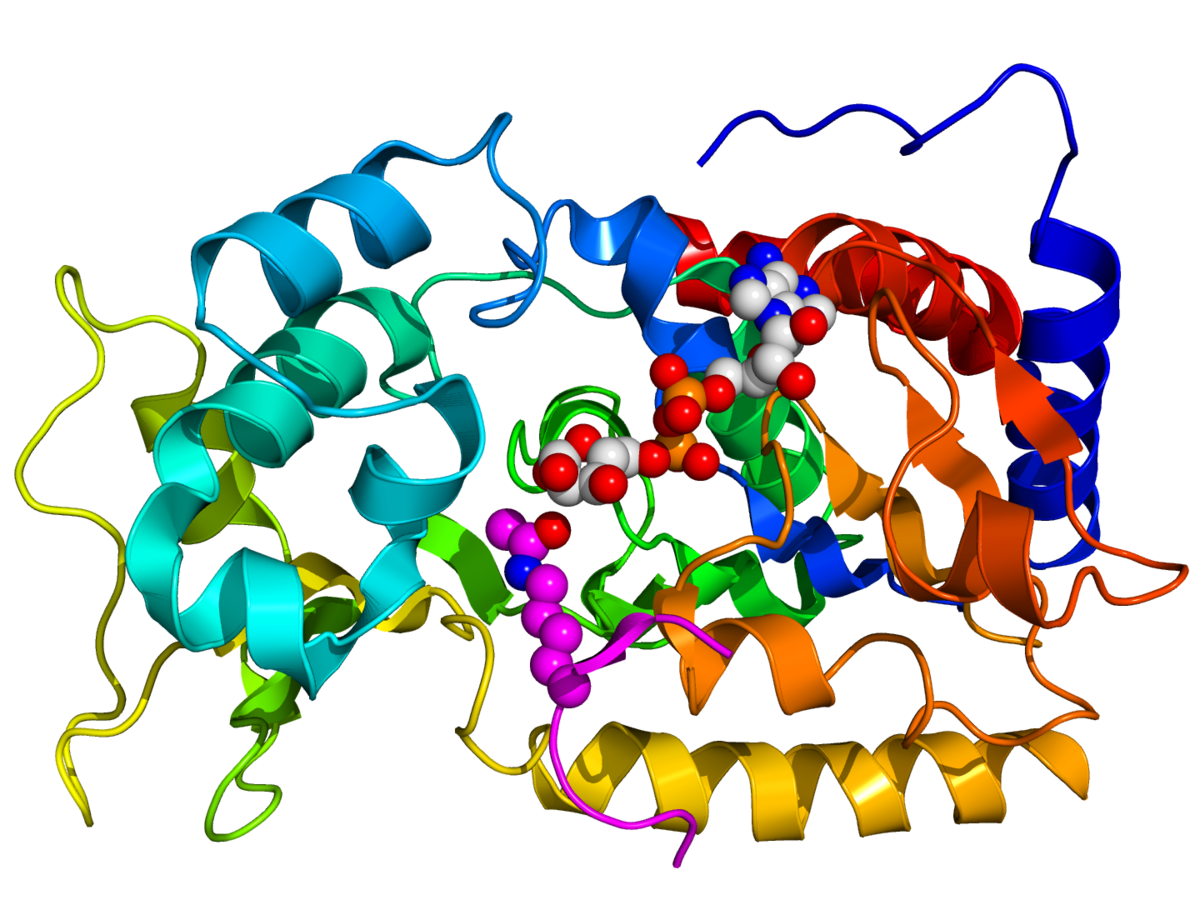
A colorful 3D molecular model, labeled 1SZD, displays the structure of a sirtuin protein. Boghog2, Public domain, via Wikimedia Commons
It is effectively an ancient survival mode designed to help organisms endure seasonal famines.
The practical application
The Okinawan practice of hara hachi bun me teaches people to stop eating when they are 80 percent full. By focusing on nutrient density rather than raw volume, they maintain health while naturally lowering their total calorie intake.
Scientists are now searching for calorie restriction mimetics like metformin to trigger these repair benefits without the need for constant, strict dieting.
How calorie restriction differs from starvation
True calorie restriction maintains strict nutrient density while cutting total energy intake. If an energy-restricted diet lacks essential nutrients, severe malnutrition follows.
The 1944 Minnesota Starvation Experiment demonstrated this contrast. Lean young men cut their intake by 40 to 45 percent on a high-carbohydrate, nutrient-poor diet intended to mimic wartime conditions. Instead of healthy cellular repair, participants suffered muscle wasting, lower-limb edema, anemia, extreme apathy, and depression.
Real calorie restriction avoids these outcomes by providing all required micronutrients and protein. When done properly, the body adapts metabolically: resting heart rate and body fat decline, while proteins like SIR2 activate to oversee gene regulation and cellular cleanup.
Human health effects and medical uses
In humans, reducing caloric intake by 20 to 30 percent while meeting nutrient guidelines leads to an average body weight loss of 7.9 kilograms. This reduction improves markers for diabetes, cardiovascular disease, dementia, and cancer.
Clinical guidelines recommend calorie restriction for managing prediabetes and diabetes, targeting a 5 to 15 percent body weight loss to prevent disease progression. Mild restriction under medical supervision can also help limit excessive weight gain during pregnancy.
Weight loss through restriction does carry documented side effects, including sensitivity to cold, menstrual irregularities, and hormonal changes. Restriction is not recommended for lean individuals with low body fat, as moderate restriction in this group can cause harm.
What primate studies show about lifespan
Studies testing calorie restriction in rhesus macaques have produced nuanced results. Research started in 1987 by the University of Wisconsin showed increased lifespan, while a concurrent National Institute on Aging study showed improved health markers without extending life in non-obese monkeys.
A 2017 analysis reconciled these findings: restriction in the presence of adequate nutrition delayed age-related disease and improved survival rates, particularly in adult and older primates. Lower fasting blood glucose, lower fat mass, and older age of onset were tied to fewer aging disorders.
Test yourself
What happens to the body during extreme energy scarcity?
It prioritizes cellular repair. The body shifts resources away from growth and reproduction to focus on maintenance and cleanup, prioritizing survival over expansion.
When a body is low on fuel, does it prioritize growth or repair?
It prioritizes repair. When energy is scarce, the body pivots from resource-heavy growth to survival-critical maintenance, activating ancient cleanup mechanisms that slow the aging process.
Lowering insulin levels through calorie restriction results in ___ cellular proliferation.
reduced. Reducing energy intake lowers insulin and IGF-1 levels, which are the main hormones that drive cell division.
Play the lesson in edgi and the card is yours. It lands on your Map next to the ideas it connects to, and turns from matte to foil to gold as you learn more around it.
Calorie restriction mimetics are compounds like metformin designed to trigger the biological cleanup and repair pathways of calorie restriction without requiring a person to maintain a strict, low-calorie diet.
How does intermittent fasting relate to calorie restriction?
Intermittent fasting restricts all calorie intake to specific time windows, such as an 8 to 12 hour period each day. It is often combined with overall calorie reduction or Mediterranean diets to support cardiovascular health.
Does calorie restriction work the same way in hospital patients?
Clinical trials in intensive care units found no significant difference in patient recovery between standard feeding and reduced-calorie feeding. Clinical guidelines recommend providing 80 to 100 percent of estimated energy expenditure for hospitalized patients.