Sirtuins are an ancient family of signaling proteins that act as master regulators of cellular metabolism and DNA repair. Unlike other repair enzymes, they cannot function without consuming NAD+, a molecule that spikes when cells run low on energy. This requirement links your cellular maintenance directly to your metabolic state.
By the edgi team We find the most surprising true thing about an idea and build a 60-second lesson around it.
Inside your cells sits a family of proteins called sirtuins. They act like master regulators of your genetic activity. When conditions are good, they focus on standard cellular chores. But when you are under stress, they pivot to emergency maintenance.
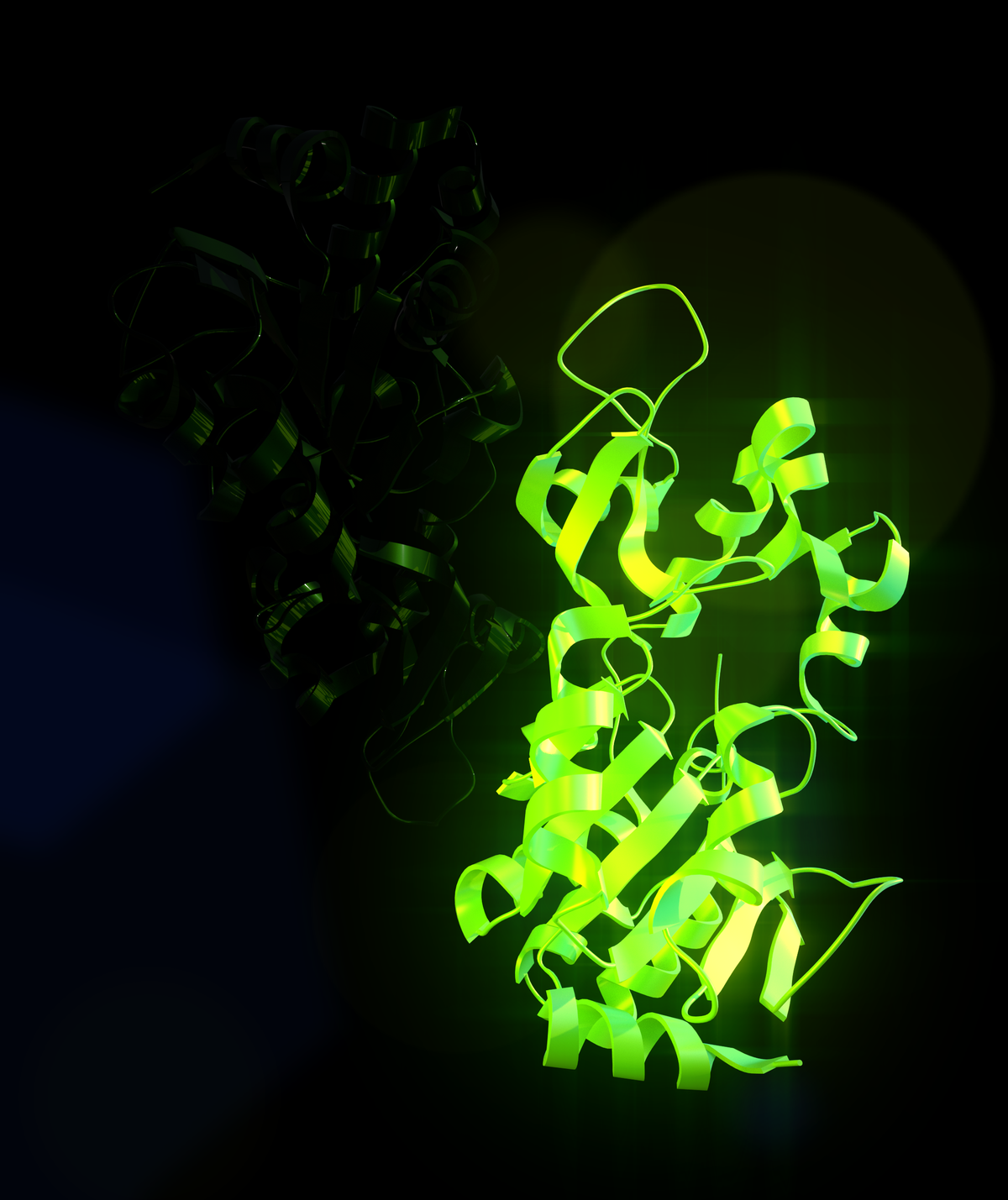
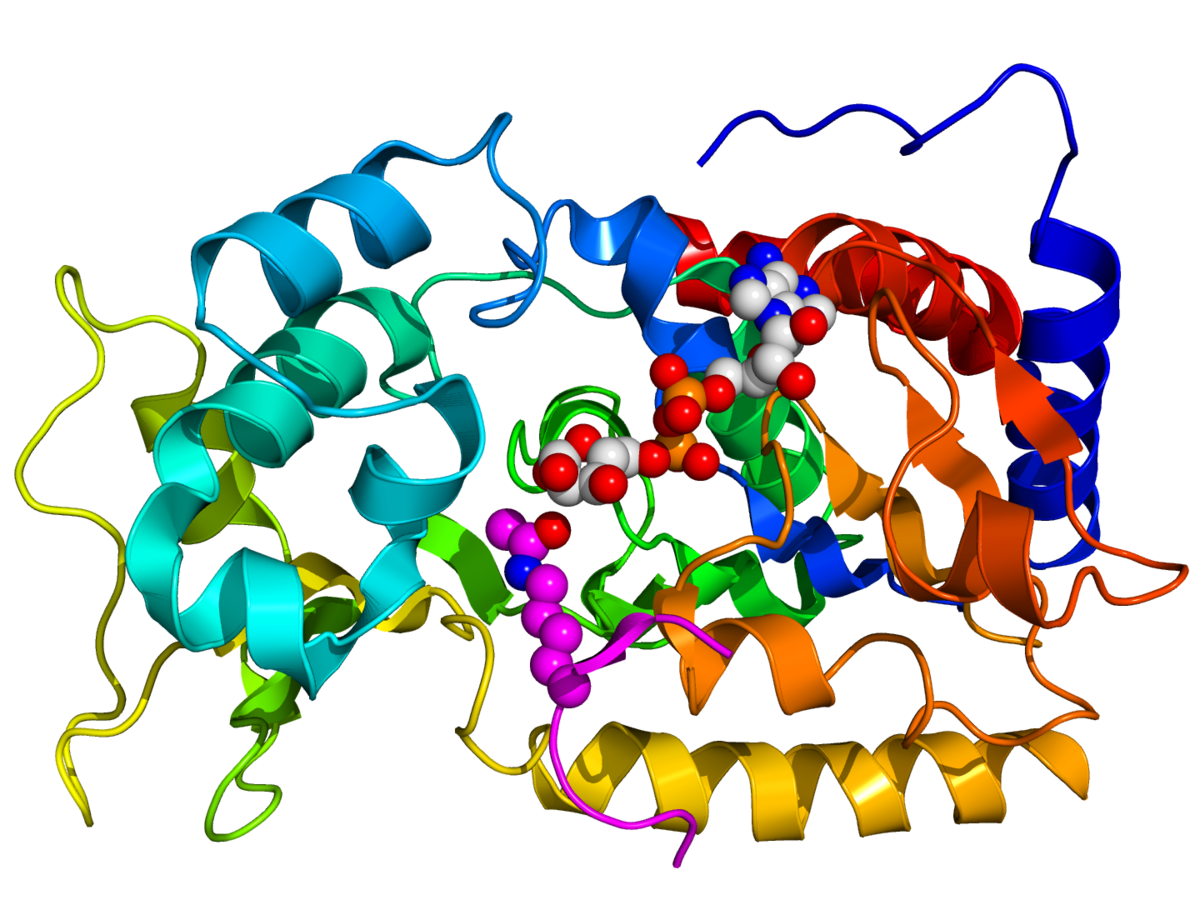
A colorful 3D molecular model, labeled 1SZD, displays the structure of a sirtuin protein. Boghog2, Public domain, via Wikimedia Commons
They prioritize fixing damaged DNA and stabilizing your genome, acting as a biological shield against the ravages of aging.
The fuel gauge
Sirtuins are famously finicky. They will not function without a molecule called Nicotinamide adenine dinucleotide, or NAD+. NAD+ levels rise when your cells are low on energy, acting as a chemical signal that food is scarce.
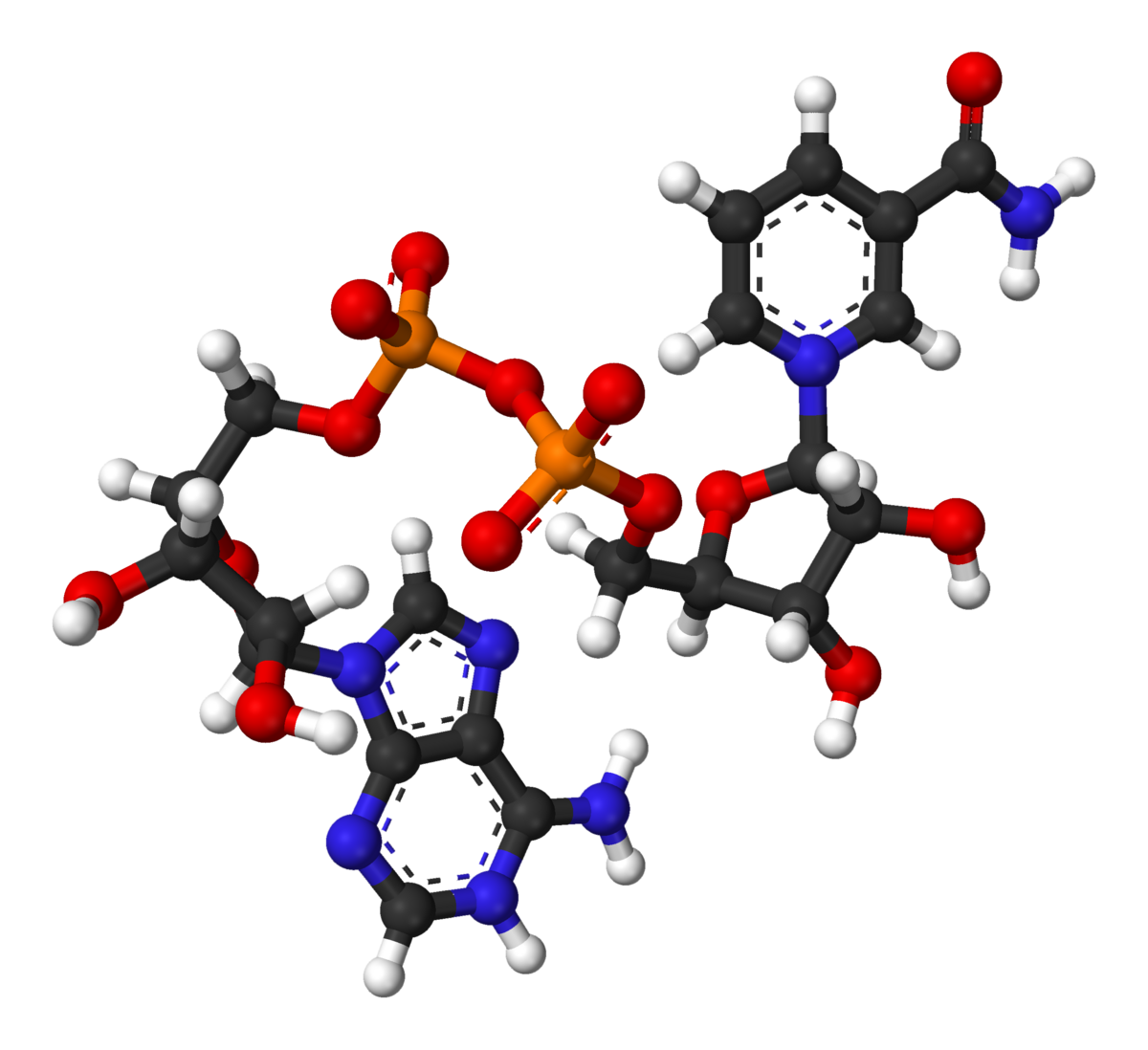
A ball-and-stick model depicts the oxidized form of Nicotinamide Adenine Dinucleotide (NAD+). Ben Mills, Public domain, via Wikimedia Commons
When sirtuins detect a surge in NAD+, they recognize a state of calorie restriction and immediately trigger their repair protocols.
The yeast discovery
In the 1990s, researchers studying yeast found a gene named SIR2 that controlled how fast the cells aged. By simply duplicating this gene, they extended the yeast lifespan by 30 percent.
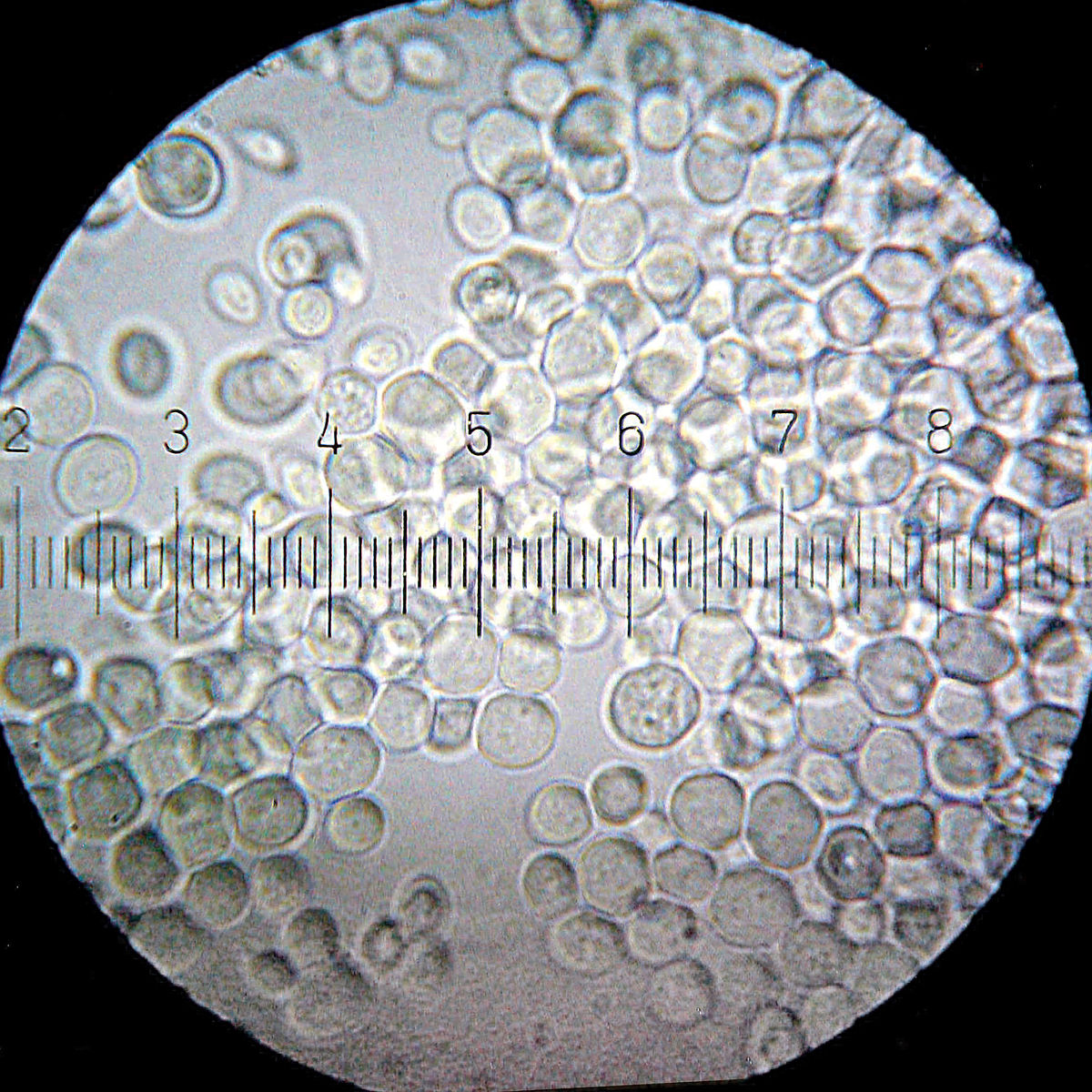
A microscopic view shows numerous Saccharomyces cerevisiae yeast cells, commonly used for brewing and baking. Bob Blaylock, CC BY-SA 3.0, via Wikimedia Commons
It was the first hard evidence that aging was not just an inevitable decay, but a regulated process that could be hacked through metabolism.
How sirtuins work
Chemically, sirtuins are enzymes with deacylase or mono-ADP-ribosyltransferase activity. When they remove acetyl groups from other proteins, they uniquely couple the reaction to the breakdown of NAD+. This reaction creates three products: the deacetylated target, O-acetyl-ADP-ribose, and nicotinamide.
Nicotinamide acts as a natural inhibitor of sirtuin activity by binding to a specific site on the enzyme. Other classes of histone deacetylases rely on zinc ions as cofactors, but sirtuins depend strictly on NAD+ to operate.
Where sirtuins operate in the cell
While single-celled bacteria and archaea carry only one or two sirtuins, mammals possess seven distinct versions labeled SIRT1 through SIRT7. These seven enzymes divide labor by stationing themselves in specific compartments of the cell.
SIRT1, SIRT6, and SIRT7 operate predominantly in the nucleus, where they direct DNA repair. SIRT1 and SIRT6 promote homologous recombination to fix DNA breaks, while SIRT6 also handles base excision repair. SIRT7 is required for repairing double-strand breaks by non-homologous end joining. SIRT2 works in the cytoplasm, and SIRT3, SIRT4, and SIRT5 reside inside the mitochondria, where SIRT3 regulates metabolic enzymes like isocitrate dehydrogenase in the TCA cycle and SIRT4 regulates glutamine metabolism.
Test yourself
How do sirtuins link cellular metabolism to the aging process?
They activate repair modes during low energy. Sirtuins respond to high NAD+ levels signaling energy scarcity, shifting cellular priority from growth to DNA repair and survival.
What role does NAD+ play in regulating sirtuin protein activity within cells?
It acts as a required fuel for function. Sirtuins require NAD+ as a cofactor to perform their deacylase activity, meaning their protective work depends directly on cellular energy states.
What triggers the body's emergency cellular repair protocols?
Energy scarcity signals. Cells prioritize maintenance over growth when resources are limited. High nutrient availability encourages expansion rather than the high-stakes repair needed for longevity.
Play the lesson in edgi and the card is yours. It lands on your Map next to the ideas it connects to, and turns from matte to foil to gold as you learn more around it.
Mice deficient in SIRT6 develop a degenerative aging-like phenotype. Similarly, mice lacking SIRT7 exhibit features of premature aging due to failures in double-strand DNA repair.
Does resveratrol extend human lifespan through sirtuins?
Although preliminary research showed resveratrol activates enzymes like SIRT1, no clinical evidence has shown that it extends human lifespan as of 2018.
What medical conditions are linked to low sirtuin levels?
Tissues from people with scleroderma show lower sirtuin levels. These reduced levels can increase the risk of tissue fibrosis through changes in the TGF-beta signaling pathway.